 By admin
 INTRODUCTION:
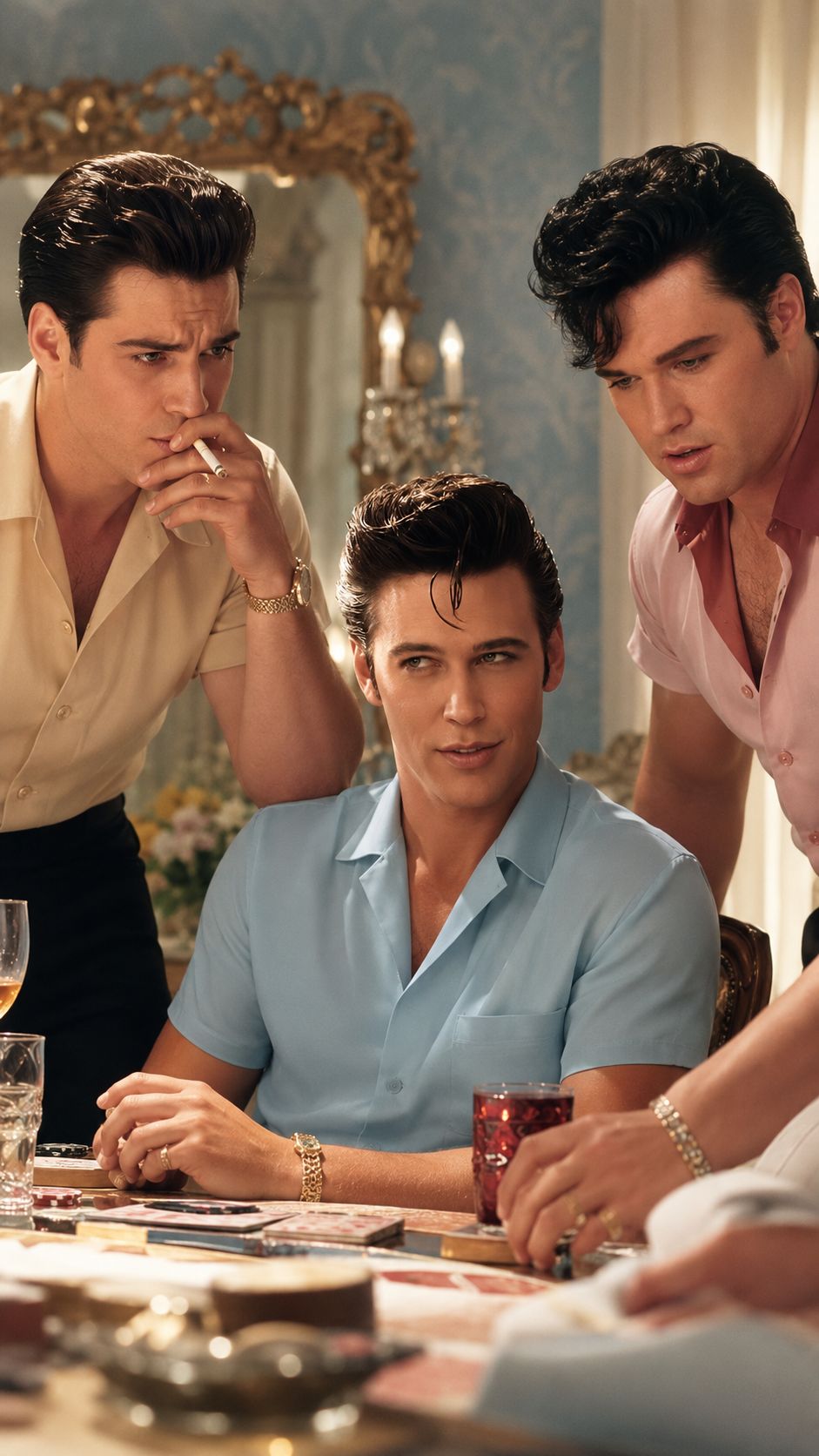
The story of Elvis Presley has been told countless times. We know the dazzling rise from a poor boy in Mississippi to the undisputed King of Rock and Roll. We know the screaming crowds, the chart-topping hits, the Hollywood fame, and the tragic final chapter at Graceland. But behind the rhinestone jumpsuits and the spotlight existed another world—one far stranger, more secretive, and infinitely more complicated.
At the center of that hidden universe stood a loyal band of friends, bodyguards, cousins, assistants, and confidants known collectively as the Memphis Mafia. To outsiders, they appeared to be little more than a group of lucky men enjoying the benefits of proximity to fame. Yet those who lived inside the walls of Graceland understood something deeper was unfolding. The Memphis Mafia was not simply an entourage. It was a brotherhood built on loyalty, dependence, privilege, and sometimes silence.
Their daily lives revolved around the unpredictable rhythms of Elvis Presley himself. Nights blurred into mornings. Wealth erased ordinary boundaries. Strange traditions emerged. Rituals developed. Rules were rarely spoken but always understood.
Decades later, the mythology surrounding the Memphis Mafia remains one of the most fascinating and controversial chapters in music history. Their story reveals not only the hidden life of a superstar but also the emotional cost of living inside the orbit of a cultural phenomenon that changed America forever.
To understand the Memphis Mafia, one must first understand the loneliness of Elvis Presley.
By the mid-1950s, Elvis Presley had become something unprecedented. He was more than a singer. He was a cultural earthquake. Hits like Heartbreak Hotel, Hound Dog, and Jailhouse Rock transformed him into a global icon almost overnight.
Fame arrived so quickly that normal life became impossible.
As his celebrity expanded, a trusted inner circle naturally formed around him. Many members were childhood friends from Memphis, relatives, or individuals who had earned his trust through unwavering loyalty. The media eventually coined the nickname “Memphis Mafia” because these men often wore dark suits, sunglasses, and moved together in coordinated fashion.
Yet the reality was less criminal and more psychological.
The group functioned as a protective shield between Elvis Presley and the outside world.
“The closer you got to Elvis, the harder it became to tell him the truth.”
This became one of the defining dynamics of the Memphis Mafia.
The first ritual was loyalty above all else.
Members of the entourage understood an unspoken rule: once you were inside the circle, your identity became intertwined with Elvis Presley. Careers, finances, and lifestyles often depended upon remaining close to him. In return, Elvis Presley displayed extraordinary generosity. He bought houses, cars, jewelry, and expensive gifts for friends.
This generosity created a unique emotional contract.
The men around him were not merely employees. They were family.
But family can become complicated when one member possesses unimaginable wealth and power.
Another unusual ritual centered around nocturnal living.
While most of America slept, Elvis Presley often came alive. The Memphis Mafia adapted completely to his schedule. Midnight breakfasts became common. Spontaneous road trips occurred at impossible hours. Entire evenings could be spent driving through the city simply because Elvis wanted company.
The group’s sleep cycles, relationships, and personal routines increasingly revolved around the King’s desires.
In many ways, they existed within an alternate reality.
Inside Graceland, time itself seemed different.
Visitors frequently described an atmosphere where ordinary rules no longer applied. Friends gathered for marathon conversations, movie screenings, and philosophical discussions stretching deep into the night. The mansion became a self-contained universe.
Perhaps the most fascinating ritual involved collective escapism.
Members of the Memphis Mafia often participated in elaborate recreational activities designed to combat boredom. Water gun battles erupted without warning. Racquetball tournaments became intense competitions. Movie theaters were rented for private screenings. Entire groups would travel suddenly on a whim.
These activities served a larger purpose.
They protected Elvis Presley from confronting the pressures surrounding him.
“The games were fun, but they were also distractions from realities nobody wanted to face.”
As the years progressed, another ritual emerged that historians view far more critically.
Silence.
Many members recognized troubling patterns in Elvis Presley’s health and lifestyle during the 1970s. Prescription medication usage increased. Physical exhaustion became more apparent. Emotional struggles deepened.
Yet challenging a global superstar proved difficult.
The Memphis Mafia existed within a system where loyalty was rewarded and confrontation carried risks. Some members later admitted feeling conflicted. They loved Elvis deeply but often struggled to determine where friendship ended and responsibility began.
This tension remains one of the most debated aspects of the Memphis Mafia legacy.
Were they protectors?
Were they enablers?
Or were they simply human beings trapped inside a situation larger than themselves?
The answer is likely all three.
The brotherhood also developed rituals of storytelling.
Long before social media, the Memphis Mafia preserved countless stories through oral tradition. Members spent years sharing tales about life with Elvis Presley, creating a mythology that continues to fascinate fans today.
Every road trip became legend.
Every late-night conversation became history.
Every unusual moment acquired symbolic significance.
The result was the creation of a parallel narrative surrounding Elvis Presley—one focused less on the performer and more on the man behind the icon.
This distinction matters.
The public experienced the dazzling entertainer who performed Suspicious Minds, Can’t Help Falling in Love, and Burning Love.
The Memphis Mafia experienced the vulnerable human being.
They witnessed insecurity, humor, generosity, loneliness, spiritual searching, and exhaustion.
Their stories reveal a version of Elvis Presley far more complex than the simplified cultural caricature often presented today.
The spiritual dimension of the group is also frequently overlooked.
During the 1970s, Elvis Presley became increasingly interested in religion, metaphysics, and self-discovery. Members of the Memphis Mafia often participated in lengthy discussions about faith, philosophy, and the meaning of life.
Books circulated among the group.
Ideas were debated.
Questions about mortality became increasingly common.
These conversations reflected a man searching for something beyond fame.
Ironically, the larger Elvis Presley became as a celebrity, the more intensely he seemed to seek personal meaning.
“The King spent much of his life searching for answers that success could never provide.”
When Elvis Presley died in 1977, the Memphis Mafia effectively lost its center of gravity.
The rituals ended.
The late-night gatherings stopped.
The private universe collapsed.
Many members spent decades reflecting on their experiences through interviews, memoirs, documentaries, and public appearances. Their accounts sometimes contradicted one another, yet together they painted a remarkably human portrait of life inside one of music’s most famous inner circles.
Today, the Memphis Mafia remains one of the most intriguing phenomena in entertainment history.
Their story is not merely about celebrity excess. It is about loyalty pushed to extremes. It is about friendship tested by power. It is about the unintended consequences of living inside the gravitational pull of a cultural giant.
Most importantly, it reminds us that even legends need companionship.
Behind the gold records, behind the sold-out concerts, behind the eternal legacy of Rock and Roll, stood a group of men who shared in the triumphs and tragedies of Elvis Presley. Their rituals—whether harmless, bizarre, or controversial—were ultimately attempts to preserve a sense of belonging in a world transformed by extraordinary fame.
And perhaps that is the greatest irony of all.
The Memphis Mafia existed to protect the King from loneliness.
Yet their story reveals just how lonely being King could truly be.