 By admin
 INTRODUCTION:
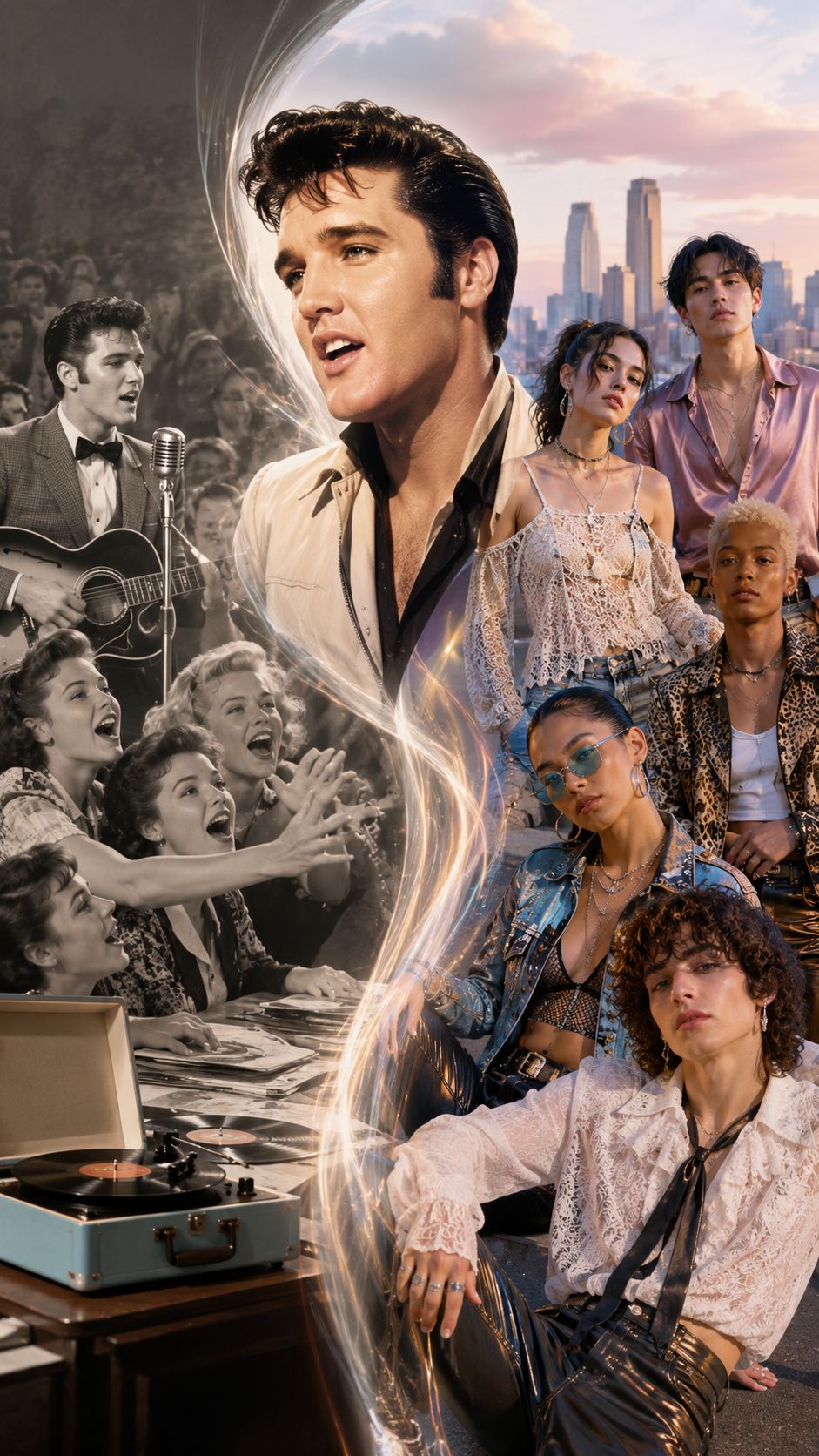
In 1956, the world heard something it had never truly heard before. A young man from Memphis stepped into the spotlight with a voice that sounded dangerous, exciting, and impossibly free. When Elvis Presley released his debut album, Elvis Presley, he did far more than introduce a collection of songs. He ignited a cultural earthquake.
The adults of the era saw disruption. Teenagers saw liberation.
For a generation raised within strict social expectations, Elvis Presley represented a new possibility: the right to be loud, emotional, rebellious, and unapologetically different. His movements challenged convention. His fashion blurred traditional boundaries. His music fused influences that many believed should never coexist. Every performance carried the energy of a revolution disguised as entertainment.
Seventy years later, the significance of that moment feels more relevant than ever.
The youth of 2026 live in a world defined by self-expression, individuality, digital identity, and the rejection of outdated labels. What many consider modern trends—gender-fluid fashion, personal branding, genre-crossing music, and cultural rebellion—can trace their DNA back to the young artist who shocked America in the 1950s.
History often treats legends as relics. But Elvis Presley is different.
His legacy did not survive the decades.
It evolved with them.
And in 2026, it is being reborn stronger than ever.
The Album That Changed Everything
When Elvis Presley released his self-titled debut album in 1956, America was standing at the edge of transformation. The nation was prosperous, but socially conservative. Young people were expected to follow established paths. Individuality was often viewed with suspicion.
Then came Rock and Roll.
The debut album blended Country Music, Rhythm and Blues, Gospel, and emerging Rockabilly influences into something entirely new. Songs like Blue Suede Shoes, Tutti Frutti, and I Got a Woman carried an energy that felt explosive compared to the polished sounds dominating mainstream radio.
This was not merely a new musical style.
It was a new attitude.
Teenagers suddenly had a soundtrack that reflected their emotions rather than their parents’ expectations. The rise of Elvis Presley marked one of the first times youth culture became a powerful force capable of influencing the broader society.
For millions of young people, Elvis was not simply a singer. He was permission.
Permission to dream differently.
Permission to stand apart.
Permission to become themselves.
The Original Rebel Before Rebellion Became Mainstream
Modern culture celebrates rebels. Social media rewards individuality. Fashion encourages experimentation. Artists build careers by challenging norms.
In 1956, however, rebellion came with consequences.
Television networks often filmed Elvis Presley from the waist up because his dancing was considered too provocative. Religious leaders criticized him. Parents worried about his influence. Cultural gatekeepers viewed him as a threat to traditional values.
Ironically, these attacks only amplified his impact.
Every criticism reinforced his image as someone willing to challenge outdated expectations.
Today, rebellion is often packaged and marketed. For Elvis Presley, it was authentic. His refusal to fit comfortably within existing cultural categories made him one of the first true youth icons of the modern era.
That same rebellious spirit now thrives across platforms like TikTok, Instagram, and YouTube, where young creators build identities around originality rather than conformity.
The mindset has changed.
The source remains remarkably familiar.
The Forgotten Fashion Revolutionary
Many people remember Elvis Presley for his music.
Far fewer recognize how revolutionary his fashion choices were.
Long before conversations about gender-fluid style entered mainstream culture, Elvis Presley was already challenging masculine stereotypes. His wardrobe featured high collars, dramatic tailoring, jewelry, vibrant colors, makeup-enhanced television appearances, and an unapologetic sense of theatricality.
In the rigid cultural environment of the 1950s, these choices were radical.
Traditional masculinity emphasized restraint.
Elvis Presley embraced expression.
Today, artists such as Harry Styles, Bad Bunny, and Lil Nas X are celebrated for pushing fashion boundaries and redefining gender expectations.
Yet decades before these conversations became mainstream, Elvis Presley was already demonstrating that style could be fluid, expressive, and personal.
What seemed shocking in 1956 now feels remarkably contemporary.
The future often arrives disguised as controversy.
And Elvis was living in that future long before the world caught up.
The Birth of Genre-Blending Culture
One of the defining characteristics of modern music is the collapse of genre boundaries.
Artists routinely blend Country Music, pop, hip-hop, electronic sounds, and alternative influences into a single project. Younger audiences often care less about genre labels than previous generations.
This trend did not emerge overnight.
It traces directly back to pioneers like Elvis Presley.
His music refused to stay within a single category. He absorbed sounds from Gospel, Blues, Country Music, and Rockabilly, transforming them into something accessible to mass audiences.
The result was revolutionary.
Today’s streaming landscape rewards exactly this kind of creative freedom. The musical ecosystem of 2026 values experimentation, collaboration, and hybrid identities.
In many ways, modern artists are continuing a journey that Elvis Presley began seventy years earlier.
Why Generation 2026 Connects With Elvis Again
Every generation rediscovers cultural icons for different reasons.
Generation 2026 sees something unique in Elvis Presley.
They do not view him solely as a historical figure.
They see someone who understood the power of personal identity.
Young people today navigate a world where self-expression is central to daily life. Online platforms encourage individuals to build personal brands, showcase unique aesthetics, and challenge social expectations.
Those same themes defined the rise of Elvis Presley.
He built one of history’s earliest personal brands before the concept even existed. His voice, appearance, movements, and attitude formed a complete cultural identity.
In an era obsessed with authenticity, that achievement feels surprisingly modern.
The parallels are impossible to ignore.
A young artist challenges convention.
Older generations react with concern.
Young audiences embrace the change.
Culture evolves.
The story repeats.
A Legacy That Refuses to Age
Most cultural phenomena belong to their moment.
Elvis Presley belongs to every moment.
His influence extends beyond music into fashion, identity, entertainment, branding, and youth culture itself. The reason his legacy continues to grow is simple: the values he represented remain relevant.
Freedom.
Individuality.
Creative courage.
Cultural fusion.
Authentic self-expression.
These ideas define the cultural landscape of 2026 just as powerfully as they defined the revolution of 1956.
Seventy years after his debut album transformed America, the world is finally recognizing how far ahead of his time he truly was.
The music remains powerful.
The image remains iconic.
The influence remains everywhere.
And perhaps the most remarkable truth is this:
The cultural revolution started by Elvis Presley never actually ended.
It simply changed forms, crossed generations, and found new voices.
Today’s youth are not witnessing the fading of a legend.
They are witnessing his rebirth.