 By admin
 INTRODUCTION:
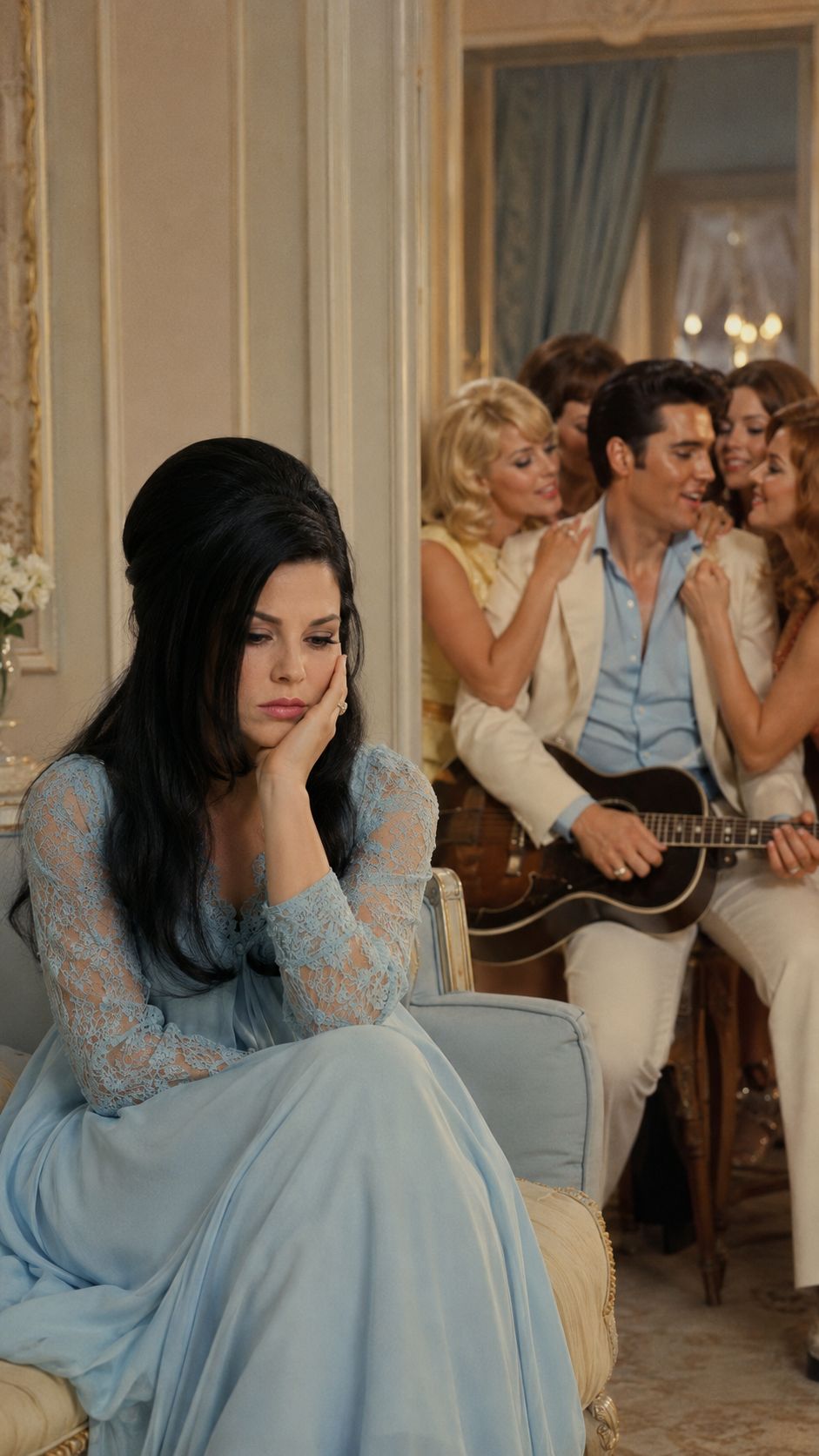
There are love stories that look magical from the outside and heartbreaking from within. Few relationships in American entertainment history embody that contradiction more powerfully than the marriage of Priscilla Presley and Elvis Presley. To millions around the world, she was the luckiest woman alive—the wife of The King of Rock and Roll, the man whose voice, charisma, and beauty captivated an entire generation. Women dreamed of him. Men envied him. Crowds screamed his name wherever he went.
Yet behind the gates of Graceland, a very different story was unfolding.
While the public saw glamour, fame, and fairy-tale romance, Priscilla Presley often experienced something far darker: profound loneliness. She lived alongside one of the most recognizable men on Earth, but true companionship frequently seemed out of reach. The demands of celebrity, the rigid expectations of the era, and Elvis Presley’s own complicated view of marriage created a relationship filled with emotional distance.
The paradox was heartbreaking. Elvis Presley wanted a beautiful, devoted wife waiting for him at home, preserving an image of domestic perfection. Yet the same man spent long stretches away on tours, film shoots, and personal adventures, surrounded by temptation and often engaging in relationships outside his marriage.
What emerged was not merely a celebrity romance gone wrong, but a deeply human story about love, control, identity, and the devastating cost of living in someone else’s shadow.
The Dream That Became a Golden Cage
When Priscilla Presley first met Elvis Presley in Germany in 1959, she was just a teenager. He was already an international sensation, serving in the U.S. Army and carrying the weight of global fame on his shoulders.
The age difference was significant, but perhaps even more important was the imbalance of power. Elvis Presley was not simply a boyfriend; he was a cultural phenomenon. Entering his world meant entering an ecosystem built entirely around his needs, desires, and schedule.
As their relationship evolved, Priscilla Presley increasingly found herself molded into the image that Elvis Presley preferred. Her appearance, clothing, hairstyle, and even aspects of her daily life were influenced by his vision.
She wasn’t simply becoming a wife. She was becoming a character in the story Elvis wanted to tell about himself.
For many observers, this dynamic represented the ideal celebrity romance of the 1960s. Yet beneath the glamorous photographs was a young woman struggling to define her own identity.
The mansion was magnificent. The lifestyle was extraordinary. But luxury does not automatically eliminate loneliness.
Elvis Wanted Perfection at Home
One of the most fascinating and tragic aspects of their marriage was Elvis Presley’s apparent desire for a highly traditional domestic arrangement.
Like many men raised in the American South during that era, he often seemed to separate the concept of a wife from the concept of romantic adventure. The woman he married was expected to represent stability, purity, and family life.
Priscilla Presley became the symbol of that ideal.
She was expected to maintain the home, support the family, and provide emotional security whenever Elvis Presley returned from the chaos of fame.
Yet the expectations were remarkably one-sided.
While Priscilla Presley was expected to remain loyal and available, Elvis Presley frequently spent months away from home. During tours, movie productions, and extended periods in places like Las Vegas, rumors and reports of infidelity followed him constantly.
This contradiction became one of the defining tensions in their marriage.
He wanted devotion without always offering the same devotion in return.
The imbalance left Priscilla Presley carrying the emotional burden of a relationship that often revolved around one person’s needs.
Life Inside Graceland Was Not What People Imagined
To outsiders, Graceland represented a palace. It was the center of the Rock and Roll universe, a place where dreams came true.
But celebrity homes can also become prisons.
Because Elvis Presley lived under constant public scrutiny, everyday activities became complicated. Privacy was limited. Independence was restricted. Normal experiences that many couples take for granted were often impossible.
For Priscilla Presley, isolation gradually became part of daily life.
While Elvis Presley traveled, performed, and interacted with countless people, she remained behind. The contrast was striking. One partner was experiencing constant stimulation and excitement. The other was waiting.
Waiting for phone calls.
Waiting for visits.
Waiting for attention.
Waiting for reassurance.
The emotional distance widened with each passing year.
Many celebrity marriages struggle because fame creates separate realities for each partner. In the case of Priscilla Presley and Elvis Presley, those realities became increasingly incompatible.
The Women Around Elvis
By the late 1960s and early 1970s, stories about Elvis Presley’s relationships with other women had become difficult to ignore.
His status as perhaps the most desired man in entertainment meant temptation existed everywhere he went. Fans adored him. Actresses admired him. His fame granted access to virtually any social circle he wished to enter.
For Priscilla Presley, this created a painful emotional environment.
Even when evidence was incomplete, the constant rumors could be devastating. Living with uncertainty can be as damaging as confronting the truth itself.
Every tour meant questions.
Every absence meant anxiety.
Every headline brought new speculation.
Imagine being married to the man every woman wanted, while wondering whether he still truly wanted you.
That emotional reality gradually eroded the foundation of their relationship.
The issue was never simply physical infidelity. It was the deeper feeling that the marriage itself was no longer the center of Elvis Presley’s emotional life.
Priscilla’s Search for Herself
One of the most significant chapters in this story is Priscilla Presley’s eventual journey toward independence.
For years, much of her identity had been tied directly to Elvis Presley. She was viewed through the lens of his fame rather than as an individual with her own ambitions, interests, and dreams.
As she matured, however, she began seeking a life beyond the role assigned to her.
This search was transformative.
It represented more than dissatisfaction with a marriage. It represented a desire for self-discovery.
Many women of the era could relate. The 1960s and 1970s were periods of enormous cultural change, particularly regarding women’s roles in society and marriage.
Priscilla Presley increasingly recognized that fulfillment could not come solely from being someone’s wife—even if that someone happened to be Elvis Presley.
The realization was painful but necessary.
The End of the Marriage
By the early 1970s, the emotional cracks were impossible to ignore.
The couple separated and later divorced in 1973. Remarkably, their split remained relatively respectful compared with many celebrity breakups.
There was still affection.
There was still history.
There was still a shared love for their daughter, Lisa Marie Presley.
But love alone could not overcome years of emotional distance, conflicting expectations, and personal unhappiness.
The marriage ended not because the fairy tale never existed, but because fairy tales rarely survive unchanged when confronted with reality.
A Legacy Beyond Heartbreak
Today, the story of Priscilla Presley and Elvis Presley remains one of the most compelling relationships in entertainment history.
It serves as a reminder that fame cannot guarantee emotional fulfillment. Wealth cannot eliminate loneliness. Adoration from millions cannot repair a struggling marriage.
In many ways, Priscilla Presley became stronger because she eventually stepped beyond the identity that had once defined her. She transformed herself from the wife of The King into a successful businesswoman, public figure, and guardian of the Elvis Presley legacy.
Her story resonates because it speaks to a universal truth.
People often assume that being loved by the world’s most famous person must feel extraordinary. But genuine happiness depends on something much simpler: mutual respect, emotional presence, trust, and partnership.
For all the glamour surrounding Elvis Presley, one painful reality remains impossible to ignore. The woman who seemed to have everything often found herself profoundly alone.
The world saw a queen living in a palace. What it didn’t always see was a woman searching for connection in a marriage increasingly defined by absence.