 By admin
 INTRODUCTION:
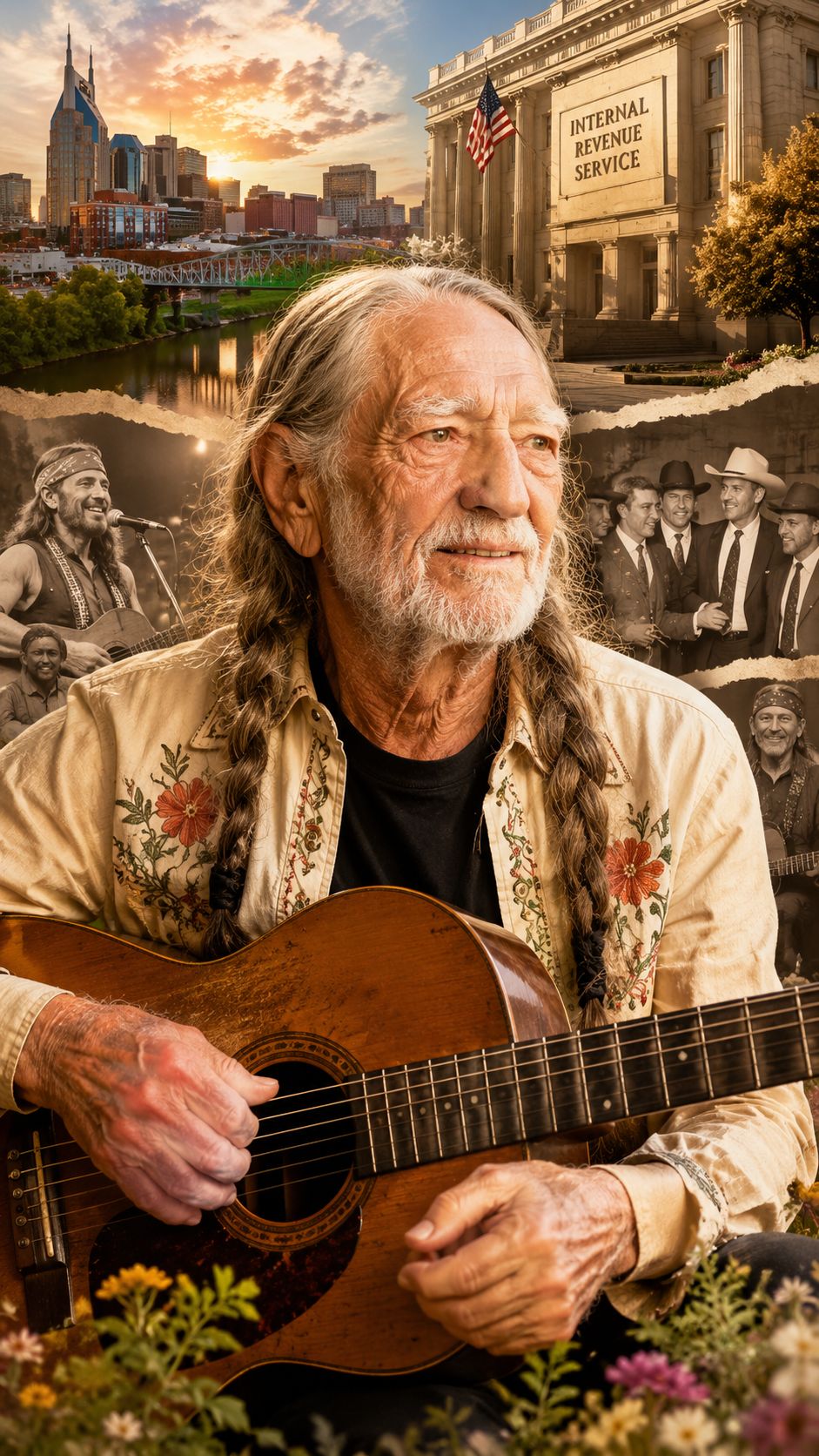
There are legends in music, and then there is Willie Nelson.
For more than seven decades, the red-headed stranger has drifted through American culture like a living ghost of another era—an artist who has somehow survived every storm that should have ended him long ago. He endured the brutal machinery of Nashville, watched friends and rivals disappear, battled financial ruin at the hands of the IRS, survived countless health scares, and somehow emerged on the other side still touring, still singing, and still smiling.
In an industry where fame burns hot and fast, Willie Nelson has become something far rarer than a superstar. He has become a medical and cultural mystery.
How is a man who lived through the excesses of the music business, smoked marijuana with near-mythical consistency, logged millions of highway miles, and faced repeated respiratory challenges still standing while so many of his contemporaries are gone?
The answer lies somewhere between science, resilience, genetics, purpose, and an almost supernatural refusal to quit.
His story is not simply about survival. It is about endurance. It is about reinvention. And it is about a man who turned every setback into another chapter of an impossible journey.
Some artists leave behind a legacy. Willie Nelson somehow became his own living legacy.
The Nashville Machine Never Broke Him
When Willie Nelson arrived in Nashville during the early 1960s, he did not look like a future country icon.
The city preferred polished performers with clean-cut images. Willie was different. His voice sounded unconventional. His phrasing ignored traditional rules. His appearance seemed out of place among the carefully manufactured stars of the era.
Yet behind that unusual exterior was one of the greatest songwriters country music had ever seen.
Songs such as “Crazy”, famously recorded by Patsy Cline, transformed him from struggling musician into one of the most respected writers in the business. Soon, classics like “Night Life” and “Hello Walls” further established his reputation.
But songwriting success did not immediately translate into recording stardom.
The traditional Country Music establishment often struggled to understand him. Rather than conform, Willie eventually became one of the leaders of the Outlaw Country movement, alongside figures like Waylon Jennings.
That decision changed everything.
Outlaw Country rejected the polished formulas of mainstream Nashville and embraced artistic freedom. It gave Willie the room to become exactly who he was meant to be.
Instead of changing himself to fit Nashville, Willie Nelson forced Nashville to expand around him.
The IRS Nightmare That Should Have Ended His Career
Few artists have experienced a financial collapse as public and devastating as Willie’s battle with the IRS.
In the late 1980s and early 1990s, Willie Nelson faced one of the largest tax debts ever associated with a celebrity. The government claimed he owed millions of dollars in unpaid taxes and penalties.
His assets were seized.
Properties were taken.
Financial advisors disappeared.
Many observers assumed his career was finished.
For most entertainers, such a catastrophe would have triggered retirement or permanent decline. Instead, Willie did something extraordinary.
He kept working.
He continued performing.
He released the now-famous album “The IRS Tapes: Who’ll Buy My Memories?”, using music itself as a tool to help pay down his debt.
The move became one of the most remarkable comeback stories in entertainment history.
Rather than hiding from humiliation, he confronted it publicly.
Years later, the debt was resolved.
His reputation survived.
His fan base became even more loyal.
The crisis revealed a defining characteristic of Willie Nelson: he never wasted energy pretending life was perfect.
The Medical Mystery Nobody Can Fully Explain
Perhaps the most fascinating chapter of Willie’s story is his physical survival.
Many of his peers from the golden age of Country Music are gone. Others retired decades ago due to declining health.
Yet Willie continues performing well into his nineties.
Medical experts often point to several possible explanations.
First, genetics may play a significant role. Some individuals possess extraordinary biological resilience, allowing them to recover from stressors that would severely impact others.
Second, Willie dramatically adjusted aspects of his lifestyle over time. While often associated with marijuana culture, he made important decisions regarding other habits as health concerns emerged.
He has openly discussed respiratory issues throughout his life and eventually changed behaviors that were affecting his lungs.
Third, he never stopped moving.
Unlike many aging performers who become sedentary, Willie remained active. He has long practiced exercise routines and has spoken about the importance of staying physically engaged.
But perhaps the most overlooked factor is psychological.
Researchers increasingly recognize that purpose can influence longevity. People with strong reasons to wake up each morning often demonstrate greater resilience during aging.
For Willie Nelson, music was never merely a profession.
It was oxygen.
Some people retire from work. Willie Nelson never retired from purpose.
Outliving an Entire Generation
The list of country legends who shared stages and charts with Willie reads like a hall of fame memorial.
Many of the giants who defined classic Country Music have passed away. Yet Willie remains one of the last living bridges to multiple eras of American music history.
He witnessed the rise and fall of countless trends.
He saw vinyl give way to cassette tapes.
Cassette tapes gave way to CDs.
CDs gave way to streaming.
Throughout every technological revolution, Willie Nelson endured.
His longevity is not merely biological. It is artistic.
While many veteran performers became trapped by nostalgia, Willie continued collaborating with younger artists and exploring new creative avenues.
That willingness to evolve kept him culturally relevant long after industry experts predicted his decline.
The Secret Ingredient: Authenticity
There may be one final explanation for Willie’s extraordinary survival.
Authenticity.
From the beginning, audiences sensed that Willie Nelson was never performing a character.
The braids.
The weathered voice.
The philosophical outlook.
The rebellious independence.
It was all real.
In an entertainment world often built on image management, Willie offered something increasingly rare: honesty.
Fans did not merely admire him.
They trusted him.
That trust created a bond stronger than marketing campaigns or chart positions.
When financial disaster struck, fans stayed.
When health scares emerged, fans worried.
When he returned to the stage, fans celebrated.
Because Willie represented something larger than celebrity.
He represented endurance itself.
Every wrinkle tells a story. Every song carries a memory. Every performance feels like a victory over time.
Why Willie Nelson Still Matters Today
The incredible story of Willie Nelson is not ultimately about taxes, health, fame, or even music.
It is about persistence.
His life demonstrates that success is not measured by avoiding hardship. It is measured by continuing after hardship arrives.
He survived the pressures of Nashville.
He survived financial collapse.
He survived health challenges.
He survived changing eras.
And somehow, against every prediction, he continues to stand.
That is why the world remains fascinated by him.
Not because he is perfect.
Not because he is immortal.
But because each new appearance feels like another reminder that resilience can sometimes accomplish what logic cannot.
The medical mystery of Willie Nelson may never be fully solved. Scientists can analyze genetics. Doctors can evaluate health records. Historians can document milestones.
Yet none of those explanations completely capture what makes his story extraordinary.
Somewhere between determination, artistry, humor, and heart, Willie Nelson found a way to keep going.
And after all these years, America is still listening.