 By admin
INTRODUCTION:
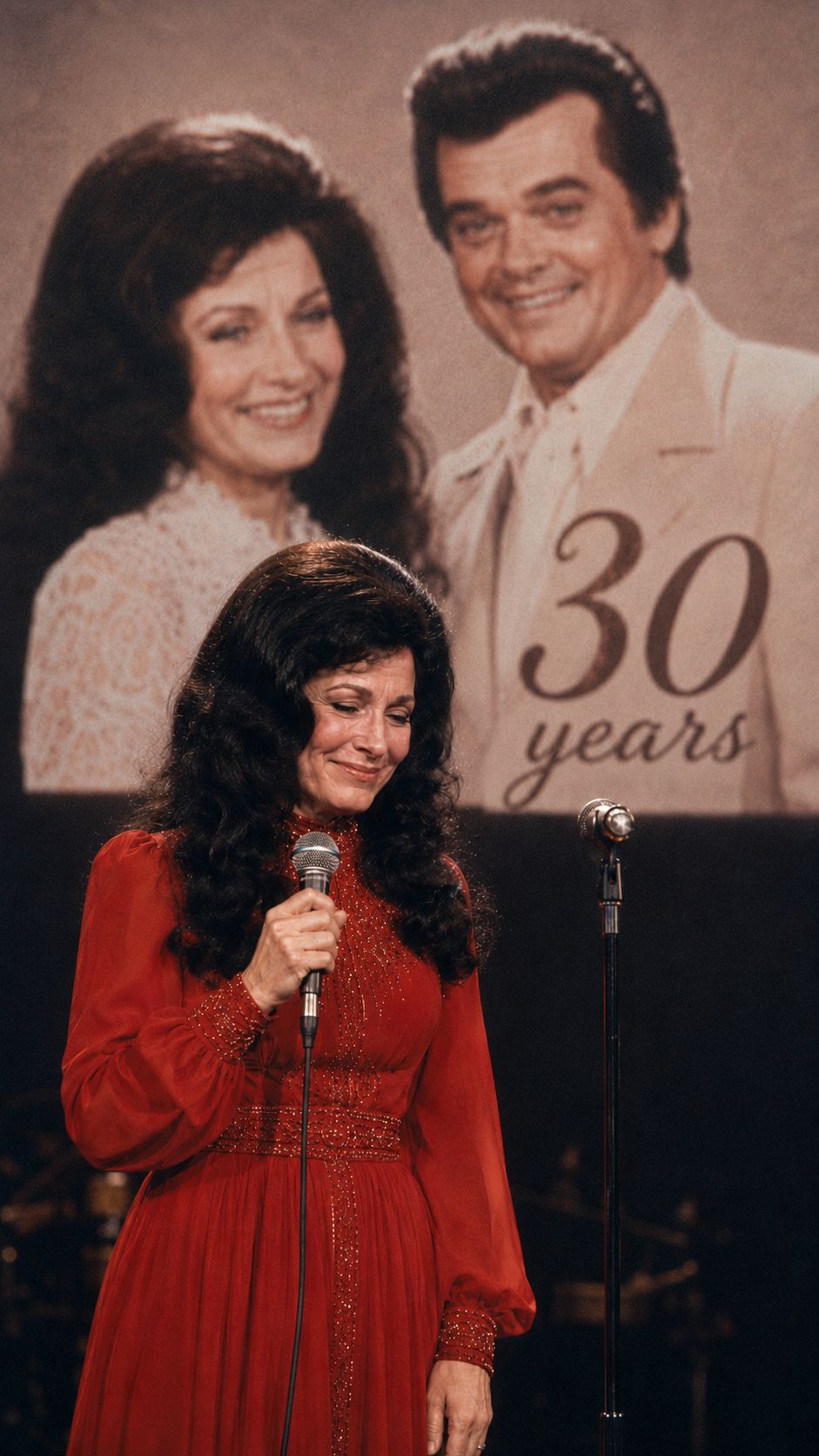
There are partnerships in Country Music that produce hit records, and then there are partnerships that transcend the charts and become part of the emotional fabric of the genre itself. The story of Loretta Lynn and Conway Twitty belongs firmly in the latter category. Together, they created a musical chemistry so natural, so believable, that audiences often felt they were witnessing real-life conversations unfolding through song.
When Conway Twitty died suddenly in 1993, the loss sent shockwaves through the country music world. Fans mourned the passing of one of the genre’s most distinctive voices, but for Loretta Lynn, the tragedy was deeply personal. She had not merely lost a duet partner. She had lost a friend, a confidant, and the musical counterpart who helped define one of the most successful collaborations in country music history.
For decades afterward, whenever Loretta Lynn stepped onto a stage and performed the songs that had once belonged to both of them, there was an invisible presence beside her. The microphone stood empty, but the memories remained alive. Audiences could see it in her eyes and hear it in her voice. Behind every note was a reminder of a friendship that death could not erase.
This is the story of how one partnership changed Country Music forever—and how its absence echoed for more than thirty years.
The Magic of a Once-in-a-Lifetime Partnership
The history of Country Music is filled with legendary duos, but few achieved the balance that Loretta Lynn and Conway Twitty found together. Individually, they were already stars. Loretta Lynn had become the voice of working-class women, delivering songs that reflected real-life struggles, independence, and resilience. Conway Twitty, meanwhile, possessed one of the smoothest and most recognizable voices in the genre.
When they joined forces in the early 1970s, something extraordinary happened.
Their voices complemented each other perfectly. Loretta Lynn’s earthy authenticity blended effortlessly with Conway Twitty’s rich romantic delivery. Together, they transformed duets into emotional storytelling experiences.
Songs like “After the Fire Is Gone,” “Lead Me On,” and “Louisiana Woman, Mississippi Man” became instant classics. These records were not merely performances; they felt like conversations between two people who understood each other completely.
“They didn’t just sing the songs. They lived inside them.”
Listeners believed every word because the chemistry felt genuine. Their playful banter, mutual respect, and natural connection created a level of authenticity that could not be manufactured.
More Than Musical Partners
What made the relationship between Loretta Lynn and Conway Twitty so compelling was that it extended far beyond the recording studio.
Despite constant speculation from fans, theirs was never a romantic relationship. Instead, it was something arguably rarer in the entertainment industry: a deep and enduring friendship built on trust.
They spent years touring together, recording together, and sharing countless moments behind the scenes. Success often creates distance between artists, but the opposite seemed true for them. Every performance strengthened the bond audiences could already sense.
Loretta Lynn often spoke warmly about Conway Twitty, describing him as someone who brought joy and professionalism wherever he went. He understood her timing, her humor, and her instincts as a performer.
That understanding cannot be taught. It develops only through years of shared experiences.
As a result, their performances never felt rehearsed. They felt alive.
The Day Everything Changed
In June 1993, the country music world received devastating news.
Conway Twitty suffered an abdominal aortic aneurysm while on tour and passed away shortly afterward. He was only 59 years old.
For fans, it was the loss of a superstar.
For Loretta Lynn, it was the loss of someone irreplaceable.
The suddenness of his death made the tragedy even harder to accept. There had been no farewell tour, no final performance, no opportunity to prepare for a future without him.
One day he was there.
The next day he was gone.
“When a great voice disappears, the silence can be deafening.”
Many artists lose collaborators during their careers. Yet some partnerships become so intertwined that the absence creates a void impossible to fill.
That was the reality Loretta Lynn faced.
Singing Alone
After Conway Twitty’s death, the songs remained.
Fans still wanted to hear “After the Fire Is Gone.”
They still requested “Lead Me On.”
They still cherished “Louisiana Woman, Mississippi Man.”
But now there was only one voice standing on stage.
For many performers, revisiting those songs would have been too painful. Yet Loretta Lynn continued to sing them because she understood that the music belonged not only to her memories but also to the millions of fans who had embraced their partnership.
Each performance became an act of remembrance.
The empty microphone beside her carried enormous symbolism. It represented the friend who should have been there. The partner whose harmony had once completed every verse.
Audience members often noticed the emotion in her face whenever those songs began.
She smiled.
Sometimes she laughed while recalling stories.
And sometimes tears appeared.
Not because the memories hurt, but because they mattered.
Why Their Duets Still Endure
The enduring power of Loretta Lynn and Conway Twitty’s catalog lies in its authenticity.
Modern listeners continue discovering these recordings because the emotions remain timeless. Love, heartbreak, devotion, humor, and companionship are themes that never lose relevance.
Unlike many studio-created pairings, this duo felt organic.
When Loretta Lynn sang, audiences heard honesty.
When Conway Twitty answered, audiences heard sincerity.
Together, they created a dialogue that reflected real human relationships.
That authenticity explains why their music continues to resonate decades after its release.
The songs are historical artifacts, but they are also living memories.
A Legacy Beyond Awards
Both artists accumulated remarkable achievements throughout their careers. They earned awards, chart success, and industry recognition.
Yet statistics alone cannot explain their impact.
Their greatest accomplishment may have been demonstrating what genuine artistic partnership looks like.
In an industry often driven by competition and ego, Loretta Lynn and Conway Twitty showed the power of mutual respect.
They elevated each other’s strengths.
They celebrated each other’s success.
And together, they created music that outlived them both.
“Some duets end when the recording stops. The greatest ones echo forever.”
Even after Conway Twitty was gone, his voice continued living through every memory, every record, and every stage performance where Loretta Lynn carried their songs forward.
The Empty Microphone That Said Everything
Perhaps the most moving image of all is not found on a record cover or in a television special.
It is the image of Loretta Lynn standing alone, singing songs that once required two voices.
Beside her stands an empty microphone.
To most people, it is simply a piece of stage equipment.
To those who understood their history, it represented something far deeper.
It symbolized friendship.
It symbolized loyalty.
It symbolized a connection that survived long after death.
For more than thirty years, every time Loretta Lynn looked toward that empty space, she was acknowledging a partner who remained present in spirit.
The audience heard only one voice.
But in her heart, the harmony never stopped.