 By admin
 INTRODUCTION:
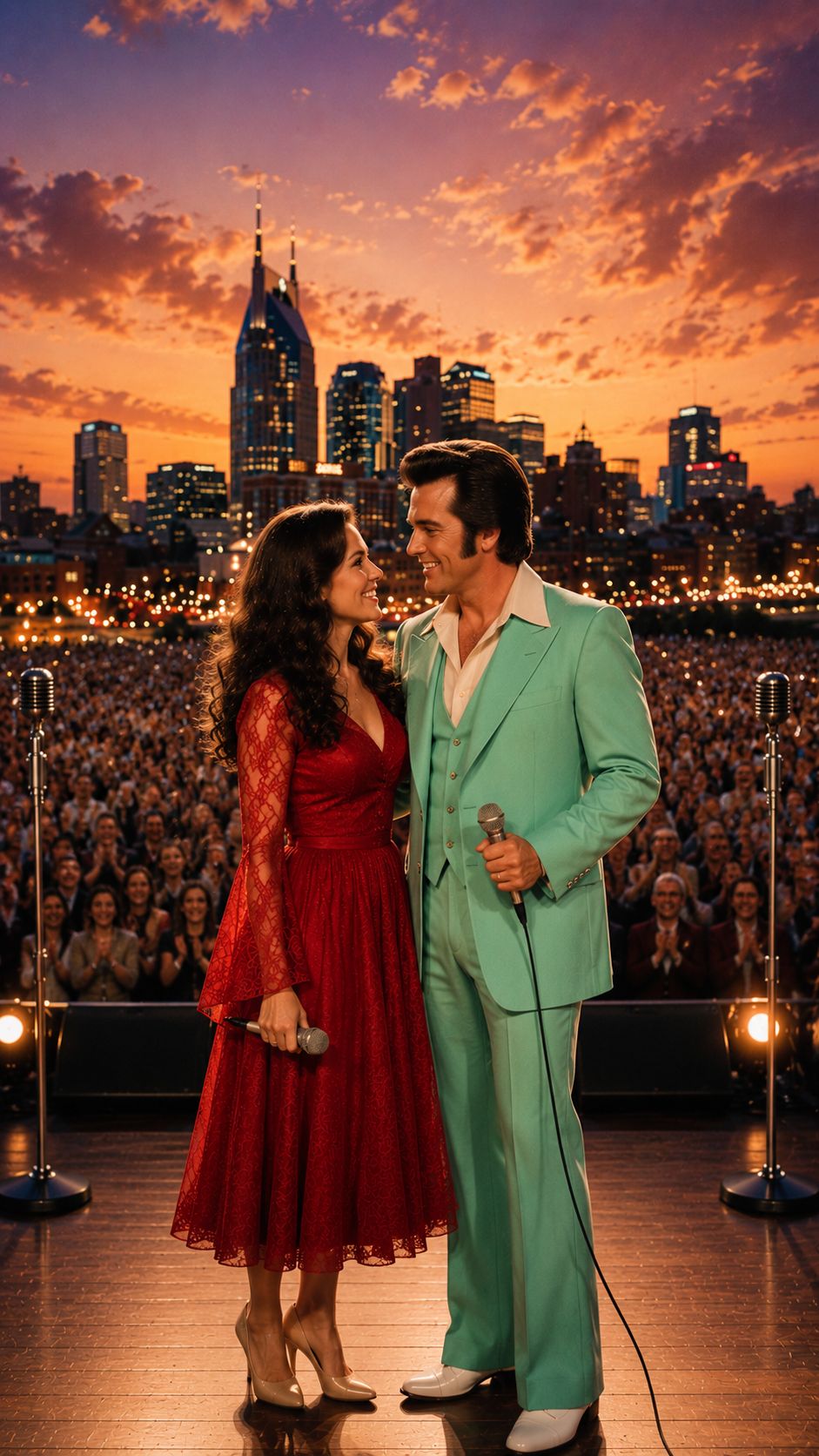
There are duos in country music, and then there are legends whose connection becomes larger than the songs they sing. Few partnerships in the history of Country Music have generated more fascination, speculation, and emotional investment than Conway Twitty and Loretta Lynn. For more than a decade, their performances captivated audiences across America, creating a kind of magic that seemed almost impossible to manufacture. Every glance, every smile, every playful exchange on stage felt authentic. Fans didn’t just hear the music—they believed they were witnessing a love story unfold before their eyes.
The chemistry between Conway Twitty and Loretta Lynn was so convincing that rumors followed them everywhere. Audiences wondered whether the passion they projected through songs like “Louisiana Woman, Mississippi Man” and “After the Fire Is Gone” existed beyond the spotlight. Nashville insiders whispered. Reporters asked uncomfortable questions. Fans debated endlessly.
What made the situation remarkable was that both artists were married to other people throughout their partnership. Yet their performances felt so intimate that many simply refused to believe the relationship was strictly professional.
The truth behind their legendary chemistry reveals something even more fascinating than a secret romance. It tells the story of two master performers whose artistic connection became so powerful that it challenged the boundaries between reality and entertainment, leaving a lasting mark on the history of Country Music.
The Perfect Storm of Talent and Timing
When Loretta Lynn and Conway Twitty began recording together in the early 1970s, both were already established stars. Loretta Lynn had become the voice of working-class women in Country Music, bringing authenticity and honesty to every recording. Conway Twitty, meanwhile, possessed one of the most recognizable voices in the genre, capable of delivering tenderness, heartbreak, and passion with remarkable ease.
Separately, they were giants.
Together, they became something else entirely.
Their first major duet success, “After the Fire Is Gone,” immediately demonstrated that their voices complemented each other in extraordinary ways. The song explored forbidden emotions and complicated relationships, themes that required believable emotional tension.
They delivered exactly that.
Audiences didn’t hear two singers performing a song. They heard two people living it.
The success was instant. Fans wanted more. Record labels wanted more. Radio stations couldn’t get enough. Soon, the duo became one of the defining partnerships of the 1970s Country Music era.
Why Fans Believed the Rumors
The rumors surrounding Conway Twitty and Loretta Lynn didn’t emerge from nowhere.
Unlike many duet partners, they appeared completely comfortable with each other. Interviews revealed genuine affection and mutual respect. Their stage performances featured playful teasing, flirtatious banter, and a level of ease rarely seen between entertainers.
Many observers struggled to separate performance from reality.
Part of the problem was that both artists understood storytelling at an elite level. They knew how to sell a song emotionally. When they sang about desire, regret, or devotion, they committed fully to the narrative.
Songs such as “Louisiana Woman, Mississippi Man,” “Lead Me On,” and “Feelins'” intensified public speculation. The lyrics often portrayed lovers navigating complicated emotional terrain. Combined with their obvious comfort around one another, the performances became almost too believable.
In today’s social media age, such speculation would dominate headlines for months. In the 1970s, it spread through fan clubs, magazines, radio discussions, and backstage gossip.
The mystery became part of the phenomenon.
The Reality Behind the Chemistry
The most surprising truth is that the chemistry wasn’t built on a secret romantic relationship.
Instead, it was built on trust.
Both Loretta Lynn and Conway Twitty repeatedly addressed the rumors over the years. Their accounts remained remarkably consistent. They described each other as close friends, trusted collaborators, and musical soulmates.
That distinction is important.
A romantic relationship is one kind of connection. An artistic partnership can be another entirely.
Loretta Lynn often spoke about how naturally they worked together. They understood each other’s timing, instincts, and emotional delivery. Each knew exactly when to push a moment and when to pull back. That level of understanding can create extraordinary performances without requiring romance.
The greatest illusion wasn’t that they loved each other. It was that they could make millions believe it night after night.
In many ways, their partnership represented the highest level of professional artistry. They mastered emotional authenticity without blurring personal boundaries.
The Nashville Tension Nobody Talks About
While fans celebrated the duo, the intense public fascination occasionally created challenges behind the scenes.
Nashville has always been a town built on relationships, reputations, and image. Persistent rumors surrounding Conway Twitty and Loretta Lynn inevitably affected conversations throughout the industry.
Their spouses occasionally found themselves answering questions generated by fan speculation. Industry insiders wondered whether the rumors might eventually become a distraction. Some observers worried that the public’s obsession with their perceived romance could overshadow their musical achievements.
For a period, the discussion around the duo became nearly as significant as the music itself.
That created a unique tension.
The duo had become victims of their own success. The more convincing their performances became, the more difficult it became for audiences to accept the reality behind them.
Ironically, the very quality that made them superstars also fueled the controversy.
The Songs That Defined an Era
The partnership produced a remarkable catalog of music that remains influential decades later.
“After the Fire Is Gone” established the template.
“Lead Me On” showcased their emotional depth.
“Louisiana Woman, Mississippi Man” demonstrated their playful energy.
“Feelins'” highlighted their romantic vocal interplay.
These recordings helped define the sound of mainstream Country Music during the 1970s. They balanced traditional storytelling with contemporary production while maintaining emotional authenticity.
What stands out today is how fresh many of these recordings still sound. The emotional communication remains powerful because it was rooted in genuine artistic understanding rather than manufactured celebrity drama.
The songs survived because the connection was real—even if it wasn’t romantic.
A Partnership That Could Never Be Recreated
Modern music executives frequently attempt to engineer chemistry between artists. Record labels pair singers together, hoping to replicate the magic of legendary duos.
Yet partnerships like Conway Twitty and Loretta Lynn remain exceptionally rare.
Why?
Because chemistry cannot be manufactured.
It emerges from mutual respect, complementary strengths, shared experience, and emotional intelligence. Both artists brought decades of life experience into their performances. They understood hardship, success, family responsibilities, and the emotional complexities explored in their songs.
That depth gave their performances credibility.
Their greatest love story was not a romance. It was a friendship expressed through music.
The public may have spent years searching for hidden secrets, but the real story was sitting in plain sight.
The Lasting Legacy
Today, discussions about Conway Twitty and Loretta Lynn still return to the same question: Was there something more between them?
The enduring fascination speaks to the extraordinary effectiveness of their work.
The truth is ultimately more impressive than the rumors. Two artists created one of the most believable musical partnerships in history without relying on scandal, controversy, or tabloid drama. Their connection came from professionalism, trust, and a shared commitment to storytelling.
In an industry often driven by image, they demonstrated the enduring power of genuine artistry.
The chemistry that nearly broke Nashville wasn’t the result of a secret affair. It was the result of two masters of Country Music reaching a level of emotional communication so profound that audiences could not distinguish performance from reality.
And perhaps that is the highest compliment any artist can receive.