 By admin
 INTRODUCTION:
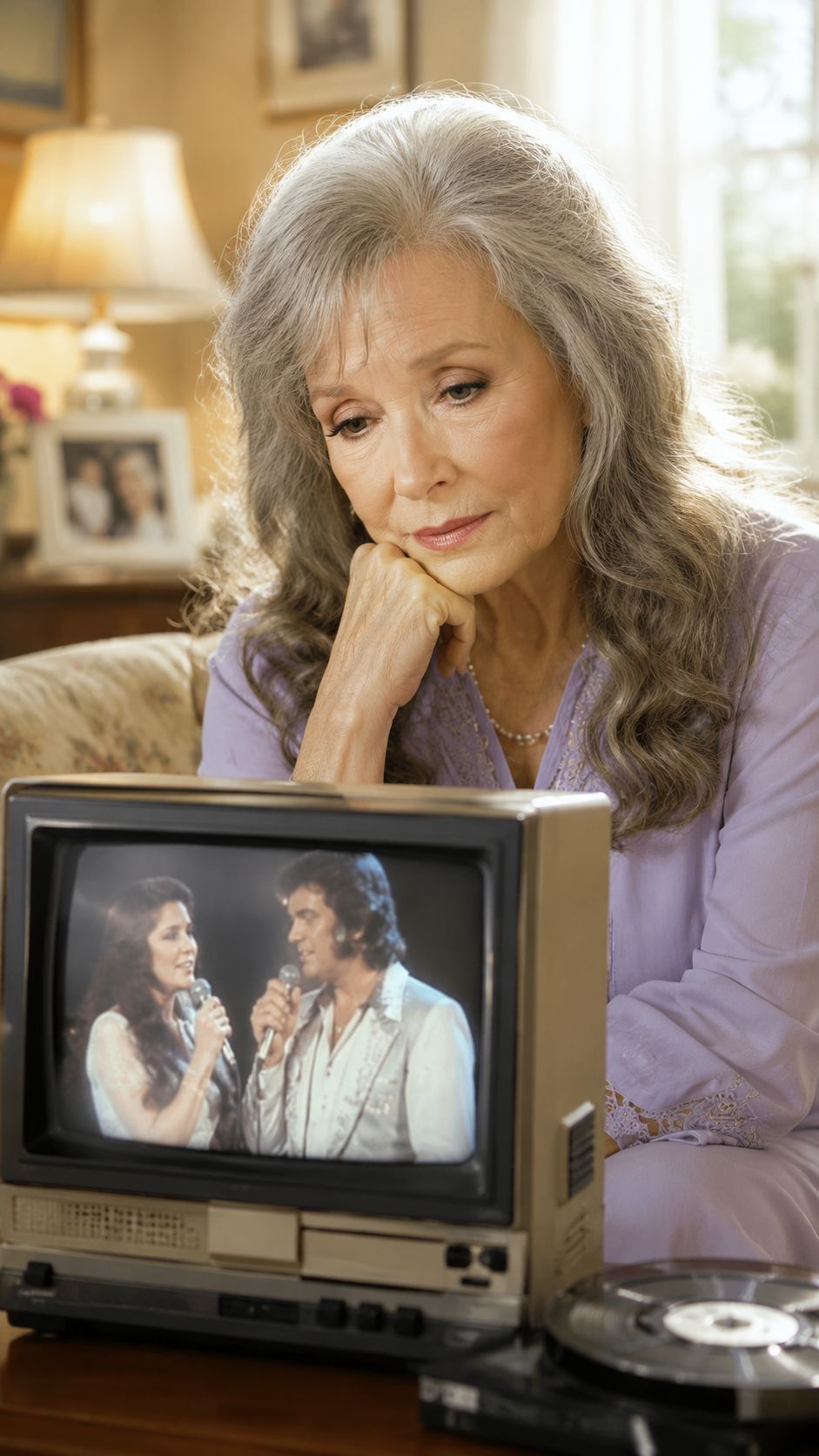
Few stories in Country Music carry the emotional weight of Loretta Lynn’s journey through love, friendship, fame, and devastating loss. Throughout her remarkable career, she stood as one of the genre’s most authentic voices—a woman who transformed everyday struggles into timeless songs that resonated across generations. Yet behind the triumphs, chart-topping records, and legendary status was a grief that never fully healed.
For decades, Loretta Lynn shared a rare artistic connection with Conway Twitty, a partnership that transcended ordinary musical collaboration. Together, they created some of the most beloved duets in Country Music history, blending passion, humor, and emotional honesty into performances that felt undeniably real. Fans often believed they were witnessing more than two singers harmonizing—they were witnessing two souls communicating through song.
When Conway Twitty died suddenly in 1993, the loss shook the country music world. But for Loretta Lynn, it was profoundly personal. She had lost more than a duet partner. She had lost a trusted friend, a creative equal, and the one artist who instinctively understood her musical language.
The public saw the icon continue performing, smiling, and preserving her legacy. What many did not see was the silent sorrow she carried behind the scenes. The absence of her greatest musical companion left a void that no award, audience, or accomplishment could ever truly fill.
The Rare Magic of Loretta Lynn and Conway Twitty
In the history of Country Music, few partnerships have generated the chemistry achieved by Loretta Lynn and Conway Twitty. Beginning in the early 1970s, the duo became a dominant force in the genre, producing hit after hit that captured the complexities of romance, marriage, and human relationships.
Songs such as “After the Fire Is Gone”, “Louisiana Woman, Mississippi Man”, “Lead Me On”, and “As Soon as I Hang Up the Phone” became instant classics. Their recordings felt effortless, but that magic came from a deep mutual respect and understanding.
Unlike many duet pairings created by record labels, the bond between Loretta Lynn and Conway Twitty developed organically. Both artists came from humble beginnings and understood the emotional realities of working-class America. Their shared experiences gave authenticity to every lyric they delivered.
Listeners often wondered whether their chemistry reflected a hidden romance. Both artists consistently denied those rumors. What existed between them was something arguably rarer—a friendship rooted in trust and artistic devotion.
“When they sang together, it felt less like a performance and more like a conversation between two hearts.”
Their voices complemented one another perfectly. Conway Twitty’s smooth, expressive delivery balanced Loretta Lynn’s powerful, emotionally direct style. Together, they created a sound that became one of the defining signatures of the 1970s Country Music era.
The Sudden Loss That Changed Everything
On June 5, 1993, tragedy struck.
While preparing for a performance, Conway Twitty suffered an abdominal aortic aneurysm. He was rushed to the hospital but passed away shortly afterward at the age of 59.
The news stunned the music industry. Fans mourned the loss of one of country music’s most beloved voices. For Loretta Lynn, however, the shock carried an entirely different dimension.
She was not merely grieving a fellow performer.
She was grieving someone who had been an integral part of her life for more than two decades.
The suddenness of his death made the loss even harder to process. There was no opportunity for farewell conversations, no final recording session, no chance to express everything that years of friendship had meant.
“One day he was there. The next day he was gone. The silence was overwhelming.”
For an artist whose career had been built around storytelling and communication, words suddenly became inadequate.
Performing Through Pain
One of the most remarkable aspects of Loretta Lynn’s character was her resilience.
Throughout her life, she faced numerous hardships—poverty, personal struggles, health challenges, and family tragedies. Yet she consistently transformed pain into strength.
After the death of Conway Twitty, she continued to perform and maintain her public responsibilities. To audiences, she remained the beloved Queen of Country Music.
Behind the scenes, however, the absence was impossible to ignore.
Every stage where they once stood together became a reminder. Every duet brought memories flooding back. Every fan request for one of their classic songs reopened emotional wounds.
Many artists can replace a collaborator. What Loretta Lynn lost was irreplaceable.
A true musical soulmate is not simply someone who shares a microphone. It is someone who instinctively understands timing, emotion, phrasing, and artistic intention. That kind of connection cannot be manufactured.
The songs remained.
The records endured.
But the living partnership was gone forever.
Why Their Connection Was So Unique
The term “musical soulmate” is often overused. In the case of Loretta Lynn and Conway Twitty, it feels entirely appropriate.
Both artists represented authenticity at a time when Country Music was evolving rapidly. They remained grounded in storytelling traditions while still achieving commercial success.
Their duets explored themes that resonated deeply with listeners:
- Love and desire
- Marital conflict
- Loyalty and sacrifice
- Longing and reconciliation
- Everyday struggles
Rather than presenting idealized romance, they portrayed relationships as complex and imperfect.
This realism created a bond not only between the singers but also with their audience.
Fans felt they knew them personally.
That emotional investment explains why the death of Conway Twitty affected so many people. It felt as though part of a beloved story had ended unexpectedly.
For Loretta Lynn, that story had been one of the most meaningful chapters of her career.
Carrying the Legacy Forward
As the years passed, Loretta Lynn continued to honor the memory of Conway Twitty through interviews, performances, and reflections on their partnership.
She frequently spoke about the respect she had for him as both an artist and a friend. Whenever discussions turned to legendary duets, his name remained inseparable from hers.
Their recordings continued introducing new generations to the golden age of Classic Country Music.
Even as country music evolved through the 1990s, 2000s, and beyond, the emotional power of songs like “Louisiana Woman, Mississippi Man” and “After the Fire Is Gone” remained undiminished.
The enduring popularity of those recordings serves as a testament to what they created together.
“Some voices fade with time. Some partnerships become history. But a truly extraordinary connection continues to live every time the music plays.”
The Silent Grief Behind the Legend
When people remember Loretta Lynn, they often focus on her extraordinary achievements: Hall of Fame honors, chart success, groundbreaking songwriting, and cultural impact.
Yet her story is also one of profound emotional endurance.
The loss of Conway Twitty revealed a quieter side of her life—a side defined not by fame but by friendship, loyalty, and heartbreak.
She carried that grief with dignity, rarely allowing it to overshadow her work. But those who understood the depth of their partnership recognized that a permanent piece of her artistic world disappeared in 1993.
Their relationship demonstrated that the strongest bonds in music are not always romantic. Sometimes they are built upon years of shared experiences, mutual trust, and creative understanding.
For Loretta Lynn, losing Conway Twitty meant losing the one person who had walked beside her through some of the most memorable moments in Country Music history.
And although she continued to inspire millions, the silence left behind by her ultimate musical soulmate was a silence she carried for the rest of her life.