 By admin
 INTRODUCTION:
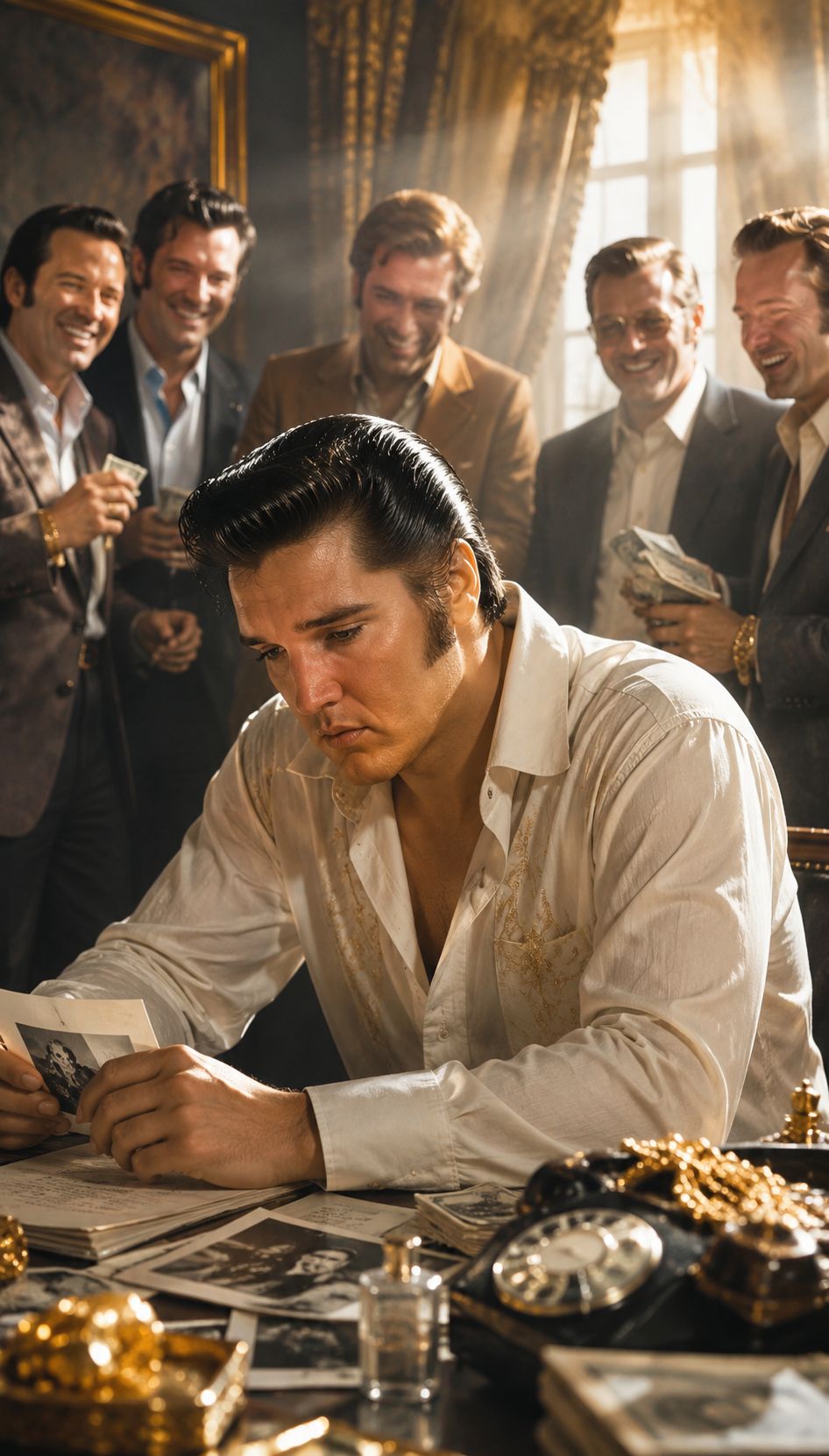
For millions around the world, Elvis Presley was more than a superstar. He was a cultural revolution, a symbol of hope, rebellion, and pure musical magic. Fans saw the dazzling jumpsuits, the sold-out arenas, the roaring crowds, and the endless adoration. They saw The King.
What they rarely saw was the lonely man behind the crown.
Behind the gates of Graceland, beyond the flashbulbs and screaming fans, Elvis increasingly surrounded himself with a tightly knit group of friends, bodyguards, confidants, and companions known collectively as the Memphis Mafia. Dressed in matching dark suits and always at his side, they became one of the most recognizable entourages in entertainment history.
But were they loyal protectors—or enablers who contributed to the tragic downfall of the world’s biggest star?
The answer, like most stories involving Elvis, is heartbreakingly complicated.
From the beginning, the Memphis Mafia was born out of necessity. As Elvis’s fame exploded in the mid-1950s, normal life became impossible. He could no longer go to the movies, drive around Memphis unnoticed, or simply spend time with old friends without causing chaos. Fame isolated him.
So Elvis did what many lonely people do—he pulled those closest to him even closer.
Childhood friends, cousins, former schoolmates, and trusted associates gradually became permanent fixtures in his life. Men like Red West, Sonny West, Joe Esposito, Marty Lacker, and Jerry Schilling weren’t merely employees. Many genuinely loved Elvis. Some had known him before the world discovered him.
At first, the arrangement seemed ideal.
Elvis was famously generous—almost impossibly generous. He bought cars, houses, jewelry, and vacations for those around him. He paid salaries, covered debts, and often handed out expensive gifts on impulse.
“If Elvis loved you, he gave without limits.”
That generosity became legendary.
But generosity can also become a prison.
As years passed, a troubling dependency emerged. Many members of the Memphis Mafia relied entirely upon Elvis for their livelihood. Their homes, lifestyles, and financial security were directly tied to maintaining their place beside the King.
And therein lay the tragedy.
Because when your entire existence depends upon keeping one man happy, telling him difficult truths becomes nearly impossible.
By the late 1960s and early 1970s, Elvis was fighting battles few truly understood. The pressures of superstardom, relentless touring, failed relationships, insomnia, physical exhaustion, and increasing prescription medication use created a dangerous storm.
People close to him watched the changes unfold.
They saw the dramatic weight fluctuations.
They witnessed the sleepless nights.
They observed the escalating dependence on prescription drugs.
Many later admitted they were deeply concerned.
Yet concern rarely translated into action.
Instead, a culture of accommodation emerged.
If Elvis wanted to stay awake for days, few challenged him.
If he wanted another prescription, there was often little resistance.
If he canceled commitments, everyone adjusted.
If he isolated himself, the circle simply closed tighter.
Some historians argue that the Memphis Mafia became less of a support system and more of an echo chamber.
“The King had surrounded himself with people who needed him too much to risk displeasing him.”
To be fair, criticizing the Memphis Mafia as villains oversimplifies an incredibly complex reality.
Elvis was not easily controlled.
Friends frequently described him as strong-willed, stubborn, and fiercely independent. When Elvis made a decision, changing his mind was extraordinarily difficult. Even Colonel Tom Parker, his notoriously controlling manager, often struggled to persuade him.
Several members of the entourage later claimed they repeatedly urged Elvis to seek help, rest more, or reduce his medication use.
Some reportedly confronted him directly.
Others attempted interventions.
But confronting Elvis came with consequences.
The most dramatic example occurred in 1976.
Longtime bodyguards Red West, Sonny West, and Dave Hebler—men who had spent years protecting Elvis—were suddenly dismissed.
The firings devastated them.
According to various accounts, the men had grown increasingly worried about Elvis’s deteriorating health and lifestyle. Tensions inside the inner circle had intensified. Questions arose regarding loyalty, honesty, and who truly had Elvis’s best interests at heart.
What happened next remains one of the most controversial chapters in Elvis history.
Feeling betrayed and financially desperate after losing their positions, the former bodyguards collaborated on the explosive book “Elvis: What Happened?”
Published just weeks before Elvis died in August 1977, the book revealed intimate details about his prescription drug use, erratic behavior, and declining physical condition.
The public reaction was immediate and brutal.
Many fans condemned the authors as traitors.
Others viewed the book as a desperate cry for help.
The timing could not have been more devastating.
Elvis was reportedly deeply hurt by the publication.
Friends recalled that he felt profoundly betrayed.
For a man whose greatest fear was abandonment, the emotional wound cut deeply.
“Of all the heartbreaks in Elvis’s life, betrayal by those he considered family may have hurt the most.”
The irony remains haunting.
The very men accused of betraying Elvis insisted they were trying to save him.
Red and Sonny West would later argue that exposing the truth was the only remaining option after years of watching Elvis self-destruct.
Whether history judges them as opportunists or whistleblowers continues to divide fans nearly fifty years later.
Yet the tragedy extends beyond a single book.
The deeper betrayal may have been systemic.
By the mid-1970s, Elvis existed inside a world where nearly everyone depended on him financially, emotionally, or professionally. Such environments often become dangerously insulated.
Truth becomes negotiable.
Difficult conversations disappear.
Protecting the star becomes more important than protecting the person.
Many modern celebrity tragedies reveal similar patterns.
Michael Jackson.
Whitney Houston.
Prince.
Even contemporary stars often struggle with isolation created by extreme fame.
The larger lesson from Elvis’s story is painfully universal.
No human being—regardless of wealth, power, or fame—can thrive without honest relationships.
Elvis desperately craved authenticity.
He longed for unconditional love, spiritual meaning, and genuine friendship. Despite being surrounded by people almost every hour of every day, he frequently spoke about feeling alone.
Jerry Schilling, one of Elvis’s closest lifelong friends and one of the few figures broadly respected across all factions of the Memphis Mafia, has consistently emphasized that Elvis possessed extraordinary kindness and generosity—but also profound loneliness.
That loneliness may have been his greatest vulnerability.
Because lonely people often tolerate unhealthy relationships simply to avoid being abandoned.
And no one feared loneliness more than Elvis Presley.
“The King could command thousands from a stage, yet still feel utterly alone when the curtain fell.”
Today, debates surrounding the Memphis Mafia continue to rage among historians and fans alike.
Were they loyal brothers?
Were they enablers?
Were they victims of fame themselves?
Perhaps they were all three.
What remains undeniable is that the story of Elvis Presley is not merely the story of a music icon. It is the story of a deeply human man searching for trust, companionship, and peace in a world that demanded everything from him.
In the end, the greatest tragedy may not be that Elvis was surrounded by too many people.
It may be that among all those people, he still struggled to find the one thing he needed most:
Someone willing to tell the King the truth—no matter the cost.
VIDEO: