 By admin
 INTRODUCTION:
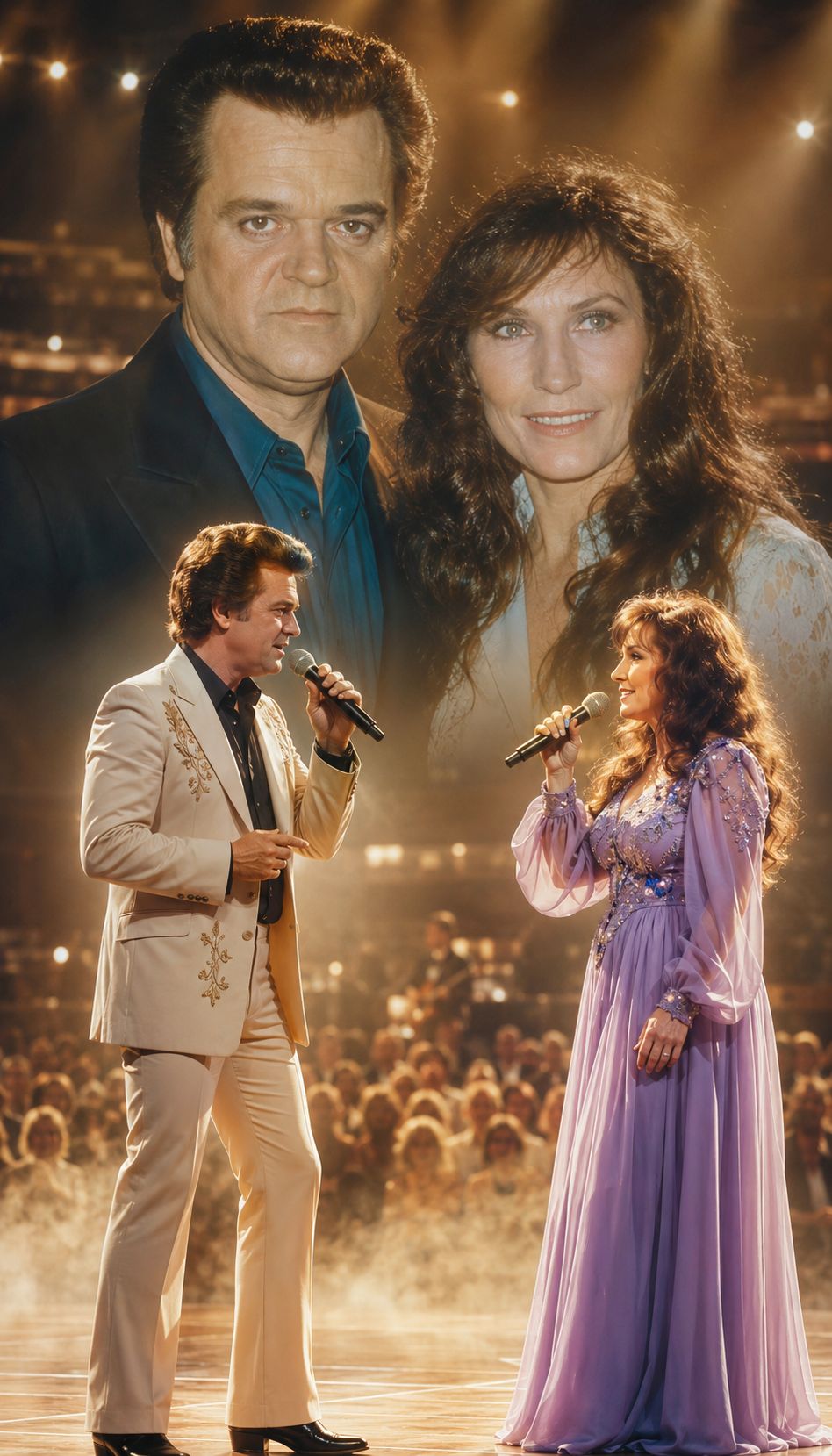
There are ghosts in country music.
Not the kind that haunt old theaters or drift through abandoned honky-tonks after midnight. No—these ghosts live in songs. They linger in scratchy vinyl records, in dusty jukeboxes tucked away in roadside diners, and in the memories of millions who still believe that country music once possessed something modern Nashville can no longer manufacture.
And perhaps no ghost looms larger than the one left behind by Conway Twitty and Loretta Lynn.
Even today, decades after their final performances together, fans still ask the same question:
“Were they secretly in love?”
The rumors have never died.
How could they? When two people stand shoulder to shoulder and sing with the kind of intimacy heard in classics like “After The Fire Is Gone,” “Louisiana Woman, Mississippi Man,” and “As Soon As I Hang Up The Phone,” people naturally begin to wonder where performance ends and real life begins.
Because what Conway and Loretta created wasn’t merely music.
It felt dangerously real.
And that is precisely why no modern duet has ever truly replaced them.
In today’s carefully managed entertainment world, every public appearance is polished. Every interview is rehearsed. Every relationship is packaged for social media consumption.
But Conway and Loretta emerged from an entirely different America.
They were products of hardship.
Loretta Lynn, the coal miner’s daughter from Butcher Hollow, Kentucky, knew poverty so intimately that she often said she could remember going to bed hungry. She married young, raised children while still practically a child herself, and transformed her struggles into songs that forever changed country music.
Conway Twitty, meanwhile, carried an unmistakable aura of mystery. Tall, handsome, smooth-talking, and blessed with one of the most seductive voices ever recorded, Conway possessed a charisma that seemed almost cinematic.
Separately, they were giants.
Together, they became legend.
Their partnership officially began in the early 1970s, when producer Owen Bradley sensed something extraordinary might happen if the two stars recorded together.
He was right.
The first major release, “After The Fire Is Gone,” exploded across country radio.
Listeners were stunned.
The song wasn’t sweet.
It wasn’t safe.
It told the story of two lonely married people finding comfort in each other after passion had disappeared at home.
For conservative America in the early ’70s, that subject matter bordered on scandalous.
Yet audiences couldn’t look away.
Or stop listening.
“Love is where you find it when you find no love at home.”
Those lyrics struck like lightning.
Because Conway and Loretta didn’t simply sing them.
They lived them emotionally.
Fans heard longing.
They heard regret.
They heard temptation.
Most importantly, they heard truth.
Soon, rumors began spreading everywhere.
Concertgoers whispered that no two people could possibly possess such chemistry without sharing something deeper.
Journalists asked questions.
Fans wrote letters.
Radio hosts speculated endlessly.
Were Conway and Loretta secretly involved?
The answer, according to both artists, was always no.
Loretta repeatedly insisted that Conway was like family.
Conway himself laughed off the rumors countless times.
Yet neither artist could fully escape public fascination.
And perhaps that fascination reveals something profound about country music itself.
Country has always thrived on blurred lines.
The greatest country songs feel autobiographical even when they aren’t.
Fans don’t merely consume country music.
They believe it.
When Conway gazed into Loretta’s eyes while performing “Feelins'”, audiences weren’t watching actors.
They were witnessing emotional authenticity.
Real or imagined hardly mattered.
It felt real.
That feeling changed everything.
Today’s country industry rarely allows such ambiguity.
Modern duos are often assembled by record executives, promoted through marketing campaigns, and filtered through publicists before ever reaching audiences.
Nothing is left to chance.
Nothing is left unexplained.
Social media, ironically, has destroyed mystery.
We know what artists ate for breakfast.
We know where they vacation.
We know when relationships begin and end.
The veil has disappeared.
But Conway and Loretta belonged to an era when mystery still mattered.
Fans filled gaps with imagination.
And imagination can be powerful.
“People spent decades trying to prove Conway and Loretta were in love because audiences had never witnessed chemistry that intense before—and perhaps never will again.”
Their concerts often felt less like performances and more like private conversations accidentally shared with thousands.
Watch old footage today.
You’ll see Conway flashing that unmistakable grin.
You’ll see Loretta struggling not to laugh.
You’ll see glances that lasted just long enough to spark another generation of speculation.
You cannot script moments like those.
Yet controversy wasn’t limited to rumors.
Many of their biggest hits challenged traditional morality.
Songs explored adultery, marital dissatisfaction, jealousy, temptation, and emotional loneliness.
At times, critics argued that Conway and Loretta romanticized infidelity.
Others accused them of undermining family values.
But supporters understood something deeper.
They weren’t glorifying human weakness.
They were exposing it.
Country music has always functioned best when it tells uncomfortable truths.
Conway and Loretta dared to sing about feelings many Americans quietly carried but rarely discussed publicly.
Loneliness inside marriage.
Unfulfilled dreams.
Emotional betrayal.
The aching desire to feel seen.
These themes remain timeless because humanity remains timeless.
The tragedy, of course, is that their story eventually ended.
On June 5, 1993, Conway Twitty died unexpectedly at age 59.
Country music lost more than a superstar.
It lost half of an irreplaceable conversation.
Loretta was devastated.
In later interviews, she spoke openly about missing her friend and musical partner.
No replacement was ever seriously considered.
How could there be?
You cannot recreate lightning.
You cannot duplicate history.
And you certainly cannot manufacture decades of trust, affection, and artistic intuition.
“When Conway died, an entire chapter of country music closed forever.”
Even now, younger artists continue searching for that same magic.
Many have achieved enormous commercial success.
Some have produced beautiful collaborations.
But none have fully captured what Conway and Loretta possessed.
Because their greatness wasn’t built solely on talent.
It emerged from imperfection.
From controversy.
From mystery.
From mutual respect.
From lived experience.
From two very different people who somehow discovered an emotional frequency no one else could hear.
And perhaps that is the ghost still haunting country music history.
Not simply the memory of Conway Twitty and Loretta Lynn.
But the haunting realization that certain kinds of artistic chemistry come along only once.
And when they’re gone, they leave behind songs—and questions—that echo forever.
VIDEO: