 By admin
 INTRODUCTION:
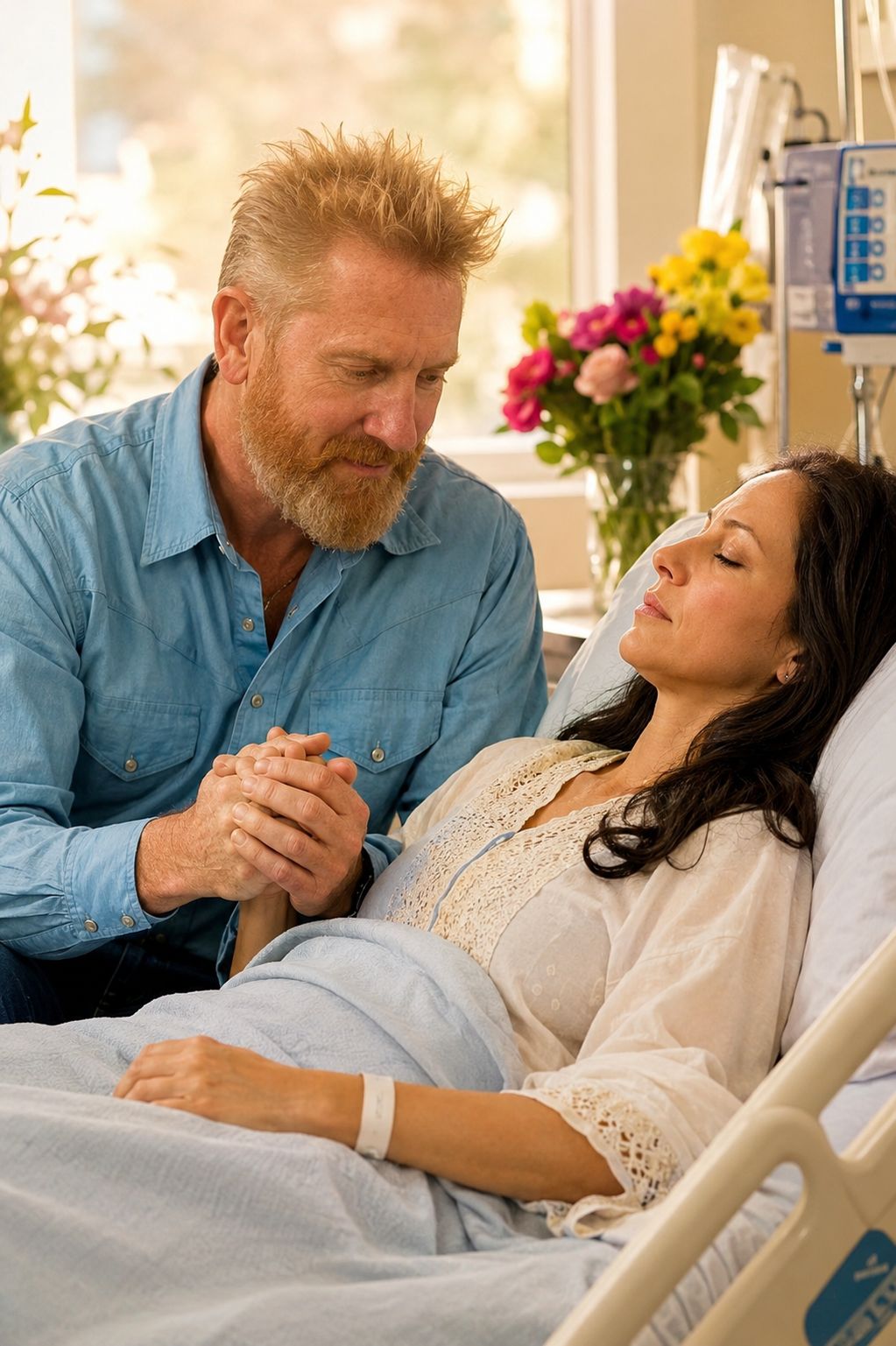
There are love stories that fade with time.
And then there are love stories that continue long after one voice has gone silent.
For millions of country music fans, the story of Joey and Rory Feek has always belonged to the second category.
Their music was simple, honest, and deeply rooted in faith, family, and tradition. But behind the award-winning songs and the gentle harmonies was a real-life story that would eventually break hearts across America. When Joey Feek lost her battle with cervical cancer in March 2016, the world mourned alongside her husband, Rory.
Fans watched as Rory documented Joey’s final months with extraordinary openness and grace. Through blog posts, photographs, and songs, he allowed strangers into the most intimate chapter of their lives. The result was something rare in modern celebrity culture: a story that felt profoundly human.
But while millions grieved Joey’s passing, few truly understood the promise Rory made to his dying wife—or the silent battles he would face trying to keep it.
A Love Story Built on Faith
Long before tragedy entered their lives, Joey and Rory had built a relationship centered on shared values.
They weren’t the typical Nashville power couple.
While many artists chased fame, Joey and Rory chased something else entirely: authenticity. They chose farm life over red carpets, simplicity over stardom, and family over industry expectations.
Their rise began after appearing on Can You Duet in 2008. Though they finished third, audiences instantly connected with their sincerity. Songs like Cheater, Cheater and When I’m Gone showcased not just musical chemistry, but genuine love.
Ironically, When I’m Gone would later take on heartbreaking new meaning.
No one could have predicted how prophetic its lyrics would become.
The Diagnosis That Changed Everything
In 2014, shortly after the birth of their daughter Indiana, Joey was diagnosed with cervical cancer.
At first, there was hope.
Treatments appeared successful. The family celebrated milestones and believed they had overcome the worst.
But cancer returned.
And this time, it was relentless.
As Joey’s health deteriorated, the family made a life-altering decision. Rather than continue aggressive treatments with diminishing chances of success, Joey chose hospice care.
She wanted to spend her remaining days at home, surrounded by the people she loved most.
Rory stood beside her every step of the way.
He became caregiver, husband, father, and emotional anchor—all while quietly preparing for the unimaginable.
“Sometimes the greatest acts of love aren’t spoken from a stage. They’re whispered beside a hospital bed.”
The Promise That Changed Rory Forever
During Joey’s final months, one promise weighed heavily on Rory’s heart.
Joey wanted him to continue living.
She wanted him to keep raising their daughter, Indiana, with faith and joy.
And perhaps most importantly, she wanted him not to allow grief to consume the rest of his life.
For Rory, this was easier promised than done.
How does someone move forward after losing the person who was not only their spouse, but also their artistic partner, best friend, and soulmate?
Yet Rory promised.
He promised Joey that he would continue.
He would keep telling stories.
He would keep making music.
He would keep being present for Indiana.
And he would keep faith at the center of everything.
It sounded noble.
It also became one of the hardest commitments of his life.
Life After Joey Wasn’t a Straight Path
Many fans assumed Rory’s deep faith somehow protected him from overwhelming grief.
The reality was far more complicated.
In the years following Joey’s death, Rory openly admitted that healing wasn’t linear.
There were lonely mornings.
Silent evenings.
Moments when the absence felt unbearable.
The farmhouse they had built together suddenly felt different. Everyday routines became painful reminders of what had been lost.
Even music changed.
For years, Rory struggled with the idea of performing without Joey.
The stage that once represented joy now carried echoes of heartbreak.
“Grief doesn’t end when the funeral is over. Sometimes, that’s when the real journey begins.”
Rory discovered that keeping his promise to Joey didn’t mean “moving on.”
Instead, it meant learning how to move forward while carrying grief.
There is a difference.
And it is a distinction countless widows and widowers understand all too well.
The Silent Battle of Single Fatherhood
Perhaps Rory’s greatest challenge wasn’t public at all.
It happened behind closed doors.
Raising Indiana alone.
Indiana, born with Down syndrome, had always been central to Joey and Rory’s lives. After Joey’s passing, Rory suddenly found himself navigating parenthood without his partner.
Every milestone carried mixed emotions.
First days of school.
Birthdays.
Holiday traditions.
Simple everyday moments.
Each joyful experience was accompanied by the painful realization that Joey wasn’t physically there to witness it.
Rory often wrote about these moments with heartbreaking honesty.
He celebrated Indiana’s growth while simultaneously grieving the mother who should have been standing beside them.
Parenthood became both his greatest blessing and his deepest reminder of loss.
Still, Rory pressed forward.
Because he had promised.
Music Became Both Medicine and Memory
For many artists, creativity serves as an escape.
For Rory, songwriting became survival.
Writing allowed him to process emotions too complex for ordinary conversation.
Books, blog entries, documentaries, and songs became vessels for grief, hope, and remembrance.
Fans found comfort in Rory’s vulnerability because it reflected their own experiences.
He wasn’t presenting himself as a man who had conquered grief.
He was simply a man learning to live with it.
That honesty resonated.
In a culture often uncomfortable with mourning, Rory demonstrated that sorrow and joy can coexist.
One does not cancel out the other.
New Chapters, New Criticism
As years passed, Rory slowly began embracing new chapters in life.
But healing in public comes with consequences.
Every decision Rory made was scrutinized.
Some fans struggled with the idea of him finding happiness again. Others questioned whether moving forward somehow diminished Joey’s memory.
The criticism revealed a difficult truth about public grief: people often become emotionally invested in stories they don’t fully understand.
Yet Rory remained steadfast.
He repeatedly emphasized that loving again—or experiencing joy again—does not erase past love.
Joey’s place in his life, and in his heart, remains permanent.
Nothing changes that.
“Love isn’t replaced. It expands.”
For Rory, keeping his promise to Joey never meant forgetting her.
It meant honoring her by fully living.
Why Rory’s Story Continues to Matter
A decade after Joey’s passing, Rory Feek’s journey still resonates because it speaks to universal human experiences.
Loss.
Faith.
Parenthood.
Second chances.
Endurance.
His story reminds us that grief isn’t something we “get over.” Instead, it becomes part of who we are.
And perhaps that was Joey’s final gift to Rory.
Not merely permission to continue living.
But permission to continue loving.
Today, whether through music, storytelling, or raising Indiana, Rory continues to fulfill the promise he made during those final days.
Not perfectly.
Not without tears.
Not without struggle.
But faithfully.
And maybe that’s the most powerful lesson of all.
Because life after devastating loss isn’t about returning to who we once were.
It’s about becoming someone new while carrying the love that shaped us.
For Rory Feek, Joey may no longer stand beside him on stage.
But in many ways, she is still part of every song, every story, and every step forward.
And perhaps she always will be.
VIDEO: