 By admin
 INTRODUCTION:
There are songs that climb the charts, and then there are songs that quietly rewrite history.
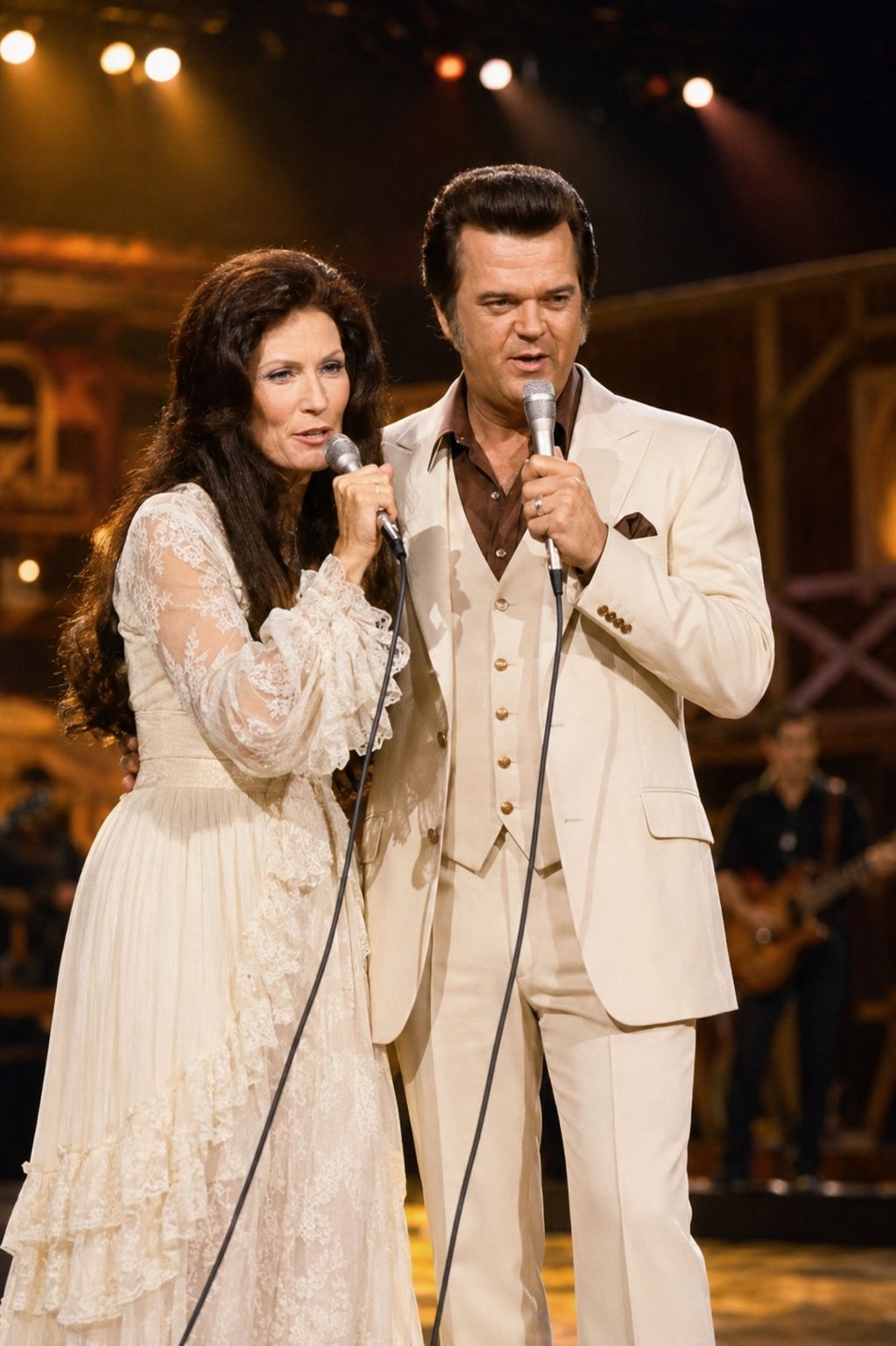
Fifty-five years ago today, a heartbreaking country ballad forever changed the course of country music when Conway Twitty and Loretta Lynn scored their very first No. 1 hit together with “After the Fire Is Gone.” It wasn’t simply another successful single—it was the beginning of one of the greatest musical partnerships Nashville has ever known.
Looking back more than half a century later, it’s remarkable how one song about forbidden love, regret, and emotional longing could still resonate with audiences across generations. While musical trends have come and gone, “After the Fire Is Gone” remains a reminder that the strongest country songs don’t just tell stories—they reveal truths people are often afraid to admit.
“Some songs entertain. Others become part of people’s lives. ‘After the Fire Is Gone’ did both.”
A Risk Worth Taking
In the early 1970s, Conway Twitty was already one of country music’s smoothest voices. Loretta Lynn had established herself as one of the genre’s fiercest storytellers, singing about real women, real marriages, and real struggles long before those themes became fashionable.
Individually, they were stars.
Together?
Nobody knew what to expect.
Record executives understood each artist’s appeal, but pairing two dominant personalities wasn’t guaranteed to work. Would one overshadow the other? Would their styles clash? Would fans accept them as a believable duo?
The answer arrived almost instantly.
The chemistry wasn’t manufactured.
It wasn’t rehearsed into existence.
It simply happened.
From the very first lines of “After the Fire Is Gone,” listeners believed every word.
A Story That Wasn’t Comfortable
Unlike many love songs of its era, “After the Fire Is Gone” refused to offer fairy-tale romance.
Instead, it explored two lonely people trapped in unhappy marriages who found comfort in each other.
That subject matter wasn’t exactly safe.
Country music has always valued honesty, but openly discussing infidelity carried real controversy in 1971.
Yet the song never glorified betrayal.
Instead, it focused on loneliness, emotional emptiness, and the complicated choices people sometimes make when love has disappeared.
That’s why audiences connected with it.
It wasn’t about scandal.
It was about heartbreak.
“The greatest country songs rarely tell us what is right. They tell us what feels real.”
The Voices That Completed Each Other
One reason the song became unforgettable was the extraordinary contrast between Conway and Loretta.
Conway possessed one of the richest, warmest voices country music has ever heard. His delivery was smooth, confident, and emotionally controlled.
Loretta brought grit.
She brought vulnerability.
She brought the unmistakable authenticity of someone who had actually lived the stories she sang.
When their voices met, neither tried to overpower the other.
Instead, they created something far greater than either could have achieved alone.
Listeners didn’t hear two singers.
They heard two people.
That distinction made all the difference.
The Beginning of Country Music Royalty
When “After the Fire Is Gone” reached No. 1, it did more than top the charts.
It launched one of country music’s defining partnerships.
Over the years that followed, Conway Twitty and Loretta Lynn would release a remarkable string of beloved duets, including classics like:
- Lead Me On
- Louisiana Woman, Mississippi Man
- As Soon As I Hang Up the Phone
- Feelins’
- I Can’t Love You Enough
Each recording built upon the emotional realism that first captivated audiences.
Unlike many duet acts assembled by record labels, Conway and Loretta genuinely sounded like two people living inside every lyric.
Fans laughed with them.
Argued with them.
Cried with them.
That emotional credibility became their signature.
More Than Great Voices
Perhaps the greatest compliment anyone could give Conway and Loretta was this:
People believed them.
There was never any need for elaborate production or flashy arrangements.
No oversized stage effects.
No dramatic choreography.
No distractions.
Just two extraordinary storytellers standing at microphones.
The songs did the rest.
That’s increasingly rare today.
Modern productions often rely on technology to create emotion.
Conway and Loretta created emotion with nothing more than timing, phrasing, and complete trust in the story.
Winning Over Critics—and Fans
The success of “After the Fire Is Gone” wasn’t limited to radio.
The song earned major critical acclaim, including a Grammy Award for Best Country Vocal Performance by a Duo or Group.
That recognition confirmed what audiences already knew.
This wasn’t simply a commercial hit.
It was exceptional artistry.
The recording also opened doors for future country duos, proving that male-female collaborations could become some of the genre’s most powerful storytelling vehicles.
Its influence can still be heard decades later.
Why It Still Hurts Today
There is something timeless about emotional honesty.
Every generation experiences relationships that begin beautifully but slowly lose their spark.
Every generation understands regret.
Every generation wonders what might have been.
That’s why “After the Fire Is Gone” never feels dated.
Its production reflects its era.
Its emotions do not.
The song continues finding new listeners because heartbreak itself never changes.
Technology changes.
Fashion changes.
Country music evolves.
Human emotions remain remarkably consistent.
“The calendar may say fifty-five years have passed. The feelings inside the song haven’t aged a single day.”
A Partnership That Became Legendary
As the years passed, Conway Twitty and Loretta Lynn became far more than successful collaborators.
They became symbols of country music’s golden era.
Whenever they appeared together, audiences expected authenticity.
They delivered it every time.
Their concerts weren’t built around spectacle.
They were built around songs.
The laughter between performances.
The playful exchanges.
The mutual respect.
Fans sensed that what they witnessed onstage came from genuine friendship rather than carefully scripted performance.
That authenticity deepened the emotional connection listeners already felt.
The Legacy Lives On
Today, younger listeners discovering classic country often begin with artists like Conway Twitty and Loretta Lynn.
It doesn’t take long to understand why.
Long before streaming platforms measured success by algorithms, these artists built careers one unforgettable song at a time.
“After the Fire Is Gone” remains one of the finest examples of country storytelling ever recorded.
Its success wasn’t accidental.
It was earned through exceptional songwriting, flawless vocal performances, and emotional honesty that still feels remarkably fresh.
Fifty-five years later, the achievement deserves more than nostalgia.
It deserves celebration.
Because this wasn’t merely the first No. 1 hit for two legendary artists.
It was the spark that ignited one of country music’s greatest partnerships.
And every time those opening notes begin to play, listeners are reminded that true classics never disappear.
They simply wait for another generation to discover them.
As country music continues to evolve, the voices of Conway Twitty and Loretta Lynn remain a benchmark for authenticity. Their first chart-topping duet proved that great country music isn’t measured by trends or technology—it is measured by the emotions it leaves behind. More than five decades after “After the Fire Is Gone” reached No. 1, its story continues to echo through every heartfelt duet that followed, reminding us that some songs don’t just top the charts—they become part of music history forever.
VIDEO: