 By admin
 INTRODUCTION:
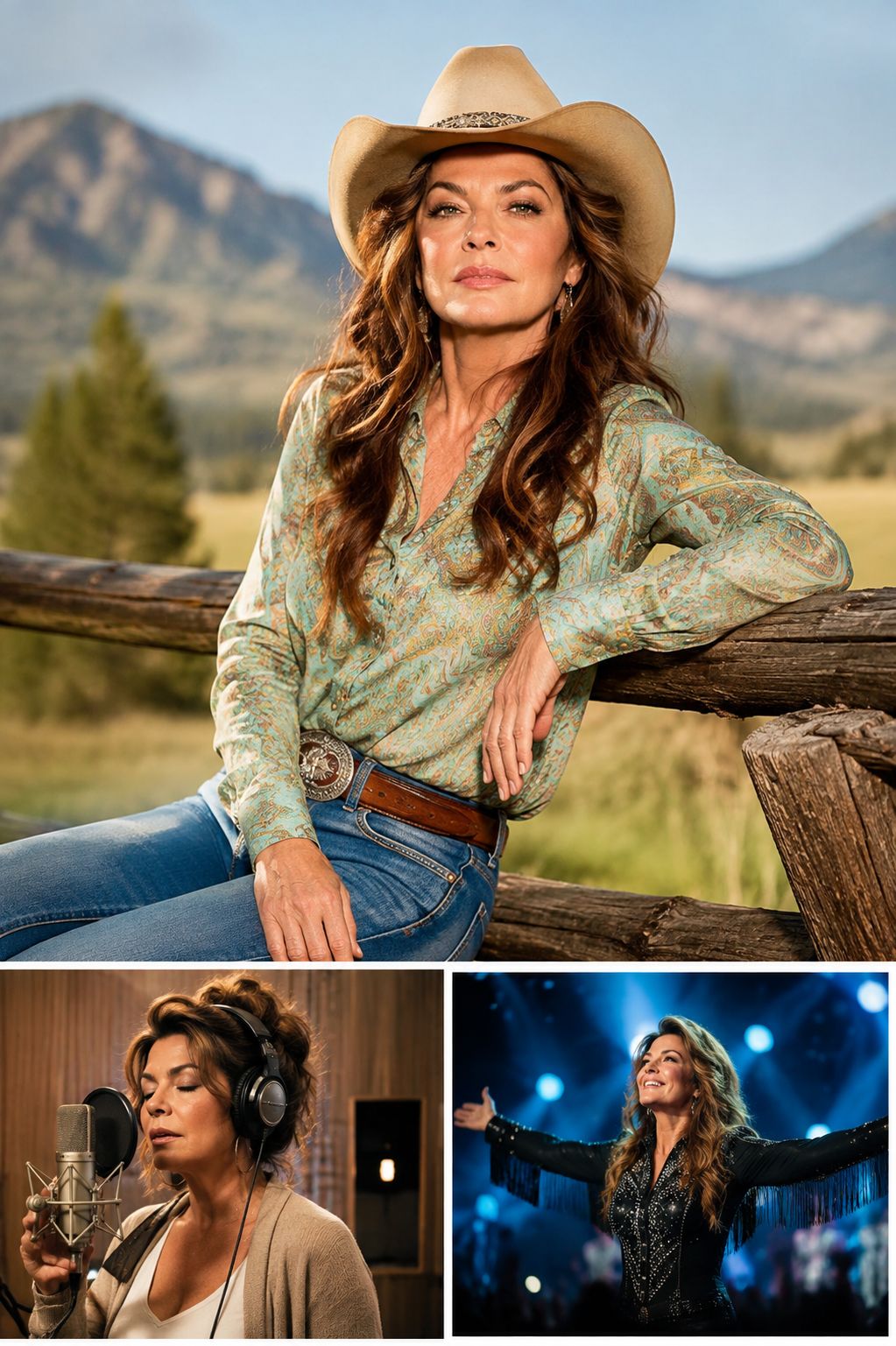
There are artists who become famous because they release hit records. Then there are artists who redefine an entire genre, inspire generations, and prove that even life’s cruelest setbacks cannot silence a truly extraordinary spirit. Shania Twain belongs to the second category.
Long before social media celebrated fearless women, before country-pop became one of the music industry’s most profitable crossovers, and before stadium tours were filled with female superstars headlining on equal footing with men, Shania Twain was already breaking barriers that many believed could never be broken.
Her journey was never simply about chart-topping singles or glamorous award shows. It was about resilience.
It was about surviving poverty.
It was about overcoming unimaginable personal tragedy.
It was about standing tall in an industry where many executives believed female artists should stay within carefully defined limits.
And perhaps most astonishing of all, it was about finding a way back after a devastating illness nearly stole the one gift that had changed her life forever—her voice.
“Sometimes life doesn’t test your talent. It tests your courage.”
That quote could easily summarize the remarkable story of Shania Twain.
A Young Girl Who Refused to Accept Limits
Born Eilleen Regina Edwards in Windsor, Ontario, Canada, Shania Twain experienced hardship long before she ever stepped inside a recording studio.
Her childhood was marked by financial struggles.
Food was often scarce.
She learned to perform in bars while still a child—not for fame, but because every dollar mattered to help support her family.
While many future stars dreamed of becoming celebrities, Shania was focused on something much simpler: survival.
Those early performances forged an unusual toughness.
Standing in front of adults night after night taught her confidence, discipline, and emotional control that would later become one of her greatest strengths.
When tragedy struck with the deaths of her mother and stepfather in a devastating car accident, Shania suddenly found herself responsible for helping raise her younger siblings.
Most aspiring singers would have abandoned their dreams.
She postponed hers.
That decision revealed something the world would later come to admire: family always came first.
Breaking Into an Industry That Didn’t Know What to Do With Her
When Shania Twain finally entered Nashville, country music was still overwhelmingly controlled by male executives, male producers, and male superstars.
Women often found themselves boxed into narrow expectations.
Be traditional.
Dress conservatively.
Sing emotional ballads.
Don’t challenge the system.
Shania ignored almost every unwritten rule.
Her style blended country with pop.
She embraced fashion that many critics labeled “too glamorous.”
She projected confidence instead of vulnerability.
Most importantly, she refused to apologize for any of it.
Many industry insiders doubted audiences would accept such a bold image.
Instead, audiences embraced it.
Her partnership with producer Robert John “Mutt” Lange transformed country music forever.
Albums like The Woman in Me and Come On Over exploded around the world.
Suddenly country music wasn’t confined to American radio stations.
It became a global phenomenon.
Songs like “Any Man of Mine,” “You’re Still the One,” “That Don’t Impress Me Much,” and “Man! I Feel Like a Woman!” became international anthems.
Millions who had never listened to country music suddenly found themselves singing every lyric.
“She didn’t simply cross genres—she erased the borders.”
The Backlash That Came With Success
Success rarely arrives without criticism.
Some country traditionalists accused Shania of becoming “too pop.”
Others criticized her fashion choices.
There were voices claiming she was changing country music for the worse.
Ironically, many of those same changes would later become standard across the industry.
Artists who followed—including numerous female superstars—benefited from doors Shania had already opened.
She demonstrated that women could headline arenas.
She proved country artists could dominate international charts.
She showed female performers could control both their artistic image and commercial success.
Looking back today, much of the criticism seems less about music than about discomfort with a woman refusing to fit old expectations.
History has largely settled that debate.
Her influence is now impossible to deny.
When Everything Suddenly Fell Apart
Just as life appeared perfect, devastating challenges emerged.
Her marriage to Lange collapsed following deeply painful personal circumstances that shocked fans around the world.
Public heartbreak alone would have been enough to derail many careers.
But an even greater battle was quietly developing.
After being bitten by a tick years earlier, Shania developed complications associated with Lyme disease.
One of its most devastating consequences affected the nerves controlling her vocal cords.
The diagnosis eventually revealed a condition called dysphonia, dramatically changing her ability to sing.
Imagine spending your entire life building your identity around your voice…
Only to wake up one day wondering whether it might never return.
For an artist whose songs had inspired millions, the silence became almost unbearable.
“Losing her voice wasn’t simply losing an instrument—it meant losing part of herself.”
Years of Fear and Uncertainty
The public often assumes famous musicians can overcome anything with money or fame.
Reality proved far more complicated.
Shania has openly discussed the emotional devastation of wondering whether her singing career had ended forever.
Concerts disappeared.
Recording became difficult.
Confidence vanished.
She later described how frightening it felt not knowing whether she would ever perform again.
There were years when even speaking comfortably became challenging.
For someone who had once commanded enormous stadiums with effortless confidence, every sentence became a reminder of what had changed.
Yet throughout those difficult years, she refused to surrender completely.
Instead of pretending nothing was wrong, she sought answers.
Medical specialists eventually determined that surgery offered hope.
Finding Her Voice Again
Undergoing delicate vocal cord surgery required extraordinary courage.
Success was never guaranteed.
Recovery demanded patience, rehabilitation, and countless hours of retraining muscles that most people never even think about.
Unlike learning a new instrument, rebuilding a damaged voice involves relearning one’s own body.
Every note required work.
Every performance demanded trust.
Slowly, something remarkable happened.
The voice returned.
Not exactly as before.
Different.
Deeper.
Marked by experience.
But unmistakably Shania Twain.
Fans noticed subtle changes, yet they also heard something even more powerful.
Resilience.
Every lyric now carried the weight of survival.
A Comeback Bigger Than Music
When Shania eventually returned to touring, audiences weren’t simply attending concerts.
They were witnessing perseverance.
Every standing ovation represented more than appreciation for hit songs.
It celebrated someone who had refused to let unimaginable obstacles define the final chapter of her story.
Her performances became emotional experiences because fans understood everything required simply to stand on that stage again.
That perspective transformed familiar songs into something entirely new.
Lyrics once associated with romance or confidence suddenly reflected endurance.
The audience wasn’t just hearing music.
They were hearing victory.
Why Her Legacy Continues to Grow
Today, Shania Twain is recognized not only as one of the biggest-selling female artists in history but also as one of country music’s most influential pioneers.
She helped modernize the genre.
She expanded its global audience.
She inspired countless women to pursue careers without apologizing for ambition.
Artists across country and pop continue citing her as a foundational influence.
Yet statistics alone fail to capture her true legacy.
Albums can be measured.
Awards can be counted.
Influence cannot.
Every young female songwriter encouraged to take creative control…
Every country artist willing to experiment…
Every performer who returns after illness or heartbreak…
Each carries a small piece of the path Shania helped create.
“Her greatest hit may not be a song at all—it may be the example she set for anyone who has ever been told they couldn’t come back.”
The Woman Who Refused to Be Silenced
The remarkable story of Shania Twain is ultimately about far more than fame.
It is the story of a young girl who survived poverty.
A sister who sacrificed dreams for family.
An artist who challenged outdated expectations in a male-dominated industry.
A woman who endured heartbreak, illness, and the terrifying possibility of permanent silence.
And finally, a survivor who stepped back onto the stage—not because the journey had been easy, but because she refused to let adversity write her ending.
That resilience explains why millions continue to connect with her decades after her breakthrough.
The charts may eventually change.
New stars will always emerge.
Musical trends will come and go.
But stories like Shania Twain’s endure because they remind us of something timeless:
Talent may open the first door.
Determination is what keeps it open.
And sometimes, the most unforgettable voice is the one that fought the hardest simply to be heard again.
VIDEO: