 By admin
 INTRODUCTION:
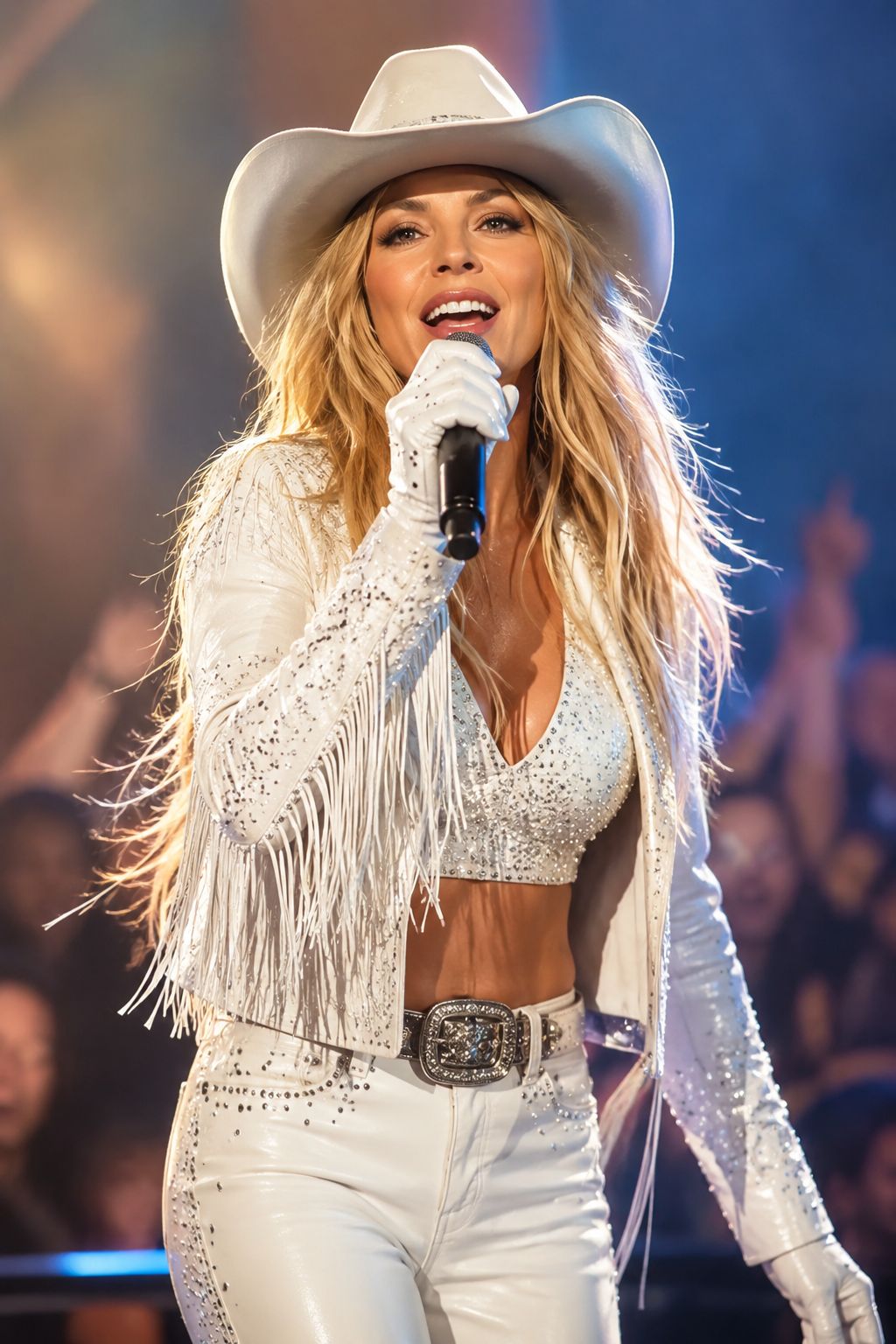
When people talk about the greatest revolutions in country music, they often focus on unforgettable songs, record-breaking albums, or legendary performances. Yet sometimes, history changes long before the first note is played. Sometimes, it begins with a single outfit, a fearless decision, and an artist willing to challenge everything the industry believed was possible.
That artist was Shania Twain.
Long before social media turned every red carpet into a global event, Shania Twain understood something many artists didn’t: fashion wasn’t simply decoration—it was storytelling. Every leather outfit, leopard-print ensemble, velvet gown, cowboy hat, dramatic cape, and iconic music video look became another chapter in a larger narrative. She wasn’t abandoning country music’s traditions. She was expanding them.
“Shania Twain didn’t just change how country music sounded. She transformed how country stars imagined themselves.”
Looking back today, it’s almost impossible to imagine country music without her influence. Modern superstars effortlessly blend western aesthetics with high fashion, pop glamour, and personal expression. But in the early 1990s, that freedom simply didn’t exist.
Country music had an unwritten dress code.
Artists were expected to look respectable, traditional, and familiar. Sequined western shirts, denim jackets, cowboy boots, and conservative styling dominated award shows and television appearances. While there were certainly fashionable performers before Shania Twain, few dared to challenge the industry’s visual identity on such a massive scale.
Then everything changed.
A Small-Town Dreamer Who Refused to Blend In
Born in Ontario, Canada, Shania Twain didn’t arrive in Nashville carrying designer wardrobes or celebrity confidence.
She arrived carrying determination.
Her difficult childhood shaped every part of her artistic identity. Growing up in financial hardship meant clothing wasn’t about luxury—it was about practicality. Perhaps that’s one reason fashion later became such an empowering form of self-expression.
Rather than allowing the industry to define her image, she gradually began creating one herself.
As her confidence grew, so did her willingness to experiment.
Leather pants.
Animal prints.
Body-hugging silhouettes.
Statement accessories.
Long flowing hair paired with unmistakable confidence.
Every appearance became memorable.
Every performance became visually unforgettable.
“Man! I Feel Like a Woman!” Was More Than a Song
When “Man! I Feel Like a Woman!” exploded onto television screens in 1999, audiences witnessed far more than a chart-topping music video.
They witnessed a cultural shift.
The striking black-and-white aesthetic.
The tailored suits.
The confident choreography.
The playful reversal of gender expectations.
The effortless charisma.
It wasn’t merely stylish.
It was revolutionary.
The song celebrated confidence without apology.
Women saw someone embracing femininity while refusing to fit inside traditional expectations.
Men admired her confidence.
Fashion magazines noticed.
Pop culture noticed.
Even people who rarely listened to country music suddenly knew exactly who Shania Twain was.
“She proved that confidence could become an artist’s greatest accessory.”
Breaking Nashville’s Invisible Rules
Every generation has an artist willing to absorb criticism so future performers don’t have to.
For Shania Twain, criticism came quickly.
Some traditional fans questioned whether her image was “too glamorous.”
Others argued her style leaned too heavily toward pop.
Industry observers wondered whether she still represented country music.
History answered those questions far better than anyone could have imagined.
Because while critics debated her clothing, audiences bought millions of albums.
Her confidence resonated across generations.
Instead of weakening country music’s identity, she introduced it to entirely new audiences around the world.
Suddenly teenagers, international listeners, and pop fans discovered country music through Shania Twain.
The genre grew.
The audience expanded.
The possibilities multiplied.
Fashion Became Part of the Performance
Before Shania Twain, clothing often complemented the music.
After Shania Twain, clothing became part of the performance itself.
Every tour featured unforgettable costume changes.
Award show appearances generated headlines.
Magazine covers showcased evolving styles.
Music videos became visual spectacles.
She understood something many performers overlooked:
People remember how music makes them feel.
But they also remember what they saw while feeling it.
That combination creates lasting cultural moments.
Confidence Became Contagious
Perhaps Shania Twain’s greatest contribution wasn’t any single outfit.
It was permission.
Permission for artists to experiment.
Permission for women to embrace glamour.
Permission for country music to evolve visually without abandoning its emotional roots.
Artists who followed gradually embraced more personalized fashion identities.
Glitter.
Designer gowns.
Rock-inspired jackets.
Bold hairstyles.
Luxury western wear.
Today those choices feel completely natural.
In the 1990s, they felt daring.
Beyond the Stage
Fashion wasn’t confined to concerts.
Fans recreated her hairstyles.
Women searched for similar boots.
Leopard prints became instantly associated with confidence.
Magazine editors analyzed every appearance.
Television programs discussed her evolving image.
Even decades later, Halloween costumes inspired by Shania Twain remain instantly recognizable.
That’s the mark of genuine cultural influence.
Not simply popularity.
Recognition.
The Power of Reinvention
One reason Shania Twain has remained relevant across multiple decades is her refusal to become trapped by nostalgia.
She has continuously reinvented herself.
Sometimes glamorous.
Sometimes elegant.
Sometimes playful.
Sometimes bold.
Sometimes surprisingly understated.
Each era reflects growth rather than repetition.
Many artists spend careers protecting a single image.
She continuously expanded hers.
That willingness to evolve inspired countless younger performers facing similar challenges.
The Ripple Effect Across Country Music
It’s difficult to discuss modern country fashion without seeing echoes of Shania Twain.
Today’s stars freely combine luxury fashion with western heritage.
Stage wardrobes now feature couture alongside cowboy boots.
High-fashion photography accompanies album releases.
Music videos receive cinematic styling.
None of this happened overnight.
Cultural revolutions rarely do.
Instead, they begin with one person willing to hear criticism while believing in a larger vision.
Shania Twain became that person.
More Than Beauty
One misunderstanding still follows discussions of Shania Twain’s fashion.
Some reduce it to appearance alone.
That misses the point entirely.
Her clothing communicated confidence.
Her image reflected independence.
Her performances projected strength.
Fashion became another language through which she expressed artistic identity.
It complemented—not replaced—her extraordinary songwriting and unmistakable voice.
Without remarkable music, even the most beautiful wardrobe quickly fades.
But when unforgettable songs meet unforgettable imagery, legends are born.
Why Her Influence Still Matters Today
Today’s music landscape celebrates individuality.
Artists routinely blend genres.
Fashion crosses cultural boundaries.
Country musicians collaborate with pop stars.
Social media rewards visual creativity.
These ideas feel obvious now.
During the 1990s, they were anything but.
Shania Twain stood at the intersection of those changes before much of the industry recognized where the future was heading.
She wasn’t simply following trends.
She was helping create them.
“Real icons don’t chase the future—they quietly become the reason it exists.”
A Legacy Woven Into Every Stitch
Years may pass.
Musical trends will continue changing.
New artists will emerge.
Different styles will dominate runways and concert stages.
Yet every time a country artist confidently blends western tradition with modern fashion, a small part of Shania Twain’s influence lives on.
Her legacy isn’t confined to platinum records or sold-out arenas.
It’s found in courage.
The courage to ignore expectations.
The courage to redefine beauty.
The courage to remain authentic while embracing change.
Perhaps that’s why her image still feels remarkably fresh decades later.
She never dressed simply to attract attention.
She dressed to express freedom.
And freedom, unlike fashion trends, never goes out of style.
In the end, Shania Twain didn’t just become one of the most recognizable faces in country music. She became a symbol of artistic evolution itself. Her fearless embrace of style opened doors for generations of performers to celebrate their individuality without sacrificing their roots. That legacy continues every time a new artist steps onto a stage wearing something that reflects who they truly are rather than who the industry expects them to be.
For millions of fans around the world, Shania Twain will always be remembered for timeless hits like “You’re Still the One,” “From This Moment On,” and “Man! I Feel Like a Woman!” But her greatest masterpiece may be something less tangible: the confidence she inspired in others to stand taller, dream bigger, and redefine what country music could look like. That is a revolution no trend can erase—and a legacy that will continue to shine for generations to come.
VIDEO: