 By admin
 INTRODUCTION:
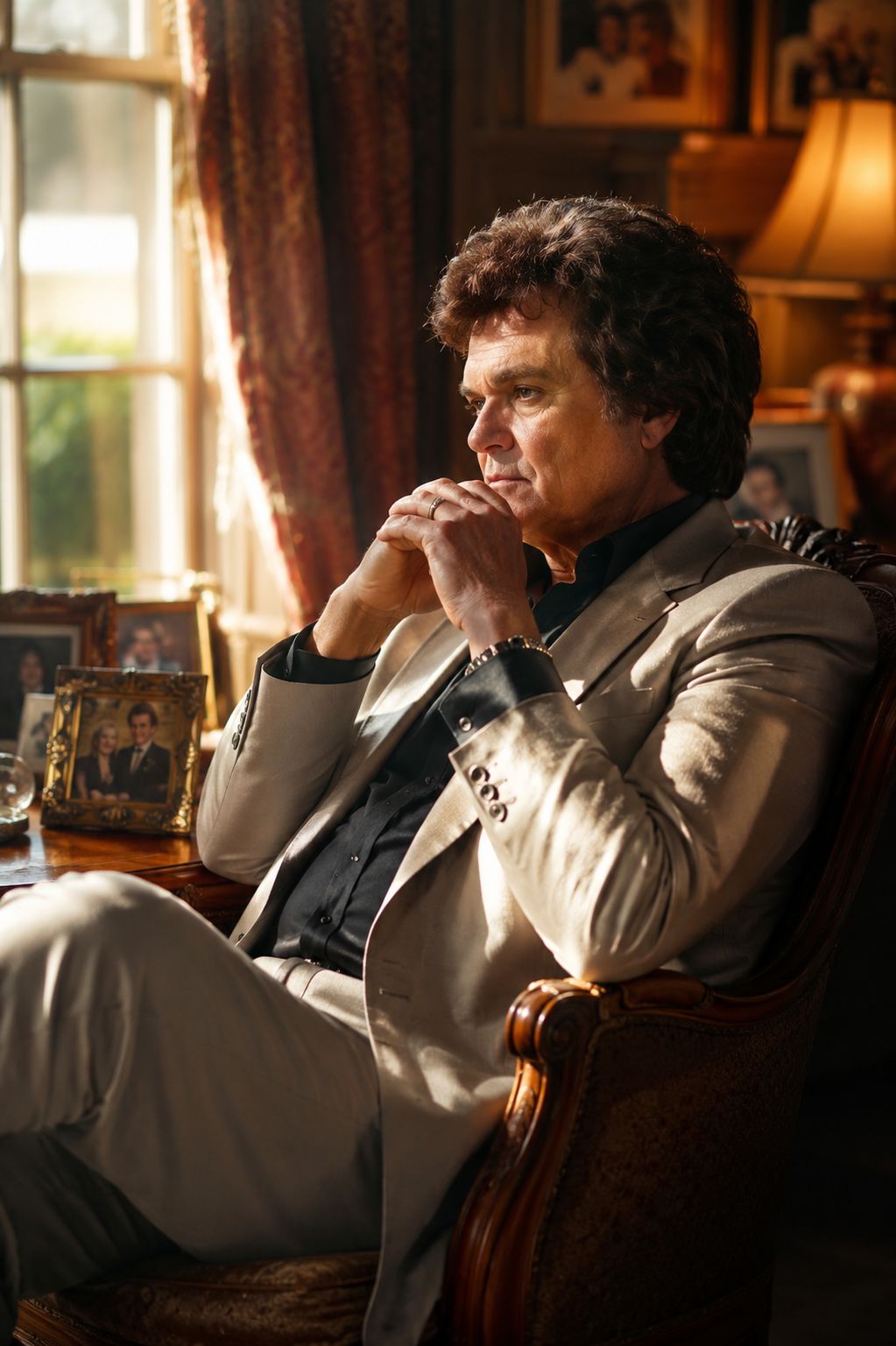
For millions of country music fans, Conway Twitty was the voice of romance. He sang about impossible love, broken hearts, second chances, and lifelong devotion with such conviction that audiences believed every word. His velvet-smooth baritone turned songs like “Hello Darlin’,” “Linda on My Mind,” “You’ve Never Been This Far Before,” and “I’d Love to Lay You Down” into timeless classics that continue to define traditional country music.
But behind the spotlight stood a man whose own personal life was far more complicated than the songs he sang.
The man who achieved an astonishing 55 No. 1 country hits experienced failed marriages, relentless pressure, financial burdens, and a deeply private struggle to balance family, fame, and the expectations that came with becoming one of country music’s biggest stars.
His life wasn’t simply a story of success.
It was also a story of sacrifice.
“Sometimes the loudest applause hides the quietest heartbreak.”
The Boy Who Never Planned to Become a Country Legend
Before he became Conway Twitty, he was Harold Lloyd Jenkins, born in Mississippi in 1933.
Ironically, country music wasn’t even his original dream.
As a teenager, Harold loved baseball and showed tremendous athletic promise. Friends believed he might someday play professionally.
Then life changed.
Military service interrupted those dreams, and when he returned home, music slowly became more than a hobby.
Inspired by rock ‘n’ roll pioneers, he reinvented himself, adopted the unforgettable stage name Conway Twitty, and exploded onto the national scene with the pop smash “It’s Only Make Believe.”
Almost overnight, America had a new star.
Yet even early success carried hidden costs.
Constant touring meant endless nights away from home.
Relationships became increasingly difficult to maintain.
And those struggles would follow him for decades.
Fame Came Faster Than Stability
Few artists have reinvented themselves as successfully as Conway Twitty.
After conquering pop music, he made what many considered an impossible transition into country.
Instead of fading away, he became even bigger.
The hits arrived one after another.
One…
Ten…
Twenty…
Eventually…
Fifty-five No. 1 singles.
An achievement almost impossible to comprehend.
Yet while audiences saw confidence on stage, life offstage became increasingly complicated.
Hours turned into weeks.
Weeks turned into months.
Tour buses became more familiar than home.
For any marriage, that schedule creates enormous pressure.
For Conway, it became one of the defining challenges of his personal life.
Four Marriages—and Four Painful Endings
Throughout his lifetime, Conway Twitty married four different women.
Each relationship began with hope.
Each ended with disappointment.
While many celebrity stories sensationalize failed marriages, the reality is often far less dramatic—and far more human.
The demands of constant touring, recording sessions, television appearances, and promotional obligations left little room for ordinary family life.
Children grew older while he was on the road.
Birthdays were missed.
Anniversaries passed in hotel rooms hundreds of miles away.
The very career that allowed him to provide for his family also kept him away from them.
That contradiction haunted countless entertainers of his generation.
Conway was no exception.
“Success can buy almost anything—except time with the people you love.”
Friends often described him as a devoted father who genuinely cared about his children, yet balancing those responsibilities with an elite touring career proved nearly impossible.
The “Secret Life” Few Fans Ever Saw
The phrase “secret life” often suggests scandal.
In Conway’s case, the reality was more nuanced.
Away from cameras and sold-out arenas, he fiercely protected his private world.
Unlike many modern celebrities, Conway rarely invited the public into his personal relationships.
He separated his stage persona from his home life whenever possible.
Fans knew the performer.
Few truly knew the man.
Those closest to him described someone who enjoyed quiet moments, family gatherings, fishing, and escaping the endless demands of celebrity whenever possible.
He understood something many stars learn too late:
Privacy was precious.
In an era before social media, Conway successfully kept much of his personal world out of the headlines—not because there was necessarily scandal around every corner, but because he believed some parts of life simply belonged to family.
That private side only fueled public curiosity.
Singing About Love While Living With Heartbreak
Perhaps the greatest irony of Conway Twitty’s career was this:
The man who became country music’s greatest romantic storyteller experienced repeated disappointment in his own relationships.
Songs like “Hello Darlin'” carried extraordinary emotional authenticity.
Listeners believed every word.
Maybe that’s because Conway understood heartbreak personally.
He knew regret.
He understood longing.
He recognized what it felt like to lose something important.
Whether consciously or not, those emotions flowed into every performance.
The result was music that never sounded manufactured.
It sounded lived.
That authenticity became his greatest strength.
The Partnership That Changed Country Music Forever
If there was one relationship fans celebrated above all others, it was Conway’s legendary musical partnership with Loretta Lynn.
Their chemistry remains one of country music’s greatest mysteries.
Were they simply incredible performers?
Or did audiences sense something deeper?
The answer appears surprisingly simple.
They respected each other enormously.
Their friendship created an effortless musical connection that translated into unforgettable recordings including:
- “After the Fire Is Gone”
- “Louisiana Woman, Mississippi Man”
- “As Soon As I Hang Up the Phone”
- “Feelins'”
Their playful performances often blurred the line between acting and genuine affection.
Fans loved imagining romance.
Reality, however, was much less sensational.
Both artists consistently maintained that theirs was a professional partnership built on trust, admiration, and remarkable chemistry—not a secret love affair.
Sometimes great storytelling simply feels real.
The Pressure of Remaining Number One
Success can become its own prison.
Every new Conway Twitty release carried enormous expectations.
Would it become another No. 1?
Would radio stations embrace it?
Would fans compare it to “Hello Darlin'”?
Would critics say his best days were behind him?
Those questions never disappeared.
Instead, they grew louder with every success.
Maintaining dominance over multiple decades demanded relentless work.
Recording.
Touring.
Interviews.
Television appearances.
Business meetings.
The schedule rarely slowed.
That pace affected not only Conway—but everyone who loved him.
An Unexpected Ending
In June 1993, Conway Twitty’s extraordinary journey came to a sudden close.
After becoming ill following a performance, he was hospitalized.
He later died at the age of 59.
Country music lost one of its most recognizable voices almost overnight.
Fans struggled to believe it.
There had been no farewell tour.
No final concert announcement.
No carefully planned goodbye.
Only silence.
The shock echoed throughout Nashville.
Artists who had shared stages with Conway remembered not only his remarkable talent but also his professionalism, generosity, and relentless work ethic.
Why His Story Still Resonates
It’s tempting to reduce Conway Twitty’s life to a dramatic headline about failed marriages or hidden struggles.
But doing so misses the larger truth.
He was a gifted performer navigating extraordinary pressures that many fans never saw. Multiple marriages, the demands of fame, and a carefully guarded private life were parts of his story, but they do not define the whole of it. His legacy rests on the music, the emotional honesty of his performances, and the lasting influence he had on country music.
Perhaps that’s why his songs continue finding new listeners decades after his passing.
When Conway sang about love, audiences believed him.
When he sang about heartbreak, people felt understood.
And when he stood beside Loretta Lynn, it seemed like country music itself had found its perfect harmony.
“Legends aren’t remembered because their lives were perfect. They’re remembered because their music helped others make sense of imperfect lives.”
More than three decades after his passing, Conway Twitty’s remarkable catalog of 55 No. 1 country hits remains one of the genre’s greatest achievements. Behind those records was a man who experienced both triumph and disappointment, public acclaim and private challenges. Rather than diminishing his legacy, that complexity makes his story all the more compelling. His voice still echoes through dance halls, radio stations, and family playlists—not because he lived a flawless life, but because he transformed real human emotions into songs that continue to speak across generations
VIDEO: