 By admin
 INTRODUCTION:
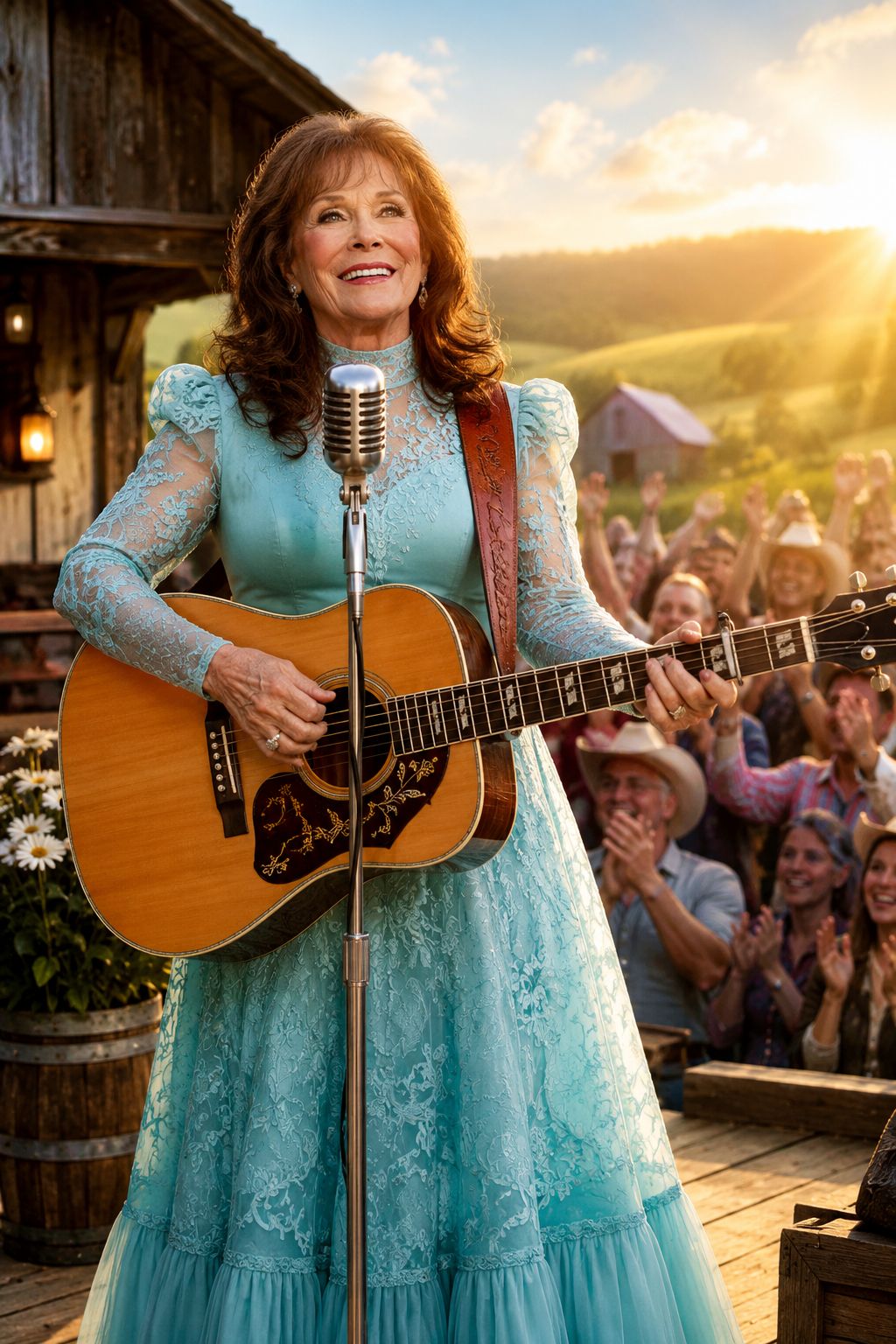
Few songs in country music history have sparked as much outrage—and admiration—as Loretta Lynn’s groundbreaking hit “The Pill.” What began as a bold recording about women’s independence became one of the most controversial moments in American music. Radio stations refused to play it. Critics accused her of destroying traditional values. Yet millions of listeners embraced the song because it dared to say what countless women had only whispered behind closed doors.
Ironically, the very song that many tried to silence became one of the defining reasons Loretta Lynn evolved from a country superstar into a cultural icon whose influence reached far beyond Nashville.
“Sometimes the songs people fear the most are the ones history remembers forever.”
A Coal Miner’s Daughter Who Never Learned to Stay Quiet
Long before controversy followed her, Loretta Lynn had built her reputation on telling uncomfortable truths.
Growing up in the tiny Kentucky town of Butcher Hollow, she experienced poverty firsthand. She married young, became a mother while still practically a child herself, and spent years raising a growing family while supporting her husband’s dreams before discovering her own remarkable gift for songwriting.
Unlike many artists of her era, Loretta didn’t rely on fairy tales.
She wrote about bills that couldn’t be paid.
She wrote about husbands who stayed out too late.
She wrote about jealousy.
She wrote about heartbreak.
Most importantly, she wrote from the perspective of ordinary women whose voices rarely reached country radio.
That honesty became her trademark.
Songs like “Don’t Come Home A-Drinkin’ (With Lovin’ on Your Mind),” “Rated X,” and “Fist City” already pushed the boundaries of what female country artists were expected to sing.
But nothing prepared Nashville—or America—for what came next.
The Song That Shocked America
When “The Pill” was finally released in 1975, America was already in the middle of enormous cultural change.
The women’s liberation movement was gaining momentum.
Conversations about family planning were becoming more public.
Traditional expectations of marriage were being questioned.
Into this atmosphere stepped Loretta Lynn, singing openly—and humorously—about birth control.
Instead of portraying motherhood as endless sacrifice without choice, she sang about finally having control over her own future.
For many listeners today, the lyrics might seem relatively tame.
In 1975?
They were explosive.
Country radio had never heard anything like it.
“This wasn’t just another country song. It was a challenge to decades of silence.”
Why Radio Stations Refused to Play It
Many country stations immediately banned “The Pill.”
Some program directors believed audiences would be offended.
Others worried advertisers would pull sponsorships.
Religious groups condemned it.
Conservative critics labeled it immoral.
Several stations simply refused to mention the song at all.
Ironically, these bans only fueled curiosity.
People who couldn’t hear it on the radio wanted to know what all the fuss was about.
Record stores suddenly became the place where listeners could discover the forbidden song for themselves.
Sometimes controversy is the best publicity money can’t buy.
Loretta Never Backed Down
Many artists would have apologized.
Others might have quietly moved on.
Not Loretta.
She consistently explained that she wasn’t trying to provoke outrage.
She was simply telling another truthful story.
After all, millions of American women already understood exactly what she was singing about.
They were balancing enormous families.
They were exhausted.
They were hoping for choices their mothers had never been allowed.
Loretta didn’t invent those conversations.
She simply put them into music.
That authenticity resonated deeply with listeners who finally heard someone speaking honestly about their lives.
The Audience Was More Ready Than the Industry
One fascinating aspect of the story is how disconnected the music industry proved to be from its audience.
Executives feared disaster.
Many listeners embraced the song.
Despite widespread radio resistance, “The Pill” sold impressively and became one of Loretta’s most talked-about recordings.
Its popularity demonstrated something powerful:
People often crave honesty more than institutions expect.
Especially when that honesty reflects experiences they already know.
“The establishment tried to silence a song. The audience turned it into history.”
She Wasn’t Trying to Be Political
Modern audiences sometimes assume “The Pill” was written as a political statement.
Loretta herself often resisted that interpretation.
She wasn’t positioning herself as an activist.
She wasn’t delivering speeches.
She wasn’t trying to lead a movement.
She was doing what she’d always done:
Writing songs inspired by real life.
That distinction matters.
Her authenticity made the song believable.
Rather than sounding like a lecture, it sounded like a conversation between neighbors sitting on a front porch.
And perhaps that’s exactly why it connected.
A Voice for Women Who Had Been Overlooked
Country music has always celebrated everyday people.
Loretta expanded the definition of whose everyday experiences deserved attention.
She gave voice to women balancing impossible expectations.
She sang about emotional burdens rarely acknowledged publicly.
She challenged the assumption that women should simply endure whatever life handed them without complaint.
This wasn’t rebellion for the sake of rebellion.
It was recognition.
Millions of women finally felt represented.
For many fans, that mattered more than any chart position.
The Legacy Grew Bigger Than the Controversy
Today, it’s almost impossible to discuss influential women in country music without mentioning Loretta Lynn.
Artists across generations—from Reba McEntire and Miranda Lambert to Kacey Musgraves—have praised her willingness to speak honestly through her music.
Her career eventually came to symbolize artistic courage.
The controversies that once threatened to define her instead highlighted her fearlessness.
Looking back, it becomes clear that “The Pill” wasn’t simply controversial because of its subject matter.
It was controversial because it arrived before many people were ready to hear it.
History often rewards those willing to tell tomorrow’s truths today.
“Icons aren’t remembered because they avoided controversy. They’re remembered because they refused to abandon honesty.”
Why the Song Still Matters Nearly Half a Century Later
Nearly fifty years after its release, “The Pill” continues to spark discussion.
Not because listeners necessarily agree with every lyric.
But because it represents something larger.
Freedom of expression.
Women’s perspectives.
Country music’s ability to document social change.
The song reminds us that country music has never been only about pickup trucks, heartbreak, or Saturday nights.
At its best, it captures America’s evolving story.
And sometimes that story makes people uncomfortable.
Loretta understood that.
She accepted the criticism.
She accepted the bans.
She kept singing anyway.
That courage ultimately became more memorable than the controversy itself.
From Banned Song to Timeless Legacy
History has a remarkable way of rewriting first impressions.
What many radio stations once considered too dangerous to broadcast is now widely recognized as one of the most important songs in country music history.
The outrage faded.
The headlines disappeared.
The music endured.
Loretta Lynn never needed permission to tell the truth as she saw it. She trusted that authenticity would outlast criticism, and time proved her right. Today, “The Pill” is remembered not merely as a controversial record, but as a milestone that broadened the possibilities of country songwriting and demonstrated that ordinary lives—and especially women’s lived experiences—deserved an honest place in American music.
That is why Loretta Lynn’s most controversial song did far more than stir debate.
It changed conversations.
It challenged expectations.
It inspired future generations of artists to write fearlessly.
And in doing so, it transformed a fearless singer from Kentucky into one of the most enduring cultural icons country music has ever known.
VIDEO: