 By admin
 INTRODUCTION:
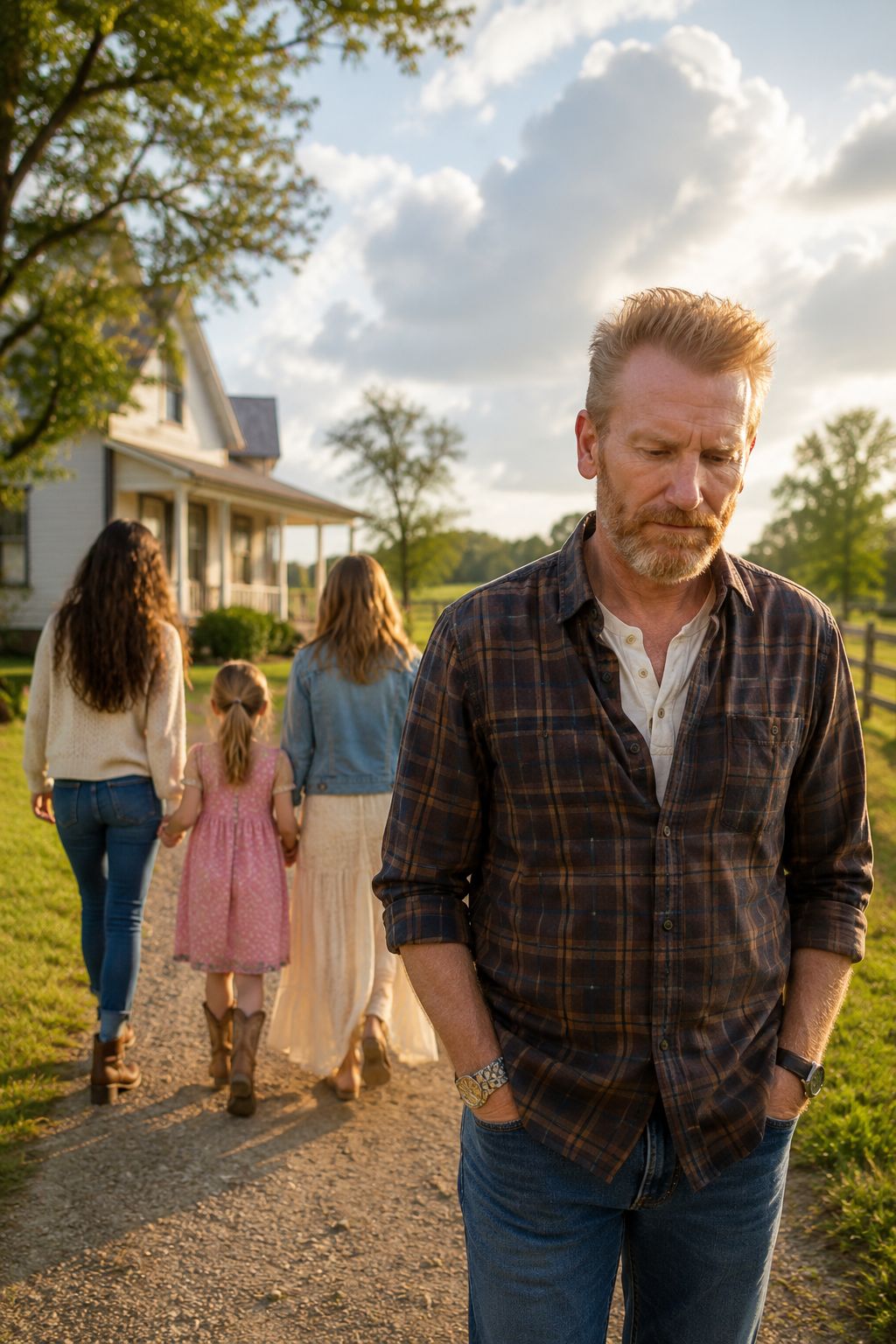
For years, Rory Feek was known to country music fans as the quiet storyteller—the songwriter who turned ordinary life into something sacred, and the devoted husband who documented his heartbreaking journey with Joey Feek. His public story was built around family, faith, love, loss, and the promise that even after unimaginable grief, life could still move forward.
But behind that carefully documented image, another story was unfolding.
One involving his two older daughters, Heidi Feek and Hopie Feek, and a family fracture that eventually spilled into public view.
And the most painful part may be this: the conflict is not simply about one argument or one disagreement. It appears to involve years of unresolved hurt, questions about family history, disagreements over parenting and faith, and—most recently—the devastating revelation that Hopie learned Rory was not her biological father.
This is not a story where one side can simply be declared the villain and the other the victim. Much of what has been alleged remains disputed, and the family members involved have given sharply different accounts.
But the emotional consequences are very real.
The Family That Once Looked Unbreakable
Rory’s family story was complicated long before the recent headlines.
He had two daughters, Heidi and Hopie, from his first marriage to Tamara Gilmer. Later, after marrying Joey, Rory became father to Indiana, born in 2014.
For a time, the three sisters appeared to share a close bond.
Heidi was especially visible in the family’s public life, and photographs and stories showed the older sisters spending time with their much younger sibling.
Then Joey died in 2016 after her battle with cancer.
The tragedy changed everything.
Rory became a single father to Indiana while continuing to navigate the grief of losing Joey. His older daughters were adults, but the family continued to share connections through Indiana.
From the outside, it seemed like an unconventional but loving family trying to survive an extraordinary loss.
Then the cracks became impossible to ignore.
When the Sisters Said Something Had Changed
The public dispute became particularly intense around access to Indiana.
Heidi and Hopie expressed concern that their relationship with their younger sister had been restricted. Heidi publicly described the situation as deeply painful and sought legal avenues concerning Indiana’s welfare and contact with her sisters.
Rory, however, rejected the accusations.
He argued that the conflict was rooted in different values and disagreements about how Indiana should be raised. He also denied accusations that Indiana was unsafe and rejected characterizations of Homestead Heritage, the faith-based community with which he and his family became associated.
Rory’s response was emotional.
“The things she’s shared have broken my heart.”
That sentence captured something important about the dispute: whatever outsiders believed was happening, this was still a father talking about the breakdown of his relationship with his daughters.
But Heidi and Hopie did not appear to see the situation simply as a disagreement over parenting.
For them, there were deeper issues.
The Part of the Story That Changed Everything
Then came February 2025.
Hopie revealed that a DNA test had shown something she could never have expected:
Rory Feek was not her biological father.
The discovery came through a 23andMe test, and Hopie publicly identified another man, whom she referred to as B.C., as her biological father.
Imagine discovering something like that after growing up believing you knew who your father was.
Biology, however, was only one part of the emotional earthquake.
Hopie had been raised by Rory.
He had been her father in every practical sense.
And yet suddenly, a fundamental part of her identity had been rewritten.
“I’ve always felt a little bit different — and now I know why.”
Her revelation was not simply a celebrity-family bombshell.
It was an identity crisis.
And it reopened old wounds.
Why the DNA Revelation Was So Painful
Hopie has said that she was upset about the way Rory had publicly discussed her family history, including details involving her mother.
She also criticized his decision to include personal elements of her life in his writing, including her coming-out story.
According to People, Hopie felt that Rory’s portrayal of her mother’s past was hurtful and that their relationship had become increasingly damaged. She also expressed frustration that he would not participate in family therapy.
That distinction matters.
The question was no longer simply:
“Why are Rory and his daughters fighting?”
It became:
“What happens when a daughter feels that her own life story has been told publicly without her consent—and then discovers that a fundamental truth about her identity was different from what she believed?”
That is much harder to repair.
And Then There Was Indiana
Perhaps the most heartbreaking part of the dispute is that Indiana became caught in the middle.
Heidi and Hopie have repeatedly expressed their desire to maintain a relationship with their younger sister.
Heidi reportedly even prepared a bedroom for Indiana in anticipation of her visiting again.
Rory, meanwhile, maintained that restrictions were connected to differing worldviews and concerns about what Indiana was exposed to.
That disagreement eventually became much larger than a family argument.
It became a legal battle.
And once lawyers entered the picture, reconciliation became dramatically more complicated.
The Homestead Heritage Controversy
Another major source of tension was Rory’s relationship with Homestead Heritage, a Christian intentional community near Waco, Texas.
Heidi raised serious concerns about the environment in which Indiana was spending time and publicly questioned the community’s history and practices.
Rory rejected the allegations and denied that the community was a cult or that Indiana was being endangered.
This distinction is crucial: the allegations made by the daughters are allegations, not established facts. Rory has strongly disputed them, and Homestead Heritage has also taken legal action against Heidi over statements concerning the community.
The resulting defamation lawsuit was still active in 2026, with no reported final resolution in the sources reviewed.
So calling this a proven “dark secret” would go too far.
The truth is more complicated—and perhaps more painful.
A Family Argument Became a Public War
What began as private disagreements eventually became public.
There were social-media statements.
There were blog posts.
There were accusations.
There were legal filings.
And there were family members telling very different versions of the same story.
Rory repeatedly expressed his desire for reconciliation while criticizing the way his daughters had handled the dispute publicly.
His daughters, meanwhile, argued that their concerns were serious enough that remaining silent was no longer an option.
That is where the tragedy lies.
Because both sides appeared to believe they were protecting something.
Rory believed he was protecting his youngest daughter.
Heidi and Hopie believed they were protecting their relationship with Indiana—and confronting unresolved issues from their own past.
And somewhere in the middle stood three sisters whose childhoods had once been connected by the same family.
The Question Country Fans Can’t Ignore
Country music has always romanticized family.
Songs about fathers.
Mothers.
Home.
Forgiveness.
Coming back to the front porch.
Finding your way home after years apart.
That’s why the Feek family story hits differently.
Because there is no easy chorus here.
There is no three-minute song where everyone apologizes in the final verse.
There is only a family trying to figure out whether love is enough to survive years of disagreement.
And perhaps the most painful irony is that Rory’s public career has been built around telling deeply personal stories.
But now the people closest to those stories are telling parts of the story differently.
That creates a painful question:
When does sharing your family’s story become someone else’s story to tell?
Blood Isn’t Always the Same Thing as Family
Hopie’s DNA discovery adds another emotional layer that cannot be ignored.
Rory may not be her biological father.
But biology doesn’t erase decades of fatherhood.
At the same time, learning the truth about one’s biological parentage can profoundly change how someone understands their childhood.
Both things can be true.
Rory can genuinely love Hopie.
Hopie can genuinely feel wounded by him.
He can believe he raised her as his daughter.
She can still feel that important parts of her story were kept from her or portrayed in ways that hurt her.
That is what makes this situation so difficult to reduce to a headline.
The Real Tragedy Isn’t the Lawsuit
It isn’t the DNA test.
It isn’t the accusations.
It isn’t even the public battle.
The real tragedy is the possibility that three sisters who once had a meaningful bond may lose years of their lives to a conflict they never wanted.
And for Indiana, who is still young, the stakes are particularly emotional.
She is not merely a legal issue.
She is a little sister.
Heidi and Hopie have made clear that their desire to remain connected to her is central to their fight.
That is why this story continues to resonate with country fans.
Because underneath all the headlines is something painfully ordinary:
A family that loves one another but can no longer agree on how that love should look.
Perhaps There Is Still a Way Home
The Feek family story remains unresolved.
There has been no simple public reconciliation that erases everything that happened.
And with legal proceedings continuing into 2026, the conflict is far from a neat Hollywood ending.
But families sometimes survive things that seem impossible to survive.
Maybe someday the lawsuits will end.
Maybe the accusations will stop.
Maybe the sisters will once again sit together without lawyers, cameras, or social media between them.
And maybe the most powerful moment will not be a public apology at all.
Maybe it will simply be three sisters standing together again.
Because in the end, family isn’t defined only by blood, belief, or a shared last name.
Sometimes family is the person who remembers your first song.
The sister who waited for you at the door.
The father who raised you.
The little sister you refused to stop loving.
And the people you still hope will find their way back home.
“Some wounds don’t need another argument. They need someone brave enough to finally say: I don’t want to lose you.”
That may ultimately be the greatest lesson hidden inside the Rory Feek family saga.
Not that one side was completely right.
Not that the other side was completely wrong.
But that when a family becomes divided, winning the argument can sometimes cost far more than anyone ever intended to pay.
VIDEO: