 By admin
 INTRODUCTION:
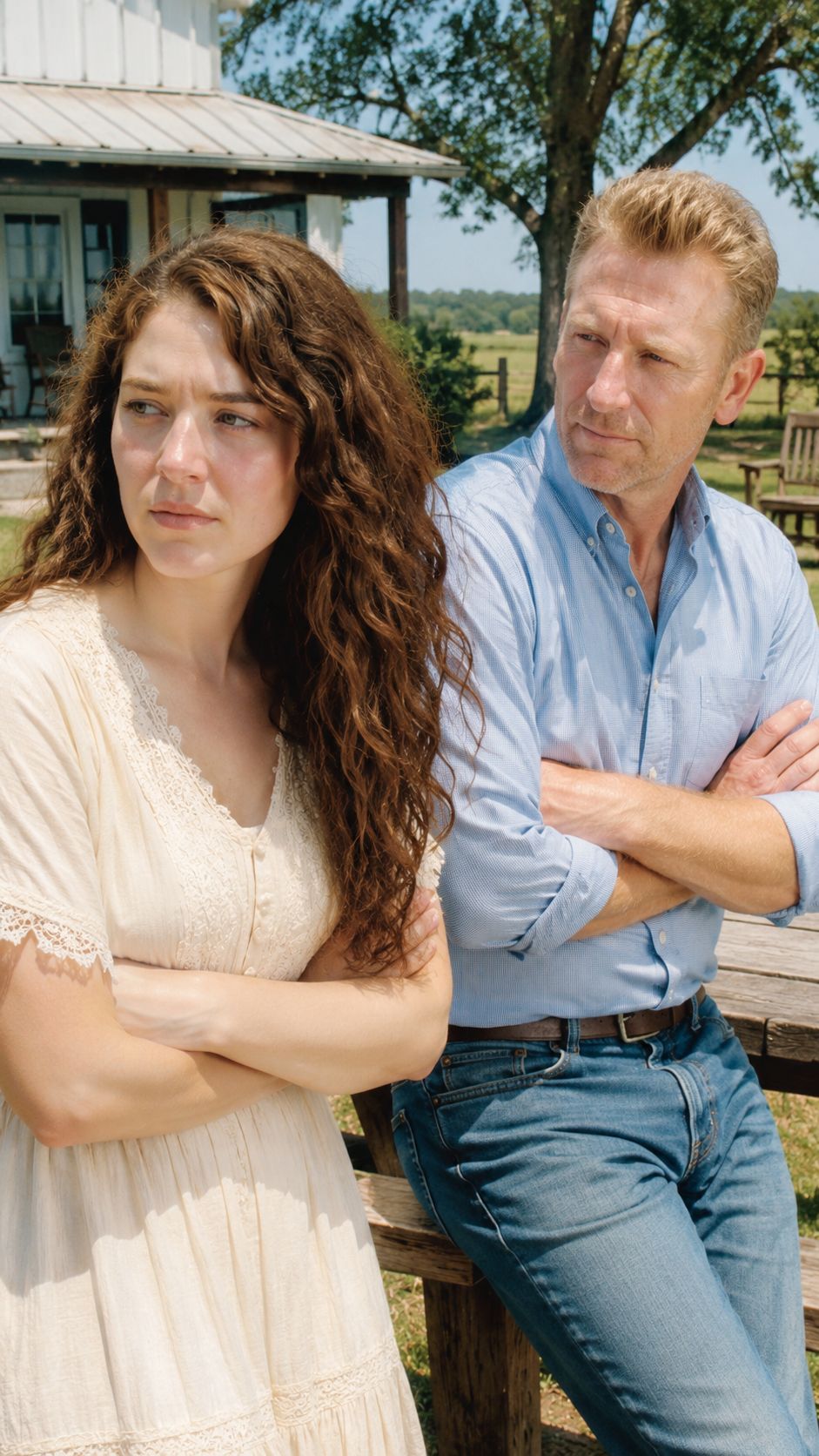
There are family revelations that change a family tree.
And then there are revelations that force people to question the meaning of family itself.
For Hopie Feek, a DNA test did both.
In February 2025, the daughter raised by country singer Rory Feek revealed that a 23andMe test had shown something she had never known for certain: Rory was not her biological father. She also revealed that she had connected with her biological father, a man she identified as B.C., and described the experience as deeply meaningful.
For many families, such a discovery might have remained a private conversation around a kitchen table.
But the Feek family story has never existed entirely behind closed doors.
Rory built much of his public identity around family, faith, music, loss, fatherhood and the extraordinary life he shared with his late wife, Joey Feek. Hopie, meanwhile, grew up inside that story without necessarily choosing the spotlight for herself.
And that difference became painfully important when Rory responded publicly to the DNA revelation.
His response was emotional. He emphasized that biology did not determine his love for Hopie.
But Hopie felt that something much more personal had happened.
She felt her private history had once again become part of a public narrative.
“My private life becomes content for his fans.”
That sentence became the emotional center of the controversy.
THE DNA TEST THAT CHANGED EVERYTHING
Hopie explained that she had always felt somewhat different and that the DNA test gave her answers she did not know she needed.
According to reports, the test revealed that Rory was not her biological father. Hopie subsequently connected with B.C., whom she identified as her biological father, and described their immediate connection in deeply emotional terms.
The discovery did not erase the decades she had spent knowing Rory as her father.
If anything, it made the question of fatherhood more complicated.
Because there is a difference between being someone’s biological parent and being the person who raises a child.
Rory had raised Hopie and her sister Heidi. He had been part of their lives through childhood and adulthood. He therefore viewed the DNA discovery through the lens of a relationship he believed was larger than genetics.
In his blog post, titled “A Different Dad,” Rory wrote that the test did not change his love for Hopie and that he would continue to love her as his daughter.
On the surface, it sounded like a father’s attempt to reassure his daughter.
But Hopie wasn’t simply responding to the DNA result.
She was responding to what happened afterward.
RORY’S VERSION OF THE STORY
Rory explained that he was not completely shocked by the DNA result.
He recalled having suspicions dating back decades, particularly concerning the timing surrounding Hopie’s birth and his military deployment. He said that, even though he had wondered about her biological paternity, he had continued to raise her as his daughter.
His message was essentially this:
Blood had never been the foundation of their relationship.
Love was.
“This news and this blood test doesn’t change anything.”
That sentiment is powerful.
But family stories are rarely experienced identically by every person involved.
For Rory, the revelation appeared to confirm something he had wondered about.
For Hopie, it represented a deeply personal discovery about her identity, her mother, her childhood and the family story she had carried for decades.
And when those two perspectives collided in public, the emotional stakes became enormous.
HOPIE’S RESPONSE: “BE KIND”
Hopie’s frustration centered on something very specific.
She said that when she told Rory about the DNA discovery, she had made one request: that he be kind and not shame her mother.
Instead, she believed Rory’s public account revealed private details about her mother’s history.
She described his decision as “extremely disappointing.”
That distinction matters.
Hopie wasn’t necessarily saying that Rory had no right to have feelings about the revelation.
She was saying that she believed the story belonged to her first.
That is a profoundly modern conflict inside families touched by celebrity.
When one person is famous and another is not, who owns the family story?
The celebrity may have the platform.
But does the platform give that person ownership of everyone else’s memories?
Hopie clearly felt the answer was no.
“I shared my story because I couldn’t keep the secret all to myself anymore.”
And then came the line that captured the heart of her frustration:
“I’m really not a public person, but because Rory is, my private life becomes content for his fans.”
That wasn’t simply a complaint about a blog post.
It was a statement about boundaries.
WHEN FAMILY STORIES BECOME PUBLIC PROPERTY
For decades, country music has thrived on storytelling.
Songs about mothers.
Songs about fathers.
Songs about broken marriages.
Songs about forgiveness.
Songs about faith.
Songs about death and redemption.
The genre has always understood that private pain can become public art.
But there is an uncomfortable question underneath all of it:
What happens when the person whose pain becomes the story never agreed to become part of the story?
That is where the Feek controversy becomes bigger than one DNA test.
Rory has spent years documenting his life publicly. His relationship with Joey, his experience as a father, his faith and his family have all formed parts of his public narrative.
Hopie, however, has repeatedly expressed discomfort with having deeply personal experiences placed before a large audience.
That tension had surfaced before.
According to reporting, Hopie had also objected to the way Rory discussed her sexuality and said she regretted allowing him to include that experience in his memoir. She said that public attention brought painful reactions from his audience.
That history helps explain why the DNA revelation struck such a sensitive nerve.
For Hopie, this was not an isolated disagreement.
It was part of a larger question:
Who gets to tell her story?
A DAUGHTER’S SEARCH FOR IDENTITY
Perhaps the most emotional part of Hopie’s story is that the DNA discovery wasn’t only about Rory.
It was about finding another piece of herself.
She described meeting B.C. and being moved by his immediate affection. Reports quoted her describing the experience as something she had not previously experienced in the same way.
Imagine discovering the biological parent you never knew.
Imagine realizing that someone out there shares your DNA.
Imagine seeing your own face reflected in someone else’s face after decades of wondering why certain pieces of your identity seemed unexplained.
That kind of discovery can be exhilarating.
It can also be destabilizing.
And it can bring grief alongside joy.
Because finding a biological father does not mean losing the father who raised you.
At least, it doesn’t have to.
But relationships can become complicated when old wounds, public narratives and conflicting memories are added to the equation.
THE MOST PAINFUL QUESTION MAY NOT BE ABOUT DNA
The public conversation naturally focused on one question:
Is Rory Hopie’s father?
Biologically, the DNA test answered that.
But emotionally, the question is far harder.
What makes someone a father?
Is it blood?
Is it presence?
Is it sacrifice?
Is it the person who stayed?
Is it the person who changes diapers, pays bills, teaches lessons and shows up when life becomes difficult?
Or is fatherhood something that can exist in multiple forms at the same time?
Rory’s response clearly emphasized the emotional definition.
Hopie’s response emphasized another issue: the right to control her own story.
Those positions do not necessarily have to cancel each other out.
A man can love someone deeply and still hurt them.
A daughter can appreciate what a parent did for her and still demand boundaries.
And a family can share decades of history while remembering those decades differently.
THE COST OF LIVING INSIDE SOMEONE ELSE’S STORY
Perhaps that is why Hopie’s statement resonated so strongly.
Many people know what it feels like to have family disagreements.
But far fewer know what it feels like to have those disagreements amplified by a public audience.
For a private person, a painful conversation might end at the kitchen table.
For the family of a public figure, that same conversation can become a blog post, an Instagram debate, headlines, comments and thousands of strangers offering opinions.
Hopie specifically referenced the unkindness she said she had experienced from Rory’s fans.
That introduces another layer of pain.
Because once a family story enters the internet, it rarely belongs entirely to the family anymore.
People choose sides.
They interpret.
They speculate.
They defend one person.
They criticize another.
And suddenly, a deeply personal family wound becomes entertainment for people who may know almost nothing about the people involved.
A FAMILY STORY WITHOUT AN EASY ENDING
Hopie eventually made clear that she wanted to move forward and find happiness away from the online hostility. She asked for privacy and indicated that she did not intend to keep publicly discussing the matter indefinitely.
That may ultimately be the most important part of the entire story.
Not the DNA.
Not the blog.
Not the headlines.
Privacy.
Because underneath the celebrity names and country music connections are real people trying to understand one another.
Rory may believe that his love for Hopie exists beyond biology.
Hopie may believe that loving someone does not give them permission to publish every chapter of her life.
Both ideas can exist simultaneously.
And perhaps that is the uncomfortable truth this story reveals.
Family is not always about having the same blood.
But family is also not a license to tell someone else’s story without considering how they will live with the consequences.
The DNA test answered one question.
It did not answer the bigger one.
Can two people who share decades of history find a way to respect each other’s truth without turning that truth into public property?
For Hopie and Rory Feek, that may be the real story still waiting to be written.
And if there is one lesson country music has taught generations of listeners, it is this:
Sometimes the hardest songs are the ones we never intended to sing in public.
Sometimes forgiveness takes longer than a verse.
Sometimes love survives even when trust is wounded.
And sometimes the most courageous thing a person can say is simply:
“This is my story. Please let me tell it.”
VIDEO:
https://youtu.be/Sr34Agx3-BY?si=tVZ1cwF04BtmuEtj