 By admin
 INTRODUCTION:
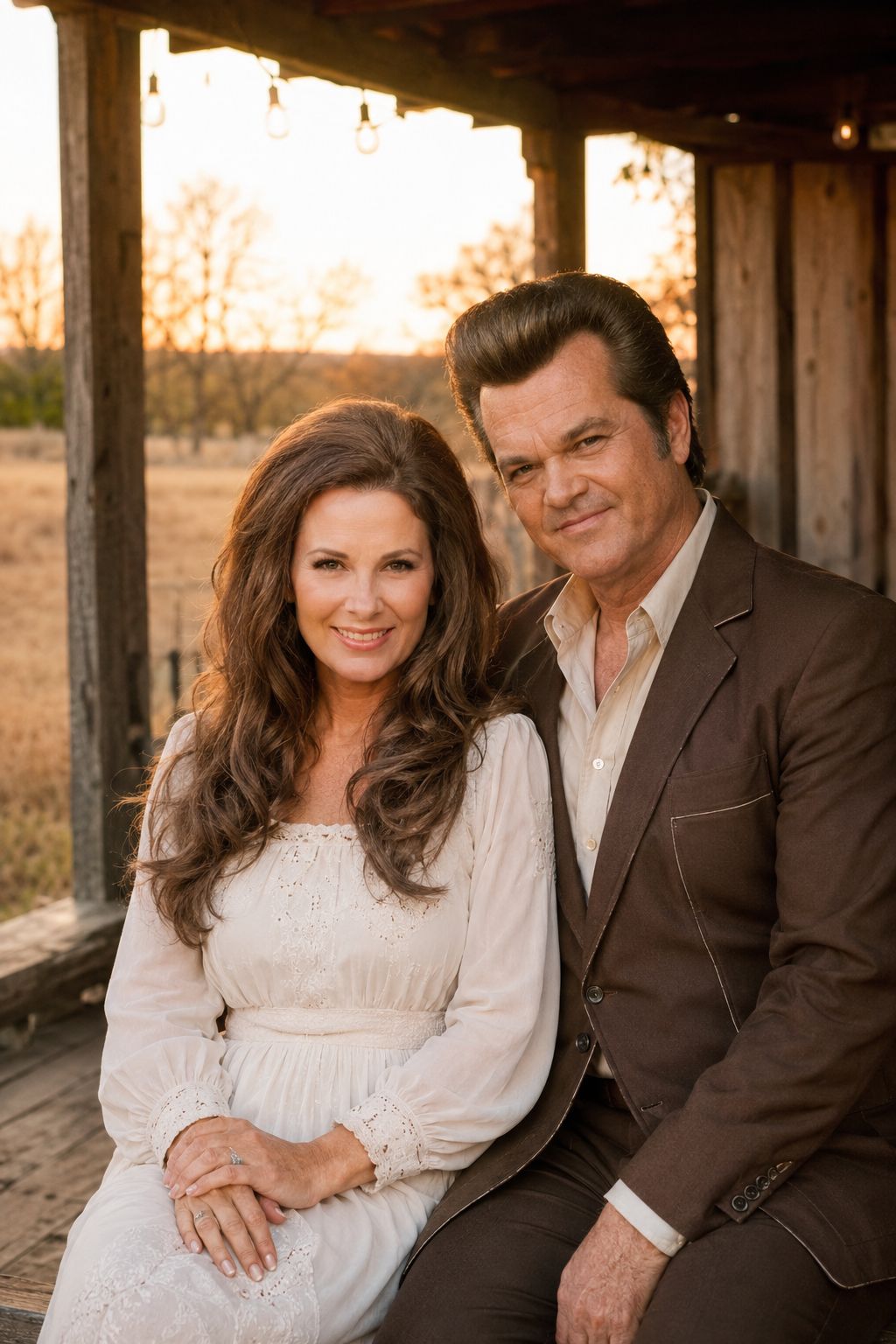
There are country music partnerships that sound good together.
And then there are partnerships that feel almost impossible to separate.
Conway Twitty and Loretta Lynn belonged to the second category.
When they stepped onto a stage together, something changed. Their voices seemed to understand one another before the first lyric was even finished. His deep, unmistakable delivery met her Kentucky-born strength, creating a sound that was passionate, playful, vulnerable, and sometimes almost painfully intimate.
Fans watched them sing songs like “After the Fire Is Gone,” “Lead Me On,” “Louisiana Woman, Mississippi Man,” and “Feelin’s” and naturally wondered what existed behind the microphones.
Were they secretly in love?
Was there something more than friendship?
Or was the magic simply the result of two extraordinary performers who understood exactly how to make a song feel real?
The answer, according to Loretta Lynn herself, was much simpler—and perhaps more beautiful.
They were friends.
Very good friends.
And that friendship became one of the most successful musical partnerships country music has ever known.
THE PARTNERSHIP THAT NOBODY EXPECTED
By the time Conway Twitty and Loretta Lynn became a recording team, both artists had already established themselves as major forces in country music.
Lynn had transformed her personal experiences into songs that spoke directly to women who rarely heard their lives reflected honestly in country music. Twitty, meanwhile, had built an enormous reputation for his emotional voice, dramatic songs, and ability to turn heartbreak into a three-minute story.
Twitty’s career had already crossed several musical worlds before he became one of country music’s biggest stars. The Country Music Hall of Fame notes that he eventually achieved 40 No. 1 Billboard country hits, an extraordinary record for his era.
Lynn had her own remarkable story.
The girl from Butcher Holler had become one of country music’s defining voices. She had written about marriage, jealousy, heartbreak, motherhood, independence, and the complicated realities of women’s lives with an honesty that made her both controversial and beloved.
Then came Conway.
Their first major duet hit, “After the Fire Is Gone,” arrived in 1971 and immediately demonstrated that their voices were not merely compatible—they were combustible.
The song reached No. 1 and opened the door to a remarkable run.
And suddenly, country music had a male-female duet partnership unlike almost anything else on the radio.
THE CHEMISTRY WAS REAL—BUT NOT THE ROMANCE
This is where the story becomes particularly fascinating.
Because the chemistry between Conway and Loretta was undeniable.
They sang about desire, distance, temptation, loneliness, marriage, and emotional conflict. They looked comfortable together. They teased one another. They laughed together. Their performances had an ease that could make audiences believe they were witnessing something deeply personal.
And audiences started talking.
Loretta later addressed those rumors directly.
“Everybody thought me and Conway had a thing going.”
But she immediately made the distinction clear: she said that was far from the truth and described Conway as a friend she loved dearly. She also explained that her husband, Doolittle “Mooney” Lynn, genuinely liked Twitty.
That detail changes the way we should remember their partnership.
The magic wasn’t necessarily created by a secret romance.
It was created by trust.
And perhaps that is even more powerful.
Because two people don’t have to be romantically involved to create emotional electricity.
Sometimes they simply have to trust each other enough to tell the truth through a song.
THE MAN WHO COULD MAKE LORETTA LAUGH
Behind the dramatic ballads was another side of Conway Twitty that fans didn’t always see.
He could make Loretta laugh.
A lot.
In the PBS American Masters account of their partnership, Lynn recalled how her husband and Conway would joke together. She remembered hearing Conway laughing while Mooney told him stories—stories she jokingly suggested were often exaggerated.
That image is remarkably different from the glamorous mythology surrounding the duo.
Forget the stage lights for a moment.
Imagine Conway and Mooney sitting somewhere backstage or on the road, laughing over some ridiculous story while Loretta looks on.
That was part of the bond too.
Not the awards.
Not the chart positions.
Not the screaming crowds.
Just laughter.
And sometimes, those ordinary moments tell us more about a friendship than any trophy ever could.
THEY DIDN’T JUST SING TOGETHER—THEY LISTENED TO EACH OTHER
Great duets require more than two great singers.
They require listening.
One singer has to know when to push forward and when to step back. They have to understand timing, phrasing, breathing, emotion, and silence.
Conway and Loretta possessed that instinct.
Listen closely to their recordings and there is a constant musical conversation happening.
He delivers a line.
She answers.
He intensifies the emotion.
She responds.
They meet in harmony.
Then they separate again.
It feels less like two singers performing a song and more like two characters living inside the same story.
That quality helped make their recordings timeless.
The Country Music Hall of Fame describes their first major duet, “After the Fire Is Gone,” as the beginning of one of country music’s most successful duet teams. The partnership produced major hits including “Lead Me On,” “Louisiana Woman, Mississippi Man,” and “Feelin’s.”
The numbers tell part of the story.
The music tells the rest.
FOUR STRAIGHT CMA DUO AWARDS
Their success wasn’t just a fan phenomenon.
The industry noticed.
Lynn and Twitty won the CMA Vocal Duo of the Year award repeatedly during the height of their partnership. The Country Music Hall of Fame records that they won four consecutive CMA Duo of the Year awards from 1972 through 1975.
The Songwriters Hall of Fame similarly notes that the pair recorded 14 charting singles together, including a remarkable run of five No. 1 duets between 1971 and 1975.
Think about that for a moment.
Five No. 1 duet singles.
In just a few years.
That isn’t simply successful collaboration.
That is cultural impact.
Yet perhaps the most remarkable thing is that neither artist needed the other to be successful.
They were already stars.
That made the partnership more interesting.
They weren’t trying to rescue one another’s careers.
They were adding another dimension to already extraordinary careers.
“LOUISIANA WOMAN, MISSISSIPPI MAN” AND THE ART OF DISTANCE
Few songs captured their chemistry better than “Louisiana Woman, Mississippi Man.”
The premise was simple: two lovers separated by geography but unwilling to let distance defeat them.
And because Conway and Loretta were so convincing together, the song felt almost autobiographical to listeners.
But that was the brilliance of their performances.
They could inhabit characters without pretending those characters were their private lives.
The Country Music Hall of Fame records the song among their signature hits.
And Loretta later recalled that her husband had actually found the song for them while they were touring.
That small detail is easy to overlook.
But it says something profound about the world surrounding the duo.
Even the people closest to them understood what Conway and Loretta could create together.
WHY THE RUMORS NEVER REALLY DIED
Perhaps the rumors continued because the songs themselves were so emotionally convincing.
Conway specialized in songs filled with romantic tension.
Loretta brought an extraordinary sense of emotional realism.
Together, they could make a listener feel as though they had walked into the middle of an argument between two married people—or witnessed two lovers saying things they had been afraid to say.
But performance is not confession.
That distinction matters.
Lynn’s own recollections make it clear that the public mythology often went further than reality. She described Twitty as a close friend and emphasized that her husband respected him.
So perhaps the better question isn’t:
“Were Conway and Loretta secretly in love?”
Perhaps the better question is:
“How much trust does it take for two people to convincingly sing about love, temptation, and heartbreak without actually living that story together?”
The answer is: a lot.
A FRIENDSHIP BUILT ON MUTUAL RESPECT
Twitty himself reportedly described Loretta as one of his best friends in the business. An archival account preserved by UNLV also records that the pair had first sung together for fun while touring Europe in 1969 and later emphasized their friendship while dismissing rumors of a romantic relationship.
That early connection matters.
Their partnership didn’t appear from nowhere.
They had time to become comfortable around each other.
They learned one another’s personalities.
They discovered what made the other laugh.
They learned how the other singer breathed, phrased a lyric, entered a harmony, and reacted onstage.
Then they took all of that familiarity and turned it into music.
That is why their performances still feel natural decades later.
WHEN THE STAGE LIGHTS FADED
Conway Twitty died suddenly in 1993 at age 59 after suffering a stomach aneurysm while traveling from a performance in Branson toward Nashville.
Loretta Lynn continued carrying her own remarkable legacy for decades afterward, releasing new music and revisiting songs from earlier periods of her career.
She died in 2022 at age 90.
By then, the world had changed dramatically.
Music had changed.
Radio had changed.
The country industry had changed.
But those old Conway-and-Loretta recordings remained.
And that is the strange thing about music.
People disappear.
Stages are dismantled.
Tour buses stop moving.
Awards gather dust.
But a voice can remain suspended in time.
THE REAL UNTOLD STORY
Maybe the greatest misconception about Conway Twitty and Loretta Lynn is that their story needs a secret romance to be fascinating.
It doesn’t.
Their real story is better.
It is the story of two immensely talented people who found a rare musical language together.
It is the story of friendship strong enough to survive rumors.
It is the story of two professionals who could step onto a stage and make millions of listeners believe in a fictional love story while maintaining genuine respect for the people they loved in real life.
And perhaps most importantly, it is the story of two artists who understood that country music is not about perfection.
It is about feeling.
They didn’t need to be lovers to sound like they understood love.
They simply needed to understand the human heart.
Conway understood the ache.
Loretta understood the truth.
Together, they understood the conversation between the two.
That is why Conway Twitty and Loretta Lynn remain unforgettable.
Not because the rumors were true.
But because the music was.
And when the first notes of “After the Fire Is Gone” or “Louisiana Woman, Mississippi Man” begin playing today, something remarkable happens.
For a few minutes, the years disappear.
The stage lights come back on.
Conway turns toward Loretta.
Loretta answers.
And country music remembers exactly what chemistry sounded like.
VIDEO: