 By admin
 INTRODUCTION:
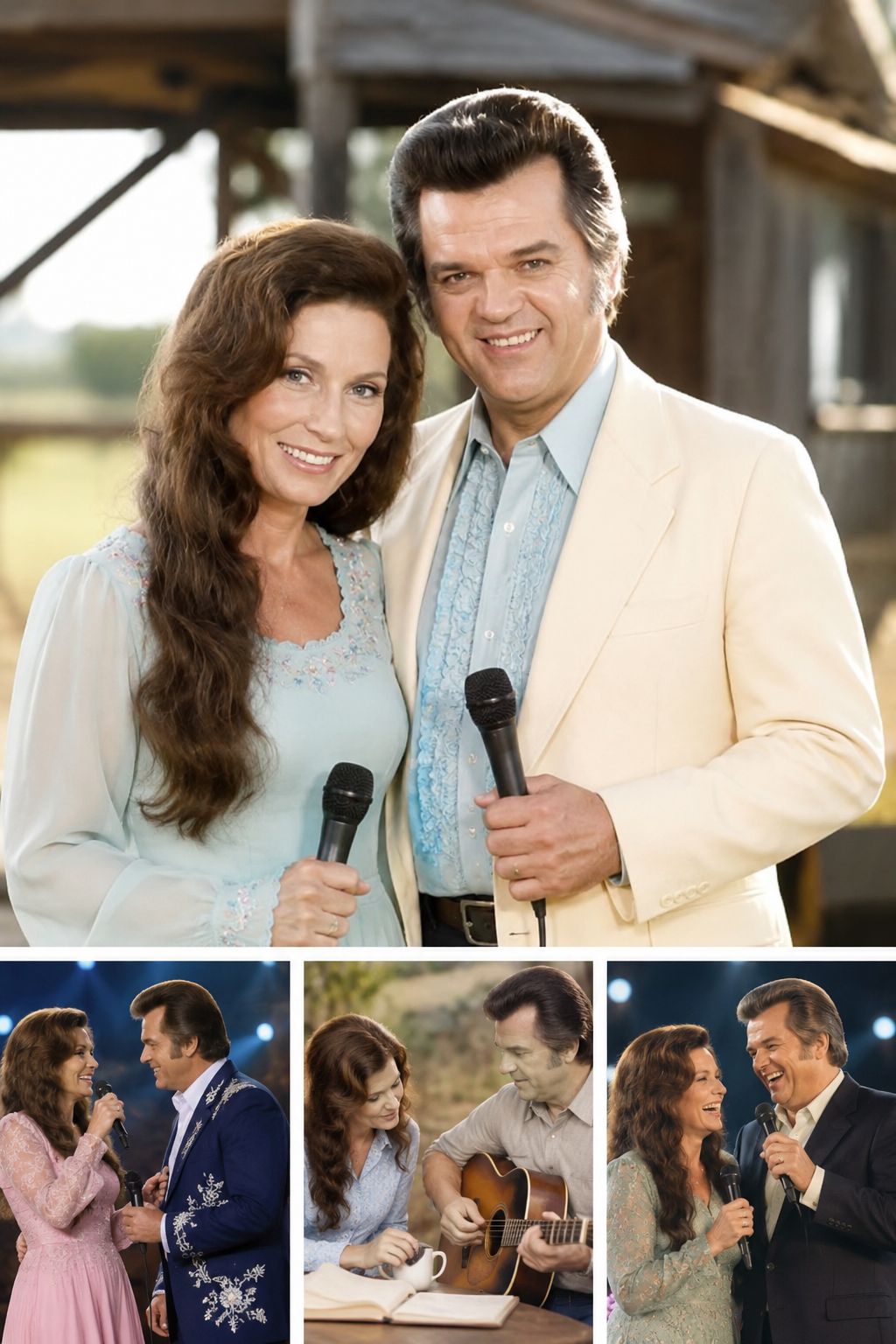
There are country music duos you remember because they sounded good together.
And then there are duos you remember because, for three or four minutes, they made you believe you were watching something private.
Conway Twitty and Loretta Lynn belonged to the second category.
When their voices collided on songs about forbidden love, temptation, jealousy, marriage, loneliness, and regret, the performances often felt almost too intimate to be acting. Conway’s smooth, restrained baritone seemed to pull the emotion out of the room, while Loretta’s unmistakably direct voice could answer him with tenderness one moment and fire the next.
Fans watched them and wondered the question that has followed the pair for generations:
Were Conway Twitty and Loretta Lynn secretly in love—or was their extraordinary chemistry simply the product of two masters who understood exactly how to tell a story?
The answer is both simpler and, in some ways, more beautiful than the rumor.
It Started With a Song—and Became Something Much Bigger
By the early 1970s, both artists were already established stars.
Loretta Lynn had transformed personal experience into some of country music’s most fearless songwriting. Conway Twitty had reinvented himself as one of country music’s great emotional storytellers.
Then came their first major duet, “After the Fire Is Gone.”
Released in 1971, the song became their first No. 1 country hit and won them a Grammy for Best Country Vocal Performance by a Duo or Group.
The song was hardly a conventional love story.
It dealt with two people confronting the emptiness that remains after passion has disappeared. That theme—complicated, morally messy, deeply human—became the perfect territory for Twitty and Lynn.
Their voices did something remarkable.
They didn’t simply sing to each other.
They sounded as though they were answering each other.
That distinction mattered.
The Chemistry Was Real. The Romance Wasn’t.
This is where the legend becomes especially fascinating.
Their performances were so convincing that audiences naturally assumed there had to be something happening behind the scenes.
After all, the pair repeatedly portrayed people who were emotionally drawn to one another, sometimes while trapped in other relationships.
They flirted onstage.
They teased one another.
They sang lyrics filled with desire and regret.
And they did it with such ease that the boundary between character and performer seemed to disappear.
But Loretta herself eventually addressed the speculation.
“Everybody thought me and Conway had a thing going. And that’s the farthest from the truth.”
According to PBS’s American Masters, Lynn described Twitty as a friend and emphasized that her husband, Oliver “Doolittle” Lynn, also cared deeply about Conway.
That statement is important because it changes the way we should hear those recordings.
The intimacy was not necessarily evidence of a secret affair.
It was evidence of trust.
What Made Them So Believable?
The secret may have been that both artists understood the difference between singing a romantic song and acting through a romantic song.
Twitty had built much of his solo career around emotionally complicated material. The Country Music Hall of Fame notes that many of his signature recordings explored infidelity, guilt, longing, and emotional conflict.
Loretta, meanwhile, had made her career by telling uncomfortable truths from a woman’s perspective.
Put those two instincts together and something extraordinary happened.
Conway could sound like the man who had already made a mistake.
Loretta could sound like the woman who knew exactly what that mistake would cost.
They didn’t have to be lovers in real life.
They only had to understand what lovers sounded like when love became complicated.
And they did.
Then Came “Lead Me On”
If “After the Fire Is Gone” established the formula, songs such as “Lead Me On” showed how far they could take it.
Their repertoire repeatedly placed their fictional characters in emotional gray areas.
The listener wasn’t simply hearing:
I love you.
They were hearing:
I shouldn’t love you.
And that is much more dramatic.
Country music has always understood that forbidden feelings create powerful stories. But Twitty and Lynn gave those stories something extra: the sense that both singers were listening to the other person rather than merely waiting for their turn.
That made every pause matter.
Every glance mattered.
Every change in vocal tone mattered.
The performances became miniature dramas.
“Louisiana Woman, Mississippi Man” Turned Chemistry Into Celebration
Not every Conway-Loretta story was tragic.
Their 1973 hit “Louisiana Woman, Mississippi Man” was more playful, energetic, and openly romantic.
The song became a No. 1 country hit, while the album of the same name also reached No. 1 on the country charts.
Suddenly, the duo wasn’t merely convincing listeners that they had complicated feelings.
They were having fun with the idea.
And that was another crucial ingredient in their chemistry.
Conway could play the confident gentleman.
Loretta could push back with humor and attitude.
The result was less like a traditional duet and more like two characters having a conversation.
That conversational quality became one of their trademarks.
Eleven Albums. Five No. 1 Hits. Four Straight CMA Awards.
The numbers make the partnership almost impossible to dismiss as a temporary gimmick.
Between 1971 and 1988, Lynn and Twitty recorded 11 studio albums together. They produced five No. 1 songs, and from 1972 through 1975 they won the CMA’s Vocal Duo of the Year award four consecutive times.
Their first Grammy-winning collaboration was followed by additional Grammy-nominated projects including “Lead Me On,” “Louisiana Woman, Mississippi Man,” “Feelins’,” “The Letter,” and the album Dynamic Duo.
Those aren’t the statistics of a novelty act.
They represent one of country music’s most durable creative partnerships.
And perhaps the most revealing part is this:
Their success continued for years without requiring the romance rumor to be true.
The music was powerful enough on its own.
Why Fans Still Wanted to Believe There Was More
Human beings are naturally drawn to stories that blur reality and fiction.
When two performers can create that illusion convincingly, audiences want to know what happens when the microphones are turned off.
Did they secretly love each other?
Did they ever wish they could be together?
Was there something they couldn’t say publicly?
Those questions are irresistible—but they also miss something important.
Sometimes professional intimacy is its own kind of relationship.
A great duet partner has to trust you.
They have to understand your timing.
They have to know when to step forward and when to disappear.
They have to recognize the emotional meaning behind a line before you even sing it.
That kind of connection can look like romance from the outside.
But it doesn’t have to be.
The Real Love Story Was the Music
Perhaps the most beautiful way to understand Conway Twitty and Loretta Lynn is not as secret lovers who were separated by circumstance.
It is as two artists who found a rare musical language together.
Loretta brought authenticity.
Conway brought restraint.
She could make a line sound like a challenge.
He could make the same line sound like a confession.
Together, they created tension.
And tension is the heartbeat of great country music.
Their partnership also revealed something fundamental about the genre: the best country songs don’t require perfect people.
They require believable people.
People who make mistakes.
People who want what they shouldn’t want.
People who stay when they should leave.
People who remember someone long after the relationship has ended.
That was the emotional world Conway Twitty and Loretta Lynn inhabited so convincingly.
The Final Verdict: Friends, Not Secret Lovers—But Something Just as Rare
The historical record supports a friendship and an extraordinarily successful professional partnership, not a secret romantic relationship. Lynn herself rejected the affair speculation, while the sheer longevity and achievement of their collaboration demonstrate how powerful their artistic bond really was.
And maybe that’s the part fans should treasure most.
They didn’t need to be lovers.
They didn’t need a scandal.
They didn’t need a hidden romance to make their performances unforgettable.
They needed two voices.
Two personalities.
Two artists willing to enter the emotional world of a song completely.
And when Conway Twitty looked across the stage at Loretta Lynn, audiences believed him—not because they were witnessing a secret affair, but because for those few minutes, he made the fictional feeling real.
That is stage magic at its highest level.
And decades later, it still works.
Because when the opening notes of one of their classic duets begin, the old question returns:
Were Conway and Loretta really in love?
Maybe not.
But they knew exactly how to make millions of people feel like they were.
And in country music, sometimes that’s the greater love story.
VIDEO: