 By admin
 INTRODUCTION:
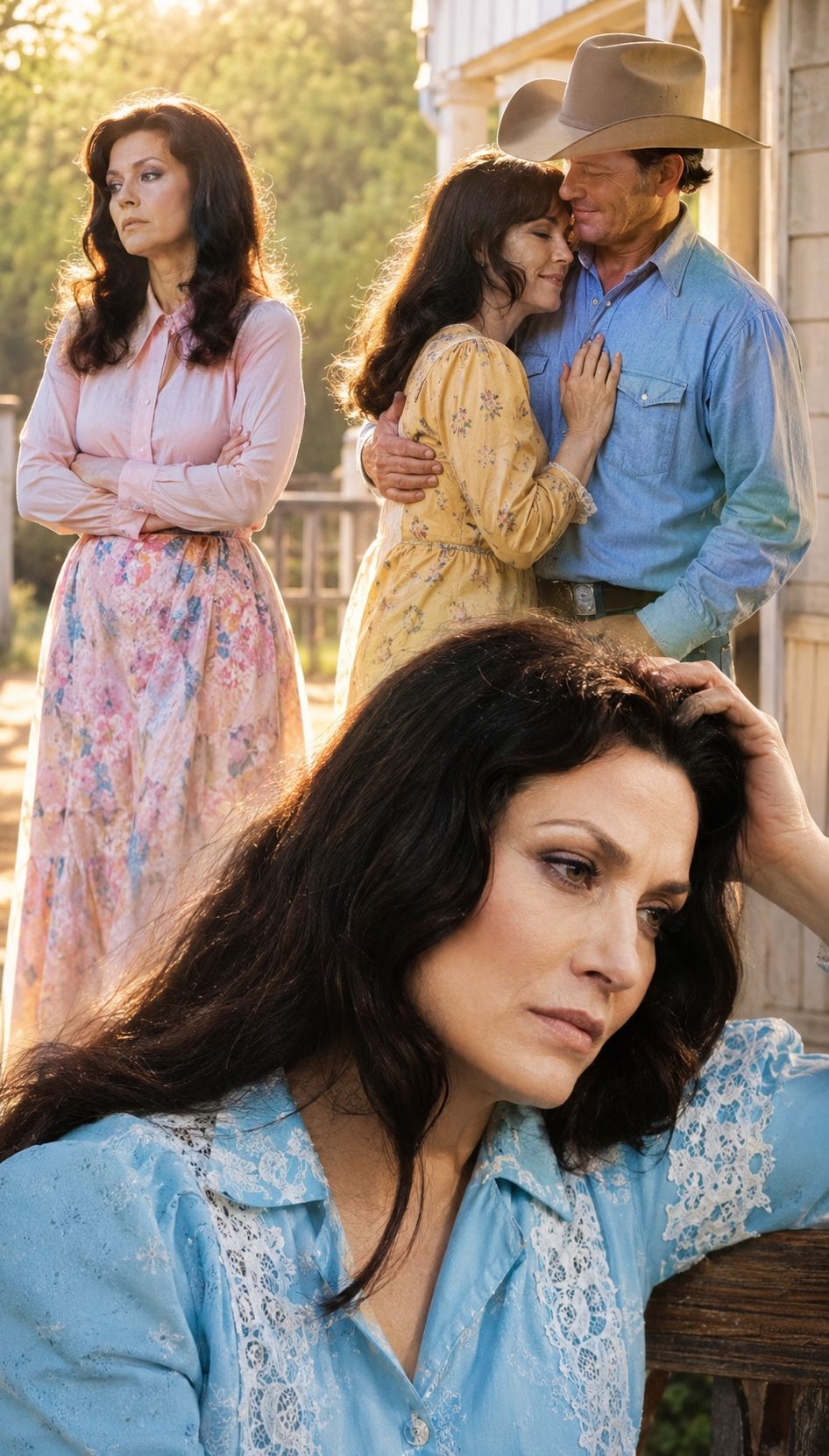
Loretta Lynn never pretended her marriage was perfect.
For nearly half a century, the country legend lived a love story that contained almost every emotion imaginable: devotion, anger, heartbreak, forgiveness, ambition, loneliness and, at times, betrayal. Her husband, Oliver “Doolittle” Lynn—better known as Doo or Mooney—was the man who encouraged her to sing, bought her an early guitar and pushed her toward a career that would eventually make her one of country music’s most influential voices.
He was also the man Loretta said repeatedly cheated on her.
Among the most painful episodes was the revelation that Doo had been involved with another woman—and, according to accounts of Loretta’s own autobiography, that woman was her brother’s wife.
It is a shocking detail in the life of a woman whose songs often sounded like warnings to unfaithful husbands and the women who pursued them.
But the deeper story isn’t simply about cheating.
It is about why Loretta stayed.
And why the complicated relationship that caused her so much pain also became one of the greatest sources of her artistic power.
A Teenage Bride Thrown Into an Adult World
Loretta Webb married Oliver Lynn in 1948, when she was still a teenager. Historical records establish that she was 15 at the time, although Loretta later recalled herself as younger in her autobiographical accounts.
The marriage moved quickly.
Children came quickly.
Hardship came even faster.
By the time Loretta was 20, she had already become the mother of four children. Her young family moved from Kentucky to Washington state as Doo searched for better opportunities, leaving Loretta to deal with motherhood, poverty and an often-absent husband.
And then came the betrayals.
Loretta later described a marriage in which Doo repeatedly pursued other women. One of the earliest episodes occurred when she was pregnant with their first child. Another particularly painful incident involved her brother’s wife. CBS, while discussing Loretta’s autobiography, reported that Doo had slept with Loretta’s brother’s wife and had left Loretta alone during the delivery of their second child.
For a young woman surrounded by family and struggling to build a life, the betrayal wasn’t merely romantic.
It was personal.
It was painfully close to home.
“It was real lonely.”
That loneliness would become a recurring theme in Loretta’s life—and eventually in her music.
The Marriage Behind the Songs
One of the most fascinating things about Loretta Lynn’s career is that she didn’t hide the contradictions of her marriage.
She turned them into songs.
Her husband could be the source of tremendous frustration and still be the person who encouraged her musical career.
Doo bought Loretta a $17 guitar and urged her to perform. He recognized something in her that she couldn’t yet recognize in herself. He pushed her onto stages and helped promote her early recordings.
That contradiction is essential to understanding Loretta Lynn.
The same relationship that gave her some of her deepest wounds also helped give her a voice.
“I could never have done it on my own.”
Loretta credited Doo with pushing her toward music, even while openly acknowledging the darker parts of their marriage.
That complexity is precisely what made her songwriting so powerful.
She wasn’t writing from the perspective of someone who had escaped heartbreak.
She was writing from inside it.
When “Fist City” Felt Like a Warning
Listen to Loretta’s catalog through the lens of her marriage and a different picture emerges.
“Don’t Come Home A-Drinkin’ (With Lovin’ on Your Mind).”
“Fist City.”
“You Ain’t Woman Enough.”
These weren’t abstract songs about imaginary characters.
Loretta drew heavily from her own experiences, and she once explained that her husband never knew exactly which lines were about him.
“Every song that I wrote, he didn’t know which lines were in there for him.”
She also said that putting those feelings into songs helped her emotionally.
That is one of the secrets of Loretta Lynn’s greatness.
She didn’t simply survive her experiences.
She transformed them.
The suspicion, jealousy, arguments and betrayals that might have remained private domestic pain became public art.
And millions of women recognized themselves in it.
Why Did She Stay?
This is perhaps the question that continues to fascinate listeners.
Why would a woman who became increasingly independent remain married to a man whose behavior caused her so much suffering?
Loretta’s answer was remarkably human.
She loved him.
She also had children.
And despite everything, their relationship contained genuine affection and partnership.
In discussing her marriage, Loretta acknowledged the pain while also explaining that she loved Doo and believed he loved her.
That doesn’t erase the betrayal.
It makes the story more complicated.
Real relationships rarely fit neatly into the categories of “good” and “bad.”
There can be tenderness alongside anger.
Loyalty alongside disappointment.
Memories of laughter alongside memories that still hurt decades later.
Loretta Lynn’s marriage was exactly that kind of complicated human story.
From Family Pain to Country Music History
By the 1960s, Loretta’s private struggles were becoming public songs.
She rose from a poor Appalachian background to become a country superstar, eventually earning 16 No. 1 country hits and 52 Top 10s, according to the PBS biography of her career.
Her honesty was revolutionary.
At a time when women in country music were often expected to sing about romance in carefully controlled ways, Loretta talked about cheating, drinking, marriage, sex, motherhood and female independence.
She didn’t polish the messiness out of her life.
She sang it.
And audiences believed her because she sounded like someone who had actually lived what she was singing.
The Strange Irony of Doo’s Legacy
Perhaps the greatest irony is that Doo Lynn became both the antagonist and an important supporting character in Loretta’s rise.
He encouraged her.
He managed parts of her early career.
He pushed her onto stages.
And he also became one of the central inspirations for her songs about difficult husbands.
As one obituary summarized, the marriage lasted 48 years, until Oliver Lynn died in 1996.
That is nearly five decades.
For all the pain, they never simply became strangers.
Loretta remained connected to him until the end.
In later years, she spoke about how deeply his death affected her. She had even spent years caring for him before his passing.
That tells us something important.
Love doesn’t always disappear just because someone has hurt you.
Sometimes love becomes tangled with history, children, memories, resentment and forgiveness.
The Woman Behind the Legend
It can be tempting to look at the story of Loretta and Doo Lynn as gossip.
The allegation involving her brother’s wife is certainly shocking.
But reducing Loretta’s life to an infidelity scandal misses the point.
The real story is about a woman who took painful experiences and refused to let them silence her.
She became the voice of women who had been betrayed.
The voice of wives waiting for husbands to come home.
The voice of mothers trying to hold families together.
The voice of women who were angry but still in love.
And sometimes, the voice of women who didn’t know whether they wanted revenge, forgiveness—or simply to be heard.
Her songs gave those emotions somewhere to go.
That is why Loretta Lynn remains so important to country music.
She didn’t write from a perfect life.
She wrote from a real one.
And her marriage to Doo was one of the greatest contradictions of that life: deeply painful, deeply formative and, in its own complicated way, deeply loved.
Loretta once described their relationship in simple terms that may explain more than any scandal ever could:
“It’s not a success story. It’s a love story.”
Maybe that’s the line to remember.
Not because it excuses betrayal.
Not because it turns suffering into romance.
But because Loretta Lynn understood something that made her songwriting extraordinary: sometimes the hardest stories are the ones that stay with us the longest.
And in Loretta’s case, those stories didn’t destroy her voice.
They created it.
VIDEO: