 By admin
 INTRODUCTION:
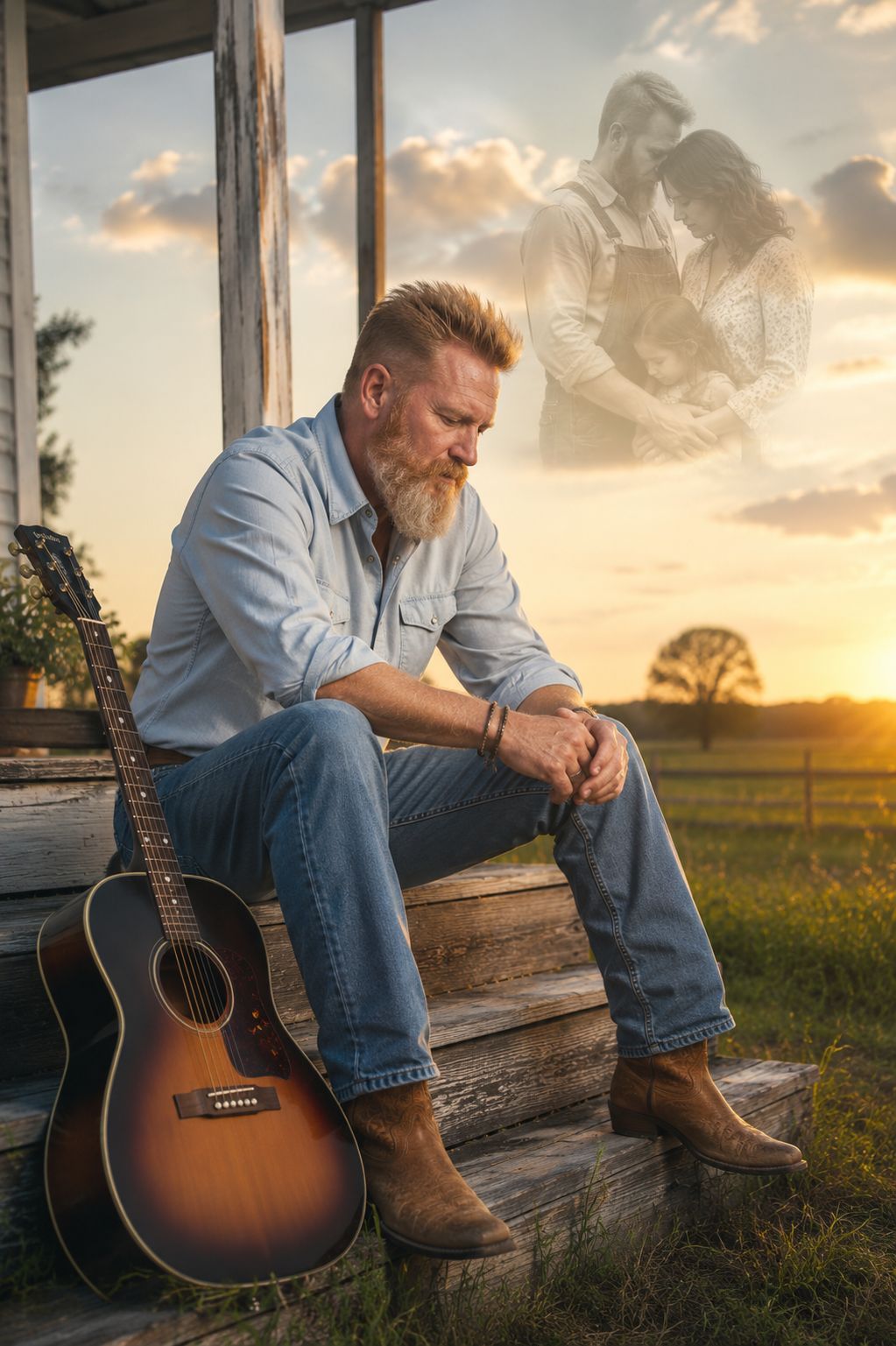
There are some losses that change your life.
And then there are losses that change who you are.
For Rory Feek, success had already arrived long before the hardest chapter of his life began.
He had written hit songs. He had built a respected career in Nashville. He had performed on stages in front of thousands of people. Alongside his wife, Joey, he had become one half of one of country music’s most beloved husband-and-wife duos.
But none of that prepared him for the day when the applause stopped mattering.
Because Rory Feek didn’t lose a record deal.
He didn’t lose a chart position.
He didn’t lose a Grammy.
He lost his wife.
And when Joey Feek died in 2016 after a battle with cancer at just 40 years old, Rory’s understanding of music, fame, family and even his own life changed forever.
Before the Loss, There Was the Dream
Long before millions of people knew the name Rory Feek, he was simply a songwriter trying to make a life in country music.
He eventually established himself as a Nashville songwriter, writing songs recorded by major country artists including Blake Shelton, Clay Walker, Tracy Byrd and others. The Country Music Hall of Fame and Museum describes how Feek came to Nashville, earned a publishing deal, and built a successful songwriting career before ultimately shifting his focus toward performing with Joey.
Then came Joey.
Rory and Joey married in 2002. Years later, they became Joey + Rory and appeared on the CMT competition Can You Duet? in 2008, finishing third. Their career quickly grew from there, with recordings, television appearances, awards and a devoted audience drawn to their unmistakably old-fashioned approach to country music.
Their appeal wasn’t based on glamour.
It was based on authenticity.
They looked like two people who actually liked being together.
They sang about ordinary life.
They laughed together.
They built a life around family, faith, music and their farm.
And somehow, in an industry obsessed with being bigger and louder, that simplicity made them stand out.
By 2010, Joey + Rory had won the Academy of Country Music’s Top New Vocal Duo award. Their career was moving forward, their television show was bringing fans into their home, and their family was growing.
Then everything changed.
The Phone Call That Divided Life Into “Before” and “After”
In February 2014, Rory and Joey welcomed their daughter, Indiana.
The couple had stepped away from touring to focus on their family and prepare for the birth. Rory began documenting their life through his blog, This Life I Live. What started as a place to capture the ordinary moments of family life soon became something much more profound.
Only months after Indiana’s birth, Joey was diagnosed with cervical cancer.
The couple initially hoped treatment would eliminate the disease.
But the cancer returned.
Eventually, the diagnosis became terminal.
And suddenly, the country music career that had once seemed so important became secondary to something much more basic:
How do you say goodbye to the person you love?
Rory began writing about Joey’s illness with extraordinary honesty. Millions followed their story, not simply because they were country music stars, but because the story was painfully human.
There were no stage lights powerful enough to make that pain disappear.
No award could fix it.
No hit song could rewrite it.
And no amount of fame could buy more time.
The Moment Music Became Something Different
One of the most heartbreaking details of Rory’s story is that music never completely disappeared.
Instead, it changed meaning.
Joey’s illness became intertwined with the music they loved, particularly the hymns that gave her comfort during her final months. Their final album, Hymns That Are Important to Us, became more than another record. It became a document of faith, love and surrender during an unimaginably difficult season. The album ultimately topped the country album sales chart and later won a Grammy.
Think about that for a moment.
At almost the exact moment when Rory was losing the person with whom he shared his music, the music itself was reaching a career high.
The charts were celebrating.
The awards were coming.
But at home, Rory was preparing to say goodbye.
That contrast is what makes the story so devastating.
Sometimes the world applauds you at the exact moment your heart is breaking.
On March 4, 2016, Joey died.
She was 40.
Rory announced her death through the same blog that had allowed millions of strangers to follow their journey. His words were filled with grief, but also with the faith that had carried them through those final months.
For the world, Joey Feek was a country singer who had died too young.
For Rory, she was his wife.
His singing partner.
The mother of his young daughter.
His best friend.
And the person with whom he had imagined growing old.
What Do You Do When the Person Beside You Is Suddenly Gone?
This is where Rory’s story becomes bigger than country music.
Because losing someone is one thing.
Learning how to live after losing them is another.
Rory later admitted that he didn’t fully understand how heavy the grief would be, even though he and Joey had spent so much time preparing for her death.
That is one of grief’s cruelest contradictions.
You can know something is coming.
You can prepare for it.
You can pray about it.
You can accept that it is inevitable.
And when it finally happens, it can still feel impossible.
Rory had spent years telling stories through songs.
After Joey’s death, he began telling them through words.
His blog became a place where grief, fatherhood, faith and memory could coexist.
His memoir, This Life I Live, transformed that experience into a larger story about his life and the woman who changed it forever. Rory himself wrote that the book wasn’t merely about Joey’s final months—it was about his entire life, his own story, their story and ultimately something larger than either of them.
In other words, Rory didn’t stop being a storyteller.
He simply discovered that the story he needed to tell had become much deeper.
The Man Who Walked Away From the Spotlight
After Joey’s death, Rory stepped away from the kind of musical partnership that had defined his career.
That makes sense.
How do you stand on a stage and sing the songs you once sang with the person who is no longer there?
How do you hear the harmony without hearing the voice that used to complete it?
How do you perform a love song when the person you wrote it for is gone?
For a time, Rory put down the guitar.
But he picked up a pen.
Publishers Weekly described that transition simply and powerfully: after Joey died, Rory put down his guitar and continued their love story through writing.
And eventually, he found his way back to music.
Not because the pain had disappeared.
But because the meaning had changed.
When Rory later began performing solo, he spoke about still feeling married and still feeling in love with Joey, even years after her death.
That statement reveals something profound about the kind of love they shared.
For Rory, moving forward didn’t necessarily mean moving on.
It meant carrying the past with him.
The Success He Couldn’t Have Imagined
Today, Rory’s identity extends far beyond the country singer audiences once knew.
His official biography describes him as a father, farmer, author and artist, with work spanning music, film, books and digital media. He is also a Grammy-winning songwriter and a bestselling author.
But perhaps the most remarkable part is this:
The thing that made Rory most meaningful to millions of people wasn’t necessarily a hit song.
It was his willingness to tell the truth about an ordinary life during an extraordinary storm.
He showed people the hospital rooms.
The quiet moments.
The fear.
The faith.
The photographs.
The memories.
The final goodbyes.
He showed people that love doesn’t become less real simply because someone dies.
Sometimes, it becomes more visible.
Rory didn’t become famous because he lost Joey. He became unforgettable because he showed the world what it meant to love her.
What Rory Really Lost
It’s easy to describe Rory’s loss as the death of his wife.
But that doesn’t tell the whole story.
He lost a singing partner.
He lost the woman beside him on stage.
He lost the future they had planned.
He lost the ordinary mornings that once seemed guaranteed.
He lost the chance to watch Joey grow old.
And perhaps most painfully, he lost the version of himself that existed only because she was beside him.
But something else happened.
He gained perspective.
He gained a deeper voice as a storyteller.
He discovered that success could mean something entirely different.
Before Joey’s illness, success might have been measured in songs, awards, records and audiences.
Afterward, success became something quieter.
Raising a daughter.
Keeping promises.
Remembering.
Forgiving.
Loving again.
Getting up the next morning.
And finding a reason to keep telling the story.
The Country Music Lesson Rory Feek Left Behind
Country music has always understood heartbreak.
That’s part of its DNA.
But Rory Feek’s story offered something different from the traditional heartbreak song.
There was no three-minute ending.
No clever final verse.
No clean resolution.
His story continued.
And perhaps that’s why so many people connected with it.
Because real grief doesn’t end when the funeral ends.
Real love doesn’t disappear when someone takes their final breath.
And real life doesn’t wait until you’re ready.
Rory had fame.
He had music.
He had success.
But the loss of Joey forced him to discover that none of those things were the most valuable part of his life.
The most valuable part was the love underneath all of it.
And maybe that is the lesson people remember most.
The stage eventually goes dark.
The awards gather dust.
The charts move on.
The audience goes home.
But the love you gave someone—and the life you built together—can remain.
That is why Rory Feek’s story isn’t ultimately about a country singer who lost his wife.
It’s about a man who discovered, through the deepest loss imaginable, what mattered all along.
And in the end, perhaps the greatest song Rory ever told wasn’t one he wrote for the radio.
It was the story of a life shared with Joey.
A love that ended too soon.
A family that continued.
And a man who learned that sometimes the most powerful thing a person can do after losing everything is simply to keep living—and keep telling the truth.
VIDEO: