 By admin
 INTRODUCTION:
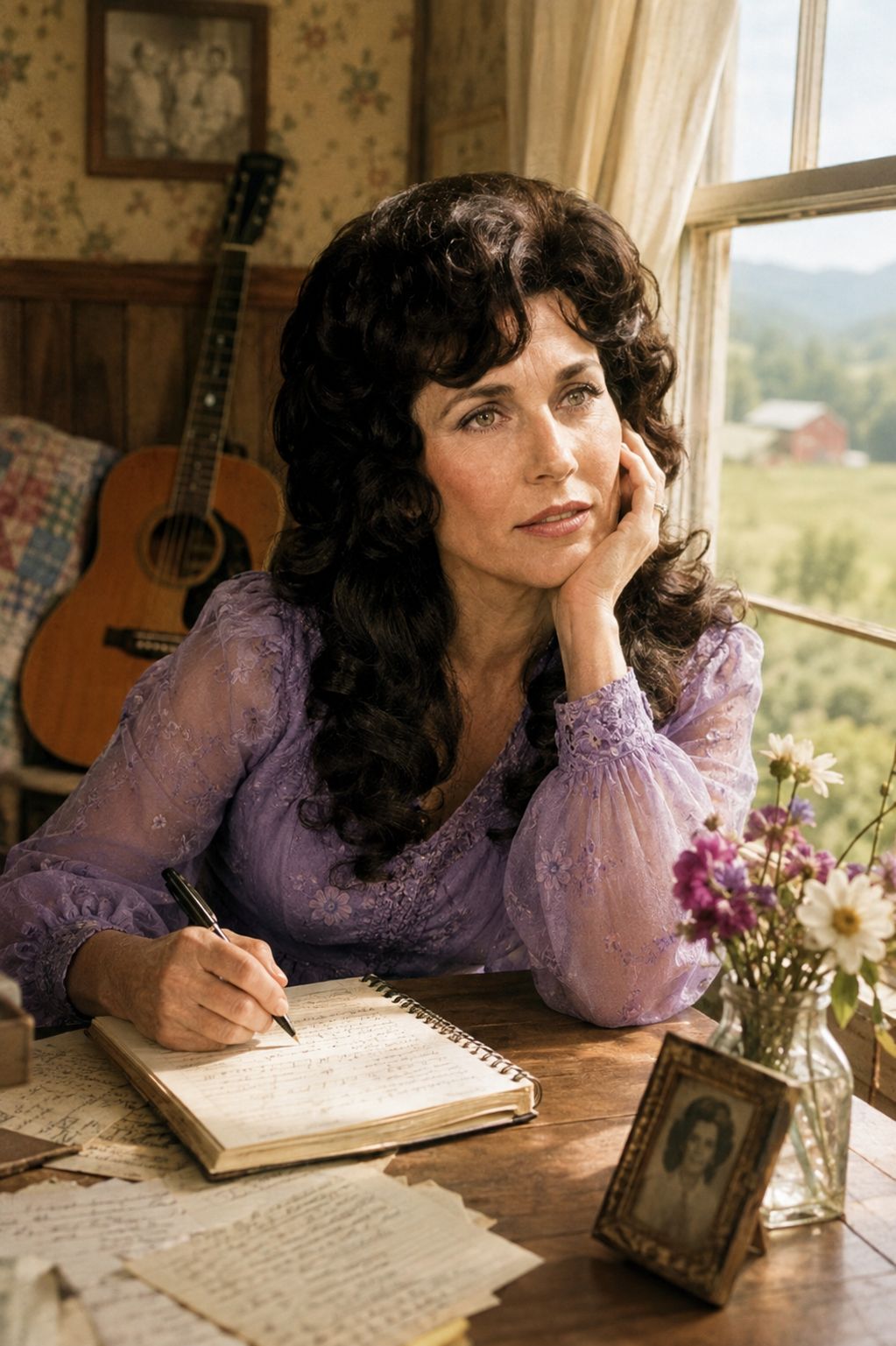
There are country songs that entertain you.
There are country songs that make you dance.
And then there are the songs of Loretta Lynn — songs that feel as if someone quietly opened an old family album, turned to the most painful page, and started singing.
That is why Loretta Lynn’s greatest songs still hit differently.
They were not built from distant fantasies. They came from poverty, marriage, motherhood, jealousy, heartbreak, hard work, pride, anger, forgiveness and survival. The Country Music Hall of Fame describes Lynn as an artist who insisted on sharing her “brash and brave truth,” drawing directly from the difficult circumstances of her early life.
And sometimes, that truth hurts.
“I guess my life is my songbook, ’cause I only write about what I’ve lived.”
That philosophy explains almost everything about her music.
So if you are about to revisit these songs, fair warning:
Don’t watch this if you’re not ready to cry.
Because behind some of Loretta Lynn’s biggest hits were pieces of a life that was far more complicated — and far more human — than the polished image of a country superstar suggested.
The Girl From Butcher Holler Who Turned Pain Into Music
Before the awards, television appearances and sold-out stages, there was a girl named Loretta Webb growing up in Butcher Holler, Kentucky.
Her family lived in poverty in the Appalachian coal country. Her father worked as a coal miner and farmer while her mother cared for a large family. Loretta married young, became a mother while still a teenager, and eventually found herself raising a family while trying to build a career in music.
It sounds almost impossible when you know how her story ended.
But that struggle became her greatest songwriting advantage.
Loretta didn’t need to invent characters.
She knew them.
She didn’t need to imagine what it felt like to worry about money.
She had lived it.
She didn’t need to ask what women were thinking behind closed doors.
She listened to the women around her — and to herself.
That authenticity became her weapon.
“Coal Miner’s Daughter” Was More Than a Hit
If there is one song that explains Loretta Lynn, it is “Coal Miner’s Daughter.”
Released in 1970, the autobiographical song became her signature recording and reached No. 1. It later provided the title for her bestselling autobiography and the film based on her life.
But what makes the song so powerful isn’t simply its success.
It’s the tenderness.
Loretta could have spent her career trying to escape the poverty of her childhood. Instead, she turned around and honored it.
She remembered her father.
She remembered her mother.
She remembered the house, the hardship and the family that somehow found happiness without having much money.
That is what makes the song devastating.
It isn’t really about being poor.
It’s about realizing, years later, that the people who gave you everything may have had almost nothing.
And suddenly, the song becomes personal for everyone listening.
Because eventually, most people reach a point where they look backward and realize:
Home was never about how much you had. It was about who was there.
Then Loretta Started Saying What Women Were Afraid to Say
If “Coal Miner’s Daughter” showed Loretta’s heart, songs like “You Ain’t Woman Enough,” “Don’t Come Home A-Drinkin’,” and “Fist City” showed her backbone.
And Nashville wasn’t necessarily prepared for that woman.
The Songwriters Hall of Fame notes that Lynn’s songs introduced a new kind of female character to country music — a woman who wasn’t afraid to defend herself.
That was revolutionary.
In “You Ain’t Woman Enough,” she confronted another woman.
In “Don’t Come Home A-Drinkin’,” she drew a line with a husband whose behavior had crossed it.
And in “Fist City,” she delivered one of country music’s most unforgettable warnings.
There was humor in these songs.
There was attitude.
But underneath the punchlines was something much more serious:
women were finally hearing themselves represented.
Loretta wasn’t pretending marriage was perfect.
She wasn’t pretending women never became angry.
She wasn’t pretending every family dinner ended with everyone smiling.
She was saying the quiet parts out loud.
And millions of women recognized themselves.
The Secret Behind Her Fearlessness Was Honesty
Today, songs about marriage, divorce, drinking, sexuality, birth control and complicated relationships are everywhere.
But when Loretta Lynn tackled these subjects, many of them were controversial.
Her official biography notes that she wrote about topics ranging from sex and divorce to alcohol, war and birth control. “The Pill,” in particular, was controversial enough to be banned by many radio stations.
That wasn’t accidental rebellion.
It was observation.
Loretta understood that country music worked best when it told people what they already knew but couldn’t say.
She understood the woman standing in the kitchen.
The wife waiting for her husband to come home.
The mother trying to stretch a paycheck.
The woman wondering whether she had sacrificed too much.
The woman who was tired of pretending everything was fine.
And Loretta gave those women a microphone.
“One’s on the Way” Was Funny — Until You Really Listened
One of Loretta’s most fascinating talents was her ability to hide pain inside humor.
“One’s on the Way” is a perfect example.
On the surface, it’s witty and conversational.
But beneath that humor is the exhausting reality of motherhood, domestic responsibility and the feeling that life keeps demanding something from you before you’ve had a chance to breathe.
That was Loretta’s gift.
She could make you laugh first.
Then, five seconds later, make you realize you were laughing because you recognized something painful.
That emotional switch is one reason her music remains so effective.
Then There Were the Songs About Love That Didn’t Have Easy Answers
Loretta wasn’t only a songwriter of confrontation.
She also understood longing.
Heartache.
Temptation.
Regret.
That became especially powerful in her legendary partnership with Conway Twitty.
Their first major duet, “After the Fire Is Gone,” reached No. 1 in 1971 and began one of country music’s most successful duet partnerships. Together they produced multiple No. 1 songs, including “Lead Me On,” “Louisiana Woman, Mississippi Man” and “Feelins’.”
Those songs worked because Loretta understood something essential about human relationships:
People aren’t always good.
People aren’t always bad.
Sometimes they’re simply lonely.
Sometimes they make mistakes.
Sometimes love and regret occupy the same room.
And country music has always been at its best when it refuses to give easy answers.
The Tears Became Even Deeper With Time
Loretta’s music became inseparable from the passage of time.
The young woman who once sang about marriage and motherhood eventually became an elder stateswoman of country music.
She experienced enormous success, but she also endured profound personal losses, including the deaths of her son Jack Benny in 1984 and daughter Betty Sue in 2013.
Those later years inevitably changed the emotional weight of her catalog.
A song that once sounded like a young woman complaining about life could suddenly sound like an older woman remembering an entire lifetime.
That’s the strange power of great country music.
The song doesn’t change.
You do.
And because you change, the song changes with you.
Loretta Never Stopped Being a Songwriter
Perhaps one of the most remarkable parts of her legacy is that Loretta wasn’t simply a singer who happened to have great songs.
She considered herself a songwriter first.
The Nashville Songwriters Hall of Fame notes that despite her enormous success and awards, Lynn continued to identify herself first and foremost as a songwriter.
That distinction matters.
Because her greatest achievement wasn’t merely getting people to listen.
It was convincing people that their ordinary lives were worth singing about.
The kitchen was worth a song.
The coal mine was worth a song.
A bad marriage was worth a song.
A mother’s exhaustion was worth a song.
A woman’s anger was worth a song.
A family’s poverty was worth a song.
A complicated love was worth a song.
And ultimately, a life was worth a song.
The Final Chapter Proved She Still Had Something to Say
Even decades into her career, Loretta Lynn refused to become a museum piece.
Her 2004 album Van Lear Rose, produced by Jack White, introduced her music to a new generation and won the Grammy for Best Country Album.
Think about that.
A woman who had begun her career in the early 1960s was still making culturally significant music more than four decades later.
That isn’t nostalgia.
That’s relevance.
Loretta’s voice survived because the things she sang about never disappeared.
People still fall in love.
People still betray one another.
Parents still sacrifice.
Families still struggle.
Women still fight to be heard.
And people still look backward and wonder where the years went.
That Is Why Loretta Lynn Still Makes People Cry
Loretta Lynn died on October 4, 2022, at age 90.
But listen to “Coal Miner’s Daughter” today, and it doesn’t sound like the ending of anything.
It sounds like someone is still there.
Still remembering.
Still telling the truth.
Still sitting at the kitchen table.
Still looking back toward Kentucky.
Still reminding us that a person’s greatest treasure isn’t necessarily fame, money or awards.
Sometimes it’s memory.
Sometimes it’s family.
Sometimes it’s simply knowing where you came from.
And perhaps that is the untold story behind Loretta Lynn’s greatest songs.
They weren’t really about becoming famous.
They were about refusing to let ordinary lives disappear.
Loretta Lynn didn’t just sing about life. She turned her life into a place where millions of other people could recognize themselves.
That’s why the songs endure.
That’s why “Coal Miner’s Daughter” still brings tears.
That’s why “Don’t Come Home A-Drinkin’” still feels fearless.
That’s why “You Ain’t Woman Enough” still makes people smile.
That’s why “Fist City” still has teeth.
And that’s why, decades after those songs first reached country radio, Loretta Lynn remains something far more important than a legend.
She remains a witness.
A witness to the women who endured.
A witness to families who struggled.
A witness to love that wasn’t always perfect.
A witness to heartbreak that couldn’t always be repaired.
And a witness to the extraordinary beauty hidden inside an ordinary life.
So yes…
Don’t watch this if you’re not ready to cry.
Because somewhere between the first note and the last memory, Loretta Lynn has a way of making you think about someone you loved, someone you lost, or perhaps the person you used to be.
And when the song ends, you may realize the tears aren’t really for Loretta.
They’re for your own story.
VIDEO: