 By admin
 INTRODUCTION:
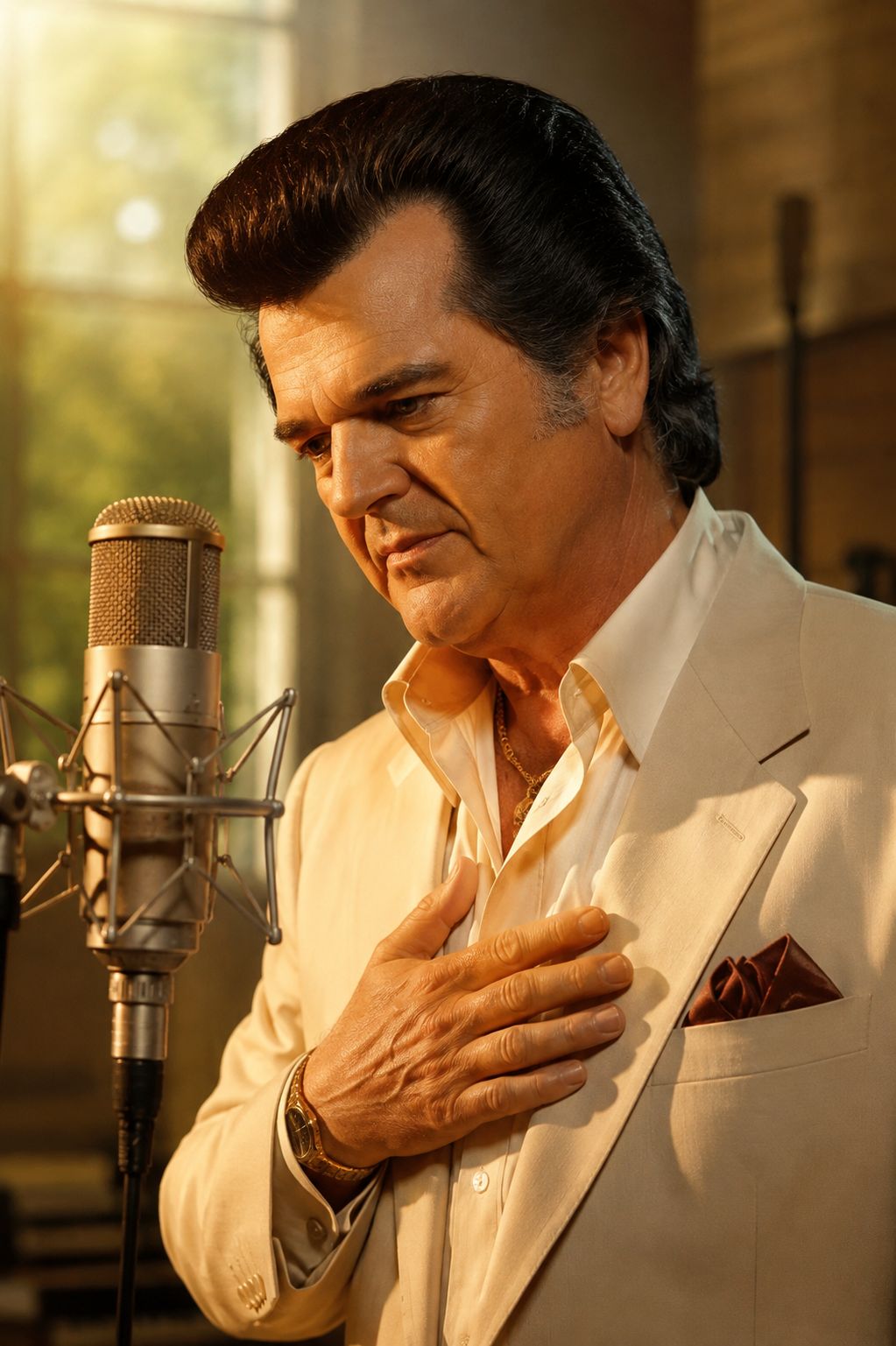
There are singers who perform love songs, and then there are singers who make you feel as if they are confessing something they have never told anyone.
Conway Twitty belonged to the second group.
His voice could turn a simple phrase into a private conversation. A low note could sound like regret. A pause could feel like hesitation. And when he sang about wanting someone, losing someone, or desperately trying to hold on to someone, millions of listeners believed they were hearing the truth behind the man.
But that raises a fascinating question:
What was Conway Twitty really feeling when he stood behind the microphone and recorded those songs?
The answer is more complicated—and more human—than the romantic image he created.
Twitty became one of the most successful artists in country music history, earning an extraordinary number of No. 1 hits and building a career around songs of desire, heartbreak, temptation, regret, and devotion. The Country Music Hall of Fame describes his singing as intensely emotional, with many of his signature songs built around passion, guilt, and complicated relationships.
But Twitty himself rarely gave audiences a direct answer about how much of those songs reflected his private life.
And perhaps that was exactly the point.
The Man Behind the Voice Was More Private Than People Realized
Conway Twitty understood something about fame that many performers never learn:
Mystery can be more powerful than confession.
While other country stars were willing to tell audiences intimate stories about their marriages, heartbreaks, mistakes, and personal struggles, Twitty deliberately kept much of himself behind the curtain.
In a 1991 interview, he was asked whether the emotional themes of his songs reflected his own experiences.
His answer was essentially: I’ll never tell.
But he added an important thought—he didn’t believe a singer could make a song believable without having lived something emotionally similar.
That statement changes the way you hear him.
Because suddenly, songs that might initially sound like theatrical country melodrama begin to feel like emotional acting based on real understanding.
He didn’t necessarily have to be telling his own literal story.
He simply had to understand the feeling.
“I don’t think that you can sing about it and make it believable if you haven’t lived it.”
That may be the key to understanding Conway Twitty.
He Didn’t Sing About Perfect Love
Listen closely to Twitty’s catalog and you’ll notice something.
His greatest romantic songs were rarely about uncomplicated happiness.
They were about wanting.
Wanting someone you shouldn’t have.
Wanting someone who might leave.
Wanting forgiveness.
Wanting another chance.
Wanting to say something that pride wouldn’t allow you to say directly.
That emotional territory became his kingdom.
Songs such as “Hello Darlin’,” “Linda on My Mind,” “Fifteen Years Ago,” “You’ve Never Been This Far Before,” and “I’d Love to Lay You Down” weren’t simply love songs. They were miniature emotional dramas. The Country Music Hall of Fame notes that many of Twitty’s best-known recordings combined infidelity, guilt, sensuality, and emotional conflict.
And that’s why his delivery mattered so much.
A different singer could have turned those songs into ordinary country records.
Twitty turned them into conversations.
“Hello Darlin’” Wasn’t Just a Song—It Was a Moment
Few openings in country music history are as recognizable as the beginning of “Hello Darlin’.”
The magic wasn’t complicated.
There was no need for an elaborate introduction.
Just a voice that sounded as if a man had unexpectedly encountered someone he had never truly stopped thinking about.
That’s what Twitty did better than almost anyone.
He made the microphone disappear.
Suddenly, the listener wasn’t hearing a country star in a recording studio.
They were standing in the emotional space between two people who had once loved each other.
Twitty’s official biography emphasizes that his communication with audiences happened primarily through his music. He famously avoided conventional stage banter for much of his career, telling audiences that he communicated through his songs rather than through speeches.
That decision was enormously important.
Because it meant that the songs had to do all the talking.
And Twitty trusted them.
Perhaps His Greatest Gift Was Knowing What Not to Say
In today’s music world, artists often explain everything.
They explain the meaning of the song.
They explain who inspired it.
They explain what happened in the studio.
They explain what they were feeling.
Twitty went the other direction.
He gave listeners just enough information to make them curious—and then left them alone with the song.
That created what he himself called a kind of mystique.
The Los Angeles Times noted that Twitty intentionally protected his private self and believed that maintaining that mystery contributed to his longevity.
Think about how powerful that is.
When Conway sang about heartbreak, you couldn’t completely separate the character from the man.
Was he remembering something?
Was he imagining something?
Was he drawing from another person’s experience?
Or was he simply an extraordinary actor with a voice capable of making fiction feel painfully real?
He never completely answered.
And because he didn’t, listeners filled in the blanks themselves.
The Emotion Was Real—Even When the Story Wasn’t Literally His
This is where the mythology surrounding Conway Twitty can sometimes become misleading.
It’s tempting to assume that every heartbreak song was autobiographical.
There isn’t enough evidence to make that claim.
In fact, the historical record paints a more nuanced picture. Twitty’s official biography describes him as a hardworking, family-oriented man who wasn’t living the stereotypical tortured-rock-star lifestyle.
The Country Music Hall of Fame likewise portrays him as a remarkably versatile artist whose career stretched across decades and genres.
So perhaps the real secret wasn’t that every song came from personal heartbreak.
Perhaps it was that Twitty understood heartbreak.
He understood longing.
He understood masculine vulnerability.
He understood the fear of rejection.
And he understood the strange combination of confidence and insecurity that often exists inside romantic desire.
That’s why his performances felt intimate.
He Sang the Things Men Often Couldn’t Say
There is another reason Conway Twitty became so important to country music.
He gave men permission to be emotionally vulnerable without making them feel weak.
His characters could admit that they missed someone.
They could beg.
They could regret.
They could confess desire.
They could admit that they weren’t over a woman.
And Twitty’s deep, controlled voice made vulnerability sound powerful rather than fragile.
A contemporary Washington Post appreciation described his ability to balance virile singing with sensitive phrasing, creating the feeling of aching hearts and romantic confidence within the same performance.
That balance was extraordinary.
He wasn’t crying into the microphone.
He was holding the tears back.
And sometimes that restraint made the emotion hit harder.
The Silence Between the Notes Mattered
Perhaps the most important thing about Conway Twitty wasn’t what he sang.
It was what he didn’t sing.
The pauses.
The breath.
The slight change in tone.
The hesitation before a phrase.
Those tiny details made his recordings feel less like performances and more like private moments overheard through a wall.
That’s difficult to manufacture.
You can write a romantic lyric.
You can hire great musicians.
You can build a beautiful arrangement.
But you can’t easily manufacture the feeling that the singer is remembering something painful while standing in front of the microphone.
Twitty had that ability.
And listeners recognized it.
His Career Was Built on Emotional Honesty
The numbers alone are staggering.
The Country Music Hall of Fame credits Twitty with forty No. 1 Billboard country hits during his career, while his official site celebrates 55 No. 1 singles across his broader recording achievements.
But numbers don’t explain why people still remember his voice.
Plenty of artists had hits.
Few created an emotional identity so recognizable that one sentence could immediately tell you who was singing.
Conway Twitty sounded like desire.
He sounded like regret.
He sounded like the phone call you weren’t sure you should make.
He sounded like seeing an old love unexpectedly.
He sounded like staying awake after midnight thinking about somebody who wasn’t there.
That emotional vocabulary became his signature.
And Then Came the Final Chapter
Twitty’s story ended suddenly in 1993 when he died from an abdominal aneurysm at the age of 59. The Country Music Hall of Fame notes that he had been traveling from a performance in Branson toward Nashville when he became critically ill.
He had continued recording almost until the end.
His final recording session was a collaboration with Sam Moore on “Rainy Night in Georgia,” later released on the Rhythm, Country & Blues collection.
There is something haunting about that final chapter.
A man who spent decades singing about love, loneliness, regret, desire, and memory left behind thousands of recordings—but never gave the world a complete explanation of which emotions belonged to the character and which belonged to Conway.
Maybe that was his greatest gift.
He allowed us to bring our own lives into his songs.
What Was Conway Twitty Really Feeling?
Maybe the honest answer is that we will never know.
And perhaps we aren’t supposed to.
Twitty deliberately protected that part of himself.
He knew that if he explained every emotion, the mystery would disappear.
Instead, he gave listeners something more valuable:
a voice they could put their own memories inside.
When someone hears “Hello Darlin’” decades later, they may think about a former spouse.
Someone else may remember a first love.
Another person may remember the person they never got to say goodbye to.
That’s the extraordinary thing about Conway Twitty.
His songs weren’t locked inside his life.
They became part of ours.
He didn’t have to tell us exactly what he was feeling. His voice made us feel it ourselves.
And perhaps that’s why Conway Twitty still sounds different.
He wasn’t simply singing about love.
He was singing about everything love leaves behind.
The longing.
The regret.
The silence.
The temptation.
The memories.
And that one impossible question that country music has been asking for generations:
What if the person you lost is still the person you love?
Conway Twitty never needed to answer that question directly.
He only needed to sing.
And when he did, millions of people heard something that felt almost too personal to be a performance.
They heard themselves.
VIDEO: