 By admin
 INTRODUCTION:
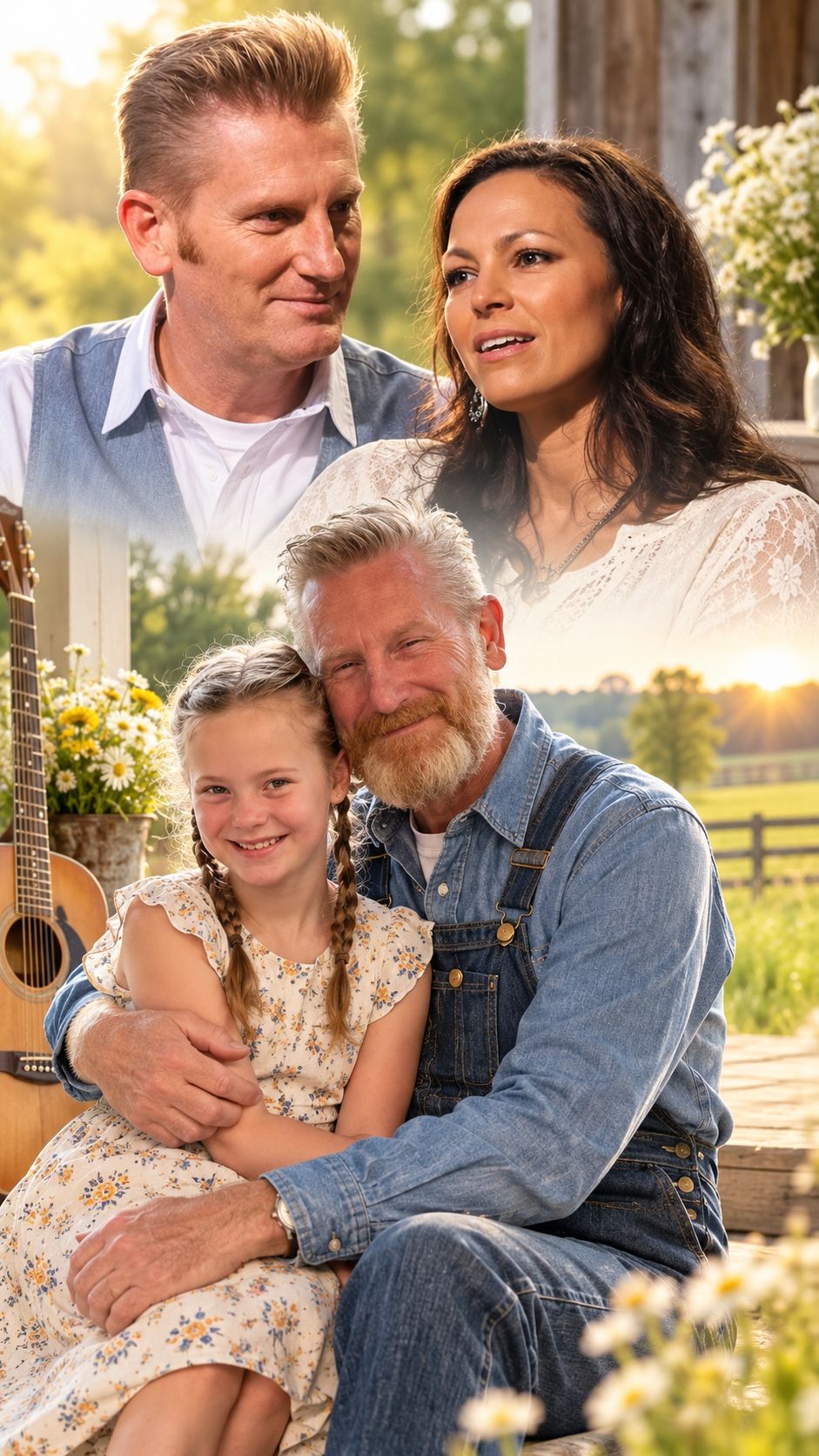
There are some stories in country music that are remembered because of hit songs, sold-out shows, or awards.
And then there are stories remembered because they touch something deeper.
The story of Rory Feek, Joey Feek, and their daughter Indiana—“Indi”—belongs in that second category.
It was never simply a story about a country-music couple. It became a story about marriage, parenthood, faith, devastating loss, and the quiet courage required to wake up the next morning and keep living.
When Rory and Joey stepped away from the demands of their music career in 2014, they imagined something wonderfully ordinary. They wanted time at home, time on their farm, and time to welcome their new daughter into the world. Rory later wrote that they were preparing to simplify their lives and begin homesteading. Instead, life gave them a story far more difficult than anything they had planned.
Indiana was born in February 2014. Only months later, Joey was diagnosed with cervical cancer.
Suddenly, the simple family life they had dreamed about became a battle against time.
And Rory became more than a husband standing beside his wife.
He became the keeper of memories.
The storyteller.
And eventually, the father who would have to carry his little girl forward without the woman who had dreamed of raising her beside him.
The Love Story Behind the Music
Before the heartbreak, there was joy.
Rory and Joey were married in 2002, and their musical partnership eventually became one of country music’s most beloved husband-and-wife duos. They gained national attention after appearing on Can You Duet, where they finished third, and their music connected with audiences because it felt genuine rather than manufactured.
They weren’t simply performers singing about love.
They were living it.
Their relationship was woven into their music, their farm, their family, and their everyday routines.
That is part of what made what came next so painful.
When Joey became seriously ill, Rory began documenting their family’s journey through his blog, This Life I Live. What started as an attempt to capture ordinary moments became something much more profound: a way for Rory to process what was happening while preserving memories for his family.
“The story took a turn.”
That simple idea captures so much of their journey.
They had expected a baby.
They received a daughter.
They had expected a year of family life.
They received a battle.
And ultimately, Rory had to say goodbye to his wife.
Joey died in March 2016 after her battle with cancer.
Rory was left with grief that no song could completely explain—and a little girl who still needed her father.
Then There Was Indi
Perhaps the most heartbreaking part of Rory’s story is also the most hopeful.
Indiana was still very young when she lost her mother.
She couldn’t fully understand what had happened.
But Rory understood.
And he knew that the life Joey had wanted for their daughter could not simply disappear with her.
So he kept going.
Not because the pain was gone.
Not because he had somehow “moved on.”
But because love gave him a reason to keep showing up.
Rory’s writing from those years repeatedly returned to the ordinary moments of fatherhood: reading books, walking around the farm, celebrating birthdays, watching Indiana grow.
In one of his early stories about Indi, Rory described how she loved books and how reading together became part of their daily life.
Those details may sound small.
But that’s exactly why they matter.
Grief often arrives in enormous waves.
Healing, however, can happen through tiny moments.
A child’s laugh.
A bedtime story.
A walk outside.
A familiar song.
A photograph.
A memory of someone’s voice.
And for Rory, those little moments became part of the bridge between the life he had lost and the life he still had to live.
He Didn’t Erase Joey From Their Story
One of the most moving aspects of Rory’s journey is that he never treated remembering Joey as something that had to end.
Instead, he found ways to carry her presence into the future.
Years after her passing, Rory wrote about wanting to preserve more of the old footage of Joey—the smiles, songs, funny moments, and ordinary memories that had been captured during their life together. He described it as a gift that could allow his daughters to have pieces of those moments preserved forever.
That idea is profoundly important.
Because sometimes people misunderstand grief.
They assume healing means leaving the past behind.
But Rory’s story suggests another possibility:
Maybe healing means learning how to carry the past without allowing it to destroy the present.
Joey remained part of the family’s story.
Indi could grow up knowing her mother not simply through photographs, but through stories.
Through music.
Through videos.
Through the memories her father preserved.
And through the love that remained.
The Hardest Part Was Probably the Ordinary Days
The public often sees grief through dramatic moments.
Funerals.
Memorials.
Tributes.
Anniversaries.
But the hardest moments can be much quieter.
The first birthday without someone.
The empty chair.
The song that suddenly sounds different.
A child’s milestone that the missing parent should have witnessed.
Rory once reflected that Indiana’s smile and her calling him “Papa” could make the pain of missing Joey feel a little easier.
That may be the heart of the entire story.
Indi didn’t replace Joey.
No one could.
Instead, her presence reminded Rory that love had not ended.
It had changed shape.
From Country Singer to Storyteller
Rory’s greatest transformation may not have been musical at all.
It was personal.
The man who once made his living primarily through songwriting and performing increasingly became known for telling the story of his life.
His blog became a book.
The book became films and television projects.
And the stories continued.
Rory has explained that writing was not merely about telling people what was happening—it helped him understand what he himself was feeling.
That distinction matters.
He wasn’t simply documenting tragedy.
He was trying to find meaning inside it.
“I wasn’t just capturing and sharing these personal moments, I was processing them.”
That may be one of the reasons so many people connected with his story.
Because grief is universal.
You don’t have to be a country-music fan to understand what it means to lose someone you love.
You don’t have to know Rory or Joey personally to understand the fear of watching someone you love suffer.
And you don’t have to be a parent to understand the responsibility of continuing when someone else depends on you.
Love Didn’t End at the Funeral
Perhaps the most powerful lesson in Rory and Joey’s story is that love doesn’t necessarily disappear when a person does.
It becomes memory.
It becomes responsibility.
It becomes the stories you tell.
It becomes the way you raise a child.
It becomes the songs you can barely sing without remembering.
It becomes the photographs you can’t delete.
It becomes the person you become afterward.
And for Rory, Joey’s memory became inseparable from the life he was building with Indi.
He once described their new journey as something that could not be understood without first understanding the life they had shared with Joey.
That’s the key.
There wasn’t an old Rory who loved Joey and a new Rory who simply moved forward.
There was one Rory carrying both stories.
The story of the man who lost his wife.
And the story of the father who continued raising their daughter.
And the Story Is Still Evolving
Rory’s life did not stop in 2016.
It continued to change.
His official writing in 2026 describes a life still centered on storytelling, faith, family, and the lessons learned through years of joy and heartbreak. He has also shared that he remarried Rebecca in 2024, describing her as a gift in the family’s continuing story.
That doesn’t erase Joey.
It doesn’t diminish the love they shared.
If anything, it demonstrates one of the hardest truths about grief:
The human heart can remember one great love while still finding room for another chapter.
Life can continue without becoming a betrayal of what came before.
And perhaps that’s what makes Rory’s journey so compelling.
He didn’t simply survive the hardest chapter.
He allowed the love inside that chapter to shape everything that came afterward.
The Legacy Joey Left Behind
Joey’s greatest legacy may not be a recording or an award.
It may be Indi.
A daughter who carries her mother’s story forward.
A child who grew up surrounded by memories of the woman who loved her before she was old enough to understand what loss meant.
And it may also be Rory himself—the storyteller who refused to let the most painful years of his life become meaningless.
His journey reminds us that sometimes the most courageous thing a person can do isn’t making a grand gesture.
Sometimes it is simply getting up.
Making breakfast.
Reading a book.
Taking your daughter outside.
Answering her questions.
Telling her about her mother.
And then doing it again tomorrow.
And the day after that.
Because sometimes love doesn’t save us from heartbreak. Sometimes love is what teaches us how to keep walking through it.
That is why Rory Feek’s story continues to resonate.
It isn’t ultimately a story about death.
It is a story about what remains after death.
Love remained.
Memory remained.
Music remained.
And most importantly, Indi remained—a living connection to the love Rory and Joey built together.
The hardest chapter changed him forever.
But it didn’t get the final word.
Love did
VIDEO: