 By admin
INTRODUCTION:
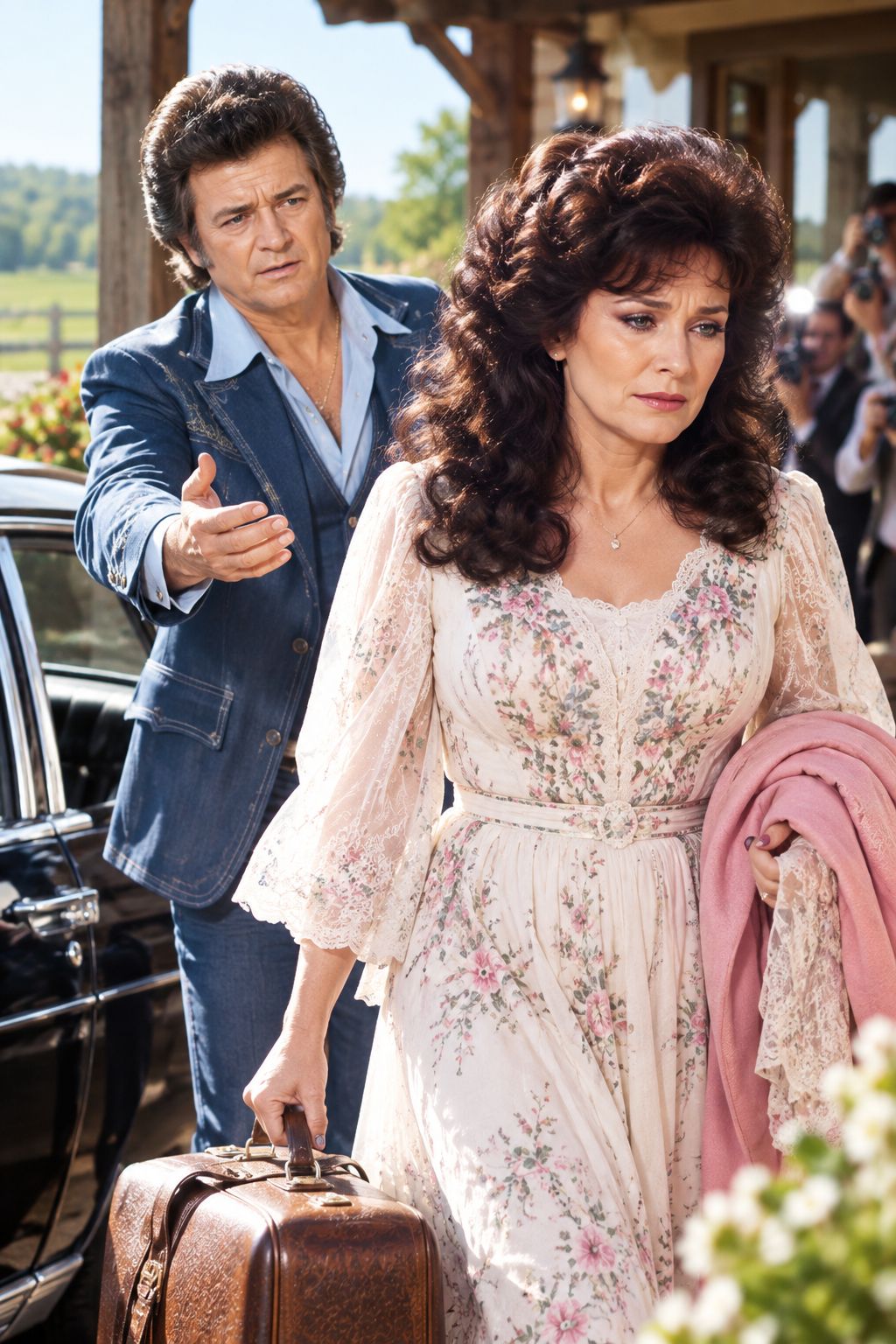
For decades, Loretta Lynn and Oliver “Doo” Lynn were one of country music’s most complicated couples. Their marriage contained love, betrayal, arguments, ambition, family, and pain—yet somehow, it endured for nearly five decades.
That is why one period in Loretta’s career caused such a stir.
To many country fans, her increasingly fearless songs about cheating, drinking, divorce, and women refusing to tolerate bad husbands sounded less like entertainment and more like a woman preparing to walk away.
But the truth was more complicated—and, in some ways, far more heartbreaking.
Loretta Lynn never simply turned her marriage into a fairy tale.
She turned it into songs.
And millions of listeners believed those songs were telling them that the end was coming.
The Marriage Behind the Music
Loretta married Oliver Lynn in 1948, when she was just 15 and he was 21. They eventually had six children and remained married until his death in 1996.
But the relationship was anything but peaceful.
Loretta later spoke openly about Oliver’s drinking, infidelity, arguments and violence. She also described him as one of the people who pushed her toward a career, including buying her a guitar and encouraging her to perform.
That contradiction became the defining mystery of their relationship.
How could a woman write so angrily about betrayal and still remain married to the man who inspired so many of those songs?
Loretta’s answer was never simple.
“We fought hard, and we loved hard.”
That sentiment captures the strange emotional territory of the Lynn marriage better than any rumor ever could.
Then Loretta Started Saying Things Other Women Were Afraid to Say
By the mid-1960s, Loretta was becoming one of country music’s most powerful female voices.
Her songs weren’t polite.
They were confrontational.
“You Ain’t Woman Enough” warned another woman away from her husband. “Fist City” turned jealousy into a threat. “Don’t Come Home A-Drinkin’” confronted a husband who expected affection after a night of drinking.
To modern audiences, those songs can sound like dramatic country storytelling.
At the time, they felt much more personal.
Fans knew Loretta was singing about real emotions and real experiences.
And that created a dangerous question:
Was Loretta Lynn writing songs about her marriage—or warning the world that she was finally done with it?
The “Scandal” Wasn’t One Single Explosion
There is an important distinction between the legend and the documented record.
There is no reliable evidence of one single public incident that literally convinced the entire country music world Loretta was leaving Oliver.
Instead, the speculation grew from years of increasingly personal songs, public stories about their troubled marriage, and Loretta’s willingness to challenge the expectations placed on wives.
One of the biggest examples came with “Rated X.”
Released in the early 1970s, the song dealt directly with the stigma surrounding divorced women. Loretta sang about the double standard women faced after divorce—something particularly provocative for a married superstar who had spent decades publicly documenting marital conflict.
Suddenly, the question became unavoidable:
Was Loretta preparing herself for life without Doo?
The song made the possibility feel real.
But there was another twist.
She wasn’t leaving.
Loretta Wasn’t Pretending Everything Was Fine
This is where the story becomes more emotional.
Loretta didn’t need to invent a scandal.
Her marriage already contained enough contradictions to fill an entire career.
She later explained that Oliver had hurt her deeply, but she also loved him. She said she stayed partly because of their children and because, despite everything, he remained important to her.
That decision is difficult for modern audiences to understand.
But Loretta herself never presented it as a perfect marriage.
She presented it as her marriage.
And that distinction matters.
“I didn’t need him but he was my kids’ daddy.”
Those words reveal something far deeper than the sensational headlines.
Loretta wasn’t saying that betrayal didn’t matter.
She was saying that love, family, history and pain could exist simultaneously.
Then Came the Conway Twitty Rumors
Just when Loretta’s marriage was already under public scrutiny, another layer of speculation appeared.
Her legendary musical partnership with Conway Twitty became so convincing that audiences began wondering whether their emotional chemistry was more than professional.
Their duets—including “After the Fire Is Gone” and “Lead Me On”—created the illusion of an intimate relationship. Loretta later recalled that people assumed she and Conway were having an affair, but she insisted they were friends, not lovers.
That mattered enormously.
Because now the public wasn’t merely wondering whether Loretta would leave Doo.
Some were imagining who she might leave him for.
And that is where country music mythology began to overtake reality.
There is no solid evidence that Loretta left Oliver for Conway Twitty. In fact, the historical record shows that Loretta and Oliver remained married until his death in 1996.
The Woman Behind the Headlines
What made Loretta different was that she refused to separate her art from her life.
She wrote about the subjects that other women were expected to keep private.
Alcohol.
Infidelity.
Sex.
Marriage.
Divorce.
Jealousy.
Motherhood.
Loneliness.
Her official biography notes that she repeatedly confronted these subjects through songs such as “Don’t Come Home A-Drinkin’,” “Fist City,” “Rated X,” and “The Pill.”
The result was explosive.
Women heard themselves in her music.
Men heard accusations.
And the press heard a story.
But Loretta was doing something more complicated.
She was turning private pain into public art.
The Moment Everyone Thought She Was Finally Done
Perhaps the most scandalous part of the story wasn’t that Loretta threatened to leave.
It was that she sounded like a woman who finally had the power to leave.
By the 1970s, Loretta wasn’t the isolated teenage bride who had moved across the country with a husband and young children.
She was a country superstar.
She had hit records.
She had awards.
She had an enormous audience.
She had become one of the most influential women in country music. PBS notes that she accumulated 79 charting records, including 52 Top 10 hits and 16 No. 1s.
For the first time, the balance of power seemed different.
And perhaps that was what made the rumors so compelling.
People could imagine Loretta walking away because she had become strong enough to survive without the man beside her.
Yet she stayed.
And That’s What Makes the Story So Sad
In retrospect, the greatest twist is that Loretta didn’t have to leave Oliver to prove she was strong.
She had already transformed herself.
She went from a teenage bride in rural Kentucky to one of the most important female artists country music had ever produced.
She publicly confronted subjects that were uncomfortable, controversial and sometimes deeply personal.
And she continued loving a man who, by her own accounts, could also hurt her.
Their marriage lasted 48 years, ending only when Oliver died in 1996. Loretta later cared for him as his health deteriorated.
That ending makes the earlier rumors feel almost tragic.
The country world kept waiting for the final chapter.
But there was no dramatic divorce.
No clean escape.
No Hollywood ending.
There was simply Loretta and Doo—two imperfect people bound together by children, memories, music, arguments, forgiveness and decades of shared history.
And perhaps that is why their marriage remains so fascinating.
Because Loretta Lynn didn’t write about a perfect love story.
She wrote about a real one.
A love story where betrayal could coexist with devotion.
Where anger could coexist with loyalty.
Where a woman could publicly sing about leaving—and still choose to stay.
And where the woman the country world thought was finally walking away ultimately remained beside the same complicated man until the very end.
That wasn’t weakness.
It was simply Loretta’s truth.
And, as she proved throughout her career, the truth was always the most powerful song she knew how to sing.
VIDEO: