 By admin
INTRODUCTION:
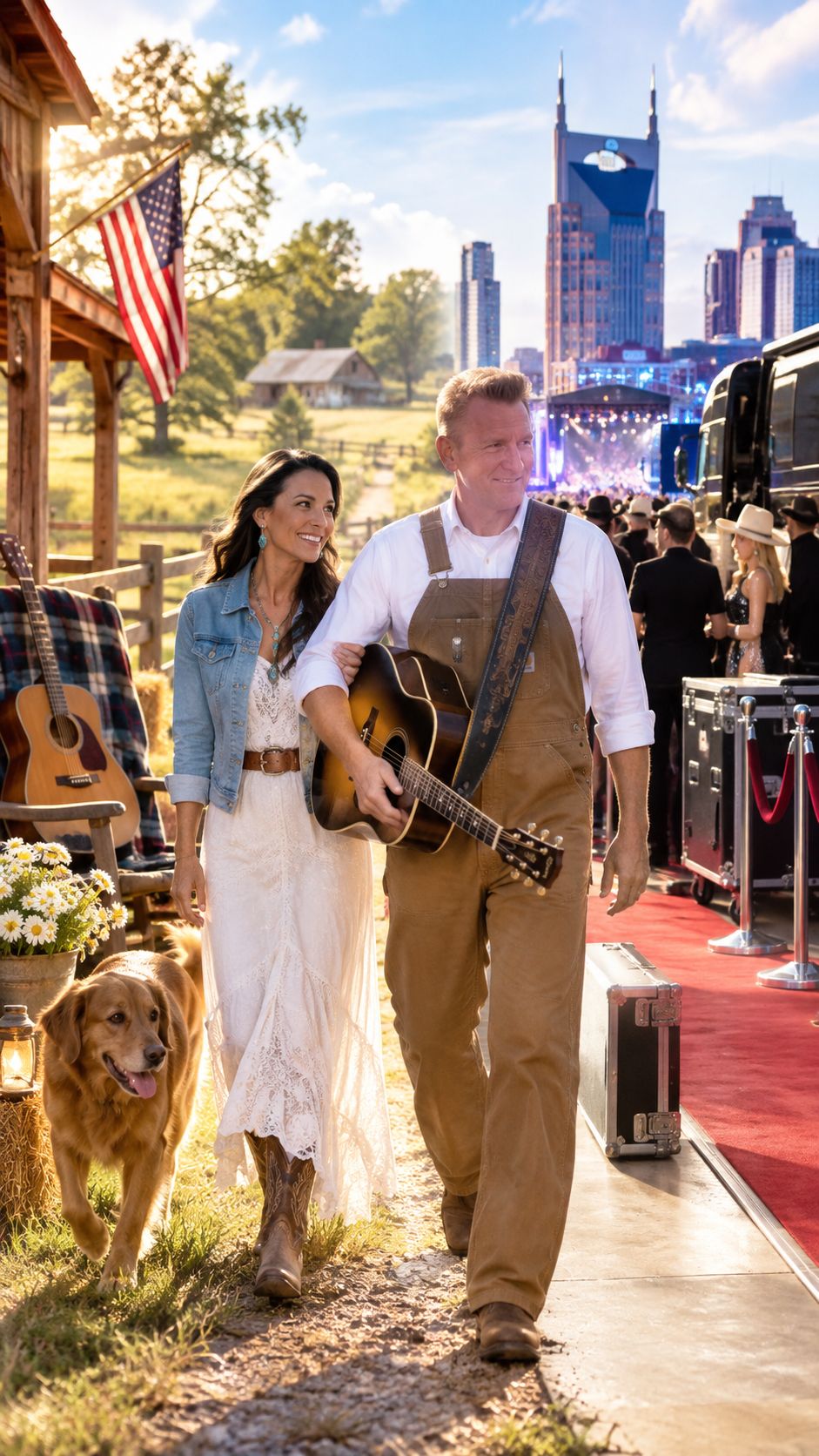
There was a time when country music seemed to know exactly where it came from.
It came from front porches, dusty roads, family kitchens, church pews, honky-tonks, small towns, broken hearts, hard work, faith, marriage, loss, redemption, and stories that sounded as though they had been lived rather than manufactured.
And then Nashville began changing.
The clothes became sharper. The production became louder. The lyrics became increasingly polished for a younger audience. Country music expanded its boundaries, borrowing heavily from pop, rock, and other commercial sounds. For many artists, that evolution represented opportunity.
For Rory Feek, however, the question was never simply whether country music should evolve.
The deeper question was this:
What happens when country music becomes so determined to become something new that it forgets what made it country in the first place?
That question sits at the center of Rory Feek’s remarkable career.
Long before audiences knew him as half of Joey + Rory, Feek had already spent years inside the Nashville songwriting machine. He arrived in Nashville in 1995 with ambitions of becoming a songwriter and eventually found himself writing successful songs for artists including Blake Shelton, Clay Walker, Tracy Byrd, Easton Corbin, and others.
He understood the business from the inside.
He knew how songs were written.
He knew how records were made.
He knew what radio wanted.
And, perhaps most importantly, he learned what could happen when an artist allowed the machinery surrounding a song to become more important than the song itself.
The Man Behind the Overalls
One of the most fascinating things about Rory Feek was that his resistance to Nashville’s changing image was not something he invented after becoming famous.
The overalls were not a marketing gimmick.
The rural lifestyle was not a costume.
The old-fashioned storytelling was not a calculated attempt to create nostalgia.
Feek had been living that way before audiences ever knew his name.
When Joey + Rory began attracting attention, their appearance alone seemed to challenge Nashville’s increasingly polished image. Rory frequently appeared in overalls, while Joey’s voice and their acoustic-centered performances evoked an older country tradition.
And some within the industry apparently wondered whether that image was compatible with modern country music.
Feek openly discussed the tension.
He argued that parts of Nashville were trying to move away from the stereotypical rural image associated with older country music, even suggesting that some people were uncomfortable with the genre’s own heritage.
That criticism was significant because Feek wasn’t an outsider throwing stones at Nashville from a distance.
He was a Nashville songwriter who had already earned his place.
He knew the system.
He simply didn’t believe that success required surrendering identity.
“Play the Song” Was More Than a Song
Perhaps nowhere was that philosophy more clearly expressed than in “Play the Song.”
The song became a clever commentary on the pressures artists can face after entering the music business.
The accompanying video portrayed music executives telling performers what they needed to change.
Change the sound.
Change the image.
Change the presentation.
Become more commercial.
Become more acceptable.
Become something the market supposedly wants.
The message was humorous, but underneath the humor was something deeply serious.
Feek believed that artists should not have to abandon the person they were before signing a record deal.
In one interview, he explained that having an audience before obtaining a record deal should not mean suddenly changing everything once the industry arrives.
That idea became almost a personal creed.
If the music is honest before the business discovers you, why should the business be allowed to make it dishonest afterward?
That philosophy would become one of the defining characteristics of Joey + Rory.
They Were Traditional — But Never Stuck in the Past
It would be too simplistic, however, to describe Rory Feek as someone who simply hated modern country music.
He didn’t.
He worked within Nashville.
He wrote commercially successful songs.
He collaborated with major artists.
He recorded albums.
He appeared on television.
He accepted opportunities that many traditionalists might have rejected.
The distinction was not between “old” and “new.”
It was between authenticity and manufactured identity.
That distinction explains why Joey + Rory could sound traditional without becoming a museum piece.
Their music wasn’t merely an imitation of 1960s or 1970s country.
It was contemporary music built around older country values: storytelling, vulnerability, humor, family, faith, marriage, heartbreak, and ordinary people.
That was their secret.
They weren’t trying to recreate the past.
They were trying to prove that the past still had something to say.
Nashville Wanted a Younger Audience
Feek also identified a broader industry trend.
He observed that country music was increasingly focused on attracting younger listeners, sometimes at the expense of the audience that had supported the genre for years.
That tension remains one of the most fascinating arguments in country music.
Every generation changes the music.
The Bakersfield sound changed country.
The Outlaw movement changed country.
The country-pop crossover era changed country.
The contemporary Nashville sound changed country again.
The question has never been whether country should change.
It always does.
The question is what should remain at its center.
For Feek, the answer appeared to be storytelling.
A song could have modern production.
A singer could have a contemporary image.
An artist could experiment.
But if the emotional truth disappeared, something important had been lost.
The Rural Life Was Part of the Music
This is where Rory and Joey became different from many acts who simply performed traditional country songs.
They actually lived the world their music described.
They lived on a farm in Tennessee.
They were connected to a family restaurant.
They built a life around community.
Their television programs brought audiences into their home rather than creating an elaborate celebrity fantasy.
Their barn became a performance space.
Their farm became part of their artistic identity.
Their lives and their music were inseparable.
That authenticity became particularly important because audiences could see that there was no enormous gap between the people onstage and the people at home.
As one industry representative told Pollstar, their challenge was figuring out where the duo fit because they didn’t fit neatly into the typical rowdy-honky-tonk model.
But perhaps that was exactly the point.
They didn’t need to fit every category.
A Different Definition of Success
For Feek, success gradually became less about conventional Nashville measurements.
Radio.
Chart positions.
Awards.
Record sales.
Industry approval.
Those things mattered, but they weren’t ultimately what defined his artistic life.
The Los Angeles Times documented how the duo’s journey through Can You Duet helped launch them, while their chemistry and old-school country approach became central to their identity.
They eventually earned major recognition, including the Academy of Country Music’s Top New Vocal Duo award.
But even then, Feek’s philosophy remained remarkably consistent.
Do the work honestly.
Tell the story honestly.
Let the audience decide.
That philosophy became even more powerful because Rory had already experienced the other side of the business.
He had written hits for other singers.
He knew what it meant to create a song that would succeed commercially.
He could have spent his entire career chasing another radio hit.
Instead, something changed.
The Farm Became His Nashville
After Joey’s death in 2016, Feek’s relationship with music changed dramatically.
The man who had once written songs for major country artists increasingly turned toward writing in other forms.
His blog became a major outlet.
His books became another form of storytelling.
His television work documented rural life.
His farm became a place where family, faith, community, education, and creativity existed together.
In a 2020 interview, Feek described how he and Joey had gradually moved away from the conventional music-industry model of making records, touring constantly, and chasing radio exposure. They wanted a way to make music while remaining close to home.
That decision says almost everything about his philosophy.
The rebellion was never simply against Nashville.
It was against the idea that there was only one acceptable definition of success.
For Rory Feek, the ultimate rebellion was not leaving country music behind. It was refusing to let the music business decide what his life had to look like.
What Rory Feek Really Fought For
That is why the phrase “Rory Feek versus Nashville” can be both compelling and misleading.
He wasn’t fighting every artist.
He wasn’t fighting every producer.
He wasn’t rejecting every modern development.
And he certainly wasn’t incapable of working within the mainstream.
His career proves the opposite.
He understood Nashville extremely well.
What he resisted was the pressure to become someone else simply because the market demanded it.
His traditionalism was therefore less about nostalgia than identity.
It was about believing that family mattered.
That faith could belong in country music.
That rural life did not need to be disguised.
That an artist could wear overalls without apologizing for them.
That a husband and wife could sing about love without turning their relationship into a manufactured publicity campaign.
That ordinary life could be extraordinary enough to build an entire artistic career around.
And perhaps most importantly, that country music did not have to abandon its roots in order to have a future.
The Lasting Legacy of the “Outsider”
Ironically, Rory Feek’s refusal to completely conform may be one reason his story continues to resonate.
Country music has always been full of outsiders.
The genre has repeatedly reinvented itself through artists who refused to sound exactly like everyone else.
Feek simply carried that tradition into a new era.
He arrived in Nashville wanting to learn how to tell great stories.
Decades later, he was still doing exactly that.
Sometimes he told those stories through songs.
Sometimes through Joey + Rory.
Sometimes through television.
Sometimes through a book.
Sometimes through a farm.
And sometimes through the quiet details of ordinary life.
That may be the most important lesson in his career.
The battle between traditional country and modern country isn’t really a battle between yesterday and tomorrow.
It is a debate over what must survive while everything else changes.
For Rory Feek, the answer was clear.
Keep the story.
Keep the heart.
Keep the honesty.
Keep the people who inspired the music in the first place.
And if the industry doesn’t understand it?
Play the song anyway.
Because sometimes the most powerful way to challenge the mainstream isn’t to shout against it — it’s to quietly remain yourself when everyone else is telling you to change.
VIDEO:
https://youtu.be/a2WrfeHK3Yw?si=YO5jZPtS_Ofyzccv