 By admin
INTRODUCTION:
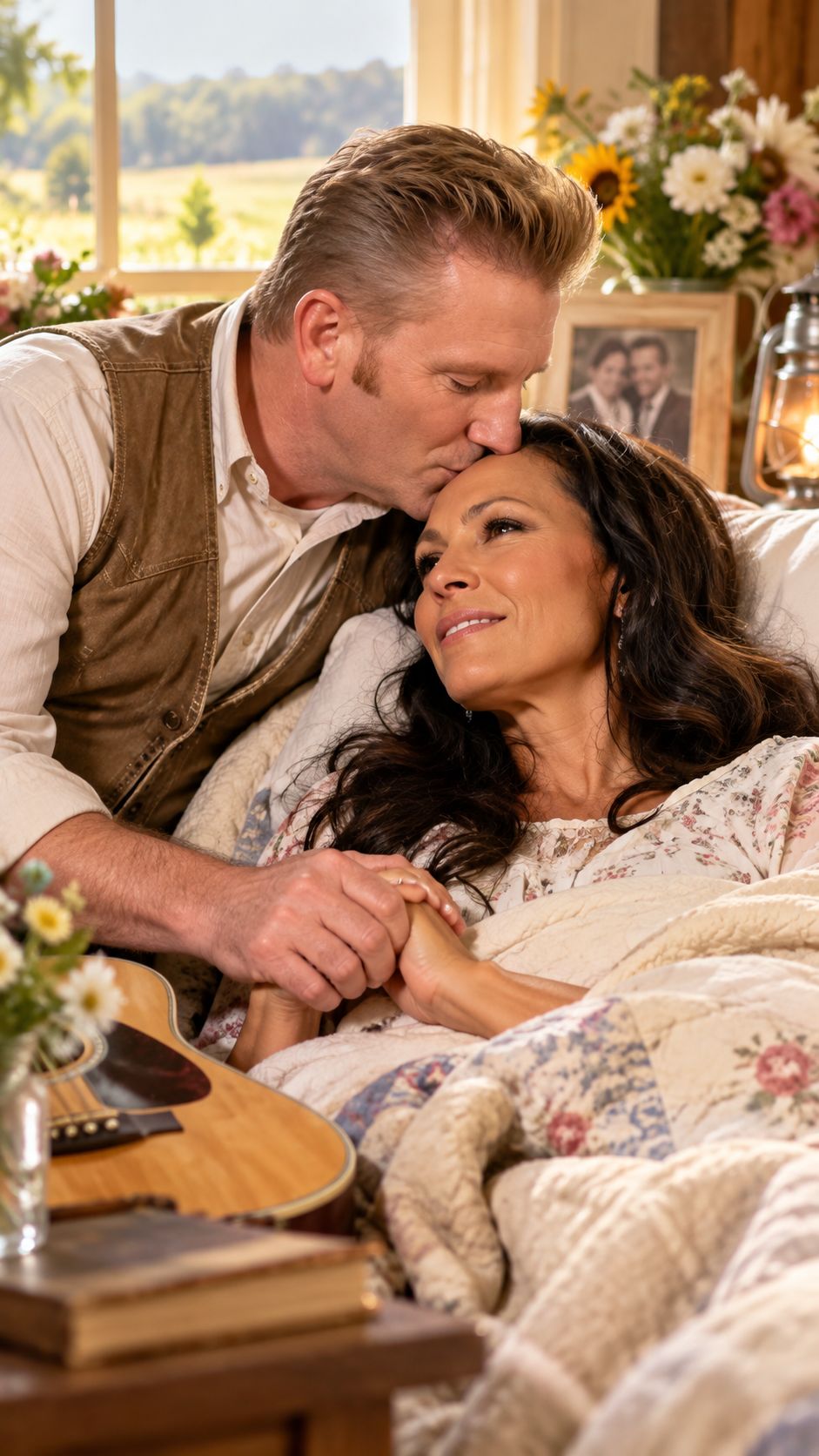
There are some stories in country music that end with a final performance, a last photograph, or the closing notes of a beloved song.
And then there are stories like Joey and Rory Feek’s—stories that seem to continue long after the music stops.
Their final chapter was not played beneath bright Nashville lights. It unfolded quietly in hospital rooms, at a farmhouse in Indiana, beside a little girl named Indiana, and in the sound of hymns sung through unimaginable pain. In the last months of Joey Feek’s life, music became more than a career. Prayer became more than a ritual. And love became something neither illness nor death could erase.
Joey died on March 4, 2016, at age 40, after a battle with cervical cancer. But the story of her final days was never simply about dying. It was about how she and Rory Feek chose to live when they knew their time together was running out.
They were no longer counting the years they had left. They were trying to make every remaining moment matter.
When the Future Suddenly Became “Right Now”
Joey and Rory had already built something unusual in country music.
They were husband and wife, but they were also musical partners. Rory had established himself as a Nashville songwriter, while Joey possessed the unmistakable voice that would become the emotional center of their duo.
Their breakthrough came through “Can You Duet?” in 2008, eventually leading to a Grammy-nominated career. But fame never seemed to define them as much as home, family, faith and ordinary life did.
Then came the diagnosis.
Joey was diagnosed with cervical cancer in 2014, only months after giving birth to their daughter, Indiana. When the cancer later returned and became terminal, the couple made the devastating decision to stop treatment and enter hospice care.
Rory later described the psychological shift in brutally simple terms: the calendar stopped being the center of their lives.
“So we don’t have forever. We’ve got right now. And that’s enough.”
Those words explain much of what happened next.
Instead of allowing the diagnosis to become the only story, Joey and Rory began filling their remaining days with the things that mattered most: family, faith, music and love.
The Album That Became Something Far More Than an Album
Perhaps the most heartbreaking part of Joey and Rory’s final chapter was the music they made during it.
The couple recorded “Hymns That Are Important to Us,” an album rooted in the songs and faith traditions that had shaped Joey’s childhood and worldview. It was released in February 2016, only weeks before her death.
The album wasn’t created simply as a commercial project.
According to reporting surrounding the record, Rory explained that Joey wanted to preserve the music that gave her comfort—the songs she could return to when life became difficult.
That decision transformed the album into something deeply personal.
Songs such as “Softly and Tenderly,” “It Is Well with My Soul,” “I’ll Fly Away,” “Jesus Loves Me,” and “How Great Thou Art” carried a different weight when performed by a woman confronting the possibility of death.
And then there was “When I’m Gone.”
The song had actually been recorded by Joey and Rory years before her final illness. But suddenly, its words seemed almost impossibly prophetic.
Rory later reflected on the strange reality that they had created a music video years earlier imagining a world in which Joey was gone and Rory remained at their farm with their child. In 2016, that imagined story became reality.
That is what makes “When I’m Gone” so haunting.
It was not originally written as a farewell from Joey to Rory. Yet in the context of her final months, listeners could hear it differently—as if the song had become a conversation between two people preparing for the unthinkable.
The song did not erase grief. It gave grief a voice.
Prayer Became Part of the Final Conversation
Faith was not something Joey and Rory suddenly discovered when the cancer became terminal.
It had been woven into their lives for years.
But during Joey’s final months, prayer became increasingly central.
When the couple entered hospice, Rory described the decision through the language of faith. He shared that they had prayed and that the answer they received was not the one they had hoped for—but one they accepted.
That distinction matters.
Their story was not presented as though faith magically removed the suffering. Joey still experienced pain. Rory still faced the possibility of losing his wife. Their family still had to confront an unimaginable goodbye.
Prayer did not make the situation easy.
It gave them a way to face it.
Friends and musicians were also part of those final days. Gospel artist Bill Gaither recalled visiting Joey and singing hymns with her. Even when her body was failing, music remained something she could reach for.
That image may be one of the most revealing of all:
A woman nearing the end of her life, surrounded by people she loved, still responding to music.
The Little Moments Became the Big Moments
The public naturally focused on the tragedy.
But Rory’s accounts also revealed something quieter.
Joey wanted to live long enough to experience milestones with her family. She celebrated Christmas. She made it to New Year’s. She experienced Valentine’s Day. She celebrated Indiana’s second birthday.
Each milestone became its own victory.
Her daughter was still very young, which made the situation especially painful. Joey knew she would not be present for the ordinary moments that parents often take for granted—the birthdays, school days, holidays and countless small memories that accumulate over a lifetime.
Yet she continued to focus on what she could give Indiana.
Love.
Presence.
Memory.
And the knowledge that her mother had fought to be there.
Rory’s Final Goodbye
By late February 2016, Joey was sleeping much of the time and her body was shutting down.
Rory shared that hospice believed she had only days remaining.
For a husband, there can be no preparation adequate for such a moment.
Even when death is expected, the finality of it is different.
Rory and Joey had spent years building a life together. They had toured together, written songs together, performed together and raised a family together.
Now Rory had to learn how to say goodbye.
One of Joey’s final messages was remarkably peaceful. Rory wrote that she had no regrets and felt she had lived the life she wanted.
Those words reveal something profound about her final days.
She wasn’t measuring her life by how long it lasted.
She was measuring it by what it contained.
The Moment the Music Went Silent
On March 4, 2016, the final moment came.
Joey was surrounded by family and loved ones. Rory later described the scene as people gathered around her, holding hands and praying.
At approximately 2:30 p.m., Joey died.
She was 40 years old.
Rory’s description of her death reflected the faith that had carried them through the preceding months. Rather than describing the moment solely as an ending, he framed it through his belief that Joey had entered Heaven.
That perspective cannot remove the grief.
But it explains how Rory survived those final moments.
He wasn’t pretending that losing Joey didn’t hurt.
He was trying to understand the loss through the faith they shared.
What Joey and Rory Really Left Behind
It would be easy to say the legacy of Joey + Rory is their music.
And certainly, their recordings remain an important part of their story.
But their deeper legacy may be the way their music became inseparable from their life.
They didn’t simply sing about love.
They lived it.
They didn’t simply sing about faith.
They leaned on it.
And they didn’t simply perform songs about hardship.
They allowed audiences to witness what hardship looked like inside an ordinary family trying to hold onto hope.
“Hymns That Are Important to Us” became their final album together, and its timing made it profoundly emotional. The record reached No. 4 on the Billboard 200, giving the couple one of their biggest chart achievements at precisely the moment their personal lives were being transformed by tragedy.
But statistics cannot explain why people still remember it.
The reason is much simpler.
The songs sounded real.
Because they were.
A Love Story That Refused to End With Death
Joey Feek’s death ended a life.
It did not end the story.
Rory continued raising Indiana. He continued writing about grief, faith, fatherhood and the strange process of learning to live after losing the person who had shared nearly everything with him.
Years later, Rory reflected on the old “When I’m Gone” video and the eerie realization that the imagined future had become his actual life.
That is perhaps the final truth behind Joey and Rory’s heartbreaking story.
Their last days weren’t ultimately about cancer.
They were about what people do when they know they cannot control the ending.
They pray.
They sing.
They hold hands.
They remember.
They love.
And sometimes, they choose to believe that goodbye is not the end.
Joey’s voice may have fallen silent on March 4, 2016—but the love inside those final songs never did.
That is why listeners still return to Joey + Rory.
Not simply to remember a country duo.
Not simply to mourn a young singer whose life ended far too soon.
But to remember a husband and wife who, in the hardest chapter imaginable, tried to turn their remaining days into something meaningful.
The music became their memory.
The prayer became their strength.
And the love became their legacy.
VIDEO: