 By admin
INTRODUCTION:
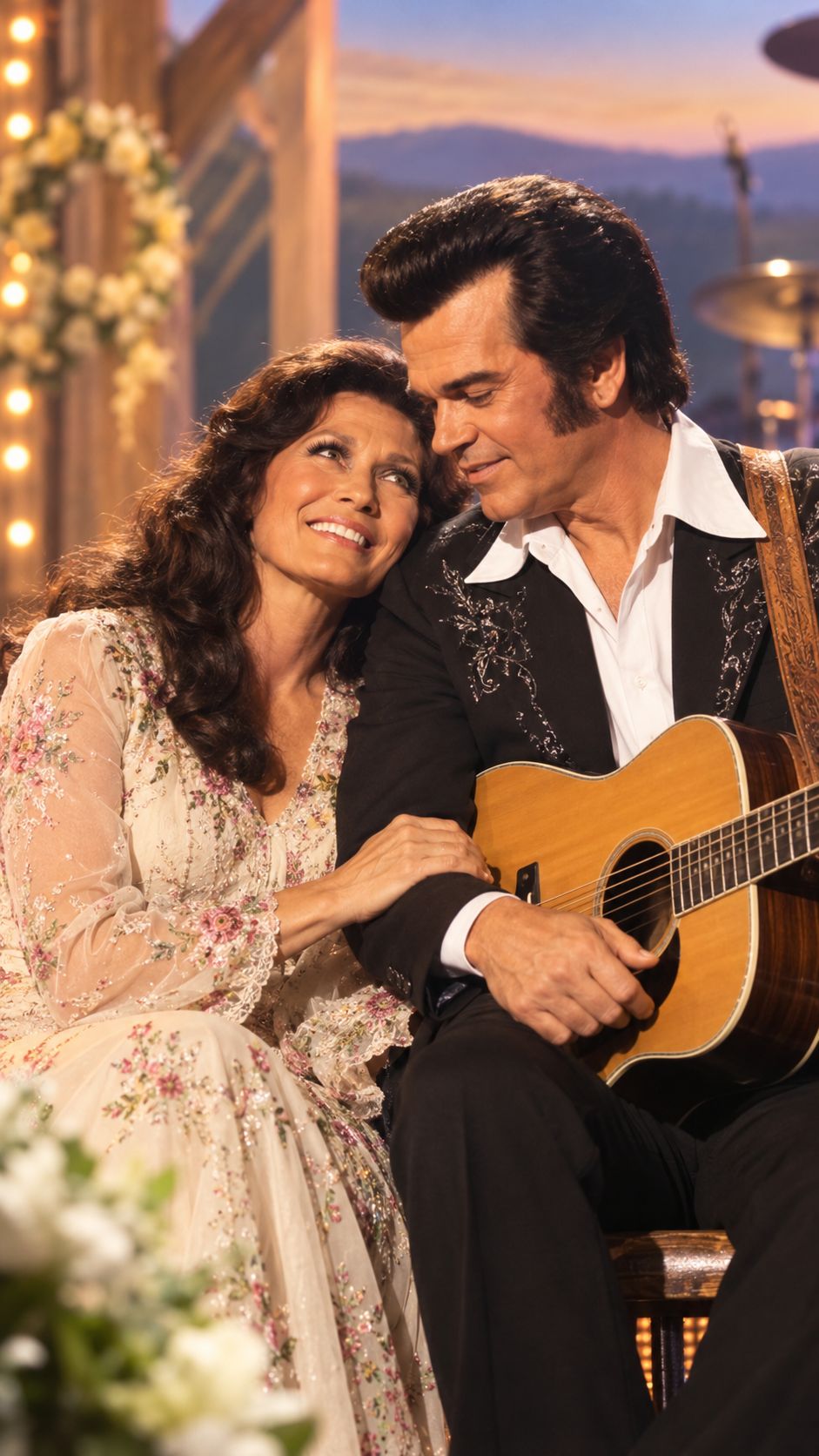
There are country music partnerships that sound good together—and then there are partnerships that seem to create an entirely different emotional world.
Conway Twitty and Loretta Lynn belonged to the second category.
When they stood beside each other under the lights, something happened that audiences could feel before they could explain it. Their voices seemed to flirt, argue, ache, tease, and reconcile within the space of a single song. They could turn a microphone into a confession booth and a country stage into the setting of a love story.
And that was precisely the problem.
For decades, listeners looked at Conway Twitty and Loretta Lynn and assumed they were seeing something that existed beyond music.
But the reality was much more complicated—and, in some ways, much more heartbreaking.
The tragedy was not that they secretly belonged to each other.
The tragedy was that the world could never quite understand what they actually were to each other.
THE CHEMISTRY THAT CREATED A MYTH
Their story began with something surprisingly innocent: mutual admiration.
Before they became one of country music’s defining duos, Loretta Lynn was already a fan of Conway Twitty. Twitty, meanwhile, admired Lynn as an artist. Their paths crossed professionally, and during a European tour they began singing together informally in dressing rooms. That casual musical connection eventually led to their recording partnership.
Their first major No. 1 hit together, “After the Fire Is Gone,” arrived in 1971.
Then everything changed.
Suddenly, the two voices weren’t simply complementary.
They sounded intimate.
They sounded dangerous.
They sounded like two people confessing something they weren’t supposed to confess.
The Country Music Hall of Fame notes that “After the Fire Is Gone” launched one of the most successful duet partnerships in country music history. From 1972 through 1975, Lynn and Twitty won the CMA Vocal Duo of the Year award four consecutive times.
Together, they eventually released 11 studio albums and produced five No. 1 singles.
But their success created an unintended consequence.
People started believing the characters they portrayed in songs were the people they were in real life.
THE SONGS MADE PEOPLE BELIEVE THE WRONG STORY
Think about the emotional world of songs like “After the Fire Is Gone,” “Lead Me On,” and “Louisiana Woman, Mississippi Man.”
These weren’t shy songs.
They dealt with attraction, temptation, longing, marriage, separation, and forbidden emotions.
And when Conway Twitty sang opposite Loretta Lynn, the performances didn’t feel like ordinary acting.
They felt lived-in.
PBS’s American Masters specifically noted that the lyrics and the pair’s easy chemistry led audiences to puzzle over the nature of their relationship. Lynn herself later addressed the rumors directly, explaining that people assumed there was something romantic between them—but she described Twitty as a friend and emphasized the respect her husband had for him.
That distinction matters.
Because the audience wasn’t completely imagining the chemistry.
The chemistry was real.
What they misunderstood was what that chemistry meant.
They were not pretending to have chemistry. They had chemistry. They were simply expressing it through music rather than living the story their songs suggested.
That may be the most important difference in understanding Conway and Loretta.
LORETTA KNEW EXACTLY WHAT THE WORLD WAS SEEING
One of the most fascinating parts of their story is that Loretta Lynn understood the rumors almost as well as the audience did.
She knew what happened when she and Conway walked onto a stage.
She knew how people watched them.
She knew how easily the boundary between performer and character could disappear.
In a later interview, Lynn recalled people asking whether she and Conway were married. She also remembered people treating them like a perfect couple because of the way they appeared together.
But Lynn’s answer was consistent.
The relationship was friendship.
Professional trust.
Mutual admiration.
And something that became increasingly rare in the entertainment business: genuine affection without romantic involvement.
Loretta later put it even more plainly in her conversations with Terry Gross.
“Me and Conway were friends. We wasn’t lovers.”
That sentence cuts through decades of speculation.
But it doesn’t erase the emotional complexity.
If anything, it makes their story more fascinating.
CONWAY WASN’T JUST HER DUET PARTNER
To reduce Conway Twitty to Loretta’s singing partner misses something important.
Their friendship extended beyond recording studios and television stages.
According to Lynn, her husband Doo also had a strong friendship with Conway. She described Conway as the one country artist her husband particularly cared about, recalling how the two men laughed together while traveling.
That detail changes the picture dramatically.
Imagine the difference between the public fantasy and the private reality.
The public saw:
Conway and Loretta—the seemingly inseparable country lovers.
Behind the scenes, there was something else:
Conway, Loretta, and Doo sharing friendship, humor, travel, work, and years of memories.
That wasn’t a scandal.
It was simply less sensational.
And perhaps that’s why the world struggled to understand it.
THE MOST TRAGIC PART CAME AT THE END
The deepest emotional weight of their relationship became clearer when Conway Twitty died in 1993.
By then, their musical partnership had already become part of country music history.
But for Loretta, Conway’s death wasn’t simply the loss of a famous collaborator.
It was the loss of a friend.
A familiar presence.
Someone who had shared years of stages, airplanes, recording sessions, jokes, tours, awards, and private memories.
Lynn later recalled that she was with her husband, Doo, who was undergoing heart surgery, when Conway was nearby in Branson. She remembered seeing his bus and going downstairs because she expected to help him find the hospital room. That night, Conway died.
There is something devastating about that image.
Loretta was not saying goodbye to a fictional lover.
She was losing a real friend while already standing inside another painful family moment.
And suddenly, all those songs that audiences had treated as romantic evidence carried a different meaning.
They were memories.
THE WORLD WANTED A LOVE STORY
Perhaps the biggest misunderstanding was cultural.
Fans were accustomed to believing that extraordinary chemistry must come from romance.
If two singers looked at each other a certain way, there had to be something behind it.
If two voices blended perfectly, there had to be hidden passion.
If they could make millions of people believe in love, surely they must have been in love themselves.
But Conway Twitty and Loretta Lynn proved something different.
Sometimes two people can understand each other’s artistic instincts so deeply that they create something that feels more intimate than ordinary friendship—without crossing the line into romance.
Their connection existed in the space between performance and reality.
That space is difficult to explain.
And perhaps impossible to reproduce.
WHY THEIR DUETS STILL FEEL SO POWERFUL
There’s another reason their relationship continues to fascinate generations of country fans.
They didn’t merely sing at each other.
They responded to each other.
A breath.
A pause.
A glance.
A change in vocal intensity.
A little humor.
Then suddenly, heartbreak.
Country Music Hall of Fame materials emphasize the importance of their voices and their extraordinary run of recordings, while PBS has highlighted how their chemistry created an energy that audiences could feel immediately.
That’s why later generations still return to these performances.
The music doesn’t sound like a museum piece.
It sounds alive.
Maybe the world misunderstood Conway and Loretta because it was easier to believe in a secret romance than to believe in a friendship powerful enough to sound like love.
And that may be the real tragedy.
Not that they secretly loved each other.
But that their genuine friendship was so extraordinary that people couldn’t recognize it for what it was.
WHEN THE MUSIC OUTLIVED THE PEOPLE
Conway Twitty died in 1993.
Loretta Lynn died in 2022.
Yet the story they created together never really disappeared.
Their grandchildren, Tre Twitty and Tayla Lynn, have continued performing music connected to their grandparents’ legacy. Their modern project, Twitty & Lynn, has brought songs such as “Louisiana Woman, Mississippi Man” and other Conway-and-Loretta classics to new audiences.
That’s perhaps the most beautiful ending available to this story.
The relationship people once misunderstood has become a legacy that families are still carrying forward.
The songs remain.
The laughter remains.
The recordings remain.
And somewhere inside those harmonies is a reminder that human relationships don’t always fit the categories audiences want to give them.
THE TRUTH WAS MORE BEAUTIFUL THAN THE RUMOR
The easiest version of the story would be to say Conway Twitty and Loretta Lynn secretly loved each other.
It would make a sensational headline.
It would create mystery.
It would give every emotional duet a hidden meaning.
But the documented record points somewhere else.
They were friends.
They were trusted collaborators.
They admired one another.
They understood each other’s musical instincts.
And together they created one of the most remarkable male-female partnerships in country music history.
Their tragedy wasn’t a forbidden romance.
Their tragedy was that time eventually took away a friendship that had become almost impossible to replace.
And perhaps that’s why their music still hurts.
Because when Conway Twitty and Loretta Lynn sang about love, the audience heard a love story.
But underneath those lyrics was something just as powerful:
two friends who knew how to make each other sound unforgettable.
And when one of those voices disappeared, the other could never quite sound the same again.
VIDEO: