 By admin
INTRODUCTION:
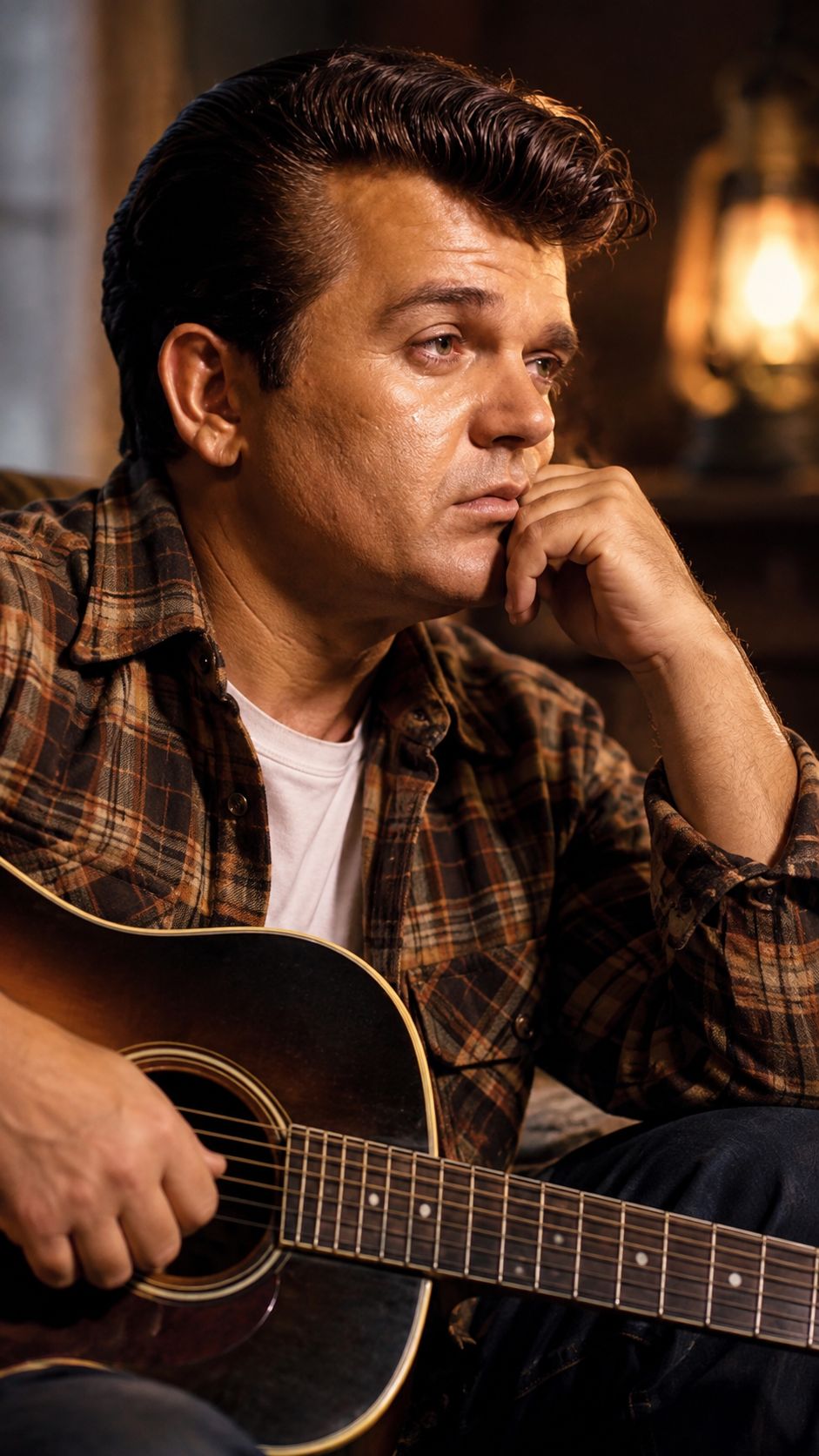
There are singers whose voices entertain us, and then there are singers whose voices seem to understand us. Conway Twitty belonged to the second kind. Behind the polished image of one of country music’s most successful performers was a deeply human artist who spent decades singing about loneliness, regret, devotion, heartbreak, desire, and the complicated choices people make when life refuses to follow the script they imagined.
His songs rarely needed grand speeches. A trembling phrase, a pause between lines, or the unmistakable weight in his voice could make an ordinary story feel intensely personal. Millions of listeners heard their own marriages, mistakes, separations, hopes, and memories reflected in his music.
That emotional connection became one of the defining features of Conway Twitty’s extraordinary career. From his early ambitions beyond country music to his transformation into a country superstar, his journey was filled with reinvention, pressure, triumph, and deeply personal storytelling.
Perhaps that is why his most powerful moments were not always the loudest ones. Sometimes, the quietest emotions carried the greatest weight.
Conway Twitty did not simply sing about human emotions. He made listeners feel as though he had lived them alongside them.
The Voice Behind the Legend
When discussing Conway Twitty, it is easy to focus on statistics: chart records, awards, hit singles, sold-out performances, and decades of success. But statistics cannot fully explain why his recordings remain emotionally memorable.
His greatest strength was interpretation.
Twitty understood that country music often works best when it sounds like someone telling you the truth after midnight. His delivery could be restrained rather than theatrical. Instead of overwhelming a listener with emotion, he often allowed emotion to sit underneath the words.
That subtlety became part of his signature.
Songs such as Hello Darlin’, It’s Only Make Believe, Linda on My Mind, and You’ve Never Been This Far Before demonstrated different sides of his artistry. Some were romantic. Some were painful. Some explored complicated relationships and morally difficult situations.
But the common thread was intimacy.
He made enormous audiences feel as if they were listening to a private confession.
From Rock and Roll Dreams to Country Stardom
One of the most fascinating parts of Conway Twitty’s story is that country music was not his original destination.
Born Harold Lloyd Jenkins, he initially pursued success in rock and roll. His early career included the massive international hit It’s Only Make Believe, which established him as a major recording artist.
Yet the musical world he eventually conquered was country.
That transition required more than changing musical arrangements. It required understanding the emotional language of a different audience.
Twitty found that language.
His move toward country music revealed an artist willing to reinvent himself rather than remain trapped by an earlier identity. The transformation was not instant, nor was it without risk. But eventually, the country audience embraced him as one of its defining voices.
That reinvention is important because it shows something deeper about his character as an artist: Conway Twitty was never satisfied with simply repeating what had worked before.
He kept searching.
The Struggles Beneath the Success
Fame can create the illusion that a performer’s life is effortless.
For Conway Twitty, the public saw the polished suit, the microphone, the confident stage presence, and the string of successful records. Behind that image was the demanding reality of maintaining a career at the highest level.
Recording required discipline. Touring demanded physical and emotional endurance. Maintaining relevance across changing musical eras required constant adaptation.
And perhaps most importantly, Twitty had to continually transform private emotions into public art.
That process can be complicated.
A performer who sings convincingly about heartbreak must somehow communicate pain without allowing the performance to become artificial. A singer who delivers a love song must make familiar words feel fresh.
Twitty possessed that rare ability.
His voice could sound vulnerable without becoming fragile. It could sound confident while still carrying sadness.
That contradiction became part of his appeal.
The Emotional World of Conway Twitty
The most enduring Conway Twitty songs often exist in emotional gray areas.
They are not simply happy or sad.
They are about people caught between what they want and what they should do. They explore relationships that have become complicated, memories that refuse to disappear, and feelings that cannot easily be explained.
That complexity is one reason his catalog remains fascinating.
Hello Darlin’, for example, begins with an almost conversational simplicity. Yet beneath that simplicity is a world of unresolved emotion. The song demonstrates how much Twitty could communicate without relying on elaborate storytelling.
Then there are songs such as Linda on My Mind, where emotional conflict becomes central to the narrative.
These songs did not always portray perfect people making perfect decisions.
They portrayed human beings.
And human beings are complicated.
The Power of His Collaborations With Loretta Lynn
No discussion of Conway Twitty’s emotional legacy would be complete without Loretta Lynn.
Together, Conway Twitty and Loretta Lynn created one of the most recognizable partnerships in country music history.
Their duets worked because their voices created contrast and tension. Twitty’s smooth, controlled delivery complemented Lynn’s distinctive emotional directness.
The result was more than vocal harmony.
It sounded like conversation.
Songs such as After the Fire Is Gone and Louisiana Woman, Mississippi Man became important parts of their shared legacy. Their recordings frequently explored relationships from multiple perspectives, allowing listeners to hear emotional tension from both sides.
Their success also demonstrated something essential about country duet music: chemistry does not require two voices to sound alike.
Sometimes the magic comes from difference.
Twitty and Lynn understood that instinctively.
Why His Sadness Felt So Personal
The phrase “quiet tears” captures something essential about Conway Twitty’s artistry.
His emotional power did not always come from obvious displays of sorrow.
Sometimes it was the restraint.
A lower note.
A slower phrase.
A brief hesitation.
A voice that sounded as though the singer knew exactly how much pain the listener could handle.
That restraint allowed audiences to bring their own experiences into the music.
Someone remembering a lost relationship could hear one meaning.
Someone thinking about a lifelong marriage could hear another.
Someone simply remembering the past could hear something entirely different.
The song remained the same.
The listener changed.
That is one of the clearest signs of enduring music.
A Career Built on Reinvention
The story of Conway Twitty is also a story about persistence.
He successfully crossed musical boundaries at a time when artists were often expected to remain within clearly defined categories.
His journey from rock and roll performer to country icon was not merely a career change. It was evidence of an artist willing to take a creative risk.
And that risk eventually became one of the most remarkable transformations in popular music.
Rather than being remembered only for his early success, Twitty built a second identity that became equally important—perhaps even more important—to his cultural legacy.
He became synonymous with country storytelling.
Why Millions Still Remember Him
There is a reason generations of country fans continue returning to Conway Twitty.
It is not simply nostalgia.
Nostalgia may bring someone back to an old record, but emotional truth is what makes them stay.
Twitty sang about feelings that do not become outdated.
Love still becomes complicated.
People still regret decisions.
People still miss someone they cannot have back.
People still wonder what might have happened if they had chosen differently.
Those emotions existed when Twitty recorded his greatest songs, and they remain familiar today.
That timelessness is perhaps the strongest explanation for his lasting influence.
The Human Being Behind the Hits
The temptation with legendary performers is to turn them into monuments.
But Conway Twitty was more interesting than a monument.
He was a working musician, a husband, a father, a performer, a songwriter, and an artist navigating the unpredictable pressures of fame.
His imperfections were part of the story.
His reinventions were part of the story.
His emotional contradictions were part of the story.
And ultimately, those human qualities helped audiences connect with him.
The legend was built through records and performances.
The connection was built through emotion.
The Final Echo
Conway Twitty died in 1993, but his voice never completely disappeared.
It continues through recordings played in quiet homes, classic-country radio programs, family memories, old jukeboxes, streaming playlists, and listeners discovering his music for the first time.
That is the strange power of recorded music.
The singer may leave the room.
The voice remains.
Years later, a listener can press play and suddenly encounter an artist who lived in another era but somehow understands something deeply familiar.
That is the legacy of Conway Twitty.
Not merely the number of records he sold.
Not merely the awards he received.
Not merely the songs that reached the charts.
It is the emotional space he created between a singer and a listener.
The greatest country songs do not simply remind us of the past. They remind us of who we were when we first heard them.
And perhaps that is why the quietest moments of Conway Twitty’s music continue to speak so loudly.
His journey was filled with triumph, uncertainty, reinvention, heartbreak, love, and human imperfection.
But above everything else, it was a journey built around one extraordinary gift:
the ability to make millions of people feel that, for a few minutes, he was singing their story.
VIDEO: