 By admin
INTRODUCTION:
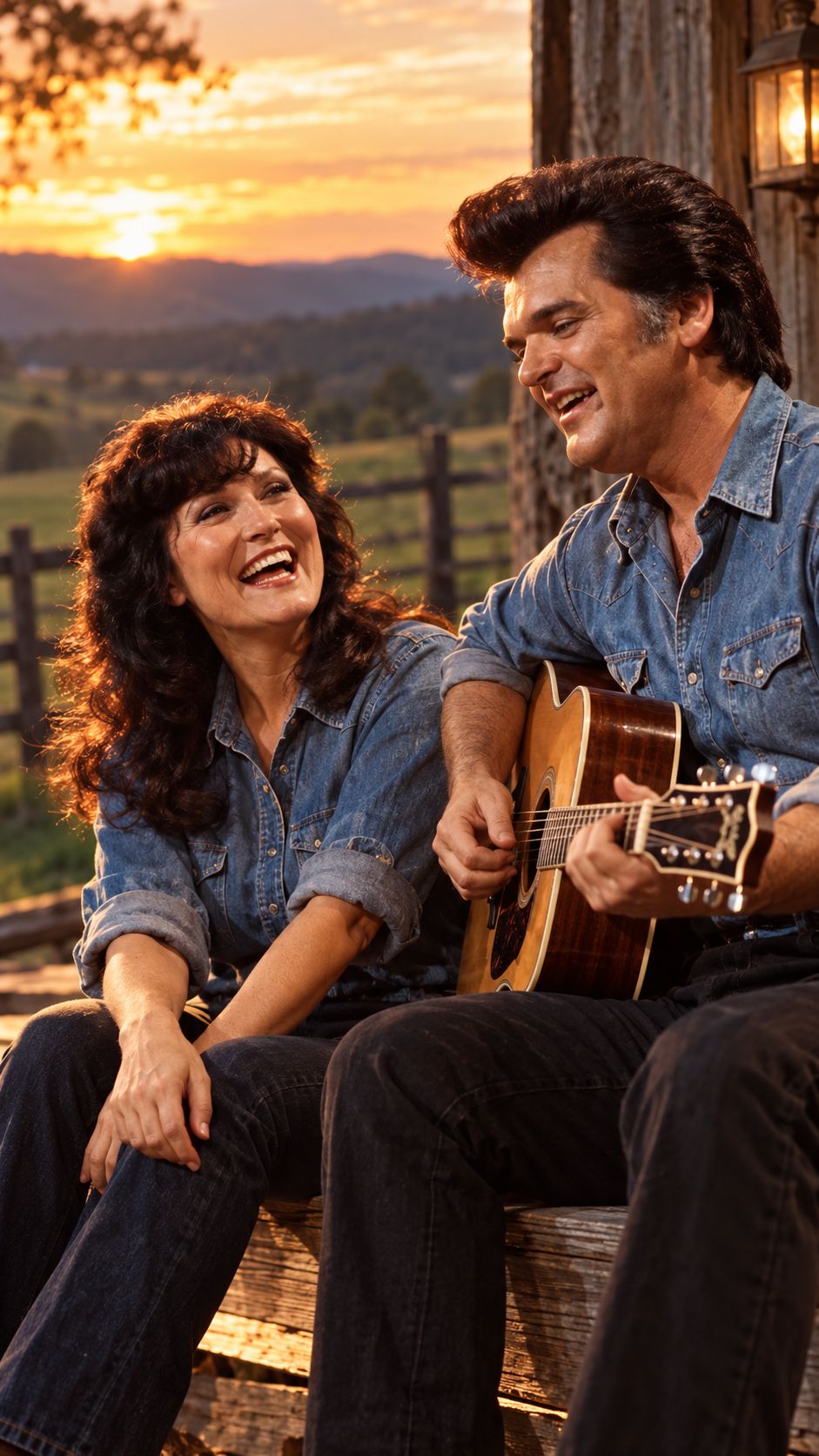
There are partnerships in country music that feel almost accidental, and then there are partnerships that seem destined to become part of the music’s permanent memory. Conway Twitty and Loretta Lynn belonged to the second kind. When their voices met, something happened that neither singer could have created alone. Their songs carried romance, tension, humor, heartbreak, stubbornness, tenderness, and the unmistakable feeling of two people telling a story they somehow already knew by heart.
Long before their celebrated duets became country classics, both artists had traveled difficult roads. Loretta Lynn emerged from humble beginnings in rural Kentucky, carrying experiences of marriage, motherhood, poverty, ambition, and determination into her songwriting. Conway Twitty, meanwhile, spent years searching for the musical identity that would eventually make him one of country music’s most recognizable voices.
Their journey together was not simply about recording successful songs. It was about chemistry. It was about contrast. Loretta’s emotional directness could challenge Conway’s smooth, controlled delivery, while Conway’s understated intensity gave Loretta’s fiery performances another dimension.
What made their story unforgettable was the humanity beneath the harmonies. Behind every polished recording were two artists who understood struggle—and knew how to turn real life into music that millions could feel.
Humble Beginnings That Shaped Everything
Before Loretta Lynn became one of country music’s most influential women, she was Loretta Webb, born into a large working-class family in the coal-mining community of Butcher Hollow, Kentucky.
Her childhood was far removed from the glamour associated with Nashville. Her family lived modestly, and the realities of Appalachian life shaped the woman and songwriter she would become.
Those experiences mattered enormously.
Loretta Lynn did not write as someone observing hardship from a distance. She wrote from inside it. Marriage, motherhood, family disagreements, financial uncertainty, ambition, loneliness, and the complicated emotions of ordinary people became subjects she was willing to put directly into songs.
That honesty eventually became one of her greatest strengths.
Her voice carried something more important than technical perfection: credibility.
When she sang about a woman trying to understand her marriage, protect her family, or find her own identity, listeners believed her because the emotional world of the song felt lived rather than invented.
Meanwhile, Conway Twitty followed a very different path.
Born Harold Lloyd Jenkins in Mississippi, Conway initially pursued music outside the country tradition that would ultimately define his legacy. He experienced success in rock and roll before eventually moving toward Nashville and discovering that his deep, dramatic voice had a remarkable place in country music.
That transition was not merely a career adjustment.
It was a reinvention.
The transformation from rock performer to country superstar demonstrated an important quality that would later define his partnership with Loretta: adaptability.
Conway Twitty understood that music was constantly changing. He knew how to take emotional material and deliver it with restraint, confidence, and an almost conversational intimacy.
When these two artists eventually found themselves working together, they brought completely different histories into the recording studio.
And that difference became their greatest advantage.
Two Voices That Should Not Have Worked—But Did
The magic of Conway Twitty and Loretta Lynn was never based on sounding identical.
In fact, the opposite was true.
Their voices were dramatically different.
Loretta could sound playful one moment and wounded the next. Her delivery often carried an edge of independence, as though the woman inside the song had already lived through the argument before the first verse began.
Conway approached songs differently.
His voice was smooth, low, deliberate, and intensely controlled. He rarely needed to force an emotion. A slight change in tone could make a line feel intimate, threatening, vulnerable, or devastating.
Put those voices together, and the result was dramatic.
Loretta often sounded like the person demanding an answer.
Conway sounded like the person trying to avoid giving one.
That tension became the foundation of their greatest recordings.
Their duets felt less like two singers taking turns and more like two characters having a private conversation in front of an audience.
That distinction is crucial.
The listener was not simply hearing harmony.
The listener was overhearing a relationship.
The Emotional Architecture of Their Duets
One reason the Conway Twitty and Loretta Lynn partnership remains so powerful is that their songs frequently contained conflict.
Love was rarely presented as simple.
There could be jealousy, regret, temptation, reconciliation, misunderstanding, pride, and forgiveness.
Their celebrated recordings such as “After the Fire Is Gone” demonstrated how effectively they could transform complicated adult emotions into country storytelling.
The song works because neither singer completely dominates it.
Their voices create a conversation.
That conversational quality became one of their trademarks.
In many country duets, the singers simply divide the verses and join together for the chorus. Conway and Loretta often went further. Their phrasing suggested reaction. One voice seemed to respond emotionally to what the other had just sung.
This gave their performances a theatrical quality without making them feel artificial.
They were actors without pretending to be actors.
They were storytellers using melody instead of dialogue.
Why Loretta Lynn Was So Important to the Partnership
It would be easy to describe Loretta Lynn merely as Conway’s duet partner.
That would miss the point.
Loretta brought an enormous artistic identity of her own into every collaboration.
She was already a major country star, a songwriter, and a woman who had challenged the industry’s expectations about what female country artists could say.
Her songwriting frequently addressed subjects that were considered uncomfortable or controversial.
She wrote about women’s lives with unusual directness.
That perspective gave the Conway-Loretta recordings an emotional balance that might otherwise have been missing.
Conway could bring sophistication and controlled sensuality.
Loretta brought confrontation and emotional truth.
She could make a lyric sound like an argument between two spouses rather than a carefully rehearsed studio performance.
That authenticity was one reason audiences connected so strongly with them.
Conway Twitty’s Quiet Power
If Loretta was often the emotional spark, Conway Twitty was frequently the steady flame.
His greatest gift was understatement.
He understood that a powerful country vocal did not always require shouting.
Sometimes the most devastating performance was the one delivered quietly.
Conway could stretch a word, lower his voice, or pause before a phrase and suddenly make a familiar lyric feel deeply personal.
That restraint complemented Loretta beautifully.
Where Loretta could push forward emotionally, Conway could pull back.
Where she challenged, he responded.
Where she exposed vulnerability, he often answered with calm intensity.
Their artistic relationship became a study in musical balance.
The Struggles Behind the Success
The polished image of country stardom can sometimes hide how difficult the journey actually was.
Both Conway Twitty and Loretta Lynn had experienced uncertainty before achieving lasting success.
For Loretta, the path from rural Kentucky to the center of Nashville was extraordinary.
She had to establish herself in an industry where female artists were often expected to fit narrow roles. Her willingness to speak honestly about marriage, motherhood, relationships, and women’s independence helped expand those boundaries.
For Conway, the challenge was different.
He had to overcome the expectations created by his earlier career and establish himself convincingly within country music.
Neither journey happened overnight.
Their eventual success therefore carried more meaning.
They were not simply famous singers making records.
They were survivors of reinvention.
The Human Stories Inside the Music
Perhaps the most enduring quality of Conway Twitty and Loretta Lynn was their ability to make enormous audiences feel that the songs belonged to ordinary people.
That is one of country music’s greatest traditions.
The biggest stars sing about small moments.
A disagreement in the kitchen.
A lonely night.
A marriage under pressure.
A memory that refuses to disappear.
A goodbye nobody wanted.
A love that survives despite everything.
These were the emotional spaces where Conway and Loretta excelled.
Their music did not require listeners to live glamorous lives.
It required listeners to have lived.
And almost everyone had.
More Than a Successful Partnership
Their collaboration eventually became more than a series of hit recordings.
It became an identity.
When people heard Conway Twitty and Loretta Lynn together, they knew what kind of emotional world they were entering.
There would be chemistry.
There would be conflict.
There would be humor.
There would be vulnerability.
And above all, there would be storytelling.
That consistency helped turn their partnership into one of country music’s defining collaborations.
They represented an era when the duet was not simply a commercial format.
It was a dramatic art form.
Why Their Music Still Matters
Decades later, the recordings of Conway Twitty and Loretta Lynn continue to resonate because the emotions inside them have not aged.
Technology changes.
Fashion changes.
Radio formats change.
But human relationships remain complicated.
People still fall in love.
People still argue.
People still regret.
People still forgive.
People still wonder whether a relationship can survive one more difficult night.
That is why their music continues to feel immediate.
The songs belong to another era, but the emotions do not.
A Legacy Built on Honesty
The greatest legacy of Conway Twitty and Loretta Lynn may not be the number of awards, chart achievements, or memorable performances.
It may be the emotional honesty they brought into the recording studio.
They understood that country music does not need to make life look perfect.
It needs to make life recognizable.
Their voices carried the weight of experience.
Their differences created chemistry.
Their struggles gave their performances credibility.
And their willingness to explore complicated emotions transformed ordinary stories into unforgettable music.
Conway Twitty and Loretta Lynn did not simply sing about relationships—they made listeners feel as though they were standing inside them.
That is why their partnership remains so powerful.
Their music reminds us that the greatest country songs are rarely about perfect lives. They are about imperfect people trying to love, survive, forgive, remember, and keep going.
And perhaps that is the real reason the voices of Conway Twitty and Loretta Lynn continue to echo across generations.
They never needed their stories to be perfect.
They only needed them to be true.
VIDEO: