 By admin
INTRODUCTION:
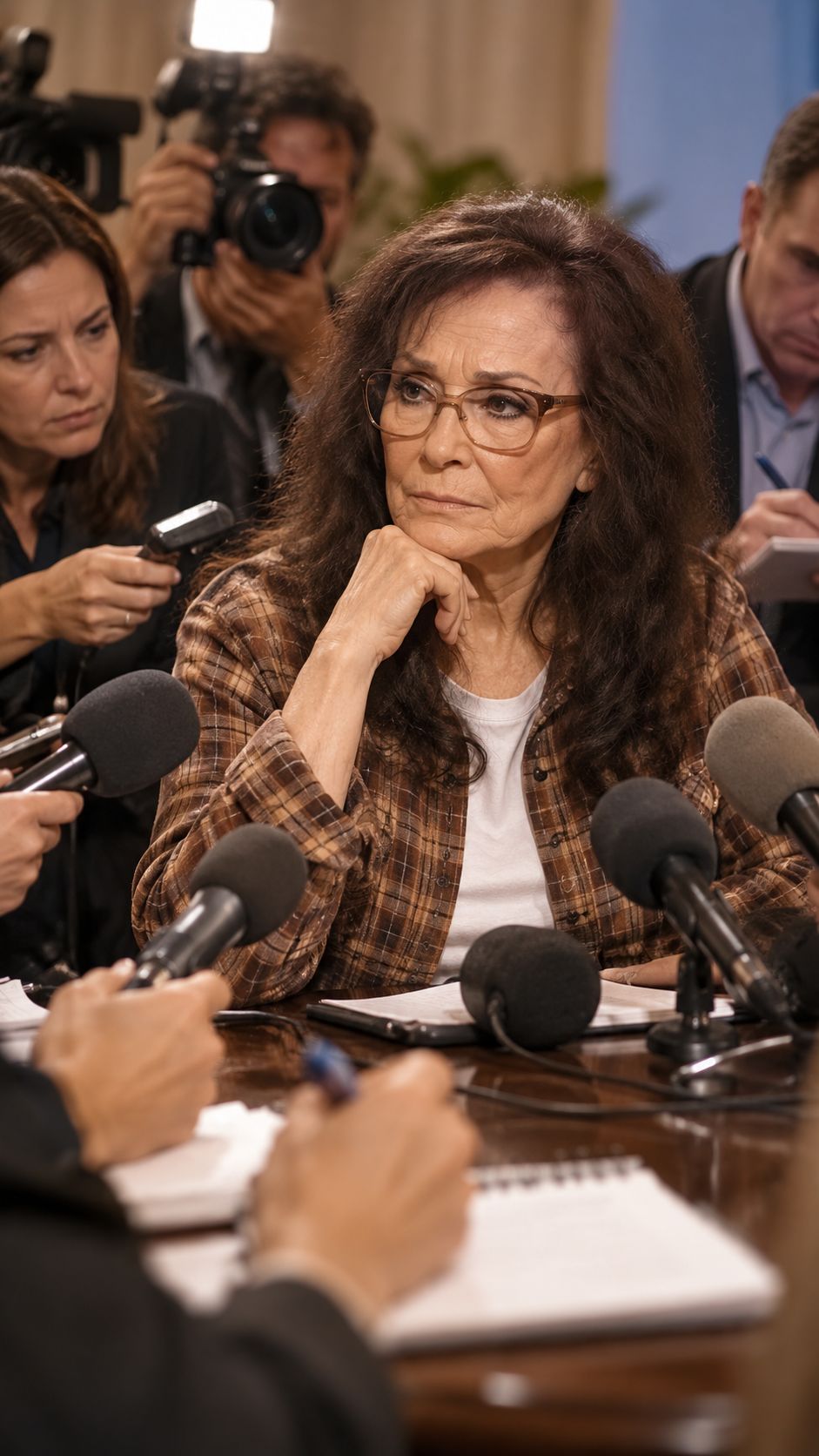
There are moments in country music history when the music itself becomes secondary to the story surrounding it. Loretta Lynn knew that better than almost anyone. She built her career by turning private struggles into public songs, writing about marriage, betrayal, motherhood, poverty, independence, and the complicated realities of being a woman in a conservative world. But that honesty came with a price. The more successful Lynn became, the more intensely the press examined the woman behind the songs.
For Lynn, scrutiny was never simply about celebrity gossip. It often became a battle over who had the right to tell her story—and whether the woman singing about ordinary life could be trusted to tell the truth about her own.
One of the clearest examples came during the controversy surrounding The Pill, when Lynn confronted an American culture deeply divided over changing ideas about women, marriage, family, and personal freedom. The song was condemned by some religious figures and banned by numerous radio stations, turning Lynn herself into a national talking point. PBS
Yet the deeper story is more complicated than the headlines suggested. Behind the controversy was an artist who had spent years transforming uncomfortable personal experiences into songs—and who refused to apologize for making country music tell the truth.
The Woman Behind the Controversy
To understand why Loretta Lynn attracted such intense media attention, you have to understand what made her different from the beginning.
She did not arrive in Nashville presenting herself as a polished celebrity removed from ordinary life. Her identity was rooted in Butcher Hollow, Kentucky, poverty, marriage, motherhood, family conflict, and the hard realities of rural life.
That authenticity became her greatest strength—and eventually one of the reasons journalists watched her so closely.
By the late 1960s and early 1970s, Lynn had become one of country music’s most powerful female voices. Songs such as You Ain’t Woman Enough, Fist City, Don’t Come Home A-Drinkin’, and Coal Miner’s Daughter did something unusual: they placed women’s frustrations, anger, resilience, and complicated domestic lives directly in the center of country music.
Her songs were not abstract stories.
They felt personal.
And sometimes, they were personal.
That distinction mattered enormously when the media began examining Lynn’s life alongside her music.
The Pill Changed Everything
The controversy reached another level with The Pill.
Recorded in 1972 but not released until 1975, the song addressed birth control at a time when discussions surrounding women’s reproductive choices remained deeply controversial in many conservative communities. Record executives reportedly hesitated over the material before finally allowing it to reach the public.
When it arrived, the reaction was immediate.
Some radio stations refused to play it. Religious critics condemned it. The song became a cultural flashpoint rather than simply another country single.
Historical accounts place the number of stations banning the song at more than 60, while reports from the period described strong grassroots interest that helped drive sales.
That is where the media scrutiny surrounding Loretta Lynn became particularly revealing.
The public debate was no longer simply about whether a song was appropriate.
It became a debate about the woman who had written and recorded it.
Was Lynn attacking traditional family values?
Was she encouraging women to reject motherhood?
Was she trying to provoke controversy?
Or was she simply writing from the perspective of women whose lives did not fit neatly into the idealized image often presented by popular culture?
The evidence points toward something more nuanced.
Lynn herself described the song as a conversation between a wife and her husband. Her explanation emphasized frustration with being controlled and the desire to have greater control over the timing and circumstances of motherhood. Contemporary reporting also recorded her saying that, had birth control been available to her earlier, she would have used it while still loving the children she eventually had.
That distinction is critical.
The controversy surrounding The Pill was real.
But reducing Lynn’s position to a simple attack on family values misses the larger story.
Why The Media Focused So Heavily on Her
There was another reason Lynn was so fascinating to journalists: her public persona and private history seemed impossible to separate.
She had written openly about drinking, infidelity, arguments, jealousy, motherhood, and marriage.
Songs such as Fist City were especially provocative because Lynn presented herself not as a passive victim but as a woman willing to confront another woman over her husband’s attention.
Even Lynn’s own explanation of her songwriting challenged the idea that she was merely creating fictional entertainment. In later interviews, she repeatedly emphasized that her songs came from experiences she had witnessed or lived through.
That honesty created a dangerous situation for any celebrity.
Once an artist repeatedly says, “This comes from real life,” journalists naturally begin asking which parts of the public story are true.
And Lynn eventually faced precisely that kind of scrutiny.
The Age Controversy
Years later, another example demonstrated how intensely the press could examine even the most personal details of Lynn’s biography.
Questions arose about her actual birth year and the age at which she married Oliver “Doolittle” Lynn.
Documents examined by the Associated Press indicated that Lynn was born in 1932 rather than the commonly reported 1935 date, making her older than many biographies had stated. The reporting also contrasted documentary records with elements of the story presented in her autobiography.
That episode is important because it demonstrates the difference between a contradiction and a scandal.
The facts surrounding Lynn’s early life were complicated. Her autobiography had become part of her public mythology, while official records provided another layer of evidence.
But the existence of conflicting dates did not erase the broader reality of her childhood, marriage, motherhood, or rise from rural Kentucky to international fame.
It simply showed that celebrity biographies are often more complicated than the simplified stories audiences inherit.
The Hardest Scrutiny Was Often About Her Marriage
Perhaps the most emotionally difficult media scrutiny surrounding Loretta Lynn involved her marriage.
Her relationship with Doolittle Lynn became inseparable from her public identity because she repeatedly incorporated its struggles into her songwriting.
Later interviews described a marriage affected by drinking, infidelity, loneliness, and conflict. Lynn’s daughters also spoke publicly about the long absences created by her demanding touring schedule.
This created a painful paradox.
The very experiences that made Lynn’s songs resonate with millions of women also gave journalists material to investigate.
Her marriage became part biography, part mythology, part country-music history.
And Lynn did not always present herself as the innocent victim in that story.
She described the relationship with a mixture of love, anger, loyalty, disappointment, humor, and regret.
That complexity is precisely what makes her story so powerful.
What the Evidence Actually Shows
When the sensationalism is stripped away, several facts become clear.
First, Loretta Lynn genuinely challenged cultural boundaries.
She wrote about subjects that many country artists avoided, particularly when those subjects involved women’s sexuality, marriage, contraception, infidelity, and independence.
Second, the backlash was not imaginary.
The Pill really was banned by numerous radio stations and condemned by religious critics. Its controversy was documented at the time and became part of the song’s historical legacy.
Third, Lynn was not simply manufactured into a controversial figure by the media.
She deliberately chose subjects that mattered to her.
She understood that they could create uncomfortable conversations—and she continued writing them anyway.
Finally, the evidence suggests that the most compelling part of Lynn’s story was not whether every detail of her biography could survive journalistic fact-checking.
It was that her songs consistently reflected the contradictions of real life.
The Legacy Behind the Headlines
The greatest mistake would be to remember Loretta Lynn only through the controversies that surrounded her.
She became the first woman named CMA Entertainer of the Year in 1972, achieved major success with Conway Twitty, entered the Country Music Hall of Fame in 1988, and ultimately became one of the defining voices of American country music.
Her legacy survived because controversy was never the whole story.
The woman the press scrutinized was also the songwriter who gave millions of women a voice.
The celebrity who was questioned about her personal life was also the performer who stayed connected to ordinary listeners.
And the artist criticized for crossing boundaries ultimately helped expand the boundaries of country music itself.
That may be the real lesson behind Lynn’s most difficult periods of media scrutiny.
She did not become unforgettable because everyone agreed with her. She became unforgettable because she was willing to tell stories other people were afraid to tell.
In the end, the evidence does not reveal a perfect heroine or a manufactured villain.
It reveals something far more human: Loretta Lynn was complicated, outspoken, vulnerable, ambitious, contradictory, and remarkably honest about the world she knew.
And perhaps that is exactly why the media never stopped watching her.
Because whenever Loretta Lynn walked into the spotlight, she brought more than a famous voice.
She brought a story.