 By admin
INTRODUCTION:
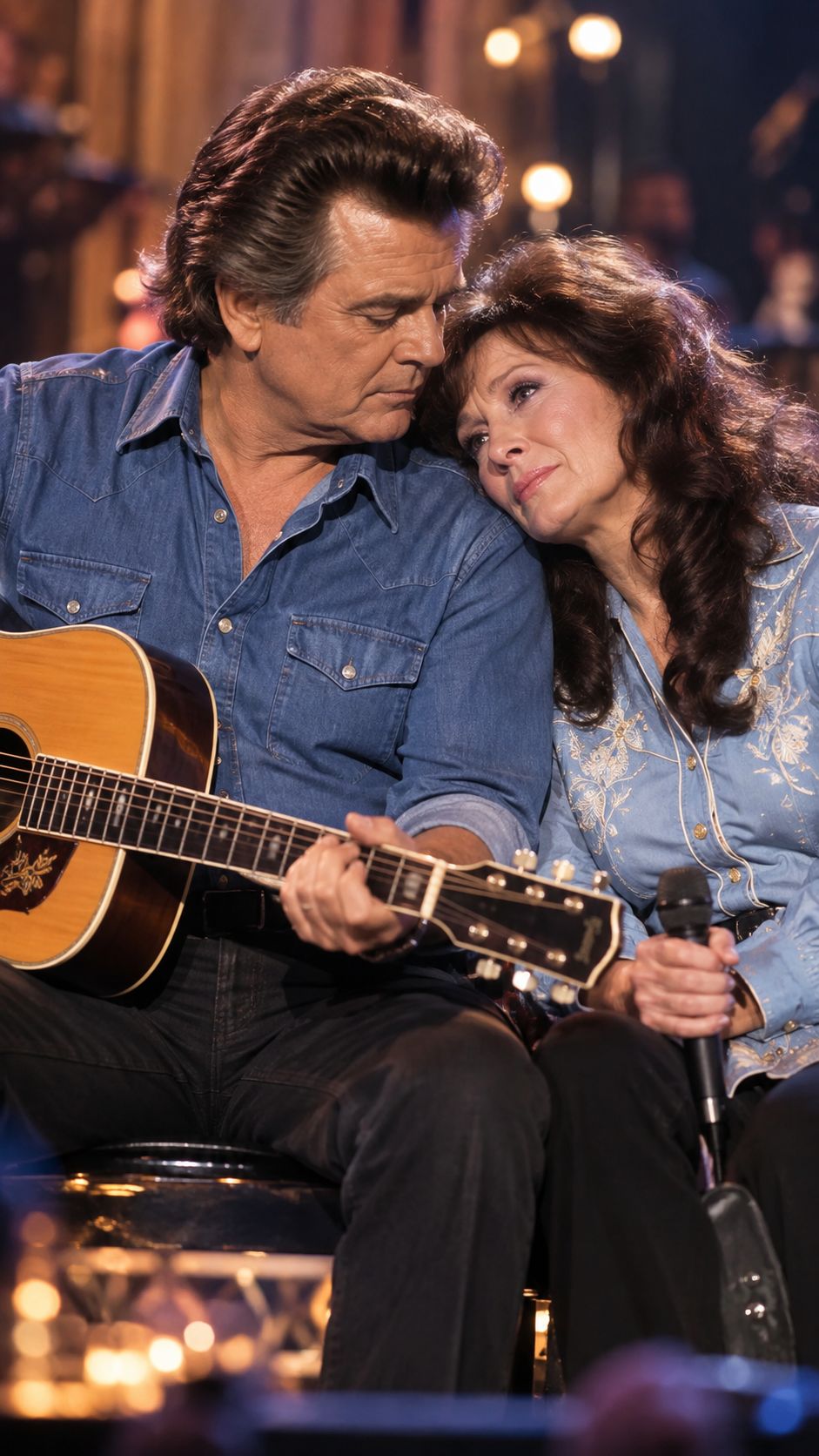
There are moments in country music that seem to live somewhere beyond the recording studio, beyond the stage, and even beyond the songs themselves. The story of Conway Twitty and Loretta Lynn belongs to that rare category. Their voices could make a room feel smaller, their harmonies could turn heartbreak into something beautiful, and their performances often carried an emotional honesty that listeners recognized immediately.
What made their partnership unforgettable was not simply the success of their recordings. It was the feeling behind them. When Conway Twitty and Loretta Lynn sang about love, regret, distance, temptation, loneliness, or reconciliation, they sounded less like two stars performing a duet and more like two people revealing pieces of real life.
Their music arrived from an era when country songs were allowed to be vulnerable. Characters could make mistakes. Marriages could hurt. Love could survive complicated circumstances. And sometimes, the most powerful emotion was not expressed through a dramatic declaration, but through a pause, a glance, or a trembling note.
That is why the emotional legacy of Conway and Loretta continues to resonate. Their story reminds us that some of country music’s greatest moments were never really about fame. They were about human beings trying to understand love, loss, loyalty, and the complicated roads between them.
When Two Voices Became One Emotional Story
The partnership between Conway Twitty and Loretta Lynn was extraordinary because their voices possessed contrasting qualities that somehow fit together naturally.
Conway had a smooth, intimate vocal style. There was often a controlled sadness in his delivery, even when he was singing something confident or romantic. Loretta, meanwhile, brought an unmistakable directness. Her voice could sound tender one moment and fiercely determined the next.
Put those qualities together, and something special happened.
Their duets did not depend entirely on vocal fireworks. Instead, they often sounded like conversations.
One singer would make a confession. The other would answer. One voice might sound uncertain while the other sounded determined. The tension created between those perspectives gave their songs an almost theatrical quality.
They did not merely sing about relationships. They made listeners feel as though they were standing inside one.
That emotional realism became one of the defining strengths of their collaboration.
The Power of As Soon as I Hang Up the Phone
Few songs illustrate their dramatic chemistry better than As Soon as I Hang Up the Phone.
The song works because it creates emotional conflict through conversation. Instead of presenting love as something simple and polished, it explores the uncomfortable space between what someone says and what someone truly feels.
That was a perfect environment for Conway Twitty and Loretta Lynn.
Their performances could make listeners feel the hesitation, frustration, longing, and emotional distance contained within the story. The tension was not necessarily loud. In fact, the quieter moments could be the most powerful.
This is where the idea of the “quiet tears” surrounding their legacy becomes meaningful.
The most heartbreaking moments in country music are not always the ones where someone openly cries. Sometimes they are the moments when a singer sounds as though they are trying desperately not to cry.
That restraint was part of the magic.
After the Fire Is Gone — Love Without Easy Answers
Another defining collaboration was After the Fire Is Gone.
The song explored a difficult emotional landscape, and that complexity helped explain why the partnership between Conway Twitty and Loretta Lynn felt so authentic.
Country music has always been willing to examine uncomfortable truths. It does not always ask listeners to choose an obvious hero or villain. Sometimes it simply asks them to understand why people make complicated choices.
That was particularly effective in the hands of Conway and Loretta.
Their voices gave the characters emotional dimension. There was attraction, uncertainty, dissatisfaction, and vulnerability. Instead of presenting relationships as perfect stories, the music acknowledged that people can simultaneously feel love and pain.
That honesty was one reason audiences connected so deeply.
Beyond the Records: The Human Element
It is easy, decades later, to remember Conway Twitty and Loretta Lynn primarily through awards, chart success, television appearances, photographs, and classic recordings.
But their enduring appeal goes deeper than statistics.
Both artists came from generations of country performers who understood that music could function almost like a diary.
Loretta Lynn built much of her artistic identity around stories of ordinary people, complicated families, marriage, motherhood, hardship, pride, and survival. She did not need to make her characters perfect. Their imperfections were often what made them believable.
Conway Twitty brought a different perspective. His career crossed musical boundaries, and his evolution from rock-and-roll beginnings into one of country music’s most recognizable voices demonstrated an extraordinary ability to reinvent himself.
Together, they created a musical space where those different experiences could meet.
Their duets therefore felt larger than a simple male-female pairing.
They represented two perspectives on the same emotional world.
Why Their Chemistry Still Feels Different
Many artists have recorded successful duets. Far fewer have created a partnership that listeners can identify within seconds.
With Conway Twitty and Loretta Lynn, the chemistry came partly from contrast.
His voice could feel restrained.
Hers could feel conversational and emotionally immediate.
His phrasing could suggest hesitation.
Hers could sound like an answer.
That contrast created movement.
The listener was not simply hearing two singers. The listener was hearing two personalities responding to each other.
And that is one of the hardest things to manufacture in music.
Chemistry cannot simply be added during production. It has to exist between performers.
Conway and Loretta had it.
The Era That Made Their Music So Powerful
Their partnership also belonged to a particular period in country music history.
During the height of their collaboration, country music was deeply connected to storytelling. Songs were often built around characters, consequences, and emotional turning points.
There was less obsession with making every performance perfectly polished.
Instead, a slightly rough edge could make a recording more believable.
That environment suited both artists.
The songs could breathe.
The voices could crack.
The characters could hesitate.
And listeners could recognize themselves in the imperfections.
This is particularly important when considering why their music continues to reach audiences long after the original recordings were released.
A song does not survive simply because it was successful when it came out.
It survives because someone decades later hears it and thinks:
That’s exactly how I felt.
The Sadness Behind the Smiles
Photographs of Conway Twitty and Loretta Lynn often capture smiles, laughter, elegant performances, and moments of apparent ease.
But every great artist carries a life beyond the photograph.
Both performers experienced the pressures that came with extraordinary careers: touring, recording, family responsibilities, public expectations, personal disappointments, and the relentless demands of fame.
That is why their emotional performances can feel so convincing.
They understood that happiness and sadness can exist simultaneously.
A person can smile while carrying grief.
A performer can stand beneath bright stage lights while privately dealing with exhaustion.
A song can sound joyful while telling a painful story.
Country music has always understood this contradiction.
Conway and Loretta understood it exceptionally well.
What Their Partnership Left Behind
The greatest legacy of Conway Twitty and Loretta Lynn is not simply a collection of successful recordings.
It is a particular emotional language.
Their songs taught generations of listeners that complicated feelings deserve to be expressed.
They showed that a duet can become a conversation.
They demonstrated that vulnerability does not make a performer weaker.
And they proved that country music can transform private pain into something shared by millions.
Their partnership also helped establish the male-female country duet as something more substantial than a novelty. At its best, the format became a dramatic art form, allowing two singers to tell different sides of the same story.
That influence continues to echo through country music.
Why Millions Still Remember Them
Perhaps the most remarkable thing about Conway Twitty and Loretta Lynn is that their music has outlived the era that created it.
New generations continue to discover their voices.
Older listeners return to the songs because they bring back memories of another time.
For some people, a particular duet may remind them of a first love.
For others, it may recall a marriage, a breakup, a family gathering, a long drive, or a difficult chapter that eventually passed.
That is the secret of enduring country music.
The song may belong to the artist when it is recorded.
But once listeners attach their own memories to it, the song becomes theirs too.
And perhaps that is where the quiet tears truly come from.
Not necessarily from one particular moment or one documented tragedy, but from the realization that these voices once captured feelings so accurately that decades later, they can still open old doors inside the heart.
The greatest country songs do not simply remind us of the past. They remind us of who we were when we first heard them.
A Legacy That Refuses to Fade
The story of Conway Twitty and Loretta Lynn ultimately belongs to something bigger than celebrity.
It belongs to memory.
It belongs to the people who listened when those records were new, the couples who found their own stories inside the lyrics, and the younger listeners who continue discovering the emotional power of classic country music.
Their partnership was built on voices, but its endurance was built on truth.
They sang about people who were imperfect.
They sang about love that was complicated.
They sang about choices that could not always be undone.
And they sang about emotions that people sometimes struggle to say out loud.
That may be why the music still feels so intimate.
Conway Twitty and Loretta Lynn did not need enormous productions or exaggerated drama to make listeners feel something profound. Sometimes all they needed were two voices, a story, and enough honesty to let the silence between the words speak.
Decades later, that honesty remains their greatest gift.
And for countless country music fans, the sound of Conway and Loretta will always carry something more than nostalgia.
It will carry a little heartbreak.
A little hope.
A little memory.
And, somewhere beneath it all, those quiet tears that only the greatest songs can bring back.
VIDEO: