 By admin
INTRODUCTION:
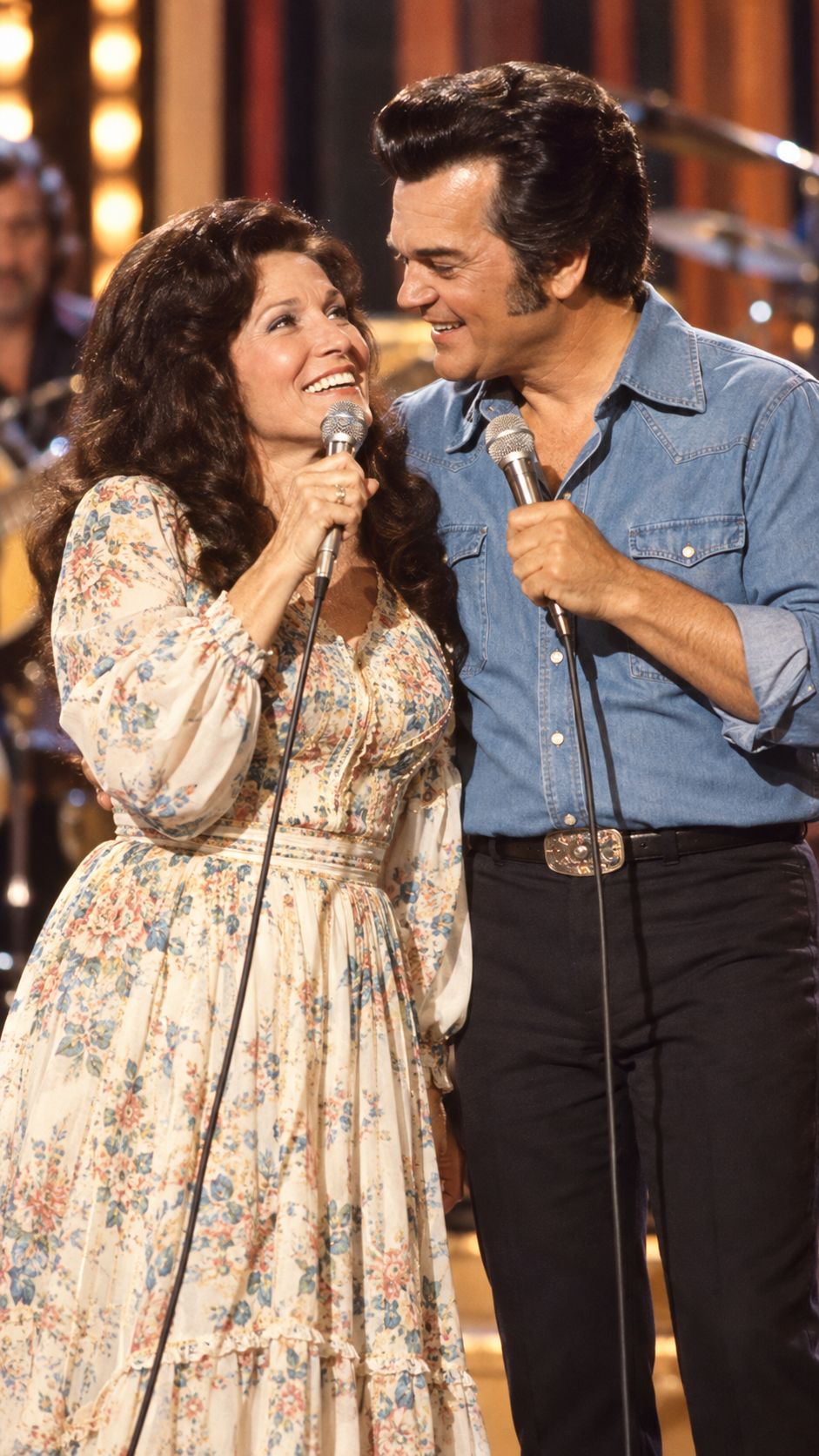
There are musical partnerships that entertain audiences for a season, and then there are partnerships that become part of a nation’s heart. Conway Twitty and Loretta Lynn belonged to the second kind. Together, they created one of the most memorable duos in country music history, combining two unmistakable voices, two powerful personalities, and an extraordinary understanding of the emotions that make a song unforgettable.
Their success was not simply the result of recording a few popular duets. It was built on years of dedication, artistic chemistry, and an ability to connect with ordinary people who recognized their own joys, disappointments, and complicated relationships in the music. When Conway Twitty delivered his smooth, intimate vocals and Loretta Lynn answered with her direct, unmistakably authentic voice, something special happened. Their performances sounded less like rehearsed entertainment and more like two people revealing the truth about love.
Yet their achievements become even more remarkable when we consider the demands of the country music industry. Trends changed, new artists arrived, and audiences constantly searched for fresh sounds. Still, their partnership continued to attract listeners, earn recognition, and produce songs that generations of fans would remember long after their original release dates.
Their story is about more than chart positions and awards. It is about trust, timing, musical instinct, and the rare ability to make millions of strangers feel that a song was written specifically for them. Understanding how they accomplished this reveals why their legacy remains so powerful today.
1. Two Extraordinary Careers That Found Each Other at the Perfect Time
To understand why Conway Twitty and Loretta Lynn became such a formidable musical partnership, we must first understand that neither artist needed the other to become famous.
Conway Twitty, born Harold Lloyd Jenkins, had already experienced a remarkable musical journey before becoming one of Nashville’s most dependable hitmakers. He began his recording career in the rock-and-roll era, scoring a major early success with “It’s Only Make Believe” in 1958. Rather than remaining tied to one musical identity, he eventually established himself as a country superstar, developing a signature style built around warmth, emotional restraint, and carefully controlled vocal phrasing.
Loretta Lynn, meanwhile, had forged her reputation through something equally powerful: honesty. Raised in a working-class family in Kentucky, she drew heavily on her own experiences to write and perform songs that spoke directly to women’s lives, marriages, financial struggles, and personal independence.
Her signature song, “Coal Miner’s Daughter,” captured that authenticity beautifully. She did not need an elaborate fictional story to move listeners. Her own life supplied the material.
When these two artists began recording together in the early 1970s, they brought complementary strengths to the studio.
Twitty understood how to make a melody sound intimate and inviting. Lynn knew how to inject a performance with conviction, personality, and emotional tension. One offered a smooth, conversational delivery; the other answered with a voice that could sound tender one moment and defiantly strong the next.
Their greatest advantage was not that they sounded alike. It was that each brought something the other could not reproduce.
That distinction became the foundation of their extraordinary success.
2. The Breakthrough That Changed Everything: After the Fire Is Gone

The turning point arrived in 1971 with “After the Fire Is Gone.”
The song explored the emotional emptiness that can emerge when a relationship loses its passion. Rather than presenting love as a simple fairy tale, it examined the difficult space between desire, loneliness, and dissatisfaction.
For country audiences, the subject was familiar. What made the recording special was how naturally Twitty and Lynn inhabited its opposing perspectives.
Twitty’s measured vocal suggested a man revealing feelings he might struggle to express in ordinary conversation. Lynn’s response supplied another dimension, making the song feel like a genuine exchange rather than two solo performances placed together.
The result reached No. 1 on the country charts and earned the duo a Grammy Award for Best Country Performance by a Duo or Group with Vocal.
That achievement did more than introduce a successful recording partnership. It demonstrated that the chemistry between the two singers could translate into commercial success.
Their voices created a dramatic structure that audiences could immediately understand: one person confesses, another responds, and the listener becomes an invisible witness to a private conversation.
The recording also established an important principle for their future collaborations. They did not have to rely on grand vocal displays or complicated arrangements to command attention. The emotional story itself was powerful enough.
Once listeners responded to that formula, Conway Twitty and Loretta Lynn had a foundation upon which to build an enduring catalog.
3. Five Consecutive No. 1 Hits: A Remarkable Run
The partnership’s early chart performance was extraordinary. Between 1971 and 1975, the duo achieved five consecutive country No. 1 singles, establishing a level of consistency that few male-female country partnerships could match.

1. After the Fire Is Gone (1971)
The breakthrough duet that established their musical identity, combining emotional vulnerability with the tension of a troubled relationship.

2. Lead Me On (1971)
A song steeped in temptation and uncertainty, demonstrating that their first success was not a lucky accident.

3. Louisiana Woman, Mississippi Man (1973)
A livelier, more playful recording that revealed their ability to move beyond melancholy into spirited musical storytelling.

4. As Soon as I Hang Up the Phone (1974)
A dramatic telephone conversation that used contrasting voices to create the feeling of overhearing an intensely personal moment.

5. Feelins’ (1974–1975)
A restrained, intimate duet that returned to the emotional complexity that had made their earliest recordings so compelling.
These five songs illustrate a critical point: the duo did not succeed by repeating exactly the same musical idea.
“After the Fire Is Gone” explored emotional distance. “Lead Me On” examined temptation. “Louisiana Woman, Mississippi Man” introduced a more playful, regional identity, turning the differences between its characters into an advantage.
Then came “As Soon as I Hang Up the Phone,” an especially memorable example of their storytelling approach. Structured around a telephone conversation, the recording made listeners feel as though they were witnessing a private exchange unfold in real time.
“Feelins’” returned to a more reflective atmosphere, proving that subtle performances could be every bit as compelling as dramatic ones.
The important detail is that these hits arrived across different releases and musical moods. Their success rested on a recognizable partnership that could accommodate variety without losing its identity.
4. The Secret Weapon: They Made Songs Feel Like Real Conversations

Many successful duets depend on vocal harmony. Conway Twitty and Loretta Lynn understood that harmony was only part of the equation.
Their most effective recordings functioned as miniature dramas.
Twitty rarely sounded as though he was trying to overpower his partner. Instead, he allowed his smooth, controlled delivery to create space for Lynn’s expressive responses. She could challenge him, reassure him, tease him, or reveal an entirely different emotional perspective.
This balance made their recordings feel spontaneous even when the performances were carefully arranged.
Consider the appeal of “Louisiana Woman, Mississippi Man.” The song transforms geographical differences into romantic playfulness. Its characters possess distinct identities, and the contrast between them becomes the source of the entertainment.
The audience is not simply hearing two celebrated singers. It is following two personalities with their own desires, opinions, and emotional rhythms.
This technique also made their music particularly accessible to radio listeners. Someone driving home after a difficult day did not need to study the lyrics to understand the conflict. The tone of a voice, the timing of a response, and the shift from hesitation to confidence communicated the story immediately.
Their chemistry was therefore both artistic and practical. It gave listeners a reason to remember the songs and gave country radio a distinctive sound that stood apart from recordings featuring only one lead vocalist.
Most importantly, the performances never required listeners to believe that the singers were a real-life romantic couple. Their effectiveness came from their ability to portray fictional relationships convincingly.
That distinction is essential to understanding their achievement. Their musical chemistry was real, even when the characters they portrayed were fictional.
5. Four Consecutive Years of CMA Recognition
Commercial success can establish a partnership, but sustained recognition from the industry reveals something more.
From 1972 through 1975, Conway Twitty and Loretta Lynn won the Country Music Association’s Vocal Duo of the Year award four consecutive times.
That remarkable run placed them among the defining collaborative acts of the period.
The awards reflected a partnership that was delivering more than occasional hits. Their recordings had become a reliable part of the country music landscape, and their combined presence was powerful enough to compete in an industry filled with accomplished solo artists and emerging groups.
Their first major hit had also demonstrated that they could work together without diminishing their individual identities.
Loretta Lynn remained a formidable solo artist, celebrated for her songwriting, directness, and influence on women in country music. In 1972, she became the first woman to win the CMA’s Entertainer of the Year award.
Conway Twitty continued to build his own extraordinary recording career, producing solo hits and maintaining a devoted audience.
Neither artist had to surrender a personal identity to become part of a successful duo. Instead, their collaboration expanded what each could accomplish.
This is one of the most important lessons in their story: a successful partnership does not always require two people to share the same strengths. Sometimes it requires each person to recognize and respect the strengths of the other.
Their four consecutive CMA victories became a public acknowledgment of that principle.
6. How They Survived Changing Musical Trends

The country music industry of the 1970s was not static. Production styles evolved, new performers attracted younger listeners, and artists had to compete for limited radio attention.
Yet Twitty and Lynn possessed a significant advantage: their music was built around human experiences that did not become outdated when musical fashions changed.
Love could become complicated in any decade. People could feel tempted, betrayed, misunderstood, hopeful, or unable to express what they wanted. The language surrounding relationships might change, but the emotions remained recognizable.
Their songs gave those emotions a clear musical form.
Twitty’s background in rock and roll had helped him develop an instinct for memorable melodies and accessible performances. His later country recordings combined those instincts with the storytelling traditions of Nashville.
Lynn brought a different kind of strength. Her ability to communicate complicated situations without unnecessary embellishment gave her performances a grounded, believable quality.
Together, they occupied a space between polished commercial entertainment and traditional country storytelling.
Their music could be emotionally serious without becoming inaccessible. It could be playful without losing its country character. And it could explore difficult subjects without requiring elaborate production to make its point.
Their continuing recording activity reinforced that adaptability. They released a succession of collaborative albums during the 1970s, including Lead Me On, Louisiana Woman, Mississippi Man, Country Partners, and Feelins’.
The title album Louisiana Woman, Mississippi Man reached No. 1 on the country album chart, demonstrating that their appeal extended beyond individual singles.
Their partnership continued into the early 1980s, with their final collaborative studio album, Two’s a Party, released in 1981.
Although their chart dominance was most concentrated in the 1970s, their collaboration lasted approximately a decade. That distinction matters: their achievement was not an uninterrupted streak of No. 1 hits for ten years, but a sustained period of influential recordings, major awards, and enduring audience recognition.
7. The Power of Two Independent Superstars
One of the most overlooked aspects of their success is that Conway Twitty and Loretta Lynn were not trying to build careers from nothing together.
They were already established artists with recognizable voices and substantial followings.
That created both an opportunity and a challenge.
Each performer had a distinct public identity. Lynn was known for songs that confronted difficult subjects with remarkable candor. Twitty had become synonymous with romantic ballads, emotional restraint, and a distinctive vocal style.
Their partnership worked because it preserved these identities rather than blending them into something indistinguishable.
Lynn did not have to become less outspoken to sing with Twitty. Twitty did not have to abandon his understated approach to complement Lynn’s expressive delivery.
Their differences became part of the entertainment.
For fans, this created the pleasure of hearing two familiar artists discover new dimensions in one another’s performances. A listener who loved Lynn’s solo work could appreciate the conversational drama she brought to a duet. A Twitty fan could hear how his restrained delivery became even more effective when another voice challenged or complemented it.
Their collaboration also benefited from a degree of continuity. The more recordings they made, the more recognizable their musical relationship became. Audiences knew the general character of the experience they were about to receive, yet each new song could introduce a different conflict or emotional resolution.
This combination of familiarity and variation is one of the foundations of long-term success in popular music.
It helped transform a promising collaboration into a defining partnership of classic country.
8. The Legacy That Outlived the Charts

When Conway Twitty died on June 5, 1993, the loss was deeply felt throughout country music. For Lynn, it meant losing not only a celebrated musical partner but also a friend.
Their professional collaboration had ended years earlier, but the recordings remained.
Songs such as “After the Fire Is Gone,” “Lead Me On,” “Louisiana Woman, Mississippi Man,” “As Soon as I Hang Up the Phone,” and “Feelins’” continued to introduce their voices to listeners who had never experienced the original era of their success.
Their influence can be understood in the way later generations approached country duets. The most memorable collaborations often depend on more than technical compatibility. They need contrasting personalities, believable storytelling, and a sense that the singers are responding to one another rather than simply taking turns.
Their recordings remain useful examples of all three qualities.
They also remind us that chart success is only one measure of musical achievement. Rankings capture a song’s performance at a particular moment, but they cannot fully explain why someone continues to listen decades later.
A familiar duet can evoke memories of a parent’s kitchen, a long drive through the countryside, a favorite radio station, or a period of life that seems impossibly distant.
For some listeners, Conway Twitty and Loretta Lynn represent the golden age of country duets. For others, their music offers an introduction to the emotional directness that has always distinguished the genre.
Their partnership demonstrates that a recording can remain meaningful long after the circumstances surrounding its release have disappeared.
That is a different kind of longevity from chart success, and arguably an even more important one.
9. What Their Extraordinary Partnership Teaches Us About Great Music
The story of Conway Twitty and Loretta Lynn offers several lessons about why some artists achieve lasting success while others struggle to remain relevant.
First, authenticity creates trust. Lynn’s willingness to explore difficult experiences gave her music a powerful sense of credibility. Twitty’s controlled, intimate singing made emotionally complicated material sound approachable.
Second, contrast can be more powerful than similarity. Their voices and performance styles were different, and those differences created the dramatic tension that made their duets distinctive.
Third, consistency matters. Their early run of five consecutive No. 1 singles was extraordinary, but the larger achievement was sustaining a productive collaboration through multiple albums and changing musical trends.
Fourth, memorable songs need memorable stories. Their best-known recordings gave listeners characters, conflicts, and emotional turning points. The melodies mattered, but the stories made the songs linger.
Finally, great partnerships allow individuals to remain themselves. Neither Twitty nor Lynn disappeared behind the other. Their collaboration succeeded because each artist brought a recognizable personality to the music.
These principles help explain why their recordings continue to resonate even as the country music industry evolves.
CONCLUSION: Two Voices, One Unforgettable Chapter in Country Music
The remarkable partnership of Conway Twitty and Loretta Lynn was not built on a single hit, a fleeting trend, or a carefully manufactured image. It emerged from the meeting of two accomplished artists who understood how to make songs feel personal.
Their five consecutive No. 1 singles between 1971 and 1975 established their extraordinary commercial chemistry. Four consecutive CMA Vocal Duo of the Year awards confirmed their standing within the industry. A decade of collaboration produced a catalog that remains one of the most recognizable in classic country music.
But the numbers tell only part of the story.
What made them special was the feeling that every duet contained a conversation worth overhearing. Their songs gave listeners room to recognize their own experiences, whether those experiences involved devotion, temptation, regret, or the complicated distance between two people who still cared about one another.
Conway Twitty brought a voice that could make a confession sound effortless. Loretta Lynn brought a voice that could turn a response into a declaration. Together, they transformed ordinary relationship stories into memorable musical dramas.
They could not have known exactly how future generations would receive their recordings. Yet the songs they made together have continued to travel across decades, reaching listeners who were not even born when the original hits climbed the charts.
Perhaps that is the clearest measure of their achievement.
The charts helped establish their place in history, but the emotional honesty of their music helped preserve it.
And for anyone who still hears the opening notes of “After the Fire Is Gone” or the lively exchange of “Louisiana Woman, Mississippi Man,” the magic remains unmistakable: two extraordinary voices, meeting at precisely the right moment, creating something neither could have made quite the same way alone.
VIDEO: