 By admin
INTRODUCTION:
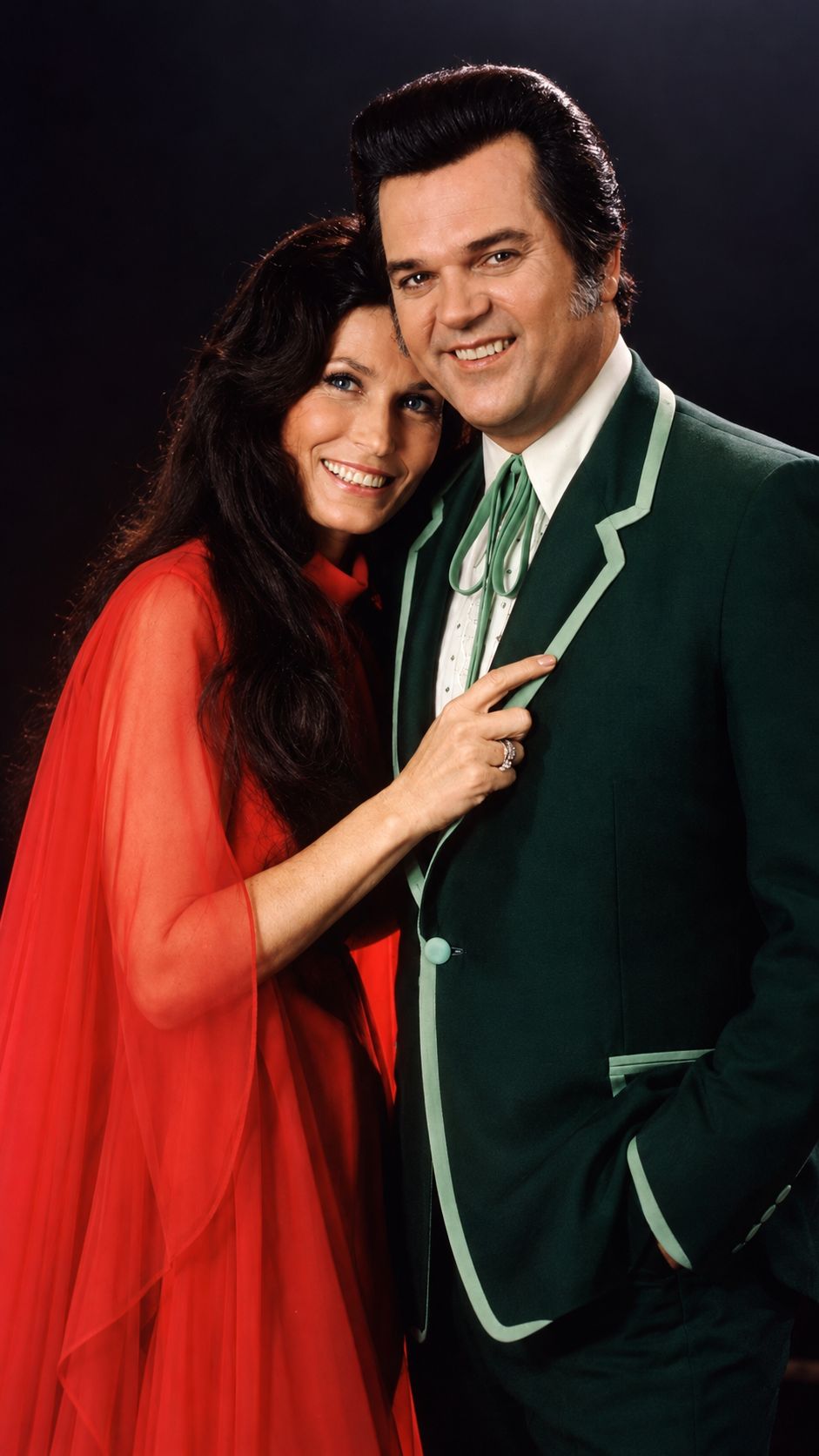
There are country music duos who entertain us, and then there are those who make us feel as though we have been invited into the most private corners of the human heart. Conway Twitty and Loretta Lynn belonged to that rare second category. When their voices came together, something extraordinary happened. Their songs became more than melodies, their harmonies became more than musical arrangements, and their performances became emotional stories that listeners could recognize from their own lives.
At first, their partnership might have seemed like a natural meeting of two country music superstars. Conway Twitty possessed a rich, intimate voice capable of expressing tenderness, regret, longing, and quiet desperation. Loretta Lynn, meanwhile, brought a distinctive strength, a sharp emotional instinct, and an unmistakable sincerity that made every word sound lived rather than rehearsed. Together, they created a musical conversation that felt astonishingly real.
But what truly made them unforgettable was not simply the beauty of their voices. It was the way they listened to one another, the way they allowed silence to carry meaning, and the way they understood that a great duet requires something more profound than two talented singers sharing a microphone.
Their partnership became one of country music’s defining collaborations, producing songs that continue to resonate across generations. And behind that enduring magic lies a fascinating combination of vocal technique, emotional timing, storytelling, and human connection that deserves a closer look.
1. Two Distinct Voices, One Remarkable Emotional Language
The first secret behind the extraordinary chemistry of Conway Twitty and Loretta Lynn was that neither artist needed to surrender an individual identity to make the partnership work.
In fact, their differences were precisely what made their music so compelling.
Conway Twitty had a voice that seemed to draw listeners closer. His smooth phrasing, controlled delivery, and ability to communicate vulnerability gave his performances an almost conversational intimacy. He could sing a line with the gentleness of a confession or introduce a subtle ache into a phrase without making the emotion feel exaggerated.
His voice often suggested a man wrestling with feelings he could not quite explain. He could sound confident one moment and uncertain the next, allowing emotional contradictions to exist within a single performance.
Loretta Lynn brought a different kind of power. Her singing possessed a directness that made listeners believe every word. She could express disappointment without sounding defeated, tenderness without losing her strength, and heartbreak without surrendering her dignity.
There was a natural honesty in her delivery. She did not need elaborate vocal flourishes to communicate pain or affection. Her phrasing, accent, and instinctive sense of emphasis could make an ordinary sentence feel like something a person had waited years to say.
When these two approaches met, the result was not a competition between voices.
It was a conversation between personalities.
Conway could introduce uncertainty into a musical exchange, while Loretta could answer with conviction. His warmth softened her sharper edges, and her strength gave his tenderness something meaningful to respond to.
The magic was never that they sounded alike. It was that their differences made each other sound even more human.
That is one of the most important lessons their partnership offers musicians today: chemistry does not require two people to become the same. Sometimes, the most powerful connection emerges when each person brings something the other does not possess.
2. The Hidden Art of Vocal Chemistry
A great duet is not simply a song divided between two singers. It is an arrangement of personalities, emotions, and carefully balanced musical choices.
With Conway Twitty and Loretta Lynn, the listener could often sense that each voice occupied a different emotional position within the story.
Conway’s smooth, measured phrasing created space for the words to breathe. Rather than rushing toward the next line, he could let a phrase settle, allowing the audience to absorb its meaning. That restraint made his emotional peaks more effective because they emerged from a foundation of control.
Loretta, by contrast, could give a lyric a striking sense of immediacy. Her delivery frequently sounded as though the character she portrayed had reached the point where remaining silent was no longer possible.
This contrast created dramatic movement.
One voice might suggest hesitation; the other might sound ready to confront the truth. One might express longing; the other might reveal the consequences of that longing. The relationship between their deliveries gave the songs a sense of progression even when the arrangement remained relatively simple.
Their vocal chemistry also depended on balance. Neither singer needed to dominate every exchange. Each could step forward when the story demanded it and allow the other to carry the emotional weight when the moment changed.
That quality is easy to overlook because it does not necessarily announce itself as technical brilliance. Yet it is central to the art of duet singing.
A singer must know not only how to deliver a line but also how to leave room for another person to answer it.
Conway and Loretta understood that principle remarkably well. Their partnership demonstrated that listening is every bit as important as singing. The pauses, responses, and changes in vocal intensity helped create the impression that the two performers were discovering the story together.
That is why their recordings could feel intimate even when heard through a car radio, across a crowded living room, or decades after their original release.
The performances did not merely communicate a story. They created the feeling of being present while that story unfolded.
3. As Soon as I Hang Up the Phone: A Conversation That Became a Classic
A landmark example of dramatic storytelling through duet performance
Few songs illustrate the emotional intelligence of Conway Twitty and Loretta Lynn more vividly than As Soon as I Hang Up the Phone.
Rather than relying on a conventional exchange of verses, the song builds its emotional world around a telephone conversation. The premise immediately creates tension: two people are communicating, but the conversation itself reveals the distance, uncertainty, and pain between them.
The telephone becomes more than a prop. It becomes a boundary between people who are emotionally connected but struggling to understand what that connection means.
This is where the performance becomes especially effective.
Loretta Lynn’s spoken delivery gives the exchange a personal, almost unguarded quality. Speaking rather than singing removes some of the distance that musical phrasing can create. The listener hears the character as someone thinking and reacting in real time.
Conway Twitty’s singing provides a contrasting emotional texture. His measured, expressive voice turns the exchange into a musical drama, giving the listener a sense of the feelings that exist beneath the words.
The contrast between speech and song is central to the experience. It blurs the line between performance and conversation, making the recording feel less like a traditional duet and more like a private moment accidentally overheard.
The song’s emotional power also comes from what the performers do not need to explain. A pause can suggest uncertainty. A change in tone can reveal hurt. A seemingly simple response can carry the weight of a much larger relationship.
That is sophisticated storytelling.
Instead of presenting every feeling directly, the performance allows the audience to interpret the emotional signals.
The listener becomes involved, mentally completing the story and imagining what might happen after the conversation ends.
This is one reason As Soon as I Hang Up the Phone remains such a memorable example of country music’s dramatic possibilities. It demonstrates that a recording can be both a song and a miniature piece of theater without losing the intimacy that makes country music so powerful.
Its success also reveals something essential about the duo: they were willing to serve the story rather than simply showcase their voices.
Sometimes, the most effective musical choice is not a soaring note or a spectacular harmony. Sometimes, it is the decision to speak a sentence as though the heart has finally run out of ways to hide.
4. After the Fire Is Gone: The Power of Emotional Restraint
If As Soon as I Hang Up the Phone demonstrates the dramatic possibilities of their partnership, After the Fire Is Gone reveals another dimension of their artistry: the ability to communicate complicated emotions without turning the performance into a theatrical spectacle.
The song explores a relationship in which desire, dissatisfaction, and emotional consequences exist in uncomfortable tension.
Its subject matter is not simple, and that complexity is part of what gives the recording its lasting power.
In less capable hands, such a story might become overly sentimental or judgmental. The singers might push too hard to tell the audience exactly what to feel. Conway and Loretta, however, could allow the emotional contradictions to remain visible.
Conway’s restrained delivery gives the material a sense of intimacy. He can suggest a character who understands the consequences of his choices without necessarily knowing how to escape them.
Loretta’s voice contributes a different emotional dimension, one that can communicate both vulnerability and determination. Her presence prevents the story from becoming a one-sided confession.
The result is a duet in which the emotional balance matters as much as the lyrics themselves.
Their voices do not simply decorate the narrative. They embody its competing impulses.
One of the most remarkable qualities of After the Fire Is Gone is the way its musical atmosphere supports its subject. The arrangement leaves room for the singers, allowing the words and the interplay between their voices to remain at the center.
There is no need to overwhelm the listener with elaborate production when the emotional tension is already present in the performance.
This restraint is particularly important in country music, where the strongest songs often depend on the listener recognizing something uncomfortable but familiar.
People understand that relationships are not always governed by clear moral boundaries or easy decisions. They understand that longing can coexist with regret, and that affection does not automatically resolve a difficult situation.
Conway Twitty and Loretta Lynn could inhabit those contradictions without pretending they were simple.
That willingness to explore emotional complexity helped distinguish their partnership from duets that relied primarily on romantic charm.
They were not merely singing about love. They were examining what happens when love, desire, responsibility, and disappointment collide.
5. Emotional Timing: Knowing When to Sing, When to Wait, and When to Let a Word Hurt
There is a difference between singing the correct notes and understanding the emotional timing of a song.
The first is a matter of musical execution. The second is what makes a performance unforgettable.
Conway Twitty had a remarkable ability to make a phrase feel unhurried. He could hold back just enough to suggest that the character was choosing his words carefully, as though speaking too quickly might expose something he was not ready to admit.
Loretta Lynn brought a complementary instinct. She could give certain words an unmistakable firmness, making them sound like the culmination of a thought rather than just another lyric in a verse.
Together, these instincts created a subtle form of dramatic pacing.
A line did not have to become louder to become more intense. Sometimes, its significance came from the way it followed a quieter phrase. Sometimes, the emotional effect depended on the contrast between one singer’s restraint and the other’s more direct response.
This is particularly important in songs about relationships.
Real conversations rarely unfold as perfectly organized speeches. People hesitate. They repeat themselves. They avoid the central issue before suddenly addressing it. Their voices reveal emotions they might prefer to conceal.
The best country storytelling recognizes those human patterns.
The partnership between Conway and Loretta made effective use of the space between statements. Their exchanges could suggest that the characters were listening, reacting, and reconsidering their positions rather than merely waiting for their turn to sing.
That quality gave the performances a sense of immediacy.
Even when listeners knew the songs by heart, the emotional sequence could remain compelling because the singers made the exchanges feel personal rather than mechanical.
Their timing also demonstrates an important principle for anyone studying vocal performance: emotional intensity is not measured by volume.
A quiet line delivered at exactly the right moment can leave a deeper impression than an entire chorus sung at maximum power.
In the hands of Conway Twitty and Loretta Lynn, restraint was not a lack of emotion. It was a way of concentrating emotion until even a small musical gesture carried meaning.
6. Their Secret Weapon Was Trust
Vocal technique can be practiced. Harmonies can be rehearsed. Arrangements can be refined.
But the kind of chemistry that makes a duet feel natural depends on something harder to manufacture: trust between performers.
That does not mean a listener must assume the singers shared every private thought or experienced every emotion depicted in their songs. Their artistic connection can be understood through what they achieved together in the studio and onstage.
Each performer needed to create enough space for the other to contribute meaningfully to the story.
Conway Twitty could bring a line to life without making every moment about his own voice. Loretta Lynn could deliver an emotionally forceful response without turning the exchange into a contest.
That mutual responsiveness allowed their individual strengths to coexist.
The importance of trust becomes clearer when we consider how easily a duet can fail. Two gifted singers may have impressive voices yet sound disconnected because each is concentrating on personal performance rather than the shared narrative.
The result can feel like two separate recordings placed beside each other.
With Conway and Loretta, the musical relationship often felt more integrated. Their performances suggested that each voice understood the role of the other within the song.
The arrangement might provide the framework, but the performers supplied the human dimension.
That is why their partnership can still serve as a lesson for contemporary artists. Chemistry is not achieved simply by pairing two recognizable names or combining two powerful vocal styles. It requires attention, restraint, responsiveness, and a willingness to make the shared performance more important than individual display.
Their recordings remind us that collaboration becomes extraordinary when neither participant needs to win.
The music wins instead.
7. Why Their Duets Defined an Era of Country Music
The enduring appeal of Conway Twitty and Loretta Lynn cannot be separated from the country music culture in which their partnership flourished.
Their collaborations arrived during a period when country music had a powerful tradition of telling stories about ordinary people facing extraordinary emotional difficulties.
Listeners wanted songs that spoke to recognizable experiences: marriage, temptation, separation, regret, reconciliation, loneliness, and the complicated responsibilities of adulthood.
The duo understood that these subjects did not need to be made glamorous to become compelling.
Their musical world was built around familiar human situations, presented with enough dramatic tension to make listeners feel the stakes.
Their success also reflected the enduring appeal of contrasting vocal identities. Conway’s smooth, intimate delivery and Loretta’s direct, unmistakable style made their recordings recognizable. Audiences did not need to hear an entire song to understand the character of the partnership.
That recognition helped turn their collaborations into more than isolated hits.
They became part of a larger musical identity.
Their work also reinforced the importance of the duet as a storytelling form in country music. A solo song can reveal a person’s inner thoughts, but a duet introduces another perspective. It allows a listener to hear disagreement, attraction, uncertainty, and emotional negotiation within the same musical space.
This creates possibilities that a single voice cannot always provide.
In the right hands, two singers can make a familiar subject feel newly complicated because each voice changes the meaning of the other.
Conway Twitty and Loretta Lynn demonstrated how powerful that approach could be. Their collaborations combined the accessibility of popular country songs with the emotional structure of dramatic storytelling.
Their legacy, therefore, is not limited to the success of individual recordings. It also lies in their contribution to the way audiences understand and appreciate country duets.
They showed that a duet could be a conversation, a confession, a disagreement, or a portrait of two people struggling to understand one another.
That versatility is part of what makes their music feel enduring rather than confined to a particular moment in the genre’s history.
8. Beyond the Hits: The Humanity That Made Their Music Last
The songs of Conway Twitty and Loretta Lynn have endured because they leave room for listeners to bring their own experiences into the music.
A person who hears As Soon as I Hang Up the Phone may remember a difficult conversation, a goodbye that came too soon, or a moment when the right words seemed impossible to find.
Someone listening to After the Fire Is Gone may think about the complicated decisions people make when their feelings conflict with their responsibilities.
The recordings do not require every listener to have experienced the exact circumstances described in the lyrics. They simply ask listeners to recognize the emotional truths beneath those circumstances.
That is the difference between a song that tells a story and one that becomes part of someone’s life.
Loretta Lynn’s authenticity helped make complicated emotions accessible without stripping them of their consequences. Conway Twitty’s intimate phrasing gave those emotions a sense of closeness, as though the audience had been allowed to hear something ordinarily kept private.
Together, they created performances that could be enjoyed as entertainment while also inviting deeper reflection.
Their partnership also reminds us that nostalgia alone does not explain why older recordings continue to attract new listeners.
A song may initially appeal because of its era, its familiar arrangement, or the memories associated with its performers. But it remains meaningful when its emotional foundation is strong enough to transcend those associations.
The recordings of Conway and Loretta possess that foundation.
Their voices preserve the feeling of people trying to communicate, trying to understand their own desires, and trying to live with the consequences of their choices.
Those experiences do not belong to one generation.
They belong to human life.
9. What Modern Artists Can Learn From Conway Twitty and Loretta Lynn
In an age when music can be recorded with extraordinary technical precision, the partnership of Conway Twitty and Loretta Lynn offers a useful reminder: perfection is not the same as emotional connection.
A recording may have immaculate production, powerful vocals, and sophisticated arrangements without making the listener feel personally involved.
The enduring power of a duet depends on more than technical excellence.
First, artists must understand the story. Before deciding how to sing a line, they need to understand who is speaking, what that person wants, and what is preventing them from expressing it.
Second, singers must recognize the value of contrast. Two voices do not need identical textures or approaches. Differences in tone, phrasing, and emotional attitude can create the very tension that makes a duet compelling.
Third, performers must learn restraint. Not every phrase needs to be a dramatic climax. A carefully placed pause, a quieter response, or a slight change in emphasis can communicate more than an exaggerated vocal display.
Fourth, collaboration requires listening. A singer must respond to the other performer rather than simply deliver a rehearsed part. That responsiveness is what turns a sequence of vocal lines into a convincing conversation.
Finally, artists should trust the audience. A song does not need to explain every emotion or resolve every conflict. Sometimes, the most memorable ending is the one that leaves listeners thinking about the characters long after the music stops.
These principles remain relevant across genres, from traditional country to modern Americana, folk, pop, and acoustic songwriting.
The technology surrounding music has changed dramatically since Conway and Loretta made their most celebrated recordings. Yet the fundamental challenge remains the same: how do you make another person believe that the emotion in a song is real?
Their answer was remarkably simple.
Understand the story. Respect the other voice. Let the words breathe. And never confuse emotional honesty with theatrical excess.
10. The Legacy of a Partnership That Still Speaks to the Heart
The story of Conway Twitty and Loretta Lynn is ultimately a story about what happens when two distinctive artists discover a shared emotional language.
Their voices were different, their musical personalities were different, and their individual careers followed different paths. Yet their collaborations created a space in which those differences became a source of strength.
Conway Twitty could make vulnerability sound intimate. Loretta Lynn could make honesty sound fearless. Together, they brought both qualities into songs that explored the imperfect, complicated business of being human.
Their music did not depend on presenting relationships as simple or people as flawless. Instead, it acknowledged that emotions often arrive in conflicting combinations. Love can exist alongside disappointment. Desire can lead to difficult choices. A conversation can reveal more than either person intended to say.
That emotional realism is one reason their duets continue to invite discussion.
Their greatest achievement was not simply that they sang beautifully together. It was that they understood how two voices could create a story neither voice could tell in quite the same way alone.
And perhaps that is the most important explanation for their lasting appeal.
Long after musical fashions change, people will still search for songs that help them understand their own experiences. They will still want to hear the ache of an unfinished conversation, the uncertainty of a difficult decision, and the tenderness that survives even when life becomes complicated.
Conway Twitty and Loretta Lynn gave country music some unforgettable examples of how those feelings could be expressed.
Their recordings remain reminders that a great duet is not merely a meeting of voices.
It is a meeting of perspectives, emotions, and stories.
And when all three come together, the result can become something much greater than a hit song. It can become part of the emotional history of country music itself.
FINAL THOUGHT: WHY WE STILL REMEMBER THEM
Perhaps the real secret behind Conway Twitty and Loretta Lynn was that they never needed to make their music feel larger than life.
They made it feel like life itself.
Their voices could take listeners into a difficult conversation, a complicated relationship, or a moment of private reflection and make those experiences feel recognizable. Their chemistry transformed carefully arranged recordings into human encounters, allowing audiences to hear not only the notes but also the feelings between them.
That is why their partnership deserves to be remembered not simply as one of country music’s most successful collaborations, but as one of its most instructive.
They showed that unforgettable music is created not only by what singers deliver, but also by what they allow one another to express.
The harmonies may fade when the record ends. The human truth inside them is what lasts.
VIDEO: