 By admin
INTRODUCTION:
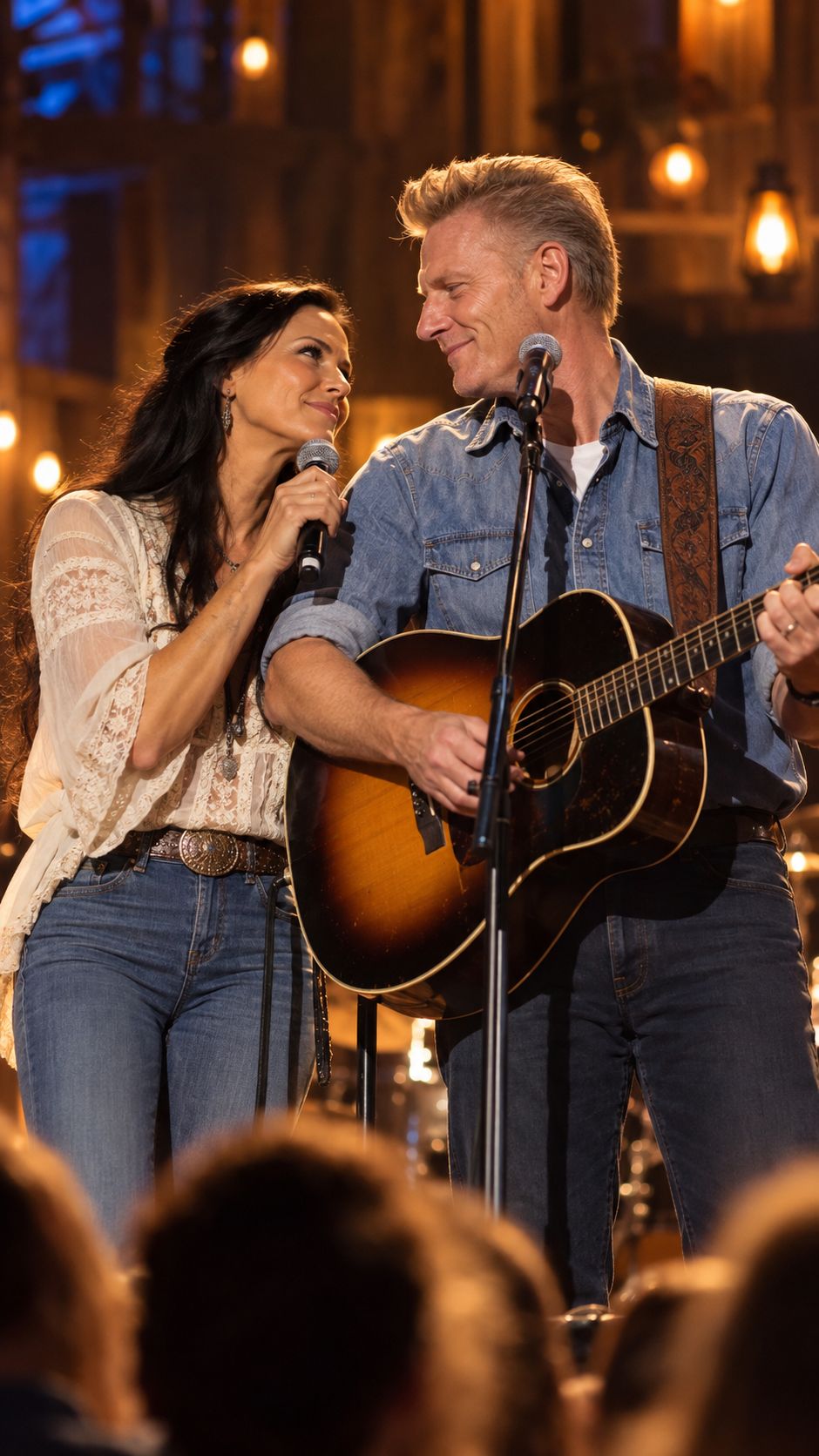
There are some people who carry their deepest sorrows quietly, not because their pain is small, but because the love they have experienced is too precious to forget. Rory Feek has become one of those figures in country music whose life story reaches far beyond the songs he writes and the stages he has stood upon. Behind his gentle smile and humble presence lies a deeply personal story of love, heartbreak, fatherhood, faith, and the difficult decision to keep living when life changes forever.
For many fans, Rory will always be remembered alongside Joey Feek, the beloved other half of the country duo Joey + Rory. Their relationship was more than a musical partnership. It represented a kind of love that audiences recognized as honest, imperfect, and profoundly human. When Joey died in March 2016 after battling cervical cancer, Rory faced the devastating reality of continuing a life they had imagined sharing together.
Yet grief rarely follows a straight road, and the heart does not simply close after one devastating goodbye. In the years that followed, Rory continued raising their daughter, Indiana, preserving memories, making music, and eventually opening another chapter of his life with Rebecca.
His journey raises a difficult question: How does someone find the courage to welcome new beginnings without feeling that the past has been left behind? Perhaps the answer lies not in forgetting, but in learning that love can remain part of us even as life continues to unfold.
1. The Love Story That Became Bigger Than Music
To understand Rory Feek, one must first understand the extraordinary partnership he shared with Joey Feek. Their story was never simply about two singers discovering that their voices sounded beautiful together. It was about two people building a life around shared values, ordinary joys, family, and a faith that remained central even when circumstances became almost unbearable.
When Joey + Rory gained wider recognition through the television competition Can You Duet, audiences discovered something refreshingly different about them. They did not project the polished distance of celebrities who seemed to belong to another world. Instead, they felt like neighbors whose songs carried the warmth of a front porch, the honesty of a family kitchen, and the emotional familiarity of conversations shared long after sunset.
Rory was the thoughtful songwriter, the man who could find a story in a seemingly insignificant moment. Joey brought a distinctive voice and an expressive presence that made their performances feel deeply personal. Together, they created music that celebrated the beauty and complications of everyday life.
Their success was meaningful, but their connection seemed even more important.
They married in 2002, and their musical partnership grew alongside their relationship. Songs became memories, performances became shared experiences, and their audience was gradually invited into a world where music and family were inseparable.
Then came a chapter that changed everything.
In 2014, Joey was diagnosed with cervical cancer, only months after the birth of their daughter, Indiana. The diagnosis transformed their family life, introducing uncertainty into moments that should have been filled with the uncomplicated happiness of welcoming a child.
The couple faced treatment, difficult decisions, and the devastating news that Joey’s cancer had returned and progressed to an advanced stage.
Suddenly, the future they had imagined together was no longer guaranteed.
Yet their story continued to unfold in front of their supporters. Through personal updates, photographs, and music, the couple shared glimpses of their struggle without reducing their relationship to illness alone.
What audiences witnessed was not a perfect love story untouched by fear. It was a real marriage confronting the possibility of separation while desperately wanting more time together.
That distinction matters.
Sometimes the deepest love is not measured by how long two people have together, but by how faithfully they stand beside one another when time becomes painfully uncertain.
For Rory, the woman beside him was not simply his singing partner. She was the person with whom he had built his home, his family, and his understanding of what the future might look like.
Losing her would mean losing more than a marriage. It would mean learning how to live in a world that no longer looked the way it once had.
2. March 2016: When the World Became Different
On March 4, 2016, Joey Feek died at the age of 40 after her battle with cervical cancer.
The news marked the end of a painful chapter for the family, but for Rory, it also marked the beginning of a reality he could never have fully prepared himself to face.
There is a particular kind of grief that follows the death of a spouse. It does not only involve missing the person who has died. It involves encountering all the small details of daily life that once made sense because that person was there.
A familiar room can suddenly feel unfamiliar. A favorite song can become difficult to hear. An ordinary morning can carry the weight of an extraordinary absence.
For a songwriter like Rory Feek, memories were everywhere. The music they had made together, the places they had visited, and the routines they had established were all reminders of the life they had shared.
He had to learn how to carry those memories without allowing them to make every new day impossible.
The couple’s final album, Hymns That Are Important to Us, reached the top of the country chart shortly before Joey’s death. Its success offered a bittersweet reminder that the world was still listening to their music even as Rory was preparing to say goodbye to the woman who had helped create it.
The contrast was heartbreaking. Professional recognition could not change the outcome of Joey’s illness. Applause could not restore the future they had planned. And no achievement could make the absence of his wife less real.
In the years afterward, Rory spoke openly about the continuing connection he felt with Joey. Grief did not erase his love, and the passage of time did not require him to pretend that their marriage had become unimportant.
That honesty helped explain why his story resonated with people who had experienced their own losses.
He did not present healing as a simple transformation from sadness to happiness. Instead, his experience suggested that grief could remain part of a person’s life while that person slowly learned to function again.
Rory’s quiet strength was not proof that he had stopped hurting. It was the willingness to keep moving through life while carrying a loss that could never be undone.
3. Fatherhood: The Promise That Gave Him a Reason to Keep Going
In the aftermath of Joey’s death, one responsibility became especially important: raising their daughter, Indiana.
She was still very young when her mother died. Her memories of Joey would inevitably be different from those of the adults who had known her for decades. Rory, meanwhile, faced the difficult task of grieving his wife while helping his daughter grow up without her mother physically present.
Fatherhood brought practical responsibilities that could not be postponed until the grief became easier.
There were meals to prepare, routines to maintain, lessons to teach, and countless ordinary decisions that continued regardless of how Rory felt inside.
For many grieving parents, this is one of the most complicated parts of loss. They must acknowledge their own pain while creating a sense of security for a child who also needs love, patience, and reassurance.
For Rory, Indiana became an important part of the life he still had to build.
Their story also highlighted the role of memory in family life. Joey could no longer participate in the everyday moments of her daughter’s childhood, but the love she had given her family remained part of the story Rory wanted to preserve.
He continued documenting his experiences, sharing reflections about family, faith, and the process of moving forward.
His writing offered a reminder that grief does not always arrive in dramatic waves. Sometimes it appears in the middle of an ordinary day, when a parent realizes that a child has reached a milestone the absent person will never witness.
Other times, it appears in unexpected happiness, when a joyful moment brings both gratitude and the wish that someone beloved could have been there to experience it.
For a parent who has lost a partner, raising a child can become an act of remembrance: a way of carrying forward the love that once shaped an entire family.
Still, it is important not to romanticize the experience. Raising a child alone after losing a spouse can be exhausting, lonely, and emotionally complicated. Love provides motivation, but it does not eliminate the practical burdens of parenthood or the pain of absence.
Rory’s journey illustrates the difficult truth that a person can be deeply grateful for the family that remains while continuing to mourn the person who is gone.
Both feelings can exist together.
And sometimes, that is what moving forward actually looks like.
4. The Unexpected Possibility of Loving Again
For years after Joey’s death, the idea of another romantic relationship was complicated by the depth of their bond.
How could someone who had shared such an important life with one person imagine building a future with someone else? Would loving another person somehow diminish the meaning of the first marriage? Could happiness return without making the past feel farther away?
These are questions that many widows and widowers confront, and there is no universal timetable for answering them.
For Rory Feek, the possibility of a new relationship gradually emerged through his connection with Rebecca, a teacher who worked with Indiana and became part of their family’s life.
Their relationship developed over time rather than appearing as a sudden replacement for what Rory had lost.
That distinction is central to understanding this chapter of his story.
In reflecting on his decision to love again, Rory shared that Joey had encouraged him to find love after her death. According to his account, Joey wanted him and Indiana to have someone in their lives who could care for them after she was gone.
The conversation was painful precisely because it confronted a future neither of them wanted. Joey was acknowledging the possibility that she would not survive, while Rory was struggling with the thought of a world in which she was no longer beside him.
Her encouragement did not make the prospect of losing her any easier. But it offered him a different way to think about the future.
Perhaps continuing to live fully was not a betrayal of their marriage.
Perhaps it was something she wanted for him.
By 2024, eight years after Joey’s death, Rory had married Rebecca in an intimate ceremony in Montana. Their daughter, Indiana, was part of the occasion, which represented a new chapter for their family.
The significance of this development went beyond a wedding.
For someone who had experienced such profound loss, choosing a new partner meant allowing himself to become emotionally vulnerable again. It meant accepting that love could bring happiness without offering a guarantee against future pain.
It also meant recognizing that the relationship he shared with Joey belonged to a particular time and place in his life, while his relationship with Rebecca would have its own identity.
Rebecca was not Joey’s replacement. She was a different person, entering a different chapter of Rory’s life.
That distinction matters because genuine healing does not require people to compare their relationships or assign them competing places in their hearts.
Love is not a limited resource that must be taken away from one person to be given to another.
A new relationship can honor the importance of an earlier one without attempting to recreate it.
For Rory, finding love again became part of a larger lesson about the complicated relationship between memory and hope.
5. The Two Great Loves: Why Moving Forward Does Not Mean Forgetting
The phrase the two great loves of his life invites a powerful emotional interpretation of Rory’s journey, but the details deserve care.
Joey Feek was his late wife and musical partner, whose death permanently changed his life. Rebecca Feek became his wife in a later chapter, helping him build a new family life after years of grief.
Rory did not lose both women in the same way. His experience was instead one of losing a beloved partner and subsequently finding the courage to love another person.
That distinction makes the story no less moving. In some ways, it makes the emotional journey even more meaningful.
When someone dies, the relationship cannot continue in the same physical form. There can be no new conversations, shared holidays, or future plans made together. The surviving partner must learn to live with a permanent absence.
When a new relationship begins, the challenge is different. The person must make room for someone new while acknowledging that the past remains significant.
These two experiences can create conflicting emotions.
There may be joy in discovering companionship again, followed by guilt for feeling happy. There may be excitement about a new future, followed by sadness when a familiar memory returns. There may even be moments when a person wonders whether moving forward means leaving a beloved partner behind.
But remembrance is not measured by the amount of suffering someone continues to experience.
A person does not have to remain lonely to prove that a marriage mattered.
Nor must every happy moment be accompanied by guilt.
The memories, lessons, and shared experiences of an earlier relationship can remain meaningful without determining every decision that follows.
For Rory, the possibility of a future with Rebecca became easier to understand through the belief that Joey had wanted him to continue living and loving.
That perspective does not erase the sadness of Joey’s death. Instead, it allows the story to contain two truths at once: Rory lost someone irreplaceable, and he still had a life worth living.
Healing does not ask us to choose between honoring the past and embracing the future. Sometimes, it asks us to find a way to carry both.
This may be the most enduring lesson in his personal journey.
It is also a reminder that grief is intensely individual. Some people find another partner; others do not. Some discover meaning in faith, while others rely on friendships, family, creative work, or quiet routines.
There is no single correct way to rebuild a life.
What matters is that moving forward remains a possibility, even when the future looks different from everything a person once imagined.
6. Faith, Music, and the Search for Meaning After Heartbreak
Throughout Rory Feek’s public story, faith has been an important part of how he understands love, loss, and the passage of time.
His music often reflects the values associated with traditional country storytelling: family, commitment, humility, and the belief that ordinary life contains moments of extraordinary significance.
After Joey’s death, those themes took on another dimension.
Songs that once described love as a shared experience could also become expressions of remembrance. Lyrics about home could evoke the ache of returning to familiar places without the person who had made them feel complete.
For an artist, music can offer a way to express feelings that ordinary conversation cannot always capture.
A song does not have to solve grief to be meaningful. Sometimes, it simply gives grief a voice.
The continuing interest in Joey + Rory reflects the emotional connection their audience developed with their music and personal story. Listeners may hear a familiar harmony and remember their own parents, partners, childhood homes, or loved ones who are no longer alive.
That is part of the remarkable power of country music. It often begins with one person’s experience and ends by giving thousands of other people a language for their own.
Rory’s willingness to share parts of his life also helped audiences understand that faith and sadness are not necessarily opposites.
A person can believe in hope and still experience despair. Someone can find comfort in spiritual convictions and still miss a loved one with an intensity that makes ordinary life difficult.
Faith, for those who embrace it, may not remove every question. It can instead provide a framework for living with questions that have no satisfying answers.
For Rory, the story of Joey’s illness and death became intertwined with his understanding of the life they had shared. His later relationship with Rebecca added another chapter to that understanding.
Yet it would be simplistic to suggest that every hardship carries a hidden blessing or that suffering automatically makes someone stronger.
Some experiences are painful because they involve genuine loss. They do not need to be justified by what comes afterward.
The meaning emerges from what people choose to do with the lives they still have.
In that sense, Rory’s music and reflections offer something more valuable than a neat lesson about overcoming adversity. They show the possibility of living with unanswered questions while continuing to create, love, parent, and participate in the world.
7. The Complicated Reality Behind a Public Story
It is tempting to tell a life story as though every difficult chapter leads neatly toward a happy ending.
Real families rarely work that way.
Although Rory’s marriage to Rebecca marked a hopeful new beginning, his broader family life has also involved painful public disagreements. His relationships with his older daughters, Heidi and Hopie, have become strained, with family disputes and legal proceedings reported publicly.
Those developments complicate any simple narrative about healing, faith, and family.
It would be unfair to treat a wedding or a new relationship as proof that every emotional wound has healed. Nor should an audience assume that a person’s private struggles can be fully understood from public statements alone.
Family conflicts often involve histories, feelings, and disagreements that outsiders cannot adequately assess. When children and private family matters are involved, particular care is necessary.
The most responsible way to understand Rory’s story is to recognize both the deeply personal losses he has experienced and the fact that his family’s challenges cannot be reduced to a single inspirational message.
Love can be genuine while relationships remain complicated. A person can experience profound grief, find new companionship, and still face difficult questions about family.
These realities do not cancel one another out.
They remind us that public figures are human beings whose lives continue long after the most widely shared moments have passed.
For fans who have followed Rory’s journey, this may be an important distinction. Admiring his music or feeling moved by his experience does not require turning every chapter into a simple story of triumph.
Sometimes, the most compassionate response is to acknowledge that people can be both vulnerable and imperfect, and that healing within a family is rarely as straightforward as a song’s final verse.
8. A New Beginning Is Not the End of the Story
What does it mean to begin again after losing someone who once seemed inseparable from your future?
For Rory Feek, there has never been a single moment that could erase the years he shared with Joey. Her voice, their music, and the memories of their marriage remain part of his life story.
But his story did not end in March 2016.
He continued to raise Indiana, create music, share his reflections, and eventually marry Rebecca. These developments represent more than a series of milestones. They demonstrate that the future can remain open even after a loss has fundamentally changed a person’s understanding of life.
Beginning again does not mean returning to the person you were before tragedy. That person belonged to a different chapter, one shaped by experiences that cannot be repeated.
Instead, it means discovering how to live as the person you have become.
For some people, that involves falling in love again. For others, it means learning to enjoy an ordinary morning, making plans without fear, or finally finding the strength to listen to a song that once felt unbearable.
Progress may be almost invisible to the outside world.
It might look like preparing dinner, spending time with a child, planting something in the garden, or finding a reason to smile after a difficult day.
Those moments may never become headlines, but they can be the building blocks of a life rebuilt gradually and honestly.
Rory’s journey also reminds us that love is not valuable only because it lasts forever in its original form. It is valuable because of what two people share, what they teach one another, and how their lives are changed by having known each other.
Joey’s death did not make their marriage less meaningful. Rory’s later marriage did not erase it.
Both chapters belong to the same life, and each carries its own significance.
Perhaps that is why the image of the quiet smile is so powerful. A smile cannot tell us everything a person has endured, and it cannot reveal every thought that passes through the mind when memories return.
But it can coexist with sadness. It can appear after a difficult season. It can represent a moment of gratitude without pretending that every wound has disappeared.
The courage to begin again is not always loud or dramatic.
Sometimes, it is simply the decision to let tomorrow arrive.
FINAL THOUGHTS: The Love That Remains
The most moving part of Rory Feek’s story is not simply that he endured the loss of Joey Feek or that he eventually found love with Rebecca. It is the difficult truth that a life can hold profound heartbreak and meaningful new beginnings without one canceling out the other.
His experience invites us to reconsider what it means to honor someone we have lost.
Perhaps remembrance is not about keeping every door closed. Perhaps it is about carrying the love, lessons, and memories of the past into whatever life makes possible next.
For Rory, Joey will always be part of the story that shaped him. The songs they created together, the family they built, and the memories they shared cannot be replaced.
But neither must the rest of his life remain frozen at the moment he lost her.
There is room for sorrow and gratitude. Room for remembrance and companionship. Room for a love that ended through death and another that began years later.
And for anyone who has ever wondered whether happiness can return after heartbreak, that may be the most important message of all.
The heart does not have to forget its greatest love to discover that life still has something meaningful to offer.
What do you think is the most powerful lesson in Rory Feek’s journey — the enduring love he shared with Joey, the courage it took to begin again, or the strength required to keep moving forward when life changes forever?
VIDEO:
BEHIND THE QUIET SMILE — Rory Feek’s Heartbreaking Journey Through Two Great Loves, Unimaginable Loss, and the Courage to Begin Again
INTRODUCTION:
There are some people who carry their deepest sorrows quietly, not because their pain is small, but because the love they have experienced is too precious to forget. Rory Feek has become one of those figures in country music whose life story reaches far beyond the songs he writes and the stages he has stood upon. Behind his gentle smile and humble presence lies a deeply personal story of love, heartbreak, fatherhood, faith, and the difficult decision to keep living when life changes forever.
For many fans, Rory will always be remembered alongside Joey Feek, the beloved other half of the country duo Joey + Rory. Their relationship was more than a musical partnership. It represented a kind of love that audiences recognized as honest, imperfect, and profoundly human. When Joey died in March 2016 after battling cervical cancer, Rory faced the devastating reality of continuing a life they had imagined sharing together.
Yet grief rarely follows a straight road, and the heart does not simply close after one devastating goodbye. In the years that followed, Rory continued raising their daughter, Indiana, preserving memories, making music, and eventually opening another chapter of his life with Rebecca.
His journey raises a difficult question: How does someone find the courage to welcome new beginnings without feeling that the past has been left behind? Perhaps the answer lies not in forgetting, but in learning that love can remain part of us even as life continues to unfold.
1. The Love Story That Became Bigger Than Music
To understand Rory Feek, one must first understand the extraordinary partnership he shared with Joey Feek. Their story was never simply about two singers discovering that their voices sounded beautiful together. It was about two people building a life around shared values, ordinary joys, family, and a faith that remained central even when circumstances became almost unbearable.
When Joey + Rory gained wider recognition through the television competition Can You Duet, audiences discovered something refreshingly different about them. They did not project the polished distance of celebrities who seemed to belong to another world. Instead, they felt like neighbors whose songs carried the warmth of a front porch, the honesty of a family kitchen, and the emotional familiarity of conversations shared long after sunset.
Rory was the thoughtful songwriter, the man who could find a story in a seemingly insignificant moment. Joey brought a distinctive voice and an expressive presence that made their performances feel deeply personal. Together, they created music that celebrated the beauty and complications of everyday life.
Their success was meaningful, but their connection seemed even more important.
They married in 2002, and their musical partnership grew alongside their relationship. Songs became memories, performances became shared experiences, and their audience was gradually invited into a world where music and family were inseparable.
Then came a chapter that changed everything.
In 2014, Joey was diagnosed with cervical cancer, only months after the birth of their daughter, Indiana. The diagnosis transformed their family life, introducing uncertainty into moments that should have been filled with the uncomplicated happiness of welcoming a child.
The couple faced treatment, difficult decisions, and the devastating news that Joey’s cancer had returned and progressed to an advanced stage.
Suddenly, the future they had imagined together was no longer guaranteed.
Yet their story continued to unfold in front of their supporters. Through personal updates, photographs, and music, the couple shared glimpses of their struggle without reducing their relationship to illness alone.
What audiences witnessed was not a perfect love story untouched by fear. It was a real marriage confronting the possibility of separation while desperately wanting more time together.
That distinction matters.
Sometimes the deepest love is not measured by how long two people have together, but by how faithfully they stand beside one another when time becomes painfully uncertain.
For Rory, the woman beside him was not simply his singing partner. She was the person with whom he had built his home, his family, and his understanding of what the future might look like.
Losing her would mean losing more than a marriage. It would mean learning how to live in a world that no longer looked the way it once had.
2. March 2016: When the World Became Different
On March 4, 2016, Joey Feek died at the age of 40 after her battle with cervical cancer.
The news marked the end of a painful chapter for the family, but for Rory, it also marked the beginning of a reality he could never have fully prepared himself to face.
There is a particular kind of grief that follows the death of a spouse. It does not only involve missing the person who has died. It involves encountering all the small details of daily life that once made sense because that person was there.
A familiar room can suddenly feel unfamiliar. A favorite song can become difficult to hear. An ordinary morning can carry the weight of an extraordinary absence.
For a songwriter like Rory Feek, memories were everywhere. The music they had made together, the places they had visited, and the routines they had established were all reminders of the life they had shared.
He had to learn how to carry those memories without allowing them to make every new day impossible.
The couple’s final album, Hymns That Are Important to Us, reached the top of the country chart shortly before Joey’s death. Its success offered a bittersweet reminder that the world was still listening to their music even as Rory was preparing to say goodbye to the woman who had helped create it.
The contrast was heartbreaking. Professional recognition could not change the outcome of Joey’s illness. Applause could not restore the future they had planned. And no achievement could make the absence of his wife less real.
In the years afterward, Rory spoke openly about the continuing connection he felt with Joey. Grief did not erase his love, and the passage of time did not require him to pretend that their marriage had become unimportant.
That honesty helped explain why his story resonated with people who had experienced their own losses.
He did not present healing as a simple transformation from sadness to happiness. Instead, his experience suggested that grief could remain part of a person’s life while that person slowly learned to function again.
Rory’s quiet strength was not proof that he had stopped hurting. It was the willingness to keep moving through life while carrying a loss that could never be undone.
3. Fatherhood: The Promise That Gave Him a Reason to Keep Going
In the aftermath of Joey’s death, one responsibility became especially important: raising their daughter, Indiana.
She was still very young when her mother died. Her memories of Joey would inevitably be different from those of the adults who had known her for decades. Rory, meanwhile, faced the difficult task of grieving his wife while helping his daughter grow up without her mother physically present.
Fatherhood brought practical responsibilities that could not be postponed until the grief became easier.
There were meals to prepare, routines to maintain, lessons to teach, and countless ordinary decisions that continued regardless of how Rory felt inside.
For many grieving parents, this is one of the most complicated parts of loss. They must acknowledge their own pain while creating a sense of security for a child who also needs love, patience, and reassurance.
For Rory, Indiana became an important part of the life he still had to build.
Their story also highlighted the role of memory in family life. Joey could no longer participate in the everyday moments of her daughter’s childhood, but the love she had given her family remained part of the story Rory wanted to preserve.
He continued documenting his experiences, sharing reflections about family, faith, and the process of moving forward.
His writing offered a reminder that grief does not always arrive in dramatic waves. Sometimes it appears in the middle of an ordinary day, when a parent realizes that a child has reached a milestone the absent person will never witness.
Other times, it appears in unexpected happiness, when a joyful moment brings both gratitude and the wish that someone beloved could have been there to experience it.
For a parent who has lost a partner, raising a child can become an act of remembrance: a way of carrying forward the love that once shaped an entire family.
Still, it is important not to romanticize the experience. Raising a child alone after losing a spouse can be exhausting, lonely, and emotionally complicated. Love provides motivation, but it does not eliminate the practical burdens of parenthood or the pain of absence.
Rory’s journey illustrates the difficult truth that a person can be deeply grateful for the family that remains while continuing to mourn the person who is gone.
Both feelings can exist together.
And sometimes, that is what moving forward actually looks like.
4. The Unexpected Possibility of Loving Again
For years after Joey’s death, the idea of another romantic relationship was complicated by the depth of their bond.
How could someone who had shared such an important life with one person imagine building a future with someone else? Would loving another person somehow diminish the meaning of the first marriage? Could happiness return without making the past feel farther away?
These are questions that many widows and widowers confront, and there is no universal timetable for answering them.
For Rory Feek, the possibility of a new relationship gradually emerged through his connection with Rebecca, a teacher who worked with Indiana and became part of their family’s life.
Their relationship developed over time rather than appearing as a sudden replacement for what Rory had lost.
That distinction is central to understanding this chapter of his story.
In reflecting on his decision to love again, Rory shared that Joey had encouraged him to find love after her death. According to his account, Joey wanted him and Indiana to have someone in their lives who could care for them after she was gone.
The conversation was painful precisely because it confronted a future neither of them wanted. Joey was acknowledging the possibility that she would not survive, while Rory was struggling with the thought of a world in which she was no longer beside him.
Her encouragement did not make the prospect of losing her any easier. But it offered him a different way to think about the future.
Perhaps continuing to live fully was not a betrayal of their marriage.
Perhaps it was something she wanted for him.
By 2024, eight years after Joey’s death, Rory had married Rebecca in an intimate ceremony in Montana. Their daughter, Indiana, was part of the occasion, which represented a new chapter for their family.
The significance of this development went beyond a wedding.
For someone who had experienced such profound loss, choosing a new partner meant allowing himself to become emotionally vulnerable again. It meant accepting that love could bring happiness without offering a guarantee against future pain.
It also meant recognizing that the relationship he shared with Joey belonged to a particular time and place in his life, while his relationship with Rebecca would have its own identity.
Rebecca was not Joey’s replacement. She was a different person, entering a different chapter of Rory’s life.
That distinction matters because genuine healing does not require people to compare their relationships or assign them competing places in their hearts.
Love is not a limited resource that must be taken away from one person to be given to another.
A new relationship can honor the importance of an earlier one without attempting to recreate it.
For Rory, finding love again became part of a larger lesson about the complicated relationship between memory and hope.
5. The Two Great Loves: Why Moving Forward Does Not Mean Forgetting
The phrase the two great loves of his life invites a powerful emotional interpretation of Rory’s journey, but the details deserve care.
Joey Feek was his late wife and musical partner, whose death permanently changed his life. Rebecca Feek became his wife in a later chapter, helping him build a new family life after years of grief.
Rory did not lose both women in the same way. His experience was instead one of losing a beloved partner and subsequently finding the courage to love another person.
That distinction makes the story no less moving. In some ways, it makes the emotional journey even more meaningful.
When someone dies, the relationship cannot continue in the same physical form. There can be no new conversations, shared holidays, or future plans made together. The surviving partner must learn to live with a permanent absence.
When a new relationship begins, the challenge is different. The person must make room for someone new while acknowledging that the past remains significant.
These two experiences can create conflicting emotions.
There may be joy in discovering companionship again, followed by guilt for feeling happy. There may be excitement about a new future, followed by sadness when a familiar memory returns. There may even be moments when a person wonders whether moving forward means leaving a beloved partner behind.
But remembrance is not measured by the amount of suffering someone continues to experience.
A person does not have to remain lonely to prove that a marriage mattered.
Nor must every happy moment be accompanied by guilt.
The memories, lessons, and shared experiences of an earlier relationship can remain meaningful without determining every decision that follows.
For Rory, the possibility of a future with Rebecca became easier to understand through the belief that Joey had wanted him to continue living and loving.
That perspective does not erase the sadness of Joey’s death. Instead, it allows the story to contain two truths at once: Rory lost someone irreplaceable, and he still had a life worth living.
Healing does not ask us to choose between honoring the past and embracing the future. Sometimes, it asks us to find a way to carry both.
This may be the most enduring lesson in his personal journey.
It is also a reminder that grief is intensely individual. Some people find another partner; others do not. Some discover meaning in faith, while others rely on friendships, family, creative work, or quiet routines.
There is no single correct way to rebuild a life.
What matters is that moving forward remains a possibility, even when the future looks different from everything a person once imagined.
6. Faith, Music, and the Search for Meaning After Heartbreak
Throughout Rory Feek’s public story, faith has been an important part of how he understands love, loss, and the passage of time.
His music often reflects the values associated with traditional country storytelling: family, commitment, humility, and the belief that ordinary life contains moments of extraordinary significance.
After Joey’s death, those themes took on another dimension.
Songs that once described love as a shared experience could also become expressions of remembrance. Lyrics about home could evoke the ache of returning to familiar places without the person who had made them feel complete.
For an artist, music can offer a way to express feelings that ordinary conversation cannot always capture.
A song does not have to solve grief to be meaningful. Sometimes, it simply gives grief a voice.
The continuing interest in Joey + Rory reflects the emotional connection their audience developed with their music and personal story. Listeners may hear a familiar harmony and remember their own parents, partners, childhood homes, or loved ones who are no longer alive.
That is part of the remarkable power of country music. It often begins with one person’s experience and ends by giving thousands of other people a language for their own.
Rory’s willingness to share parts of his life also helped audiences understand that faith and sadness are not necessarily opposites.
A person can believe in hope and still experience despair. Someone can find comfort in spiritual convictions and still miss a loved one with an intensity that makes ordinary life difficult.
Faith, for those who embrace it, may not remove every question. It can instead provide a framework for living with questions that have no satisfying answers.
For Rory, the story of Joey’s illness and death became intertwined with his understanding of the life they had shared. His later relationship with Rebecca added another chapter to that understanding.
Yet it would be simplistic to suggest that every hardship carries a hidden blessing or that suffering automatically makes someone stronger.
Some experiences are painful because they involve genuine loss. They do not need to be justified by what comes afterward.
The meaning emerges from what people choose to do with the lives they still have.
In that sense, Rory’s music and reflections offer something more valuable than a neat lesson about overcoming adversity. They show the possibility of living with unanswered questions while continuing to create, love, parent, and participate in the world.
7. The Complicated Reality Behind a Public Story
It is tempting to tell a life story as though every difficult chapter leads neatly toward a happy ending.
Real families rarely work that way.
Although Rory’s marriage to Rebecca marked a hopeful new beginning, his broader family life has also involved painful public disagreements. His relationships with his older daughters, Heidi and Hopie, have become strained, with family disputes and legal proceedings reported publicly.
Those developments complicate any simple narrative about healing, faith, and family.
It would be unfair to treat a wedding or a new relationship as proof that every emotional wound has healed. Nor should an audience assume that a person’s private struggles can be fully understood from public statements alone.
Family conflicts often involve histories, feelings, and disagreements that outsiders cannot adequately assess. When children and private family matters are involved, particular care is necessary.
The most responsible way to understand Rory’s story is to recognize both the deeply personal losses he has experienced and the fact that his family’s challenges cannot be reduced to a single inspirational message.
Love can be genuine while relationships remain complicated. A person can experience profound grief, find new companionship, and still face difficult questions about family.
These realities do not cancel one another out.
They remind us that public figures are human beings whose lives continue long after the most widely shared moments have passed.
For fans who have followed Rory’s journey, this may be an important distinction. Admiring his music or feeling moved by his experience does not require turning every chapter into a simple story of triumph.
Sometimes, the most compassionate response is to acknowledge that people can be both vulnerable and imperfect, and that healing within a family is rarely as straightforward as a song’s final verse.
8. A New Beginning Is Not the End of the Story
What does it mean to begin again after losing someone who once seemed inseparable from your future?
For Rory Feek, there has never been a single moment that could erase the years he shared with Joey. Her voice, their music, and the memories of their marriage remain part of his life story.
But his story did not end in March 2016.
He continued to raise Indiana, create music, share his reflections, and eventually marry Rebecca. These developments represent more than a series of milestones. They demonstrate that the future can remain open even after a loss has fundamentally changed a person’s understanding of life.
Beginning again does not mean returning to the person you were before tragedy. That person belonged to a different chapter, one shaped by experiences that cannot be repeated.
Instead, it means discovering how to live as the person you have become.
For some people, that involves falling in love again. For others, it means learning to enjoy an ordinary morning, making plans without fear, or finally finding the strength to listen to a song that once felt unbearable.
Progress may be almost invisible to the outside world.
It might look like preparing dinner, spending time with a child, planting something in the garden, or finding a reason to smile after a difficult day.
Those moments may never become headlines, but they can be the building blocks of a life rebuilt gradually and honestly.
Rory’s journey also reminds us that love is not valuable only because it lasts forever in its original form. It is valuable because of what two people share, what they teach one another, and how their lives are changed by having known each other.
Joey’s death did not make their marriage less meaningful. Rory’s later marriage did not erase it.
Both chapters belong to the same life, and each carries its own significance.
Perhaps that is why the image of the quiet smile is so powerful. A smile cannot tell us everything a person has endured, and it cannot reveal every thought that passes through the mind when memories return.
But it can coexist with sadness. It can appear after a difficult season. It can represent a moment of gratitude without pretending that every wound has disappeared.
The courage to begin again is not always loud or dramatic.
Sometimes, it is simply the decision to let tomorrow arrive.
FINAL THOUGHTS: The Love That Remains
The most moving part of Rory Feek’s story is not simply that he endured the loss of Joey Feek or that he eventually found love with Rebecca. It is the difficult truth that a life can hold profound heartbreak and meaningful new beginnings without one canceling out the other.
His experience invites us to reconsider what it means to honor someone we have lost.
Perhaps remembrance is not about keeping every door closed. Perhaps it is about carrying the love, lessons, and memories of the past into whatever life makes possible next.
For Rory, Joey will always be part of the story that shaped him. The songs they created together, the family they built, and the memories they shared cannot be replaced.
But neither must the rest of his life remain frozen at the moment he lost her.
There is room for sorrow and gratitude. Room for remembrance and companionship. Room for a love that ended through death and another that began years later.
And for anyone who has ever wondered whether happiness can return after heartbreak, that may be the most important message of all.
The heart does not have to forget its greatest love to discover that life still has something meaningful to offer.
What do you think is the most powerful lesson in Rory Feek’s journey — the enduring love he shared with Joey, the courage it took to begin again, or the strength required to keep moving forward when life changes forever?
VIDEO: