 By admin
INTRODUCTION:
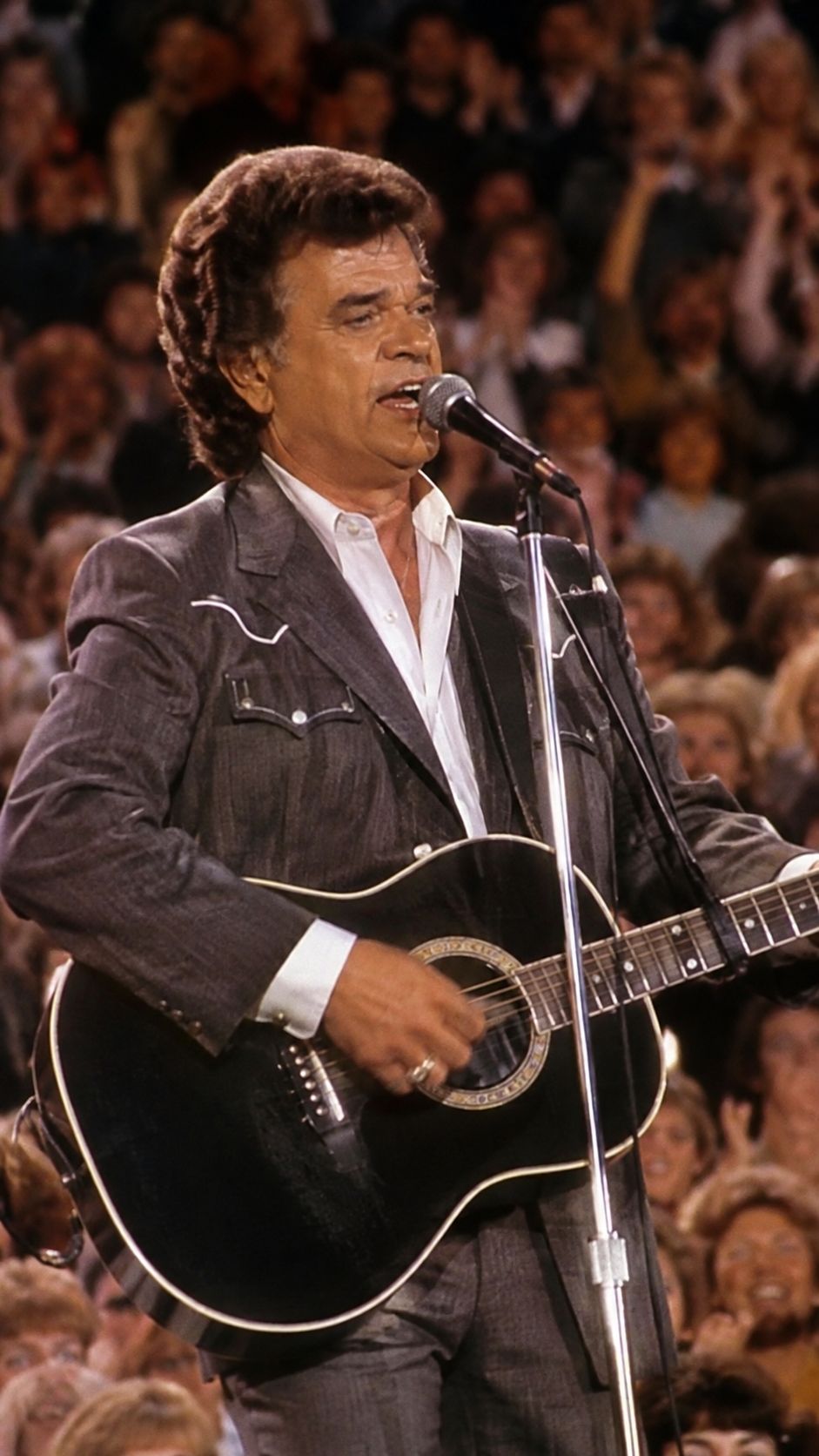
There are songs we remember because they accompanied a special moment in our lives, and then there are songs that seem to understand us long before we understand ourselves. The music of Conway Twitty belongs to that second category. His unmistakable voice carried a rare combination of tenderness, longing, confidence, and heartbreak, transforming ordinary lyrics into stories that listeners could feel deep in their souls.
For decades, fans have turned to Conway Twitty when love felt impossible, when memories refused to fade, and when the distance between two people seemed too painful to explain. His greatest hits became more than country music classics. They became companions through first loves, broken promises, lonely nights, second chances, and the quiet realization that some feelings never completely disappear.
Yet something remarkable happens when we return to these familiar recordings years later. The songs remain the same, but we have changed. A lyric that once sounded romantic may suddenly feel heartbreaking. A line that seemed simple may reveal the complicated truth about human relationships. And a melody we have heard hundreds of times may uncover an emotion we somehow missed before.
That is the enduring power of Conway Twitty. He did not simply sing about love; he explored its contradictions, its temptations, its sacrifices, and its unforgettable consequences.
Listen again, and you may discover that his greatest hits were telling you something about life all along.
1. Hello Darlin’ — The Heartbreak Hidden Behind a Simple Greeting
A song about memory, regret, and the feelings that survive a goodbye.
Few songs demonstrate the emotional power of Conway Twitty more beautifully than Hello Darlin’. Released in 1970, this signature recording established a remarkable connection between the singer and his audience. What makes the song so unforgettable is not merely its melody, but the emotional tension that unfolds from the moment one person encounters someone they once loved.
Imagine meeting someone who once knew every detail of your life. You remember the sound of their laughter, the small habits that made them special, and the dreams you once believed would last forever. Now imagine standing in front of that person with years of memories between you, trying to appear calm when your heart is anything but.
That is the emotional world of Hello Darlin’.
The greeting sounds simple, almost casual. Yet beneath it lies a complicated mixture of affection, vulnerability, and unfinished business. The narrator seems to want to reconnect, but the encounter also exposes how much of the past remains alive inside him.
Twitty’s delivery is central to the song’s impact. He does not need to overwhelm the listener with theatrical emotion. His measured phrasing creates the impression of a man trying to maintain his composure while memories threaten to take control.
The song also reminds us that a relationship can end without every feeling disappearing. Sometimes people move forward with their lives while carrying a quiet attachment to someone they can no longer call their own.
The hardest goodbyes are not always the ones we speak. Sometimes they are the ones we continue carrying long after the conversation ends.
Listen again as an adult, and Hello Darlin’ may sound less like a romantic greeting and more like a reunion with a part of yourself you thought you had left behind.
2. It’s Only Make Believe — The Difference Between a Dream and Reality
Before Conway Twitty became one of country music’s defining voices, he achieved enormous success with It’s Only Make Believe, a song he wrote and released in 1958.
Its importance reaches beyond its commercial success. The recording captures the emotional distance between what a person longs for and what that person actually possesses.
The title itself contains the central conflict. Make-believe allows us to imagine a world where our deepest desires have come true. We can picture the person we love returning our affection, the future unfolding exactly as we hoped, and every uncertainty finally disappearing.
Reality, however, does not always cooperate.
The song’s dramatic vocal performance gives that conflict a sense of urgency. Rather than presenting love as a peaceful state of happiness, Twitty explores the pain of wanting something that may exist only in the imagination.
This is one reason the recording continues to resonate across generations. Nearly everyone has experienced the feeling of building an entire emotional world around a possibility that never became real.
Perhaps it was a first love that never developed into a relationship. Perhaps it was a promise that gradually lost its meaning. Or perhaps it was the realization that two people could share the same moments without sharing the same hopes.
The song also reveals an important part of Twitty’s artistry: his ability to move between musical worlds. His early career included rockabilly and rock-and-roll influences before he became a dominant force in country music. That background helped give his performances a dramatic intensity that distinguished him from many traditional country vocalists.
It’s Only Make Believe therefore represents more than an early hit. It introduces an artist who understood that the emotional power of a song often comes from the distance between what we want and what we can have.
When you hear it again, consider how much of life is shaped by that distance. The dreams we cherish can inspire us, but they can also make reality difficult to accept.
Sometimes the most painful illusion is not believing that someone loves us. It is believing that love alone can guarantee the ending we want.
3. Linda on My Mind — When the Past Refuses to Stay in the Past
Some heartbreaks happen in a single moment. Others develop slowly, as memories begin to occupy the spaces where peace once lived.
Linda on My Mind, a major hit for Conway Twitty in 1975, explores the complicated emotional territory between a person’s present circumstances and the feelings they cannot seem to escape.
The song’s central tension is familiar: someone is physically present in one situation while emotionally preoccupied with another. That separation between outward behavior and inward thought creates an uncomfortable question.
Can we truly give ourselves to the present when our minds remain attached to the past?
Twitty approaches this subject without making the emotional conflict seem easy to resolve. The story is not simply about missing someone. It is about the consequences of carrying one attachment into another part of life.
That distinction matters.
Nostalgia often makes old relationships appear more beautiful than they actually were. We remember the tenderness, the excitement, and the moments when everything seemed possible. The arguments, disappointments, and reasons for separation may become less vivid with time.
A familiar song can bring those memories rushing back, sometimes with startling intensity.
Yet Linda on My Mind also invites a more difficult interpretation. Persistent memories may indicate that something remains unresolved, but they do not automatically mean that returning to the past would make everything right.
The emotional truth is more complicated: we can miss someone and still recognize that life has changed.
This is where Twitty’s interpretive skill becomes so important. He gives the narrator’s conflict a human quality, allowing listeners to understand the feeling without necessarily approving every decision that emerges from it.
That distinction separates a compelling country song from a simple love story. Great storytelling allows us to recognize ourselves in imperfect characters.
Perhaps that is why the song becomes more meaningful with age. Younger listeners may hear the drama of romantic longing. Older listeners may recognize the emotional cost of carrying yesterday into today.
The question is no longer just whether someone remains on your mind.
It is whether the memories you protect are helping you understand your life or preventing you from fully living it.
4. You’ve Never Been This Far Before — The Power of Vulnerability and Intimacy
You’ve Never Been This Far Before, released in 1973, illustrates another defining feature of Conway Twitty’s music: his ability to make intimate emotions feel immediate and personal.
The recording became notable for its sensual subject matter, demonstrating how country music could explore adult relationships with greater openness while retaining the genre’s emphasis on storytelling.
At first listen, the song may seem primarily concerned with romantic intimacy. But beneath its provocative reputation lies a broader theme: the vulnerability that appears when a relationship reaches unfamiliar territory.
Every meaningful relationship encounters moments when familiar boundaries shift. Two people may discover that their feelings have become deeper than they anticipated. They may find themselves confronting emotions they have never expressed so openly before.
Such moments can bring excitement, uncertainty, and fear all at once.
What makes the song interesting is the tension between confidence and vulnerability. Twitty delivers the material with a controlled, assured vocal presence, yet the emotional situation depends on the uncertainty of an experience that cannot be completely predicted.
That contrast is essential to his appeal.
His voice could sound confident without making the character seem invulnerable. He understood that desire and uncertainty frequently coexist, particularly when people risk revealing parts of themselves they usually keep hidden.
The recording also demonstrates how country music evolved during the 1970s. Traditional themes of love, loyalty, temptation, and consequence remained central, but performers increasingly explored the complexities of adult relationships through more contemporary arrangements and expressive performances.
Twitty helped occupy that space between traditional country storytelling and a more modern, sophisticated sound.
Revisiting the song today means looking beyond its reputation. It becomes an opportunity to consider how trust develops, why unfamiliar emotional territory can feel frightening, and how intimacy involves more than physical closeness.
Sometimes the greatest vulnerability is allowing another person to see how deeply they matter to you.
And sometimes the most important question in a relationship is not how far two people have gone, but whether they understand what that closeness means to each of them.
5. After the Fire Is Gone — When a Relationship Becomes an Emotional Desert
Performed by Conway Twitty and Loretta Lynn.

When Conway Twitty joined forces with Loretta Lynn, country music gained one of its most recognizable vocal partnerships. Their 1971 hit After the Fire Is Gone demonstrated how two singers could turn a complicated relationship into an unforgettable musical conversation.
The song explores a difficult subject: the emptiness that can emerge when passion fades and a relationship no longer provides the emotional fulfillment it once promised.
The metaphor of a fire is especially effective because fire can represent warmth, excitement, desire, and life itself. When that fire disappears, the absence becomes impossible to ignore.
Two people may continue sharing a home, responsibilities, and familiar routines while gradually losing the connection that once brought them together.
This is not necessarily a dramatic separation. Sometimes the most painful changes happen quietly.
Conversations become shorter. Affection becomes less spontaneous. Shared experiences lose their emotional intensity. Eventually, a couple may begin searching elsewhere for the attention and understanding they no longer find within their relationship.
The song’s emotional complexity comes from its willingness to acknowledge desire without pretending that desire makes every decision harmless. The characters are caught between dissatisfaction and temptation, and the consequences are part of the story.
Twitty and Lynn make that tension especially compelling because their voices provide contrasting emotional perspectives. Their performance feels conversational rather than one-dimensional, giving the listener a sense that two people are negotiating the same difficult reality from different positions.
Their chemistry was not merely a matter of matching vocal tones. It was a storytelling advantage. Each singer could respond to the other, creating the impression of a relationship unfolding in real time.
Their partnership produced numerous celebrated recordings, including Lead Me On, Louisiana Woman, Mississippi Man, and Feelins’. Their work earned major industry recognition, including a Grammy Award for After the Fire Is Gone.
But the song’s lasting significance reaches beyond awards and chart positions.
It asks listeners to confront an uncomfortable possibility: a relationship can appear intact while its emotional foundation is weakening.
That does not mean every difficult season signals the end of love. Relationships can change, recover, and grow stronger when people communicate honestly and make an effort to reconnect.
Rather, the song reminds us that neglect has consequences. Love requires attention, and affection cannot always survive on memories of what once existed.
When you hear After the Fire Is Gone again, listen to the emotional dialogue between Twitty and Lynn. Beneath the beautiful harmonies lies a story about unmet needs, difficult choices, and the human desire to feel alive and understood.
6. Louisiana Woman, Mississippi Man — Two Different Worlds, One Unforgettable Connection
Not every great Conway Twitty song is built around regret. Some celebrate the excitement of attraction, the pleasure of playful conflict, and the irresistible energy that can emerge when two strong personalities come together.
Louisiana Woman, Mississippi Man, the celebrated 1973 duet by Conway Twitty and Loretta Lynn, offers precisely that kind of contrast.
The song places its characters on opposite sides of a geographical divide, turning their different backgrounds into part of the romantic adventure. Their identities become playful expressions of individuality, and the distance between them adds energy to the story.
What makes the duet so effective is its sense of movement. Instead of presenting romance as a quiet, private emotion, the singers create an exchange full of personality.
They challenge one another. They answer one another. Their voices suggest that neither character intends to surrender their independence simply because love has entered the picture.
This is an important distinction.
Romantic compatibility does not require two people to become identical. Sometimes attraction grows precisely because each person brings something different to the relationship.
The song celebrates that possibility without losing its humor or musical momentum.
Twitty’s smooth, confident delivery complements Lynn’s direct and spirited voice. Their contrast gives the recording its personality, allowing the listener to hear two distinct characters rather than a single blended romantic ideal.
Their performances also reveal the importance of timing in country duets. A successful partnership depends on knowing when to lead, when to respond, and when to leave room for the other voice to shine.
That musical conversation is part of what made their collaborations so enduring.
For listeners returning to the song decades later, there is another layer worth appreciating. Love is often described as a force that erases differences, but lasting relationships frequently depend on learning to enjoy those differences instead.
Two people can have different backgrounds, temperaments, and perspectives while still building a meaningful connection.
The challenge is learning when to compromise without losing the qualities that made each person distinctive in the first place.
Louisiana Woman, Mississippi Man turns that challenge into an entertaining musical celebration.
It reminds us that romance does not always have to be tragic to be meaningful. Sometimes its greatest pleasure lies in the laughter, the arguments that end in smiles, and the shared understanding that neither person has to become someone else to belong together.
7. Goodbye Time — Learning to Accept What the Heart Still Resists
There is a particular kind of sadness that arrives when a relationship has reached its end, but the people involved have not yet learned how to live with that reality.
Goodbye Time, recorded by Conway Twitty in the late 1980s, captures the emotional weight of separation and the difficult process of recognizing when a chapter of life must close.
Unlike songs that focus on dramatic confrontations, this kind of heartbreak can feel painfully quiet. The relationship may already be over in practical terms, yet the heart continues searching for reasons to believe that something can still be repaired.
A person may replay conversations, revisit old memories, or imagine the words they should have said. They may convince themselves that one more conversation could change everything.
But sometimes closure begins with accepting that there is no perfect sentence capable of undoing what has happened.
Twitty’s strength lies in his ability to make this emotional struggle sound intimate rather than exaggerated. His mature voice carries the weight of experience, giving the song the atmosphere of someone confronting a truth they would rather avoid.
That quality makes Goodbye Time especially meaningful for listeners who have experienced major changes in their own lives.
The end of a relationship is rarely just the loss of another person. It can also mean losing a familiar routine, a shared future, a social identity, or the version of yourself that existed within that partnership.
Grief can therefore linger even when the decision to separate is necessary.
One of the most valuable lessons in country music is that emotional honesty does not always produce a happy ending. A song can help us acknowledge pain without promising that the pain will disappear immediately.
In that sense, Goodbye Time is not simply about leaving. It is about the slow process of making room for a future that no longer resembles the one we imagined.
Listening again may reveal something that was difficult to recognize during younger years: accepting an ending does not mean the relationship never mattered.
It means allowing its importance to remain part of your history without requiring it to determine every chapter that follows.
8. That’s My Job — The Quiet Promise Behind a Father’s Love

Among the many emotional dimensions of Conway Twitty’s career, few are as moving as the family-centered message of That’s My Job, released in 1987.
Many listeners associate Twitty with romantic ballads, complicated relationships, and songs about longing. This recording reveals a different side of his storytelling: the enduring responsibility of a parent who wants to protect a child from the world’s hardships.
The central idea is powerful because it treats love as an everyday commitment rather than a grand declaration.
A parent cannot prevent every disappointment. No amount of experience can guarantee that a child will avoid heartbreak, failure, fear, or uncertainty. Yet a loving parent can offer guidance, reassurance, and a dependable presence when life becomes difficult.
That is the emotional foundation of the song.
Its message is not that parents can solve every problem. It is that caring for someone means accepting a responsibility to stand beside them, even when the situation cannot be fixed immediately.
This is a different kind of love from the passion explored in many of Twitty’s earlier hits. Romantic love may be filled with uncertainty about whether two people will remain together. Parental love, as expressed in this song, emphasizes a commitment to helping another person grow, even when that growth requires independence.
The distinction makes the song especially resonant across generations.
For a younger listener, it may evoke memories of a parent offering comfort after a difficult day. For someone raising children, it may reflect the quiet determination to provide security despite personal worries. For an adult who has lost a parent, it may bring back memories of small acts of kindness that seemed ordinary at the time but now feel priceless.
Twitty’s performance allows these interpretations to coexist.
He does not need to make the message complicated. Its strength comes from recognizing something universal: love is often expressed through actions that receive little attention when they happen.
A ride home. A reassuring conversation. A sacrifice no one else notices. A promise kept when keeping it becomes inconvenient.
These moments rarely make headlines, but they can shape a person’s entire life.
That’s My Job demonstrates why Conway Twitty should not be remembered solely as a singer of romantic longing. He was also an interpreter of family bonds, responsibility, and the ordinary acts of devotion that give life its deeper meaning.
And perhaps that is why this song can feel even more powerful as the years pass. Eventually, many listeners come to understand that the people who loved them were not always trying to make life easy.
They were trying to make sure they never had to face it entirely alone.
9. Why Conway Twitty’s Voice Made These Stories Feel So Real
A great song begins with words and music, but a truly memorable performance depends on the relationship between the material and the person interpreting it.
Conway Twitty possessed a distinctive ability to make listeners feel that he understood the emotional situation inside a song. His deep, resonant voice could communicate confidence, tenderness, regret, or longing without requiring excessive vocal ornamentation.
The secret was not simply the richness of his tone. It was the way he used it.
He understood that a pause could be as meaningful as a sustained note. A restrained phrase could suggest emotions a more forceful performance might overwhelm. And a carefully controlled delivery could make a familiar lyric sound like a private confession.
This approach was especially effective in songs about complicated relationships.
In Hello Darlin’, the narrator’s composure creates tension beneath the surface. In Linda on My Mind, emotional preoccupation becomes the heart of the story. In Goodbye Time, the weight of separation emerges through restraint rather than spectacle.
Each recording demonstrates a different aspect of the same artistic instinct: the singer must serve the emotional truth of the song.
Twitty also had an unusual ability to select material that suited his strengths. His repertoire included songs written by others as well as compositions of his own, and his songwriting talent contributed directly to his legacy. His signature song Hello Darlin’ was among the works he wrote himself.
His career also demonstrates remarkable adaptability. He began as a successful rock-and-roll performer before establishing himself as a major country star, and he continued recording through changing musical fashions.
His legacy includes more than commercial achievements. He became known for his respect for songwriters and his willingness to find material that matched his interpretive style.
That attention to storytelling helped his music remain accessible to listeners who might otherwise have little in common.
A teenager experiencing heartbreak for the first time could find meaning in a recording that also resonated with someone reflecting on a relationship that lasted decades. A parent could hear a familiar song differently after raising a family. Someone facing a difficult goodbye could discover that a recording they had known for years suddenly described their own feelings.
This is the difference between a hit that belongs to a particular moment and a classic that continues to find new audiences.
The arrangement may preserve the sound of its era, but the emotional questions remain timeless.
10. The Hidden Meaning of Listening Again: Why These Songs Change as We Age
One of the most fascinating aspects of Conway Twitty’s greatest hits is that the listener often changes more than the music does.
When we first encounter a song, we tend to focus on its most immediate emotions. A romantic ballad may seem to celebrate desire. A heartbreak song may appear to describe a single painful event. A family song may sound like a simple tribute to a loving parent.
But experience adds layers.
After living through disappointment, we may hear a song about longing and recognize the difference between missing someone and needing them back. After raising children, we may understand the emotional responsibility described in That’s My Job. After witnessing a long relationship change over time, we may hear After the Fire Is Gone as a reflection on the importance of maintaining emotional connection.
The recording has not changed. Our understanding has deepened.
This is one reason older country music continues to hold such a powerful place in people’s lives. Its strongest songs do not depend entirely on novelty or changing trends. They explore recurring human experiences through specific characters and memorable melodies.
Conway Twitty was particularly effective at turning those experiences into intimate musical narratives.
His songs rarely require listeners to have lived the exact circumstances described in the lyrics. Instead, they invite listeners to recognize a familiar emotion within an unfamiliar situation.
You do not need to have experienced the exact relationship described in Linda on My Mind to understand emotional attachment. You do not need to have faced the same goodbye described in Goodbye Time to recognize the difficulty of letting go. And you do not need to share the narrator’s experiences in Hello Darlin’ to understand how memories can return unexpectedly.
That universality is part of the music’s lasting strength.
There is also a lesson in the way these songs allow conflicting emotions to exist together. Love can bring happiness and pain. Memory can provide comfort and prevent healing. Responsibility can feel burdensome and meaningful at the same time.
Life rarely fits into a simple category, and great country music does not insist that it should.
Instead, it gives us a melody through which we can explore the contradictions we might otherwise struggle to explain.
That is why returning to Conway Twitty’s music can feel like revisiting an old conversation with someone who understands you better than you expected.
Each listening brings a new perspective, because each stage of life gives the same words a different meaning.
CONCLUSION: Conway Twitty’s Greatest Hits Were Never Just Songs
The enduring legacy of Conway Twitty cannot be measured by hit records alone, even though his achievements on the country charts were extraordinary. His music endured because it connected memorable melodies with the complicated emotions people experience throughout their lives.
From the longing of Hello Darlin’ to the uncertainty of It’s Only Make Believe, from the emotional conflict of Linda on My Mind to the enduring devotion expressed in That’s My Job, his recordings explored love from multiple perspectives.
His collaborations with Loretta Lynn added another dimension, revealing how two distinctive voices could bring humor, tension, vulnerability, and personality to the same story.
And his distinctive vocal style gave these songs an intimacy that continues to draw listeners back.
Perhaps the greatest misunderstanding about classic country music is the idea that familiarity makes it simple. We may recognize every melody and remember every chorus, but that does not mean we have exhausted what the songs can teach us.
A song heard at twenty can become a different experience at forty. A lyric that once seemed ordinary may become unforgettable after a personal loss. A familiar recording may suddenly remind us of someone whose importance we did not fully appreciate until years had passed.
That is the remarkable thing about Conway Twitty. His music allows the past to speak to the present without demanding that we return to the people we once were.
So the next time one of his greatest hits plays, do more than sing along. Listen to the pauses. Notice the uncertainty beneath the confidence. Pay attention to the difference between what a character says and what the music seems to reveal.
You may discover that the song you thought you knew has been waiting for you to understand it differently.
And that is how a country music legend continues to live in the hearts of new generations—not simply through the songs he left behind, but through the memories, questions, and emotions those songs awaken in everyone who listens.
Because some voices never truly grow old. They simply become more meaningful as we grow older ourselves.
VIDEO: