 By admin
 INTRODUCTION:
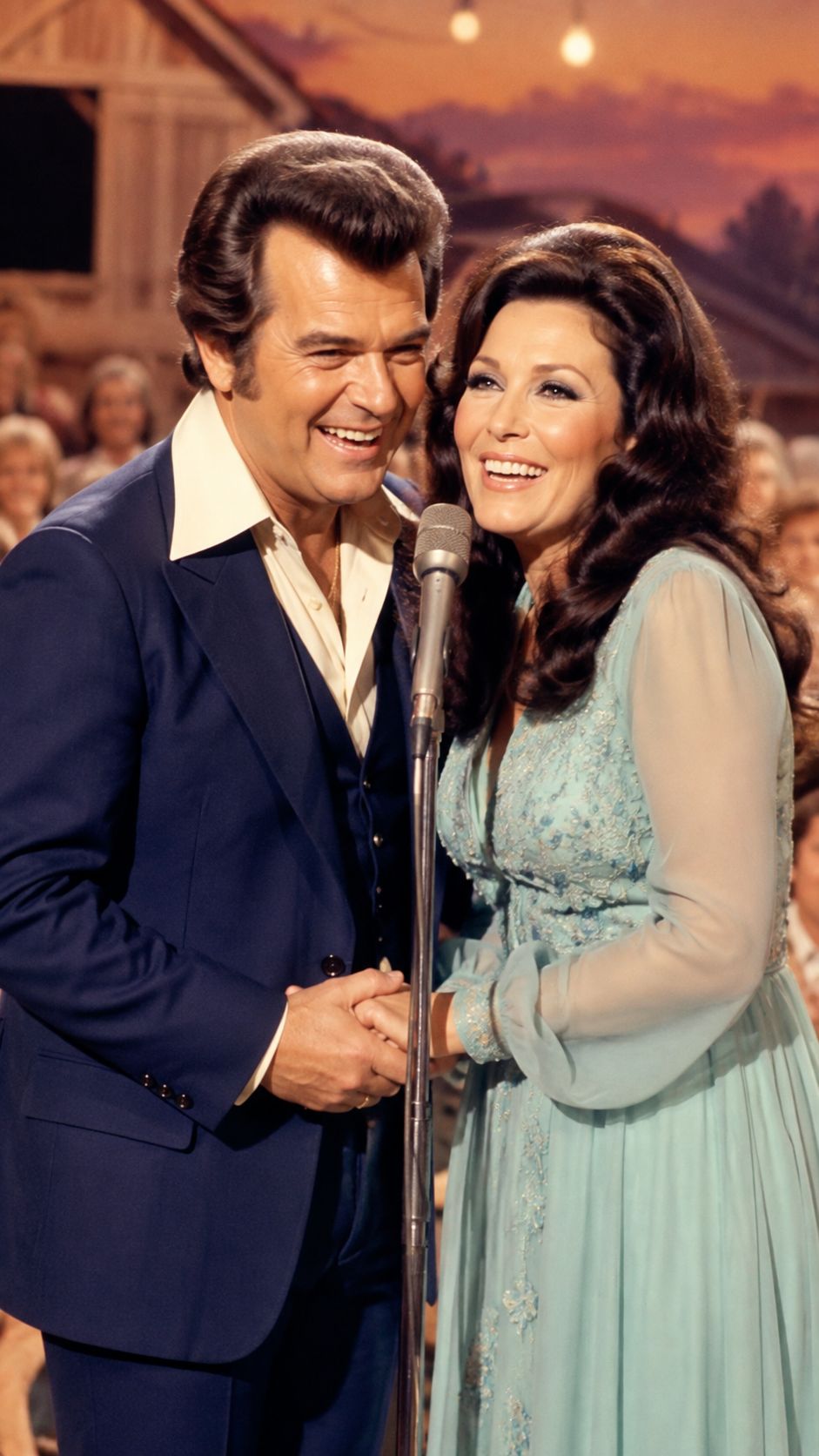
There are moments in country music when two voices come together and create something bigger than either singer could have achieved alone.
Then there are moments when two voices seem to tell an entire story simply by standing beside each other.
That was Conway Twitty and Loretta Lynn in 1971.
Fifty-four years ago, a song about fading love, temptation, loneliness, and the dangerous space between staying and leaving climbed to the top of the country charts. “After the Fire Is Gone” became Conway Twitty and Loretta Lynn’s first No. 1 hit as a duo, reaching the summit of the Billboard country chart on March 27, 1971. It remained at No. 1 for two weeks and stayed on the chart for 14 weeks.
But the numbers only tell part of the story.
The real significance of that record was what happened after it.
It turned a promising collaboration into one of the most important partnerships in country music history.
And somehow, all of that history began with a song about what happens when the fire in a relationship has already gone out.
Before the Duet, There Were Already Two Stars
To understand why “After the Fire Is Gone” mattered so much, you have to remember who Conway Twitty and Loretta Lynn already were.
They were not unknown singers hoping for a breakthrough.
They were established stars.
By 1971, Lynn had already built a remarkable career with songs that spoke directly to the lives, frustrations, dreams, and contradictions of everyday women. Twitty, meanwhile, had developed into one of country music’s most distinctive male voices, bringing a dramatic, intimate style to songs about love and heartbreak.
Then their paths crossed in a way that seemed almost inevitable.
Lynn later recalled that she and Twitty had begun singing together informally while traveling overseas. When they returned home, they decided to try their voices together for producer Owen Bradley. Bradley reportedly loved what he heard and sent them into the studio.
What happened next became history.
Their first collaborative album was We Only Make Believe, released in 1971, and “After the Fire Is Gone” became its defining breakthrough.
The chemistry was immediate.
Not romantic chemistry in real life—but musical chemistry so convincing that audiences sometimes had difficulty separating the performers from the characters they portrayed.
That distinction would become one of the most fascinating parts of their legacy.
A Song About a Love That Had Already Died
Written by L.E. White, “After the Fire Is Gone” was not a sweet love song.
It was complicated.
The song centers on two people who feel emotionally abandoned in their existing relationships and find themselves drawn toward one another. They know their situation is wrong, yet the loneliness they share makes the temptation difficult to resist.
That was bold material.
Country music had always dealt with broken hearts, cheating, loneliness, marriage, regret, and forbidden love. But what made this record so powerful was the way Twitty and Lynn refused to make the story simple.
There was no perfect hero.
There was no innocent victim.
There were simply two people standing in the ashes of relationships that had lost their warmth.
And their voices made that emotional conflict feel painfully real.
“Love is where you find it / When you find no love at home.”
Those words hit differently because Twitty and Lynn sounded less like two singers performing a song and more like two people confessing something they probably should not have said aloud.
That was their gift.
They could make fictional characters feel like neighbors.
Friends.
Husbands.
Wives.
People sitting alone at a kitchen table wondering when the love disappeared.
When Their Voices Changed the Meaning of the Song
Individually, Conway Twitty and Loretta Lynn were powerful storytellers.
Together, they created tension.
Twitty’s rich, dramatic voice carried a sense of vulnerability and longing. Lynn brought a directness that could sound simultaneously strong and wounded.
When they traded lines, the song became a conversation.
When they harmonized, it became something almost unbearable.
That vocal contrast was one reason their partnership became so influential.
PBS’s American Masters later highlighted the extraordinary power of their voices together, noting that their combination created something listeners could not experience from either singer alone. The duo eventually recorded 11 studio albums together between 1971 and 1988.
And perhaps most importantly, their first No. 1 proved that the experiment worked.
It wasn’t just a novelty.
It wasn’t just two famous singers sharing a microphone.
It was a new musical identity.
The Rumors Were Almost Inevitable
The realism of their performances created an unexpected problem.
People started wondering whether the emotions in the songs reflected something happening between the singers themselves.
The rumors were fueled by the material they recorded.
They sang about forbidden attraction.
Secret meetings.
Marriage problems.
Longing.
Temptation.
Regret.
And they performed those songs with astonishing conviction.
Lynn later acknowledged that people assumed she and Twitty were romantically involved.
But she was clear: they were friends, not lovers.
That fact makes their artistry even more impressive.
They were able to create believable emotional intimacy without that intimacy being their real-life story.
They were actors through music.
And the stage was their theater.
The No. 1 Was Only the Beginning
The success of “After the Fire Is Gone” opened the door to something extraordinary.
Between 1971 and 1975, Twitty and Lynn scored five consecutive No. 1 country hits together: “After the Fire Is Gone,” “Lead Me On,” “Louisiana Woman, Mississippi Man,” “As Soon as I Hang Up the Phone,” and “Feelins’.”
Think about that for a moment.
One No. 1 can be a lucky break.
Two can be a trend.
Five consecutive No. 1s?
That’s a partnership.
And the success wasn’t limited to the charts.
Twitty and Lynn became one of the defining vocal duos of the era. They won the Country Music Association’s Vocal Duo of the Year award four consecutive years, from 1972 through 1975.
“After the Fire Is Gone” also earned them a Grammy for Best Country Performance by a Duo or Group with Vocal.
Their first No. 1 had become the foundation of an entire chapter in country music.
Why This Song Changed Country Music
The phrase “changed country music” can sound exaggerated.
But in this case, there is a legitimate argument behind it.
Twitty and Lynn demonstrated how two established solo stars could create a completely new identity together.
They also showed that a duet didn’t have to be merely pleasant.
It could be dramatic.
Messy.
Adult.
Emotionally uncomfortable.
The songs could contain moral ambiguity while still making listeners care about the characters.
That approach helped establish a model that countless country duos would follow.
Their influence can be heard in the generations of male-female country partnerships that came afterward—artists discovering that the emotional space between two voices can be just as powerful as the voices themselves.
And their recordings demonstrated another timeless truth:
Country music becomes strongest when it tells the truth about complicated people.
The Beautiful Irony of “After the Fire Is Gone”
Perhaps the most heartbreaking thing about the song is its title.
“After the Fire Is Gone.”
The fire represents passion.
Love.
Connection.
The feeling that once made two people believe their relationship could survive anything.
But when that fire disappears, what remains?
Cold ashes.
Silence.
Routine.
Memory.
That idea has allowed the song to survive long after 1971.
Because people change.
Relationships change.
Marriage changes.
Life changes.
And sometimes the most painful part of losing someone isn’t the argument that ends a relationship.
It’s realizing that the feeling has been disappearing quietly for years.
That is why this song still works.
It isn’t really about 1971.
It is about something human.
Two Voices, One Legacy
Conway Twitty died in 1993, but his musical partnership with Loretta Lynn continued to live in recordings, memories, and the influence they left behind.
Lynn herself continued to speak warmly about Twitty as a friend and musical partner, making clear that the public’s imagined romance was never the reality behind their relationship.
That makes their legacy even more fascinating.
They didn’t need to be lovers to sound like they understood each other’s hearts.
They didn’t need a real-life romance to create believable heartbreak.
They simply needed two extraordinary voices, two experienced storytellers, and songs brave enough to explore the uncomfortable corners of love.
And “After the Fire Is Gone” gave them exactly that opportunity.
54 Years Later, Why Are We Still Listening?
Because some songs don’t belong to a particular decade.
They belong to people.
A listener in 1971 could hear the song and recognize a marriage that had gone cold.
A listener decades later could hear it and remember a relationship they lost.
Another listener might simply hear two legendary voices and wonder how country music ever sounded so emotionally honest.
That is the power of great country music.
It doesn’t tell you what to feel.
It reminds you of something you already felt.
And that may be the greatest achievement of Conway Twitty and Loretta Lynn.
They didn’t simply record “After the Fire Is Gone.”
They turned it into a moment.
A conversation.
A confession.
A warning.
And ultimately, the opening chapter of one of country music’s greatest partnerships.
“After the Fire Is Gone” was more than a No. 1 hit. It was the moment Conway Twitty and Loretta Lynn discovered that together, they could tell stories neither could tell alone.
Fifty-four years after that first chart-topping milestone, the record still carries the ache of two people searching for warmth after the flames have disappeared.
And maybe that’s why country fans still come back to it.
Because the fire may go away.
The years may pass.
The singers may be gone.
But a great country song?
That never stops burning.
VIDEO: