 By admin
 INTRODUCTION:
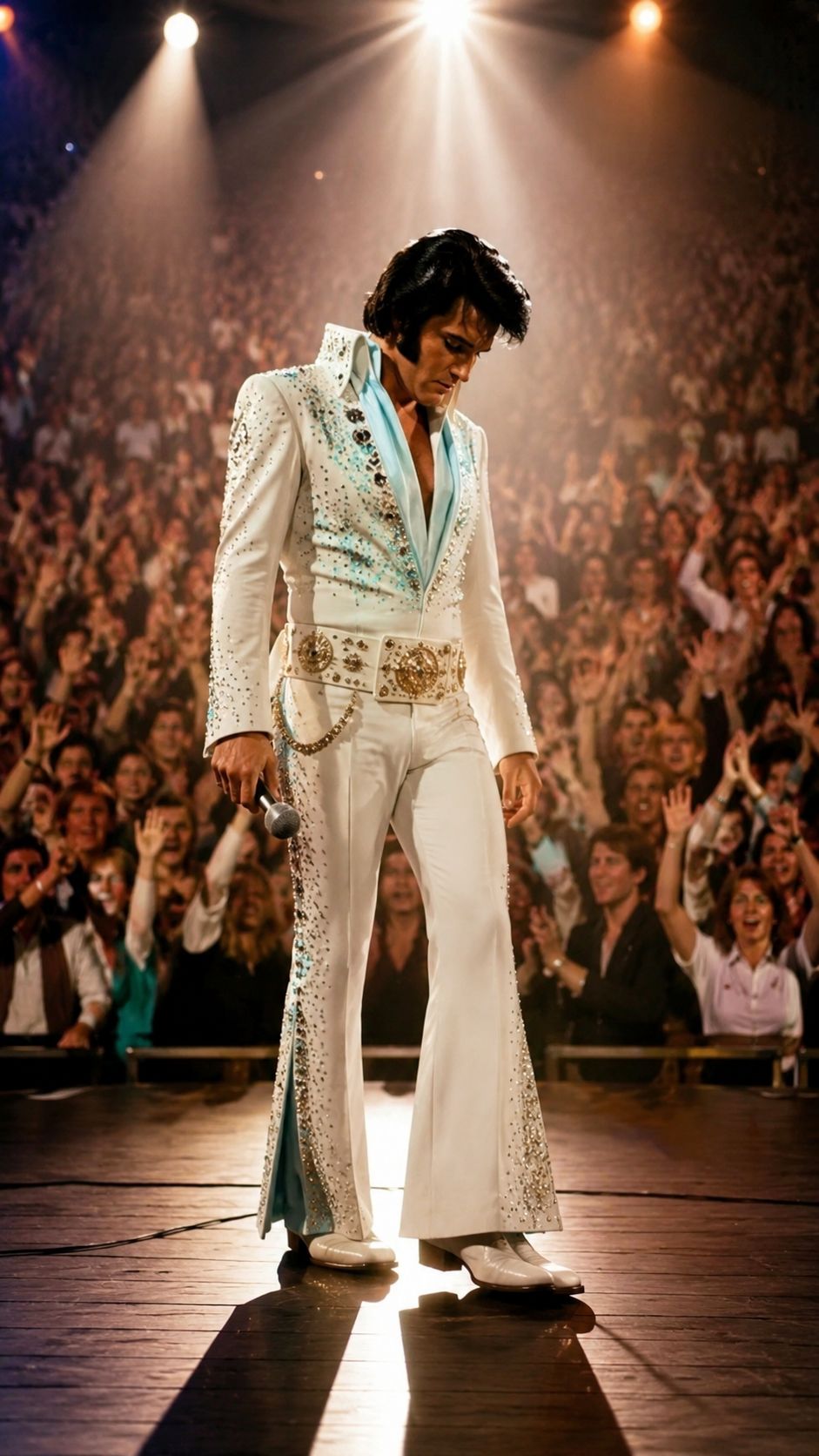
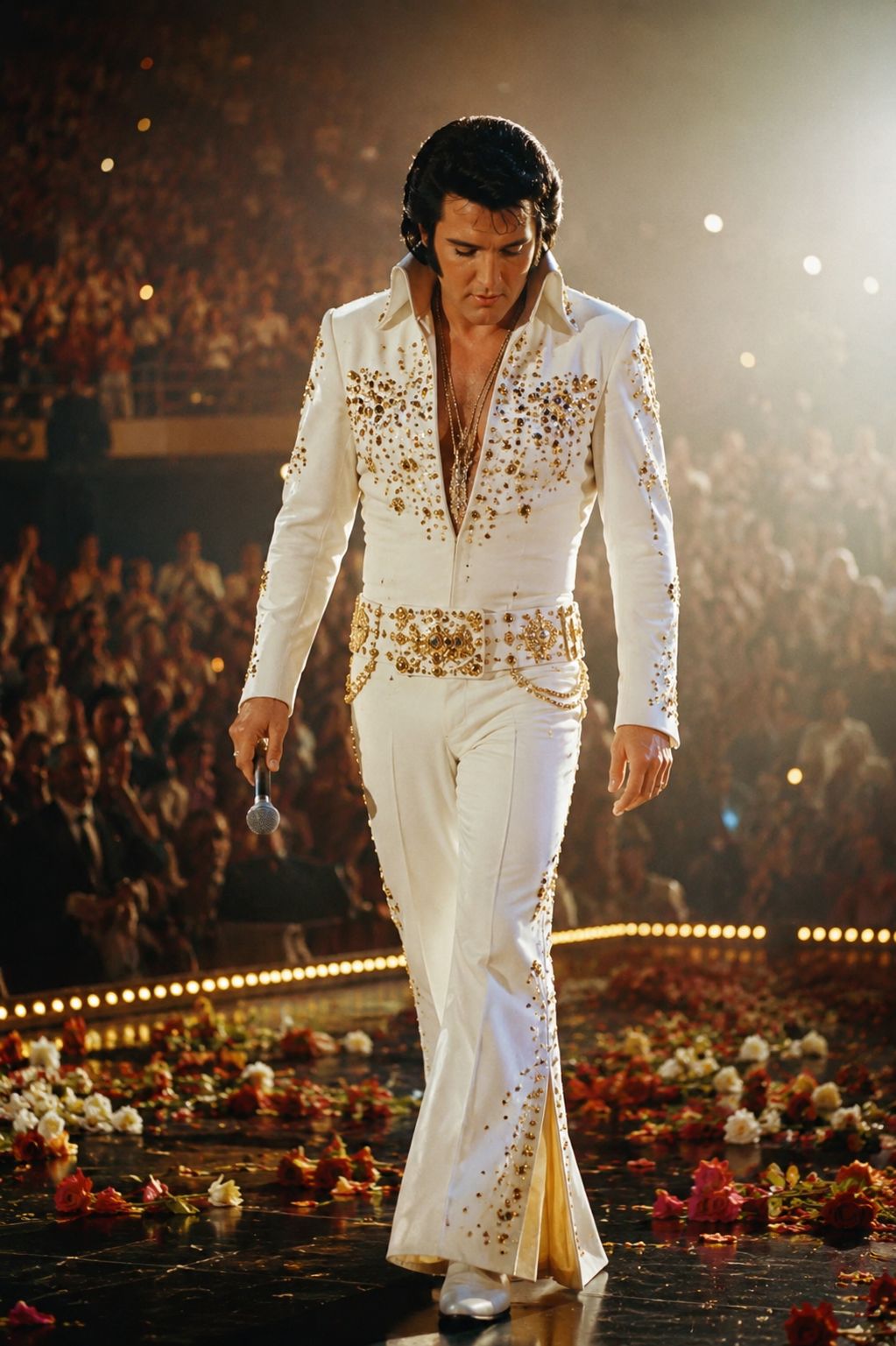
There are moments in music history that feel less like events and more like the closing of an era. August 16, 1977, was one of those moments.
For millions around the world, it was impossible to imagine a world without Elvis Presley. He wasn’t simply a singer. He wasn’t merely a superstar. Elvis was a cultural earthquake—a once-in-a-century force who changed the sound, style, and soul of popular music forever.
Yet, long before the heartbreaking news arrived from Graceland, there had already been a final goodbye.
It happened quietly.
No grand farewell tour. No emotional speech. No carefully orchestrated ending.
Just a man walking off a stage.
No one in the audience knew they had just witnessed history.
No one realized that the final notes echoing through the auditorium would become immortal.
And no one could have imagined that the King had taken his last bow.
The Final Concert: June 26, 1977
The setting was the Market Square Arena in Indianapolis, Indiana.
By the summer of 1977, Elvis Presley was only 42 years old, but the relentless pressures of fame, constant touring, health struggles, and personal battles had clearly taken their toll.
Still, fans packed the arena that night with the same excitement they had carried for decades.
To them, Elvis was eternal.
He had survived changing musical trends, the British Invasion, shifting public tastes, and years of intense scrutiny. The King always came back.
As the lights dimmed, thousands erupted in thunderous applause.
Elvis appeared wearing his now-iconic white sundial jumpsuit, adorned with sparkling rhinestones. Though visibly tired, there remained something unmistakably powerful about his presence.
Because even in his most fragile moments, Elvis possessed a quality few performers in history have ever matched:
He could command a room simply by walking into it.
“There was still magic there,” many concertgoers would later recall. “You could still see the King.”
The concert itself was emotional, imperfect, and profoundly human.
His voice occasionally showed signs of strain, yet when he launched into songs like “Love Me,” “Jailhouse Rock,” “Hurt,” and “Can’t Help Falling in Love,” the audience responded with overwhelming devotion.
For longtime fans, it didn’t matter that Elvis wasn’t the energetic young rebel of 1956.
They weren’t witnessing perfection.
They were witnessing legend.
A Voice Filled With More Than Music
Listening back to recordings from that final concert today is almost haunting.
There is an unmistakable sense of vulnerability.
Elvis sounded weary.
But he also sounded deeply sincere.
Especially during “Unchained Melody.”
Seated at the piano, Elvis delivered what many now consider one of the most emotional performances of his entire career.
His voice trembled.
His body showed signs of exhaustion.
Yet somehow, he reached depths of feeling that transcended technical perfection.
It was as though every triumph, heartbreak, regret, loneliness, and memory from his extraordinary life poured into that performance.
“Oh, my love, my darling…”
Those lyrics have since become inseparable from the story of Elvis’s final months.
Many fans describe watching the performance today as both beautiful and heartbreaking.
Because with the benefit of hindsight, it feels almost like a farewell letter.
The Final Song
As the concert neared its conclusion, Elvis performed the song he had used to close many of his shows:
“Can’t Help Falling in Love.”
Few songs in popular music carry the emotional weight of that timeless ballad.
For years, audiences had stood, applauded, and sung along as Elvis closed countless performances with those unforgettable words.
But on June 26, 1977, something was different.
No one knew it then.
Yet these would become the final lyrics Elvis Presley would ever sing onstage before a live audience.
“Take my hand, take my whole life too…”
Those words now feel almost prophetic.
As the orchestra swelled, fans rose to their feet.
The applause was deafening.
Elvis smiled, thanked the audience, and slowly exited the stage.
Just another night.
Just another concert.
Or so everyone believed.
Nobody Knew It Was Goodbye
Perhaps the most heartbreaking aspect of Elvis’s final concert is its ordinary nature.
There was no announcement.
No tears.
No declaration that this would be his last appearance.
Fans simply left the arena expecting to see him again.
Many had already purchased tickets for future concerts.
After all, Elvis had performed more than 1,100 concerts throughout his career.
Why would this night be any different?
But history often reveals itself only in retrospect.
Seven weeks later, the unimaginable happened.
On August 16, 1977, Elvis Presley died at Graceland.
The news spread with astonishing speed.
Radio stations interrupted programming.
Television networks issued special reports.
Fans wept openly in streets, workplaces, and homes.
For millions, it felt personal.
A piece of their youth had vanished.
An era had ended.
“The King is dead.”
Those four words stunned the world.
More Than a Superstar
What made Elvis’s passing so devastating was that he had become far more than an entertainer.
He represented dreams.
Possibility.
Rebellion.
Hope.
In the 1950s, he shattered barriers between musical genres, bringing elements of gospel, rhythm and blues, country, and rockabilly together in ways that transformed modern music forever.
He influenced nearly every artist who followed.
From country legends to rock icons, countless performers credit Elvis as the reason they pursued music.
John Lennon famously said:
“Before Elvis, there was nothing.”
While historians may debate that statement, few argue with its larger truth:
Popular music changed permanently because of Elvis Presley.
The Legacy That Refused to Fade
Nearly five decades after his death, Elvis remains astonishingly present.
His recordings continue to sell.
New generations discover his music every year.
Pilgrims from around the world still travel to Graceland seeking a connection to the man behind the legend.
Why?
Because great artists entertain.
But transcendent artists become part of human memory.
Elvis belongs to that rare category.
He represents nostalgia, yes.
But he also represents authenticity.
Despite unimaginable fame, enormous wealth, and worldwide adoration, Elvis remained profoundly human—capable of joy, generosity, insecurity, loneliness, and vulnerability.
Perhaps that is why his final performances resonate so deeply.
They reveal not an untouchable icon, but a man giving everything he still had to the audience he loved.
The Walk Off the Stage That Never Truly Ended
On that June evening in Indianapolis, Elvis Presley walked off the stage for the final time.
The curtain closed.
The lights came up.
The audience went home.
But something remarkable happened.
The goodbye never truly ended.
Because legends do not disappear when they leave the stage.
They continue through songs sung by future generations.
Through memories shared by fans.
Through the emotions they awaken long after they are gone.
Elvis Presley may have walked off the stage forever.
Yet in living rooms, on car radios, in quiet moments of nostalgia, and in the hearts of millions around the world, the King never really left.
And perhaps he never will.
“Elvis has left the building” became one of entertainment’s most famous phrases. But history has proven something extraordinary:
The man may have left the stage, but the music—and the legacy—remain eternal.
VIDEO:
https://youtu.be/yis1oa6Cri4?si=9NX8xGvuiXNyCJso