 By admin
 INTRODUCTION:
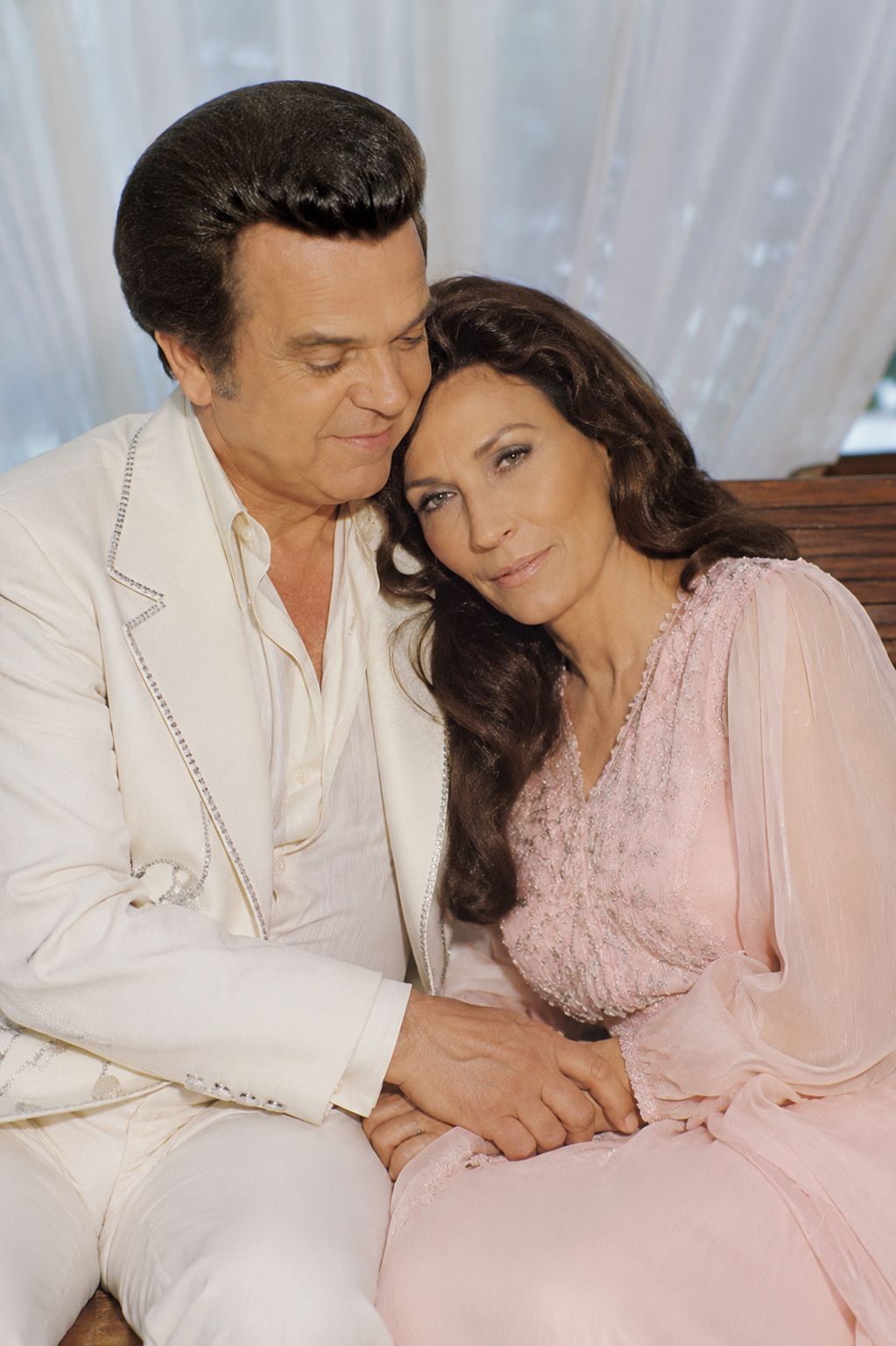
There are some friendships in country music that seem almost too perfectly written for a song.
Then there was Loretta Lynn and Conway Twitty.
For more than a decade, their voices told stories of longing, marriage, temptation, heartbreak, humor, and complicated love. Onstage, they could make millions of listeners believe they were hearing two people who knew exactly what the other was thinking.
But behind the microphones and the applause was something quieter.
A friendship.
A deep professional trust.
And, eventually, a loss that Loretta could never completely separate from the music they had made together.
When Conway Twitty died suddenly on June 5, 1993, country music lost one of its most distinctive voices. But for Loretta, the loss was personal. She had spent years beside the man whose voice seemed to understand the emotional spaces between her own words.
And that is why the tears surrounding their story have continued to fascinate country fans decades later.
“He was the only one who understood me.”
That sentence has become closely associated with the way fans describe Loretta’s feelings toward Conway. But it is important to distinguish the emotional truth of their relationship from a perfectly documented verbatim quotation: the surviving official and archival sources establish their extraordinary friendship and musical partnership, but do not provide a reliable primary-source record confirming that exact sentence as a direct Loretta quotation.
Still, the sentiment captures something real.
Because when Loretta Lynn and Conway Twitty sang together, something happened that neither voice quite created alone.
The Partnership That Changed Country Music
By the early 1970s, Loretta Lynn was already one of country music’s defining women.
She had built her career on songs that refused to hide behind polite language. She sang about husbands, wives, jealousy, poverty, motherhood, independence, and the uncomfortable realities of ordinary life.
Then came Conway.
Their partnership produced a remarkable run of recordings, including “After the Fire Is Gone,” “Lead Me On,” “Louisiana Woman, Mississippi Man,” and “As Soon as I Hang Up the Phone.”
The Country Music Hall of Fame recognizes Lynn’s partnership with Twitty as one of the central chapters of her career. Together, they won the CMA Vocal Duo of the Year award four consecutive times from 1972 through 1975.
Their success wasn’t simply about having two famous singers on the same record.
It was chemistry.
Conway possessed that smooth, controlled baritone that could sound almost conversational. Loretta brought something entirely different: vulnerability mixed with steel.
He could sound like the man trying to hide what he felt.
She could sound like the woman who already knew.
And somehow, that tension made the songs believable.
People Saw Romance. They Saw Something Else.
The chemistry was so convincing that audiences naturally wondered whether there was something more between them.
But the reality was considerably more complicated—and, in some ways, more meaningful.
Loretta was married to Oliver “Doolittle” Lynn. Conway was married as well. Their professional relationship generated endless speculation, but Loretta consistently maintained that Conway was a close friend of both her and her husband.
In fact, according to an account highlighted by Entertainment Weekly, Doolittle himself played a role in their musical partnership, including recognizing that “Louisiana Woman, Mississippi Man” was a perfect song for Loretta and Conway.
That detail matters.
Because it reminds us that the story wasn’t simply about forbidden attraction.
It was about trust.
Conway and Loretta trusted each other enough to inhabit emotionally complicated songs without allowing the performance to destroy the friendship underneath it.
And that is much harder than simply creating chemistry for the camera.
“After the Fire Is Gone” Changed Everything
Their 1971 recording of “After the Fire Is Gone” became one of the defining moments of their partnership.
The song was about two people trapped in relationships where the passion had disappeared.
It was emotionally dangerous material.
But Loretta and Conway didn’t sing it like actors reading a script.
They sounded as though they understood the people inside the song.
The record earned them a Grammy for Best Country Vocal Performance by a Duo or Group, helping establish the partnership as one of the most important male-female collaborations in country history.
That success was followed by hit after hit.
The official Conway Twitty biography describes him and Lynn as the most awarded male/female duet partnership in country music history, highlighting recordings such as “After the Fire Is Gone,” “Lead Me On,” and “Louisiana Woman, Mississippi Man.”
Their voices had become inseparable in the minds of listeners.
And eventually, so did their stories.
Then Came the Call No One Expected
On June 5, 1993, Conway Twitty died in Springfield, Missouri.
He was only 59.
The official Conway Twitty biography describes his death as untimely, coming after a career that had stretched from rockabilly into one of country music’s most extraordinary chart runs.
For fans, it was shocking.
For Loretta, it was devastating.
There was something especially cruel about losing someone whose professional life had been so intertwined with yours.
When a bandmate dies, you don’t only lose a friend.
You lose the person who knows the songs the way you know them.
The person who knows when you are going to breathe.
The person who knows how long to hold a note.
The person who can look across a stage and communicate without saying a word.
That was Conway.
And perhaps that is why memories of Loretta’s grief remain so powerful.
The Silence After Conway
Imagine spending years hearing a familiar voice beside yours.
Then suddenly, there is silence.
No new duet.
No backstage conversation.
No familiar voice answering the opening line.
No possibility of another tour.
No chance to create one more memory.
Loretta continued making music for decades after Conway’s death. She remained a country icon, eventually recording acclaimed later-career albums and continuing to inspire generations of artists.
But Conway belonged to a particular chapter of her life that could never be recreated.
The pair had stopped touring together full-time in 1981, but the musical bond remained part of their legacy. The descendants of both artists have continued performing their grandparents’ songs, demonstrating just how powerful that partnership remains.
Tre Twitty, Conway’s grandson, and Tayla Lynn, Loretta’s granddaughter, eventually created Twitty & Lynn, a tribute act that carries the story forward.
Their performances aren’t merely nostalgia.
They are evidence that something about Conway and Loretta still resonates.
Why Did Conway Understand Loretta So Well?
Perhaps the answer lies in their musical instincts.
Loretta had a gift for turning personal experience into universal emotion.
Conway had a gift for making complicated emotions sound effortless.
Put those two qualities together and something extraordinary happened.
Loretta could push a lyric toward vulnerability.
Conway could answer without overpowering her.
She could sound wounded.
He could sound resigned.
She could challenge him.
He could retreat.
And the listener became the third person inside the conversation.
That is why their duets still feel intimate.
Not because we know exactly what happened between Loretta and Conway privately—but because they were extraordinary at making fictional characters feel emotionally real.
The Tears Were About More Than a Singing Partner
This is perhaps the most important part of the story.
When people talk about Loretta’s sadness after Conway’s death, it is easy to reduce it to the loss of a famous duet partner.
That doesn’t capture the emotional weight of what happened.
Conway had been part of Loretta’s professional life during some of her most important years.
He was there when she was one of Nashville’s biggest stars.
He was there when their records were climbing the charts.
He was there when audiences began associating the sound of his voice with hers.
And when he was gone, that entire era suddenly became history.
Sometimes the hardest goodbye isn’t to the person you loved romantically. It’s to the person who knew a version of you that no one else could ever completely know.
That is the deeper tragedy in Loretta and Conway’s story.
They didn’t need to be husband and wife to have an extraordinary bond.
They didn’t need a secret romance to make their relationship meaningful.
They simply understood one another artistically—and apparently cared for one another deeply as friends.
A Partnership That Refused to Die
Loretta Lynn died on October 4, 2022, at her Tennessee home at the age of 90.
By then, Conway had been gone for nearly three decades.
Yet his voice remained attached to some of the most memorable moments of her career.
And perhaps that is the strange beauty of country music.
People die.
Careers end.
Stages disappear.
But a voice captured on a record can remain forever.
Today, when “After the Fire Is Gone” begins playing, listeners aren’t simply hearing two legendary singers.
They are hearing a conversation between two people who knew how to tell complicated stories.
When “Louisiana Woman, Mississippi Man” comes on, there is the spark, the humor, the swagger.
And when Loretta’s voice rises beside Conway’s, there is something almost haunting about knowing that the man answering her is no longer here.
The partnership ended in 1993.
The music never did.
The Legacy of Loretta and Conway
Country music has produced countless duos.
Some had bigger hits.
Some had longer careers.
But very few created the emotional illusion that Loretta Lynn and Conway Twitty created.
They could make millions of strangers feel as if they were eavesdropping on a private conversation.
That was their gift.
And perhaps that is why the story of Loretta’s tears continues to move people.
Because underneath the legendary records was something profoundly human:
A woman lost a friend.
A singer lost a musical partner.
And country music lost one half of a conversation that could never quite be repeated.
They weren’t husband and wife. They didn’t need to be. Onstage, their voices understood each other in a language all their own.
Decades later, Conway Twitty is still gone.
Loretta Lynn is gone too.
But when their voices meet on an old recording, for a few minutes, neither one seems to have left.
And maybe that is the greatest kind of immortality a country singer can have.
Not simply to be remembered—but to still sound alive.
VIDEO: