 By admin
 INTRODUCTION:
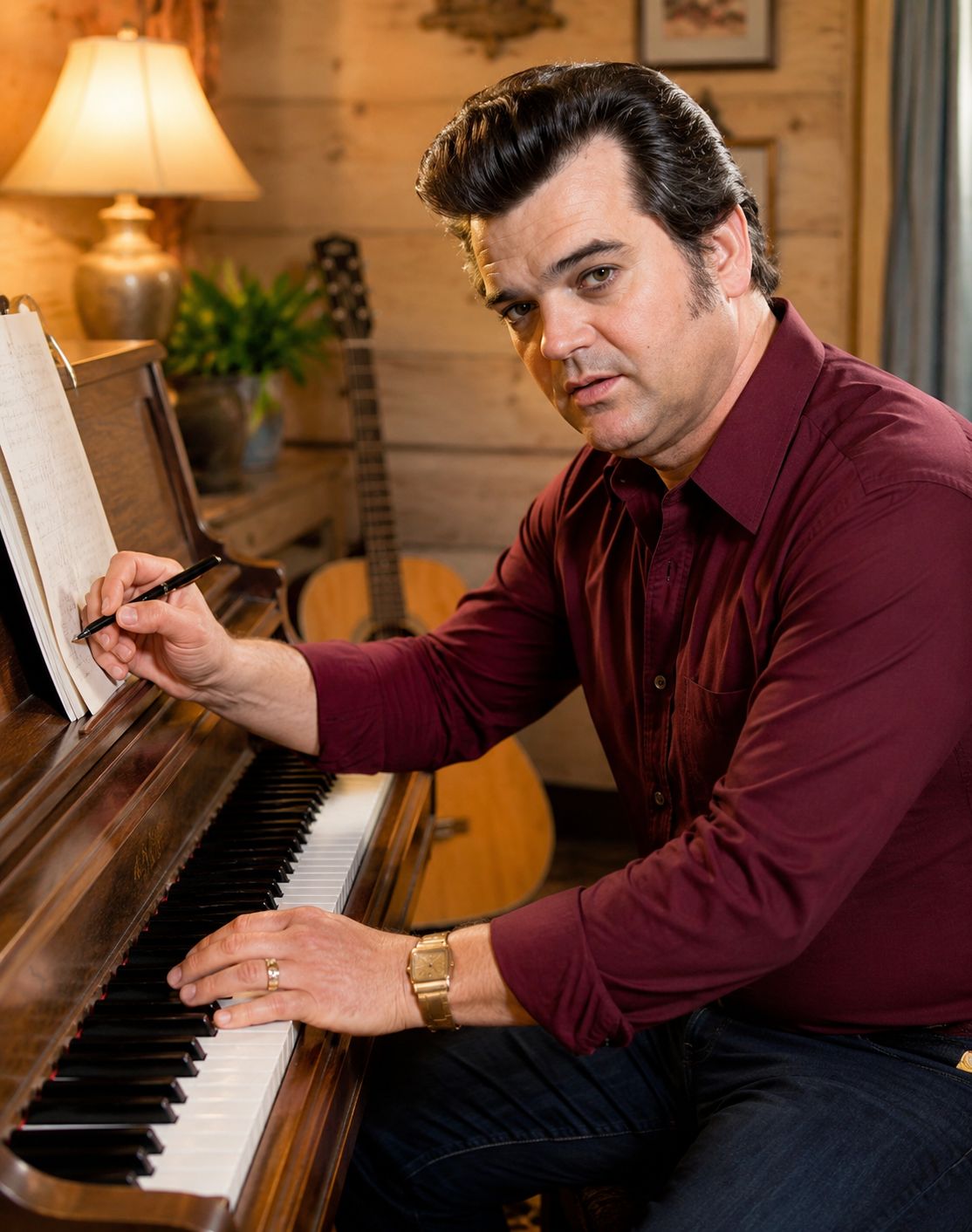
There are country songs you listen to for the melody. There are songs you remember because they remind you of a particular place, a particular person, or a particular season of your life.
And then there are songs that seem to understand heartbreak before you even have the words for it.
For generations of country music fans, Conway Twitty’s “Don’t Take It Away” has been one of those songs.
Released in 1979 as the first single from Twitty’s album Cross Winds, the song was written by Troy Seals and Max D. Barnes. Twitty’s recording reached No. 1 on the U.S. country chart, becoming his 21st chart-topper at the time. It also spent nine weeks on the country chart and finished No. 24 on Billboard’s year-end country chart for 1979.
But statistics cannot explain why the song still hits so hard.
For that, you have to listen to the emotion in Conway’s voice.
A Song About the Moment Everything Could Be Lost
The genius of “Don’t Take It Away” is that it does not begin with confidence.
It begins with desperation.
The narrator knows he has made a mistake. He knows he has hurt the person he loves. And now he is standing in that terrifying space between apology and goodbye, hoping there is still enough love left to save the relationship.
That is classic country storytelling.
There is no perfect hero here.
There is no glamorous romance.
There is simply a man realizing, perhaps too late, that the thing he took for granted may be slipping through his fingers.
“Please, let me make it up.”
That emotional idea is the heartbeat of the entire song.
And Conway Twitty was almost uniquely qualified to deliver it.
His voice had an unusual combination of warmth, authority, vulnerability, and intimacy. He could sound like a man telling a story across a crowded honky-tonk, yet somehow make the listener feel as if he were singing directly into one person’s ear.
That was one of his greatest gifts.
Conway Twitty: The Man Behind the Voice
Long before he became one of country music’s defining voices, Conway Twitty was born Harold Lloyd Jenkins in Friars Point, Mississippi, in 1933.
His musical journey was anything but ordinary.
He first became known through rock and roll before eventually establishing himself as one of country music’s most successful artists. According to his official biography, his career stretched from the early days of rock and roll through his dominance of the country charts and ultimately to his induction into the Country Music Hall of Fame.
By the end of his career, Twitty had achieved an extraordinary 55 No. 1 singles, according to his official biography, along with record sales exceeding 50 million.
Yet numbers alone don’t explain Conway Twitty.
His real strength was emotional storytelling.
He understood something fundamental about country music:
The best songs don’t merely tell you what happened. They make you feel what happened.
That is exactly what happens in “Don’t Take It Away.”
The Vulnerability That Made Conway Different
One reason the song remains so powerful is that Twitty allows his narrator to be vulnerable.
He is not pretending everything is fine.
He is not trying to win an argument.
He is pleading.
The song revolves around the fear that love, once damaged, may not be recoverable. That fear is universal.
Anyone who has ever said the wrong thing…
Anyone who has ever watched someone walk away…
Anyone who has ever wished they could turn back one night, one argument, or one decision…
can recognize something of themselves in this story.
And that is where Conway’s performance becomes more than entertainment.
It becomes memory.
“Love don’t come easy.”
That simple idea carries enormous emotional weight.
Love is work.
Love requires forgiveness.
Love requires humility.
And sometimes, love requires admitting that you were wrong.
The Story Behind the Song
“Don’t Take It Away” was not originally written specifically for Conway Twitty.
The song was written by Troy Seals and Max D. Barnes, and country singer Jody Miller had recorded it earlier, in 1975. Twitty later recorded his own version in February 1979 at Woodland Sound Studio in Nashville.
That history makes Twitty’s version even more fascinating.
The song already possessed emotional power.
But Conway knew how to turn that power into drama.
His interpretation transforms the song into a conversation between two people standing on the edge of separation.
The narrator isn’t simply asking someone to stay.
He’s promising to change.
He’s asking for another chance.
And underneath all of it is one devastating possibility:
What if the apology comes too late?
That question is what makes the record timeless.
Why Conway’s Voice Makes It Hurt More
Listen closely to Twitty’s delivery.
He doesn’t sound like a man comfortably singing about heartbreak from a distance.
He sounds emotionally involved.
There is urgency in the performance, but also restraint.
That combination is crucial.
If the song had been performed too dramatically, it could have become melodramatic.
If it had been performed too casually, the emotion would have disappeared.
Conway found the middle ground.
He sounded like someone who knew exactly what he stood to lose.
That was one of the defining characteristics of his career.
The official Conway Twitty biography describes him not as a tortured artist, but as a hardworking performer who deeply valued his family, his fans, and his craft.
That perspective matters when listening to songs like this.
The emotion doesn’t feel manufactured.
It feels lived-in.
The 1979 Country Music Landscape
When “Don’t Take It Away” reached No. 1, country music was entering an interesting period.
The traditional sound was still enormously powerful, but the genre was also evolving.
Artists were increasingly crossing boundaries between country, pop, rock, and adult contemporary music.
Conway Twitty had already lived through several musical eras himself.
He understood how to evolve without losing the emotional foundation that made country music special.
That is part of what made him such an important figure.
He could sing about love, regret, desire, family, loneliness, and reconciliation without making the songs feel like completely different versions of himself.
His voice remained the constant.
More Than a Love Song
It would be easy to describe “Don’t Take It Away” simply as a romantic song.
But that misses something.
At its core, it is a song about consequences.
The narrator has crossed a line.
Now he understands the value of what he might lose.
That is a very human experience.
We often don’t recognize the importance of something until its disappearance becomes possible.
A relationship.
A friendship.
A family connection.
A home.
A voice on the other end of the telephone.
A familiar face sitting across the kitchen table.
Country music has always excelled at capturing those moments.
And Conway Twitty was one of its greatest interpreters.
The Song’s Quiet Legacy
Interestingly, “Don’t Take It Away” continues to appear in conversations among classic-country listeners decades after its original release.
Modern listeners still discover it through streaming services, classic-country playlists, radio, and social-media discussions. On Reddit, for example, country fans have repeatedly singled out the song as one of Twitty’s underrated favorites.
That says something important.
A hit can disappear.
A trend can disappear.
But emotional truth is harder to erase.
And “Don’t Take It Away” contains an emotional truth that does not belong to 1979.
It belongs to anyone who has ever been afraid of losing someone they love.
Remembering Conway Twitty
Conway Twitty died in June 1993, but his influence remains deeply embedded in country music.
He was inducted into the Country Music Hall of Fame in 1999, six years after his death. His official biography also notes that his career included more than 100 major awards and millions of records sold.
But perhaps his most important legacy isn’t found in trophies.
It is found in moments.
A man driving alone at night.
A woman remembering someone she once loved.
A couple hearing an old song on the radio.
A fan sitting quietly and suddenly remembering exactly where they were when they first heard Conway sing.
That is the strange magic of great country music.
It doesn’t stay in the year it was recorded.
It follows you.
Why “Don’t Take It Away” Still Matters
More than four decades after its release, Conway Twitty’s “Don’t Take It Away” remains a reminder that country music doesn’t need complicated words to create complicated emotions.
Sometimes the most powerful story is simply this:
I made a mistake.
I know I hurt you.
I don’t want to lose you.
Please give me one more chance.
And perhaps that’s why Conway’s performance continues to resonate.
Because beneath the polished recording, beneath the Nashville production, beneath the No. 1 achievement, there is something painfully ordinary.
A human being asking another human being not to walk away.
“Don’t take it away.”
Those words may have been recorded in 1979.
But for someone listening today, they can feel as though they were written yesterday.
And that is the mark of a true country classic.
Conway Twitty didn’t simply sing about heartbreak. He gave heartbreak a voice.
And decades later, that voice still knows exactly where to find us.
VIDEO: