 By admin
 INTRODUCTION:
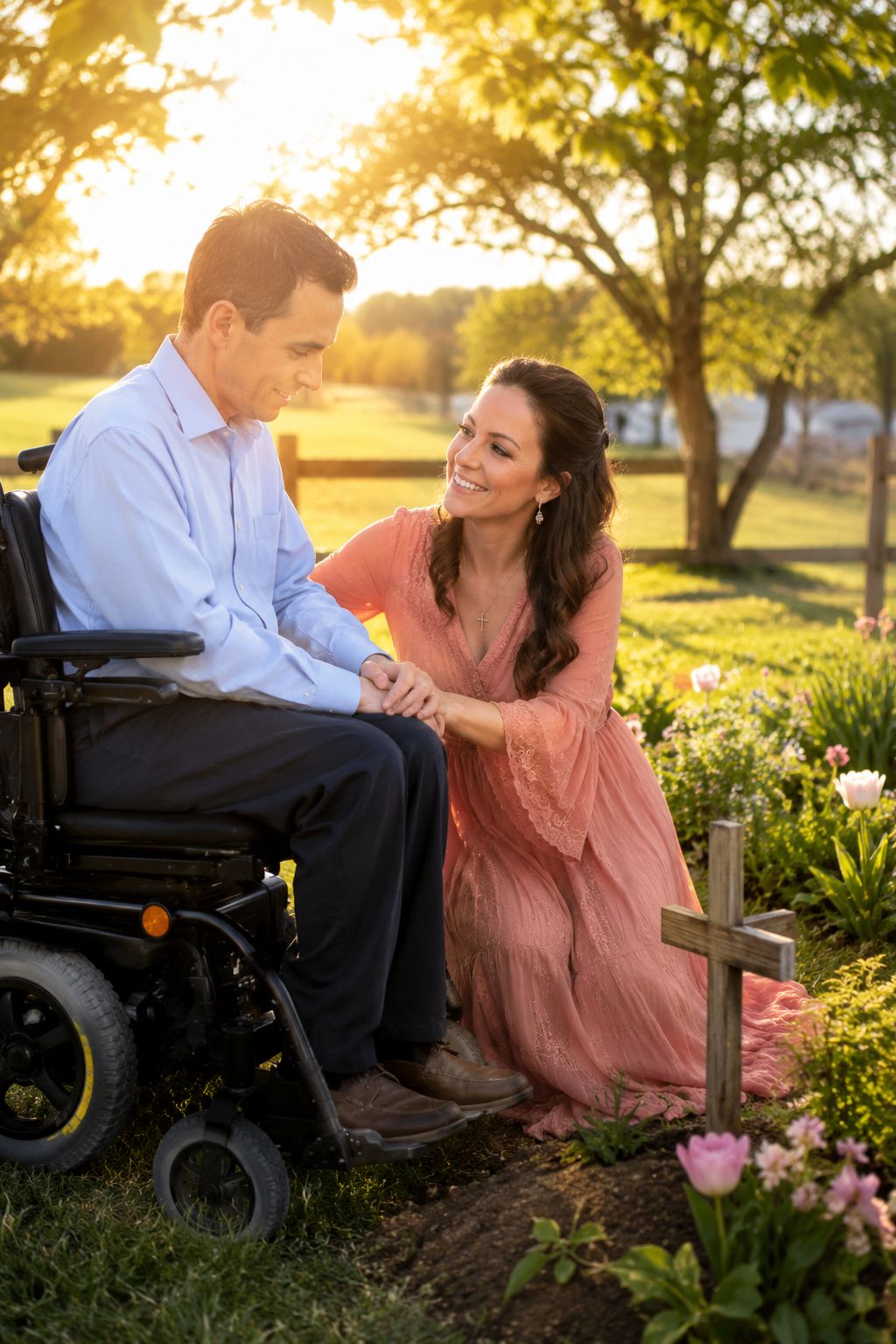
There are some goodbyes that feel like endings.
And then there are goodbyes that somehow become beginnings.
When Joey Feek was nearing the end of her life in early 2016, she knew there were things she wanted to leave behind—not possessions, not fame, and not a grand ceremony. She wanted something simple. Something rooted in faith. Something that sounded less like a funeral and more like a final act of love.
She talked with her husband, Rory Feek, about the details of her funeral. She wanted a simple service, a handmade wooden box, and a quilt from a dear friend.
Then she made one final request.
She wanted the hymn “Leave It There” sung at her graveside.
But Joey didn’t stop there.
She knew exactly who she wanted to sing it.
Her name was not a household name. He wasn’t a major country star filling arenas. He was a gifted Alabama singer named Bradley Walker, a man Joey admired deeply for his extraordinary baritone voice. Walker had performed at the Grand Ole Opry and had already built a following in country and gospel circles, but he was still living a very different life from the stars who regularly occupied Nashville’s biggest stages.
Joey looked at Rory and essentially said: not just anybody.
Bradley.
That small decision would soon change the course of one man’s life.
And perhaps that is what makes this story so powerful.
Joey was preparing to leave this world.
Yet somehow, even in saying goodbye, she was still thinking about how to lift somebody else up.
“No… not someone… I want Bradley Walker to sing it for me.”
Those words, reported by Rory after Joey’s death, have become the emotional center of a story that reaches far beyond one funeral.
THE SONG THAT MEANT MORE THAN A SONG
“Leave It There” was not simply chosen because it sounded beautiful.
The hymn carried a message that seemed almost perfectly written for Joey’s final chapter.
Its central idea is surrender: when life becomes too painful to carry alone, give that burden to God.
That message had personal meaning for Joey and Rory.
They had first heard the hymn during their honeymoon in Montana, where a mother and daughter sang it in a small church near the Bitterroot Mountains. Rory later recalled that something about the words stayed with them.
Years later, those same words would be heard beside Joey’s grave.
The irony was almost overwhelming.
The woman who had once heard the song as a young wife was now asking for it to accompany her final farewell.
“Take your burden to the Lord, and leave it there.”
For Rory, the words could not have been more personal.
He was losing his wife.
He was facing life without the woman who had been his musical partner, his best friend and the mother of their young daughter, Indiana.
And yet Joey’s final request seemed to tell him exactly what she wanted everyone to do with the grief:
Don’t carry it alone.
Leave it there.
THEN BRADLEY WALKER SANG
The funeral came.
Family and friends gathered.
And Bradley Walker stood at Joey’s graveside and sang the song she had specifically chosen for him.
Nobody could have known at that moment that another life was about to change.
Among those listening was legendary gospel musician and producer Bill Gaither.
Gaither heard Walker’s deep baritone voice during the service.
And according to Rory’s account, he turned to someone and asked a simple question:
“Who’s that?”
It was an ordinary question.
But it became an extraordinary turning point.
Because the answer was Bradley Walker.
And suddenly, a singer who had spent years pursuing music while also working a full-time job was being heard by people who could help take his voice to an entirely different audience.
The funeral performance became more than a final tribute to Joey.
It became an introduction.
FROM POWER-PLANT WORKER TO GOSPEL RECORDING ARTIST
One of the most remarkable details of the story is that Walker wasn’t standing at the graveside as a superstar whose career was already secure.
He was a working musician.
He also worked at a power plant in Athens, Alabama.
His journey had not been easy. Walker has muscular dystrophy and uses a wheelchair, but his physical limitations had never erased his desire to sing. He had already performed at the Grand Ole Opry and worked steadily toward a career in country and gospel music.
Still, nobody could have predicted what would happen after Joey’s funeral.
Rory helped Walker record a gospel album.
Walker filmed a television special on the very stage where Joey and Rory had once performed together.
He was invited to perform at the Gaither Family Fest in Gatlinburg, Tennessee, where he received a standing ovation from an audience of thousands.
Think about the symbolism.
A stage that had once belonged to Joey and Rory became part of Bradley’s next chapter.
A funeral song became the doorway to a recording career.
And a final request became an opportunity.
“ALL BECAUSE HE SANG ONE SONG”
Perhaps nobody understood the strange beauty of the situation more than Rory.
He was still grieving.
There was no replacing Joey.
There was no pretending that a new opportunity for Bradley could somehow make her death less painful.
But Rory could see something else happening.
He could see Joey’s generosity continuing after she was gone.
As he described it, Bradley’s upcoming album and television appearances were happening:
“All because he sang one song. All because of my wife’s last request.”
That sentence carries the entire story.
One song.
One request.
One graveside.
One voice.
And then a chain reaction nobody could have planned.
WAS IT COINCIDENCE?
For many people, the story could simply be described as an extraordinary coincidence.
Bradley happened to be chosen.
Bill Gaither happened to be there.
Gaither happened to hear him.
The record label happened to recognize his potential.
Rory happened to help.
And suddenly Walker’s career was moving forward.
But Rory did not see it that way.
He believed there was something deeper happening.
He believed Joey’s final act of remembrance may have become an act of blessing.
“I could tell you that it’s just coincidence or happenstance, but I’d be lying.”
For a man grieving the loss of his wife, that belief mattered.
It gave meaning to something that otherwise could have felt unbearably tragic.
Joey had died.
But the story didn’t end at the graveside.
Instead, something was beginning.
JOEY WAS STILL LIFTING PEOPLE UP
This may be the most beautiful part of Joey’s story.
Even while preparing for her own death, she was thinking about someone else’s gift.
She could have requested a famous singer.
She could have chosen someone whose name everyone recognized.
Instead, she chose a man whose voice she believed deserved to be heard.
That tells us something about Joey.
She wasn’t simply listening for fame.
She was listening for something genuine.
She heard something in Bradley Walker that perhaps others had overlooked.
And when she was given one final opportunity to make a request, she used it to give that voice a larger audience.
That is why her final request continues to resonate.
Because it wasn’t really about a funeral.
It was about recognition.
It was about encouragement.
It was about faith.
And perhaps most importantly, it was about giving while she was still able to give.
THE LEGACY OF “LEAVE IT THERE”
Joey Feek died on March 4, 2016, after her battle with cancer. Her final months had already touched millions of people through the story she and Rory shared publicly.
But her legacy didn’t stop with her recordings or the memories of Joey + Rory.
Sometimes a person’s legacy is found in the lives they influence.
Sometimes it is found in the courage they inspire.
And sometimes it is hidden inside one tiny decision that doesn’t seem important at the time.
Joey’s decision to ask Bradley Walker to sing “Leave It There” was exactly that kind of decision.
Nobody at the graveside could have known how far that song would travel.
Nobody knew that the singer standing beside Joey’s grave would soon be receiving new opportunities.
Nobody knew that his voice would reach audiences far beyond the small circles in which he had previously been known.
But Joey believed in that voice.
And Rory believed in what happened next.
For Christians, the story offers an especially powerful interpretation: sometimes God works through moments that look ordinary, painful or even final.
A goodbye can become an introduction.
A loss can create an unexpected opportunity.
A grave can become the place where another person’s future begins.
THE MAN WHO SANG GOODBYE FOUND A NEW BEGINNING
There is something almost poetic about Bradley Walker being the one to sing Joey into eternity.
He came to the graveside to say goodbye to a friend.
Instead, that moment helped open a new chapter in his own life.
His career subsequently included a gospel album, television work and major performances, with Rory and the Gaither organization helping him along the way. Walker’s 2016 album Call Me Old-Fashioned later reflected the gospel direction that had emerged from this extraordinary chain of events.
And perhaps Joey would have loved the irony.
She was leaving.
Bradley was arriving.
She was giving her final request.
He was receiving a new opportunity.
And Rory was standing between the two—grieving the woman he loved while watching her kindness continue to affect someone else.
That is why this story still feels bigger than country music.
It is about what people leave behind.
SOMETIMES THE LAST REQUEST ISN’T REALLY THE LAST
Joey’s final request may have been spoken during one of the darkest moments imaginable.
But the result was unexpectedly bright.
She wanted Bradley Walker to sing one hymn.
He did.
Bill Gaither heard him.
Rory helped him.
Audiences discovered him.
And a man who had spent years working toward his musical dream suddenly found a door opening.
Was it coincidence?
Rory didn’t think so.
And whether someone sees the story through the lens of faith, fate, friendship or simply extraordinary timing, the emotional truth remains:
Joey used one of her final moments to think about someone else’s future.
That may be one of the most enduring definitions of generosity.
“Joey would be so proud of him.”
Those words from Rory may be the perfect ending.
Because Bradley Walker’s performance didn’t erase the sadness of Joey’s death.
It transformed part of that sadness into something meaningful.
Her voice was gone.
But her influence was still speaking.
And somewhere beyond the grief, a singer was standing on a new stage, carrying a song Joey had chosen specifically for him.
One final request.
One unforgettable voice.
One unexpected door.
And for those who believe in God’s timing, perhaps one more reminder that sometimes the story doesn’t end where we think it does.
Sometimes, the goodbye is where the next chapter begins.
VIDEO: