 By admin
 INTRODUCTION:
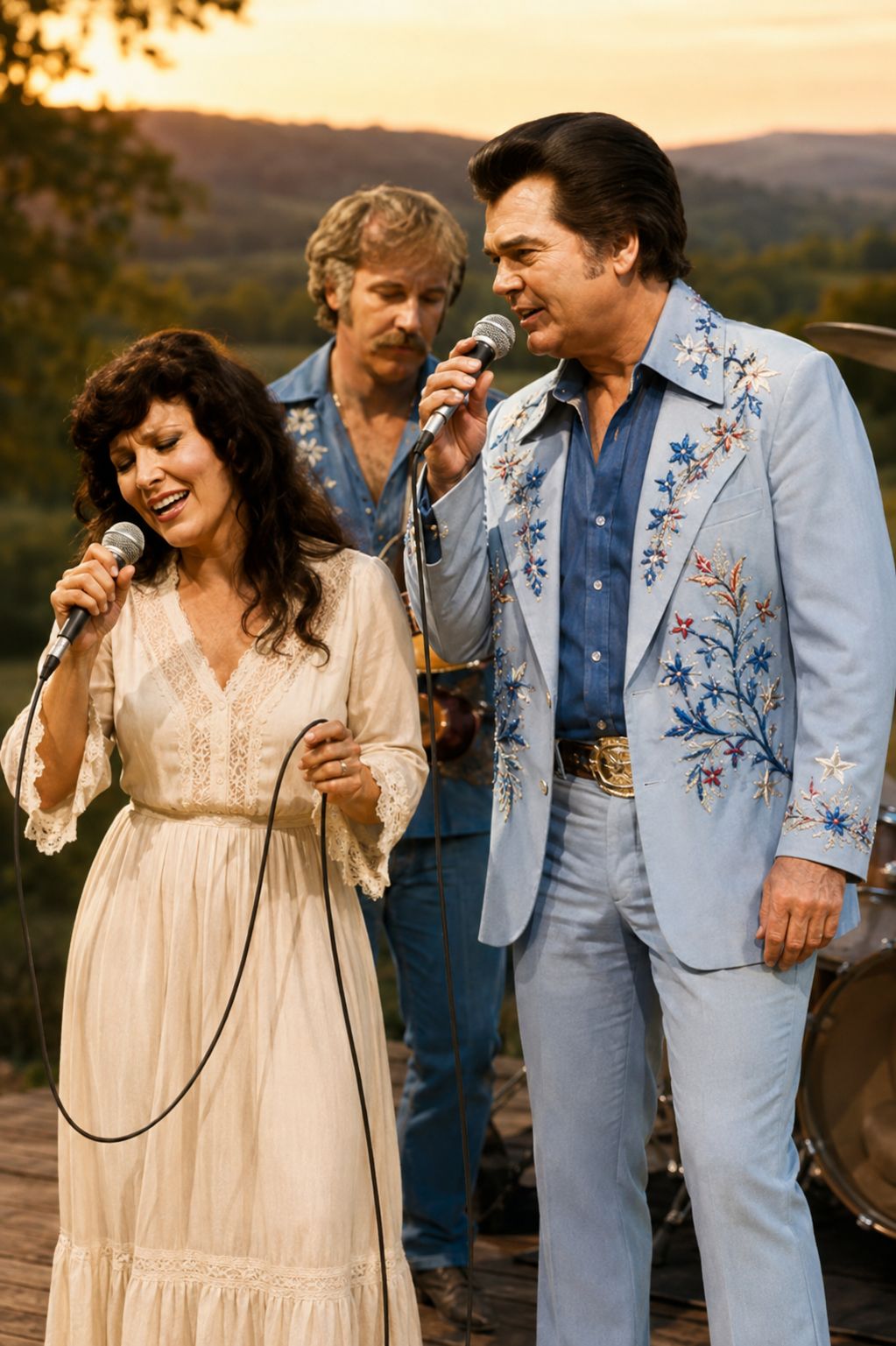
There are country songs that become hits.
Then there are country songs that become part of American memory.
Dolly Parton’s “Jolene” belongs in the second category.
When the song first emerged in 1973, nobody could have known just how far its story would travel. It was only a few minutes of music, built around a trembling voice, a haunting melody, and a desperate request from one woman to another.
But somehow, Dolly Parton captured something much bigger than jealousy.
She captured fear.
She captured insecurity.
She captured the terrifying possibility of losing the person you love—and the vulnerability of admitting that possibility out loud.
More than five decades later, “Jolene” remains one of the songs that people instantly recognize after hearing only a few notes. It has been covered across generations and genres, while modern rankings have continued to place it among the greatest country songs ever recorded. Billboard’s 2025 ranking of the 100 Best Country Songs of All Time placed “Jolene” at No. 1, while other prominent country-song lists have likewise celebrated its extraordinary staying power.
And that raises an intriguing question:
How did a song about a woman begging another woman not to take her husband become a timeless masterpiece?
The answer is hidden inside the emotion.
A Song Born From a Moment of Fear
Released as a single in October 1973, “Jolene” became one of the defining recordings of Dolly Parton’s career. It eventually reached No. 1 on the country chart, becoming her second chart-topping country single.
But the song didn’t begin as some carefully calculated attempt to create a legendary country classic.
It came from real life.
Parton has explained that the song was inspired in part by a red-haired bank teller who flirted with her husband, Carl Dean, during the early years of their marriage. Parton has described the story as containing a little truth, transformed through her songwriting imagination.
That distinction matters.
Because Dolly didn’t simply write down what happened.
She transformed an uncomfortable personal feeling into a universal story.
And she gave that fear a name:
Jolene.
“What makes ‘Jolene’ so powerful isn’t simply the threat of another woman. It’s the honesty of admitting, ‘I’m afraid I could lose the person I love.’”
That honesty is what still makes the song feel so intimate.
There is no bravado.
No revenge fantasy.
No angry confrontation.
Instead, the narrator asks.
She pleads.
She admits that another woman possesses qualities she fears she cannot compete with.
And that makes the song devastatingly human.
The Genius Is in the Simplicity
Country music has always understood that the biggest stories don’t necessarily require complicated plots.
Sometimes all you need is a kitchen, a broken heart, a highway, a front porch—or one frightening conversation.
“Jolene” takes that philosophy and pushes it to its emotional limit.
The narrator isn’t trying to convince herself that everything is fine.
She isn’t pretending she isn’t jealous.
She’s frightened.
And she knows exactly why.
Jolene is described as beautiful, confident and almost impossibly captivating. The narrator sees the threat clearly, which makes her plea even more painful.
That is where Parton’s songwriting becomes extraordinary.
She doesn’t make Jolene a cartoon villain.
Instead, Jolene becomes almost mythical.
She is the woman who could walk into a room and command attention without trying.
And the narrator knows it.
That vulnerability creates the tension that drives the entire song.
Dolly Parton’s Voice Makes the Story Feel Personal
The lyrics alone would have been powerful.
But then comes Dolly’s voice.
Her delivery on “Jolene” is not simply singing. It feels like someone trying to hold herself together.
Her voice has brightness, but underneath it is desperation.
There is a slight tremble in the performance that makes the narrator sound less like a superstar and more like a woman standing face-to-face with a fear she desperately wants to control.
That contrast is one of the song’s greatest strengths.
Dolly Parton was already becoming a major country star when “Jolene” arrived. Yet the recording doesn’t sound overly polished or emotionally distant.
It sounds close.
Almost whispered into the listener’s ear.
“The brilliance of ‘Jolene’ is that Dolly never sings down to the woman in the story. She sings from the heart of the woman who is afraid.”
And that is why millions of listeners can see themselves inside the song.
You don’t have to be Dolly Parton.
You don’t have to know Carl Dean.
You don’t even have to have experienced the exact situation described in the song.
You’ve simply had to love something enough to be afraid of losing it.
From No. 1 Hit to Cultural Landmark
When “Jolene” reached No. 1 on the country chart, it confirmed that the song wasn’t merely a personal confession.
It was a commercial phenomenon.
But its real legacy would come later.
Because great songs don’t disappear when the charts stop counting them.
They get passed down.
Parents play them for children.
Young musicians discover them.
Other artists reinterpret them.
And “Jolene” has repeatedly crossed those generational and musical boundaries.
Artists including The White Stripes, Olivia Newton-John, Mindy Smith, Pentatonix and Miley Cyrus have all recorded versions of the song, demonstrating how adaptable Parton’s composition is.
Even artists outside traditional country music have found something inside “Jolene.”
That is a remarkable achievement.
Because the song is unmistakably country.
Yet the emotion is universal.
Why “Jolene” Still Sounds Fresh
Listen to many songs from the early 1970s today and you can immediately hear the era.
The production.
The arrangements.
The recording techniques.
The fashion surrounding the artist.
But “Jolene” somehow feels less trapped in its decade.
That’s because the emotional problem at its center never became outdated.
People still fall in love.
People still become insecure.
People still compare themselves with others.
People still fear abandonment.
And sometimes, people still have the courage to admit:
“I’m scared.”
That’s why the song continues to work.
Its technology is old.
Its emotional language isn’t.
The Song Became Bigger Than Its Story
Perhaps the most remarkable part of “Jolene” is that Dolly Parton’s real-life inspiration eventually became almost irrelevant.
You can know the story behind the song, but you don’t need to.
The moment the opening melody begins, the listener enters a different world.
There is Dolly.
There is Jolene.
There is the unseen husband.
And there is a woman asking another woman for mercy.
The story becomes almost cinematic.
And the listener becomes a witness.
That is the mark of extraordinary songwriting.
A songwriter begins with something personal.
Then the audience makes it their own.
“Dolly Parton wrote ‘Jolene’ from a deeply personal fear, but the world turned it into a song about every kind of fear that comes with loving someone deeply.”
Why the Song Deserves Its Place Among the Greatest
Calling “Jolene” one of the greatest country songs of all time isn’t simply nostalgia.
Its influence, recognition and endurance make the argument compelling.
Billboard’s ranking placing it at No. 1 only reinforces what generations of listeners have already understood: the song has an emotional architecture that is remarkably difficult to imitate.
It is short.
It is direct.
It is melodic.
It is unforgettable.
Most importantly, it is honest.
There are no complicated metaphors necessary to understand the pain.
A woman loves her husband.
Another woman seems capable of taking him away.
And the woman who is afraid asks her rival to leave her love alone.
That’s it.
Yet somehow, from those simple ingredients, Dolly Parton created one of the most recognizable stories in modern music.
More Than 50 Years Later, Jolene Is Still Knocking
In 1973, “Jolene” was a new Dolly Parton single.
Today, it is a cultural landmark.
It has survived changing musical fashions, new generations of artists, streaming platforms and decades of shifting ideas about what country music can be.
And perhaps that is the greatest compliment a song can receive.
It didn’t simply survive.
It kept finding new listeners.
It kept finding new singers.
It kept finding new meanings.
For some, “Jolene” is a song about jealousy.
For others, it’s about insecurity.
For others still, it’s about the painful humility of knowing that love cannot always be controlled.
But for millions of country fans, it is simply Dolly Parton at her absolute best.
A voice.
A guitar.
A name.
And a plea that somehow became immortal.
The charts eventually moved on.
The 1970s disappeared.
The records aged.
But Jolene stayed.
And perhaps that is why, more than five decades after its release, Dolly Parton’s masterpiece still feels like it is speaking directly to us.
Because the world changes.
Music changes.
People change.
But the fear of losing someone you love?
That never goes out of style.
VIDEO: