 By admin
 INTRODUCTION:
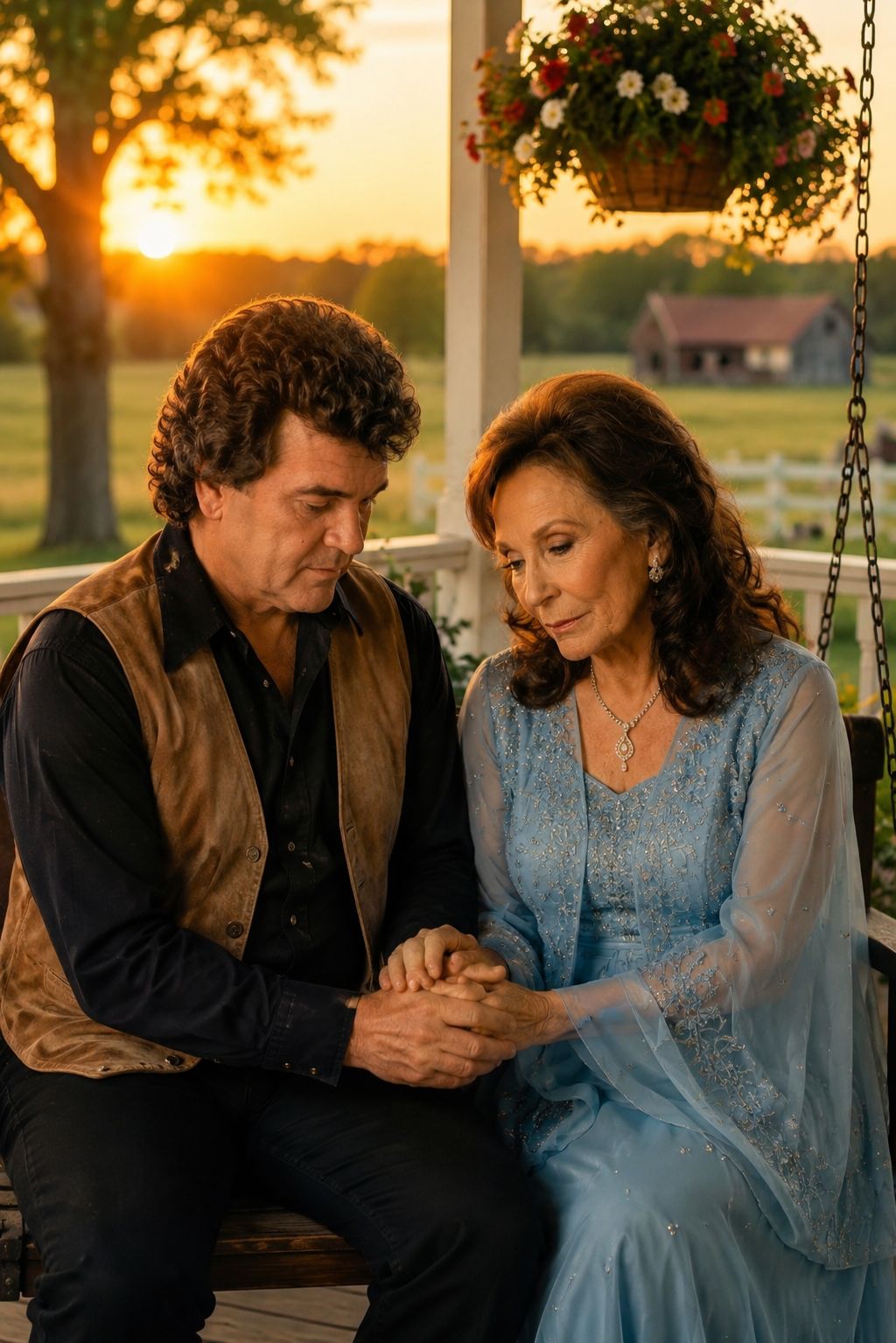
There are some country music partnerships that sound good together.
And then there are partnerships that make people believe they are hearing something private.
Loretta Lynn and Conway Twitty were the second kind.
When their voices met, it rarely sounded like two singers simply sharing a microphone. It sounded like a conversation between two people who understood heartbreak, marriage, temptation, regret, loyalty, and the complicated business of loving someone when life refuses to make things simple.
For decades, fans wondered what really existed behind that extraordinary chemistry.
Was it friendship? Professional trust? Something deeper? Or was the magic simply the result of two artists who understood exactly how to make a country song feel painfully real?
The answer may be less scandalous than some modern headlines suggest—but in many ways, it is far more moving.
The documented history shows that Loretta Lynn and Conway Twitty built one of country music’s most successful and believable partnerships, earning four consecutive CMA Vocal Duo of the Year awards from 1972 through 1975 and a Grammy for their classic duet “After the Fire Is Gone.”
And behind that success was something fans sometimes overlook:
trust.
THE PARTNERSHIP THAT SOUNDED TOO REAL TO BE ACTING
By the time Loretta Lynn began recording regularly with Conway Twitty, she had already established herself as one of country music’s most fearless storytellers.
Her songs were rarely polished fantasies.
She sang about poverty.
Marriage.
Motherhood.
Jealousy.
Infidelity.
The frustrations of women who were expected to remain silent.
Her honesty was precisely what made audiences believe her.
The Country Music Hall of Fame describes Lynn’s career as one built on her willingness to tell her own truth, transforming a difficult childhood and complicated life into music that connected with millions.
Then came Conway.
Twitty brought something completely different.
His voice was smoother, darker, and intensely dramatic. He had already transformed himself from a rock-and-roll performer into one of country music’s dominant stars, eventually collecting an extraordinary 40 Billboard No. 1 country hits.
Put those two voices together, and something unexpected happened.
They sounded believable.
Not perfect.
Believable.
That distinction changed everything.
“Their voices didn’t simply blend. They seemed to answer one another.”
Their first major duet, “After the Fire Is Gone,” became a No. 1 country hit in 1971 and launched one of the most successful duet partnerships in country music history.
The song dealt with emotional loneliness and a relationship that had lost its spark.
It was exactly the kind of subject that could make people wonder whether the singers were revealing more about themselves than they intended.
But that was their gift.
They could make fiction feel like memory.
THE “HIDDEN TRUTH” WAS NOT NECESSARILY A SECRET ROMANCE
This is where the story becomes important.
Over the years, the emotional intensity of their performances encouraged speculation about the nature of their relationship.
Some stories have suggested secret conflicts, jealousy, or romantic tension behind the scenes.
But there is no solid historical evidence establishing a secret romance between Lynn and Twitty.
In fact, the surviving record points toward something more complicated—and arguably more beautiful.
They were exceptionally close professional partners who understood one another’s musical instincts.
And their families were not strangers to one another.
Entertainment coverage has noted that Lynn maintained Twitty was a good friend not only to her but also to her husband, Oliver “Doo” Lynn. Their professional relationship even extended into business through United Talent.
That matters.
Because the real story isn’t necessarily about a secret love affair.
It is about two artists who knew how to create the illusion of one inside a three-minute country song.
That is an enormous difference.
LORETTA AND CONWAY KNEW HOW TO MAKE HEARTBREAK SOUND PERSONAL
Listen to songs like “Louisiana Woman, Mississippi Man.”
The song turns geography into romantic conflict.
She’s in Louisiana.
He’s in Mississippi.
The Mississippi River stands between them.
But neither character is willing to surrender.
The energy is playful, stubborn, romantic, and unmistakably country.
Then there was “Feelins’,” another recording that demonstrated how naturally their voices could move between vulnerability and tension.
And perhaps that is why listeners sometimes forgot they were watching performers.
Lynn and Twitty didn’t merely sing about relationships.
They acted them out through sound.
Lynn could sound wounded in one line and defiant in the next.
Twitty could answer with tenderness, arrogance, regret, or longing.
It was musical storytelling at its finest.
EVEN THEIR FAREWELLS CARRY A DIFFERENT WEIGHT TODAY
Conway Twitty died suddenly on June 5, 1993, after suffering a stomach aneurysm while traveling from a show in Branson, Missouri, toward Nashville for Fan Fair.
He was only 59.
The shock was enormous.
Twitty had spent decades appearing almost larger than life.
He had survived changing musical fashions.
He had reinvented himself.
He had continued producing major records deep into his career.
And suddenly, there was no next show.
No next duet.
No next conversation.
No next opportunity for Loretta and Conway to stand together and recreate that familiar musical argument.
That is the part that becomes heartbreaking when we look backward.
Because country music is full of songs about saying goodbye.
But sometimes the real goodbye doesn’t happen inside a song.
It happens when one artist is suddenly gone—and the other is left carrying the memories.
THE FINAL CHAPTER WAS NEVER JUST ONE SONG
One of the biggest misconceptions surrounding the pair is the idea that there must have been one dramatic final duet or one secret moment that explains everything.
History doesn’t really give us such a clean ending.
And perhaps that’s what makes their story more human.
Twitty’s final recording session was actually a duet with Sam Moore on “Rainy Night in Georgia,” and he had recorded material for an album coincidentally titled Final Touches before his death.
So when people talk about a “final” Loretta-and-Conway moment, caution is necessary.
The mythology can be powerful.
But the documented story is powerful enough without inventing a secret ending.
Their partnership had already become part of country music history.
YEARS LATER, THE EMOTION STILL HASN’T DISAPPEARED
Loretta Lynn died on October 4, 2022.
By then, decades had passed since she and Twitty ruled the country charts together.
Yet their music remained.
That’s the strange thing about great country duets.
The singers disappear.
The stage lights go dark.
The costumes become photographs.
The microphones become museum pieces.
But the voices remain trapped inside the recordings.
And every time the song begins again, the two artists are suddenly together.
Again.
Loretta’s voice rises.
Conway answers.
For three minutes, time disappears.
“They didn’t need a love story away from the microphone. They created one inside the music.”
That may be the hidden truth fans were searching for all along.
WHAT LORETTA AND CONWAY REALLY LEFT BEHIND
The greatest legacy of Lynn and Twitty isn’t a rumor.
It isn’t a backstage mystery.
It isn’t an alleged secret romance.
It is chemistry.
Real musical chemistry.
The kind that happens when two performers understand that the most powerful thing they can do is listen to each other.
The Country Music Hall of Fame recognizes their run of classic recordings—including “After the Fire Is Gone,” “Lead Me On,” “Louisiana Woman, Mississippi Man,” and “Feelins’”—as a defining part of their careers.
And their influence has lasted long beyond their deaths.
Even today, their descendants continue celebrating that musical legacy. Tre Twitty, Conway’s grandson, and Tayla Lynn, Loretta’s granddaughter, perform together as Twitty & Lynn, deliberately keeping the grandparents’ musical memory alive.
That is perhaps the most beautiful ending imaginable.
Not scandal.
Not mystery.
Continuation.
A song handed from one generation to another.
THE GOODBYE THAT COUNTRY MUSIC NEVER REALLY HEARD
There is something deeply emotional about knowing that two people who once seemed inseparable onstage eventually had to become memories.
Loretta Lynn could no longer turn toward Conway and wait for that familiar harmony.
Conway could no longer answer her voice.
But the recordings remain.
And that’s why their music still hurts.
Because somewhere between the first note and the final harmony, we remember what country music once did better than almost anything else:
It made ordinary human pain sound beautiful.
Loretta and Conway didn’t need to tell the world every secret.
They gave us something more enduring.
They gave us songs that made millions of people feel understood.
And perhaps that is the real hidden truth behind their story:
The magic was never that they were secretly something they couldn’t admit.
The magic was that, when they sang together, they made everyone listening believe—for just a few minutes—that they had lived the heartbreak themselves.
And after Conway was gone, those songs became something else entirely.
Not just duets.
Not just hits.
Memories.
Memories of a golden era when two unmistakable voices could meet in the middle of a country song—and make the whole world stop and listen.
Because sometimes, the most painful goodbye isn’t the one spoken aloud.
It’s the harmony that will never be sung again.
VIDEO: