 By admin
 INTRODUCTION:
There are some memories time refuses to erase.
For Rory Feek, the hardest ones are not necessarily found in photographs, old recordings, or the songs he once performed beside his wife, Joey Feek. They live somewhere deeper — in hospital rooms, quiet hallways, long nights, whispered prayers, and the unbearable moments when love means standing beside someone you cannot save.
More than a decade after Joey’s cancer diagnosis and ten years after her death, the story of Joey + Rory still carries an extraordinary emotional weight. Joey died on March 4, 2016, at just 40 years old, following a battle with cervical cancer. Throughout that journey, Rory documented much of what their family endured, creating an unusually intimate record of love, faith, fear, and goodbye.
And perhaps that is why memories of the hospital can be so powerful.
Because Rory wasn’t simply watching an artist struggle with illness.
He was watching his wife.
The woman he had married.
The woman who sang beside him.
The mother of their little girl.
The person he once expected would grow old beside him.
THE DAY EVERYTHING CHANGED
The beginning of Joey’s cancer journey was frightening enough.
In 2014, doctors discovered a mass on her cervix during what had been a routine appointment. Rory later recalled the moment they learned the diagnosis, including the heartbreaking sight of Joey’s doctor struggling to hold back tears.
Joey was diagnosed with cervical cancer.
A few days later, Rory and Joey met with a specialist in Nashville. Rory wrote that the mass was already four centimeters and growing aggressively, although doctors believed they had caught it early enough to recommend surgery.
The couple went forward.
They had a baby at home.
They had older children.
They had a farm.
They had music.
They had plans.
And suddenly, everything revolved around hospitals, doctors, treatments and the question no family wants to ask:
How much time do we have?
That question eventually became impossible to avoid.
“So we don’t have forever. We’ve got right now. And that’s enough.”
Those words, recalled from Rory’s writing during the darkest period of Joey’s illness, captured something that would define their final months: they stopped measuring life by the future and started measuring it by the present.
THE HOSPITAL WAS NEVER JUST A HOSPITAL
For many people, a hospital is simply a place.
For Rory, it became a collection of memories.
A door opening.
A doctor walking into a room.
A nurse checking vital signs.
A bed surrounded by equipment.
A husband sitting beside the woman he loved.
And every small moment carrying enormous emotional significance.
Years later, Rory has continued to write about Joey not only as the woman who died, but as the woman who lived.
That distinction matters.
In one of his most emotional reflections, Rory explained that the world had witnessed Joey’s final months — the illness, the pain, the goodbye — but he wanted people to understand the woman she was before cancer took over their lives.
That may be one of the most important parts of Joey’s legacy.
She was not merely a story about cancer.
She was not merely a story about dying.
She was a singer.
A wife.
A mother.
A daughter.
A woman of faith.
And a person who continued to find meaning even when the circumstances around her became almost unbearable.
“WHAT DO I DO WITH THESE MEMORIES?”
Grief is strange because it does not always arrive when we expect it.
Sometimes it comes at a grave.
Sometimes it comes through an old song.
Sometimes it comes when a familiar smell drifts through the house.
And sometimes it comes unexpectedly, years later, when an old photograph or video brings an entire chapter of life rushing back.
Rory has spoken openly about how difficult mourning became after Joey’s death.
In a 2016 interview with CBS, he admitted that despite having time to prepare for Joey’s death, the grief was heavier than he expected.
That observation reveals something many people misunderstand about terminal illness.
Knowing that someone may die does not make losing them painless.
Preparation does not cancel love.
It simply gives grief a longer runway.
And in Rory’s case, that grief was intertwined with thousands of memories from the hospital and the final months of Joey’s life.
THE HARDEST THING JOEY EVER DID
Perhaps the most heartbreaking part of their story wasn’t what Joey endured physically.
It was what she willingly sacrificed emotionally for her daughter, Indiana.
As Joey realized that her cancer might take her life, she began making a decision that Rory would later describe as one of the greatest examples of selflessness he had ever witnessed.
Indiana was still very young.
Joey had been her daughter’s entire world.
But Joey understood that Rory would have to become the child’s primary parent if she died.
So she deliberately began strengthening the bond between Rory and Indiana.
She gave Rory more opportunities to care for their daughter.
And she allowed herself to step back.
Rory later described this as an extraordinary act of love.
“Who has that kind of strength and character?”
It is difficult to read that question without understanding the sacrifice behind it.
A mother knew she might not be there to raise her daughter.
Instead of holding tighter, she began preparing her child to survive without her.
That is not weakness.
That is love in its most painful form.
SHE LEFT RORY WITH MORE THAN MEMORIES
Joey’s final months were devastating, but they also produced something unexpected.
A record.
Rory had been filming their life before the cancer diagnosis became the center of everything.
Looking back at that footage later, he discovered something almost impossible to comprehend: scenes from ordinary life that would eventually become priceless memories.
In his reflection on To Joey, With Love, Rory described watching footage of Joey and realizing that the world needed to see more than her final days. He wanted people to see her life, her personality, her joy and the woman she was before illness defined the final chapter.
That footage became more than a documentary.
It became a time capsule.
A way for Rory — and for Indiana — to return to moments that could never happen again.
And perhaps that is why the memories remain so powerful.
They hurt because they matter.
TEN YEARS LATER, THE LOVE IS STILL THERE
In March 2026, ten years after Joey’s death, Rory publicly remembered the anniversary of her passing.
He described Joey as the bravest person he had ever known and reflected on how her impact continued long after her death.
Ten years.
For some people, that might sound like enough time for grief to disappear.
But grief doesn’t work that way.
The calendar moves forward.
Children grow.
Families change.
Songs continue playing.
New chapters begin.
Yet love can remain exactly where it was.
That is the paradox of losing someone you deeply love:
You learn how to live without them without ever learning how to stop loving them.
AND THEN CAME ANOTHER HOSPITAL
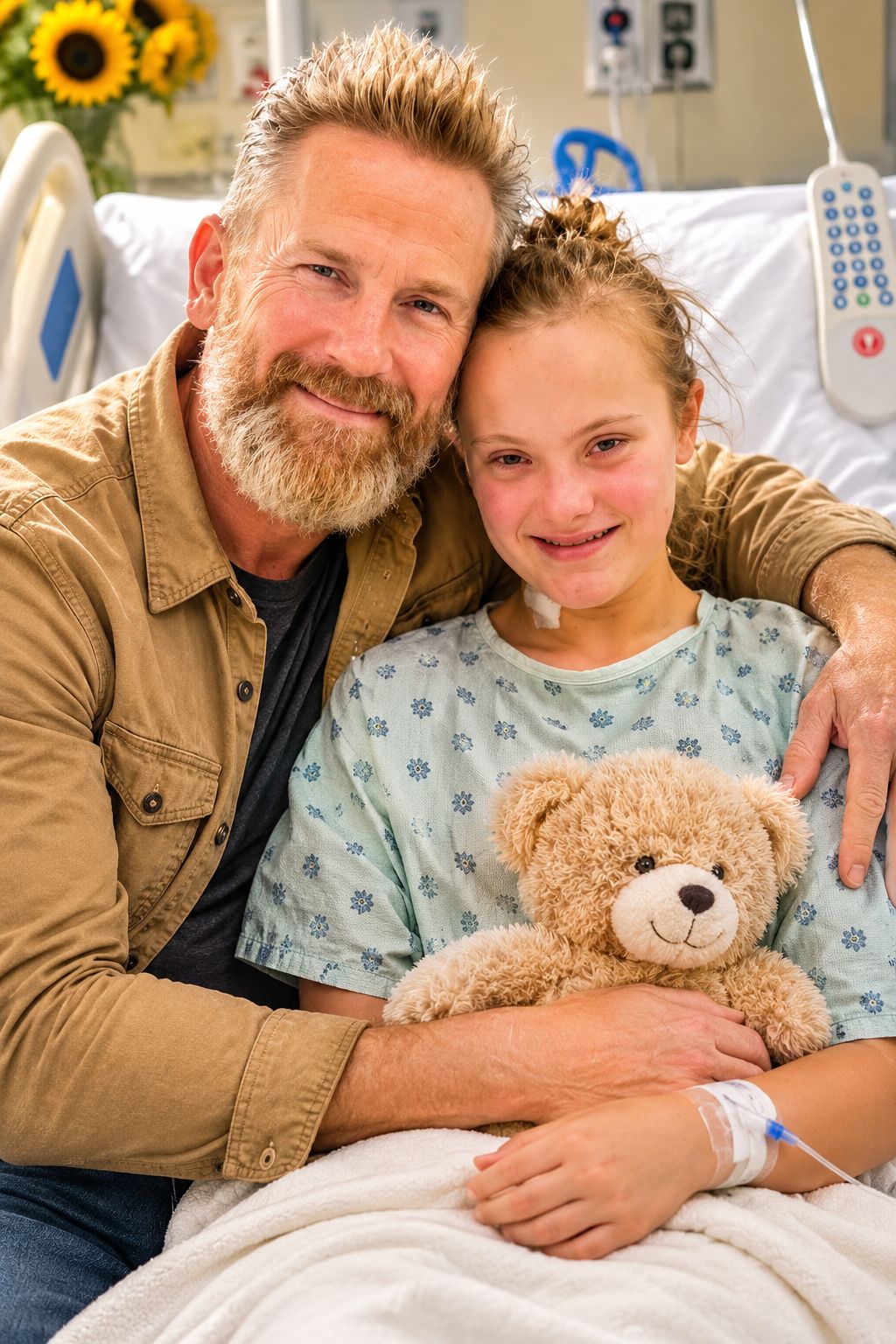
In 2026, Rory faced another deeply emotional hospital experience — this time involving his daughter Indiana.
Indiana, now 12, underwent open-heart surgery after doctors determined that a long-standing heart condition needed to be addressed. Rory shared updates about her hospitalization, fears, recovery and the overwhelming support the family received.
The circumstances were completely different from Joey’s cancer battle.
But emotionally, the hospital could not have been an ordinary place for Rory.
For a father who had once spent countless hours beside his dying wife, another hospital journey involving his child inevitably carried another layer of fear.
This time, however, there was a different ending.
Indiana came through surgery and was eventually discharged from the hospital, with Rory expressing gratitude for her recovery and for the letters and cards sent by strangers from across the country.
And perhaps that contrast makes the story even more powerful.
The hospital once represented the place where Rory had to prepare to lose Joey.
Years later, it became the place where he watched his daughter fight her way back home.
THE MEMORIES DON’T HAVE TO DISAPPEAR
Maybe the real meaning behind Rory’s heartbreaking reflections is not that the memories should disappear.
Maybe they never will.
And perhaps he doesn’t want them to.
The memories of Joey’s hospital rooms may contain pain, but they also contain love.
They contain conversations.
They contain courage.
They contain the last chapters of a marriage.
They contain a mother thinking about her daughter.
They contain a husband refusing to leave his wife’s side.
They contain the final evidence of two people choosing each other even when the future was slipping away.
That is why Joey’s story continues to resonate with country music fans.
It wasn’t only about fame.
It wasn’t only about music.
It was about ordinary people facing extraordinary heartbreak.
A LEGACY THAT OUTLIVED THE STAGE
Joey Feek’s voice remains part of country music history, but her greatest legacy may have nothing to do with charts or awards.
It may be found in the people who learned something about courage from watching her final months.
It may be found in Indiana, who continues to grow up carrying memories of a mother she lost far too young.
It may be found in Rory, who has spent years trying to transform grief into something meaningful.
And it may be found in every family that watched their story and recognized a little piece of their own.
“Love truly is an amazing thing.”
Rory used those words while describing the overwhelming kindness strangers showed his family during Indiana’s recent hospitalization.
But those words could just as easily describe the entire story of Joey and Rory.
Love did not prevent the heartbreak.
It did not stop the cancer.
It did not change the outcome.
But it gave meaning to the time they had.
And perhaps that is what Rory’s memories ultimately reveal.
The hospital was where some of his most painful memories were created.
But it was also where he witnessed Joey’s courage.
Where he saw her sacrifice.
Where he held onto hope.
Where he learned that sometimes love means fighting — and sometimes it means letting go.
Ten years after Joey’s death, Rory continues to carry those memories.
Not because he is trapped in the past.
But because the past contains someone he will always love.
And maybe that is the most heartbreaking truth of all:
Some memories hurt because they are the closest thing we have left to holding someone again.
VIDEO: