 By admin
 INTRODUCTION:
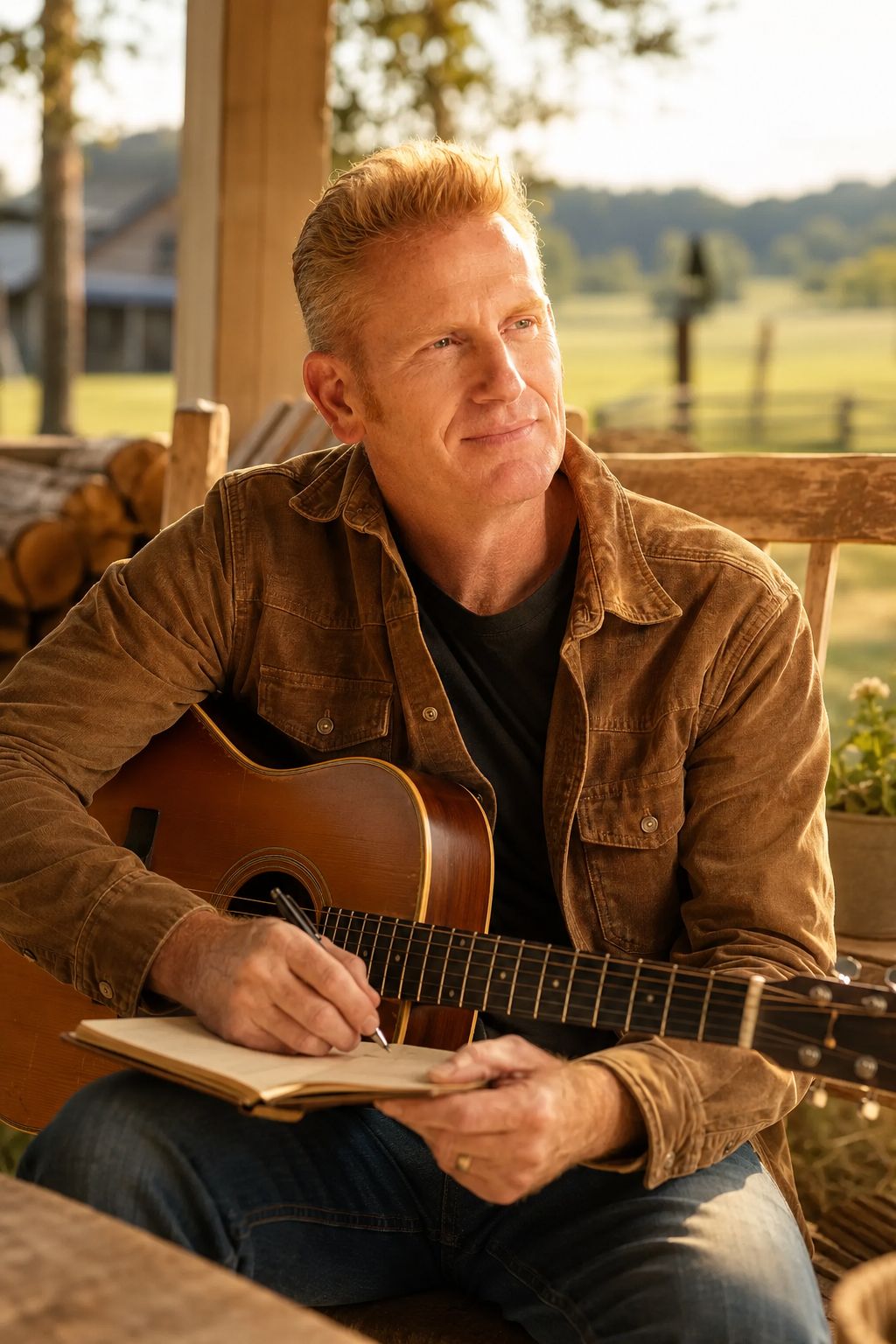
There are country songs that tell you a story.
And then there are lives that become the story.
For Rory Feek, the line between the two has never been easy to separate.
Long before audiences knew him as one half of Joey + Rory, Feek was a songwriter who understood the power of ordinary moments. A kitchen conversation. A quiet morning on the farm. A child’s laughter. A husband looking at his wife and realizing that time is moving far too quickly.
But eventually, those ordinary moments became something much larger.
They became a record of love.
They became a record of loss.
And eventually, they became This Life I Live.
What began as a personal blog in January 2014 eventually grew into books, videos, documentaries and a television series. In 2020, This Life I Live premiered as a television program on RFD-TV, bringing viewers into Feek’s family life and his continuing journey as a father, songwriter and storyteller.
But behind the television cameras was something much more intimate.
A man trying to understand his own life by telling the truth about it.
Before Television, There Was a Songwriter
Rory Feek’s career was built on storytelling.
He became known in Nashville as a songwriter whose songs were recorded by major country artists, and later found a new audience through his musical partnership with Joey Feek. Together, Joey + Rory became known not simply for their music, but for the authenticity of their relationship.
Their music felt lived-in.
There was no need to manufacture drama because real life was already providing more than enough.
The couple’s television journey had already begun years earlier with The Joey + Rory Show, which aired on RFD-TV from 2012 to 2014. Their farm became both home and creative space, eventually including a barn converted into a concert venue.
Then came 2014.
The couple decided to step away from their regular television and music schedule as they prepared for the birth of their daughter, Indiana.
Rory began writing This Life I Live as a way of documenting those days.
At first, it wasn’t intended to become a television empire or a major publishing project.
It was simply a man trying to remember.
And that distinction matters.
Because some of the most powerful stories aren’t created because someone wants fame.
They’re created because someone is afraid they’ll forget.
Then Life Changed Everything
The plan had been simple.
Slow down.
Prepare for a baby.
Live on the farm.
Enjoy a quieter season.
But life rarely respects the plans we make for it.
Their daughter, Indiana, was born with Down syndrome. Not long afterward, Joey was diagnosed with cervical cancer. What should have been a season defined by new parenthood became a period of uncertainty, faith, fear and ultimately devastating loss.
Rory began documenting the journey through his writing.
And readers came with him.
They saw the joy.
They saw the fear.
They saw the hospital rooms and the farm.
They saw a husband trying to remain strong while confronting the possibility that the woman he loved might not be there to watch their daughter grow up.
That is what made This Life I Live so different from a conventional celebrity memoir.
It wasn’t written from a safe distance.
It was being lived in real time.
“They’re not just about what’s happening in the stories, they’re usually ‘what’s really happening’ in them.”
That idea became central to Rory’s storytelling philosophy. He wasn’t merely recording events. He was trying to understand what those events meant.
And eventually, the writing became part of his healing.
Love Didn’t End When the Story Changed
Joey Feek died in 2016 at the age of 40 after a battle with cancer.
The loss devastated Rory, but it also changed the meaning of everything he had been documenting.
The photographs weren’t simply photographs anymore.
The songs weren’t simply songs.
The old television episodes weren’t simply entertainment.
They had become evidence that a life had existed.
A marriage had existed.
A family had existed.
And Joey’s voice, smile and presence had been preserved.
Rory later described the surviving footage of Joey as an extraordinary gift because it allowed her to remain part of the family’s story even after her death.
That may be one of the most heartbreaking truths about This Life I Live.
It is not really a story about forgetting someone.
It is about finding ways to keep remembering.
“In my mind and in my heart, she’s still here.”
Those words capture the emotional center of Rory’s journey.
He wasn’t pretending that grief didn’t exist.
He was learning how to carry it.
From Blog to Television
Eventually, Rory realized that he could no longer tell the story in exactly the same way.
Before Joey’s death, he could stand behind the camera while she stood in front of it.
They could create together.
They could capture each other.
After Joey was gone, that dynamic disappeared.
Rory was suddenly trying to be both the person living the story and the person documenting it.
That was nearly impossible.
So This Life I Live evolved.
Rory brought in a television crew, including many of the people who had worked on the earlier Joey + Rory program, and began transforming the blog into a weekly docu-series. The concept was not to create another polished celebrity reality show, but to continue documenting life as honestly and intimately as possible.
The television version premiered on RFD-TV in March 2020.
And suddenly, viewers weren’t just reading Rory’s words.
They were walking through his world.
They were seeing the farm.
They were seeing Indiana growing up.
They were seeing Rory’s family and community.
And, perhaps most importantly, they were seeing pieces of Joey that had been preserved in old footage.
The Most Powerful Character Was Never the Camera
There is a temptation when discussing celebrity documentaries to focus on production.
The cameras.
The network.
The episodes.
The audience.
But in Rory’s case, those things are almost secondary.
The real subject is time.
Time before Joey.
Time with Joey.
Time after Joey.
Time with Indiana.
Time spent trying to understand what comes next.
That is why This Life I Live resonates beyond country music.
You don’t have to know every Joey + Rory song to understand what it means to lose someone you love.
You don’t have to live on a Tennessee farm.
You don’t have to be a songwriter.
You simply have to understand that life can change in a single phone call.
And that sometimes the smallest memories become the most valuable ones.
Rory’s Storytelling Has Always Been About the Ordinary
One of the fascinating things about Rory Feek is that he has never needed an extraordinary setting to create emotional impact.
A farmhouse can be enough.
A front porch can be enough.
A schoolhouse can be enough.
A conversation between father and daughter can be enough.
His own description of his life has emphasized its ordinary nature, yet he argues that the larger context reveals something much more meaningful. That philosophy has been present in his writing for years.
And perhaps that’s why older country music fans connect so deeply with him.
Country music has always understood the emotional power of ordinary life.
A kitchen table can be as important as a concert stage.
A worn photograph can be more powerful than a trophy.
A goodbye can become more memorable than a hit record.
Rory simply carried that philosophy beyond songwriting.
He turned his life into the song.
More Than a Television Show
Today, This Life I Live represents something bigger than a television program.
It is a continuing archive.
In 2026, Rory’s own writing confirms that the project has continued to evolve across more than a decade. What began in 2014 as a personal blog has grown into books, videos and television, while Rory continues to use writing to process his experiences and understand where his life is going.
That evolution is important.
Because Rory’s story didn’t end when the television cameras stopped rolling.
It didn’t end when Joey died.
It didn’t end when the first book was published.
And it didn’t end when viewers finished an episode.
The story continues because life continues.
There are new seasons.
New places.
New questions.
New memories.
And new chapters that cannot yet be predicted.
The Legacy of Joey Is Still Everywhere
Perhaps the most moving element of Rory’s storytelling is the way Joey remains present without being artificially placed at the center of every story.
She exists in old footage.
In photographs.
In songs.
In family memories.
In the daughter they shared.
In the farm they built their life around.
And in the man Rory became after losing her.
That is a subtle but powerful form of remembrance.
Grief does not always mean constantly talking about the person who is gone.
Sometimes grief means continuing to live in a world they helped create.
Sometimes it means hearing their voice in an old recording.
Sometimes it means watching your child smile and seeing a familiar expression.
And sometimes it means opening an old hard drive and realizing you still have pieces of a life that you thought was gone forever.
Rory understood that.
“What a gift it has been … to have all the footage from The Joey+Rory Show still.”
That footage became more than entertainment.
It became a family archive.
A time capsule.
A bridge between yesterday and today.
Why Rory Feek’s Story Still Matters
Country music has always been at its strongest when it tells the truth.
Not the glamorous truth.
Not the promotional truth.
The human truth.
Rory Feek’s journey embodies that tradition.
He has written about love without pretending love protects us from loss.
He has written about family without pretending family life is easy.
He has written about faith without pretending faith eliminates questions.
And he has documented grief without allowing grief to become the final chapter.
That is why This Life I Live feels so personal.
It isn’t really asking viewers to watch Rory.
It’s asking them to recognize themselves.
The parent who worries about a child.
The husband or wife who knows time is precious.
The person who has lost someone and wondered how life could possibly continue.
The person who looks at an old photograph and suddenly feels twenty years disappear.
Those are the stories that never go out of style.
A Life Still Being Written
Rory Feek began This Life I Live because he wanted to capture a moment in time.
Instead, he captured an entire transformation.
A songwriter became a husband.
A husband became a father.
A family confronted illness.
A husband became a widower.
A father learned to raise a daughter through an unimaginable chapter.
And a personal blog became a television series watched by people who had never met the family but somehow felt as though they knew them.
That’s the strange power of storytelling.
When it is honest enough, someone else’s life can become a mirror.
And perhaps that’s the greatest legacy of This Life I Live.
It reminds us that our lives don’t have to be famous to be meaningful.
They don’t have to be perfect to be beautiful.
And they don’t have to end the way we imagined for the story to still be worth telling.
Rory Feek is still writing that story.
Still singing.
Still remembering.
Still raising a family.
Still looking forward.
And somewhere inside every new chapter is the echo of an old one — the voice, smile and memory of Joey, forever woven into the life they once shared.
Because some love stories don’t end when one person leaves.
They simply change the way they are told.
VIDEO: