 By admin
 INTRODUCTION:
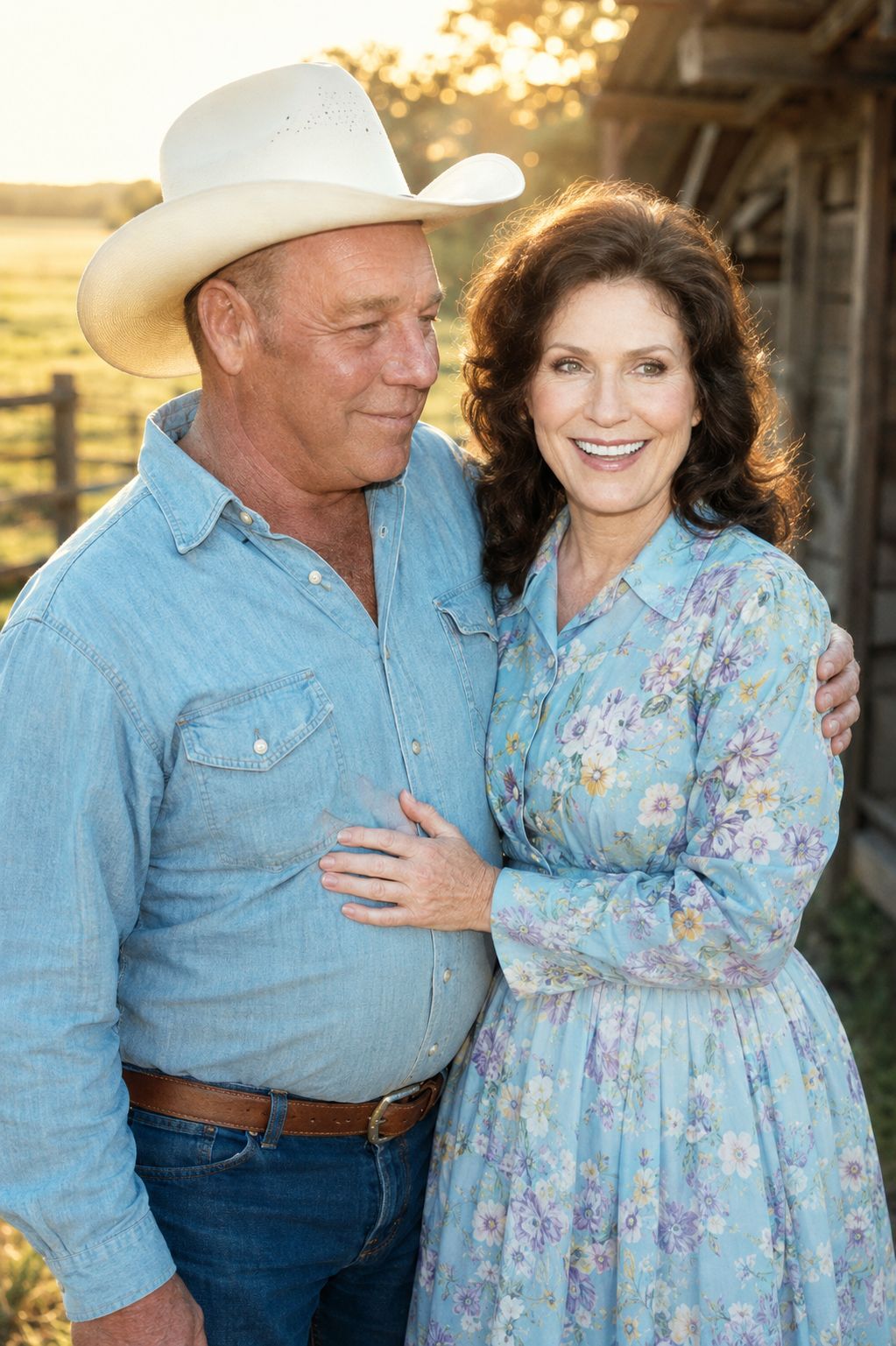
There are country songs about heartbreak.
There are country songs about betrayal.
And then there are songs that feel like someone has opened a bedroom door, turned on the light, and told the truth about what happened behind it.
Loretta Lynn built an extraordinary career out of that kind of truth.
Long before she became the legendary “Coal Miner’s Daughter,” before the awards, the sold-out concerts, the Grand Ole Opry appearances, and the Hollywood movie based on her life, Loretta Webb was a teenager from Butcher Hollow, Kentucky, who married Oliver “Doolittle” Lynn.
She was just 15.
Their marriage would last nearly five decades, until Oliver died in 1996. But longevity should not be confused with simplicity. Their relationship contained love, loyalty, arguments, drinking, infidelity, and episodes of violence. Loretta herself spoke openly about those contradictions rather than pretending her marriage had been a fairy tale.
And that is what makes her story so difficult—and so fascinating—to understand.
Because the question remains:
Why did Loretta stay?
She Was Barely More Than a Child When It Began
Loretta was born into a poor coal-mining family in eastern Kentucky. Her childhood was shaped by hard work, family, faith, and scarcity.
Then came Oliver Lynn.
The two met at a pie social, and within months they were married. The Country Music Hall of Fame notes that Loretta was only 15 when she married Oliver, who was returning from military service. Soon afterward, the young couple moved to Washington State in search of better opportunities.
It was a world away from the Kentucky hills she knew.
And suddenly Loretta had to grow up.
Motherhood came almost immediately. By her early twenties, she was already raising four children, and eventually the couple would have six.
Imagine being that young—far from home, raising a growing family, trying to survive financially, and attempting to understand marriage at the same time.
There was no glamorous Nashville life yet.
There was only survival.
And Oliver, for all his faults, was also one of the people who recognized something extraordinary in Loretta.
He heard her sing.
He believed she could do something with that voice.
He bought her a guitar.
He encouraged her to perform.
That detail matters because the man who could hurt her emotionally and physically was also intertwined with the birth of her musical identity. The contradiction would follow Loretta for the rest of her life.
The Man Who Inspired Her—and Hurt Her
Loretta never presented Oliver as a perfect husband.
Quite the opposite.
She openly described his drinking and womanizing. Biography.com reports that she recalled periods when his behavior left her uncertain about what kind of homecoming awaited her after touring.
That uncertainty eventually became part of the mythology surrounding Loretta Lynn.
She could stand on a stage in front of thousands of people and sing about women confronting cheating husbands, rivals, jealousy, and marital frustration.
But these weren’t abstract subjects.
They came from life.
The Songwriters Hall of Fame notes that Lynn became known for writing about subjects such as infidelity and divorce from a woman’s perspective at a time when doing so was unusual in country music.
Her marriage became material.
Her pain became melody.
Her anger became rhythm.
And her humor became a survival mechanism.
One of the clearest examples was “Fist City.”
The song wasn’t simply a fictional warning from a jealous wife. Lynn said it was inspired by a real woman she believed was making advances toward Doolittle while Loretta was performing.
Then came songs such as “Don’t Come Home a-Drinkin’ (With Lovin’ on Your Mind)” and “You Ain’t Woman Enough.”
These weren’t songs from a woman quietly accepting humiliation.
They were declarations.
She was angry.
She was funny.
She was wounded.
But she was still standing.
Loretta didn’t hide the cracks in her marriage. She turned those cracks into songs that millions of women recognized as their own.
But What About the Violence?
This is where Loretta’s story must be handled carefully.
Her own accounts describe physical fights between her and Oliver. Biography.com reports that she spoke of him hitting her and recalled moments when their arguments became physically violent. She also described fighting back.
That history should not be romanticized.
Violence inside a marriage is serious, regardless of who initiated a particular incident or how the couple later described it.
Yet Loretta herself often talked about the relationship in a language that seems almost impossible to reconcile with the painful details.
She loved him.
She fought with him.
She was furious with him.
She depended on him.
And, in her view, he depended on her.
That is the uncomfortable truth about many long relationships: human beings can experience love and harm within the same relationship.
Those feelings don’t automatically cancel each other out.
So Why Didn’t She Leave?
Loretta eventually gave several explanations.
One was the children.
She had six of them.
In an interview and later accounts, she acknowledged that her children were a major reason she stayed. She also expressed the belief that love was something worth fighting for.
But there was another reason that goes deeper.
Loretta’s entire identity had been built around that marriage.
She had met Oliver as a teenager.
She had become a mother with him.
She had moved across the country with him.
She had entered the music business with his encouragement.
He was part of the story before the world ever knew her name.
To walk away from him would not have meant simply ending a romance.
It would have meant dismantling the life she had spent decades constructing.
And there was still something else.
Despite everything, Loretta believed Oliver had helped create the conditions that allowed her to become Loretta Lynn.
Her later writing acknowledged that she did not believe she would have become the same singer without his influence and encouragement.
That doesn’t erase the harm.
It explains the attachment.
“We Fought Hard, and We Loved Hard”
Perhaps no description captures their relationship better than Loretta’s own characterization.
Their marriage was not polished.
It was not a Hollywood romance.
It was messy.
Country.
Passionate.
Sometimes painful.
Sometimes funny.
And sometimes deeply sad.
The Irish Times, reflecting on Lynn’s own recollections, noted that she drew extensively from the marriage in her songwriting and described the couple’s relationship as one in which they both “fought hard” and “loved hard.”
That contradiction became part of her artistic power.
Loretta didn’t sing like someone who had studied heartbreak from a distance.
She sang like someone who had lived it.
When she warned another woman away from her man, audiences heard confidence.
When she complained about a drunken husband coming home, they heard frustration.
When she sang about marriage, they heard someone who knew that love could be beautiful one minute and brutal the next.
The Marriage Also Helped Create a Revolutionary Country Voice
In the 1960s and 1970s, women in country music were often expected to occupy familiar roles.
The devoted wife.
The abandoned woman.
The heartbroken lover.
Loretta complicated all of them.
She could be vulnerable without being submissive.
She could be furious without losing her humor.
She could love her husband and still write songs criticizing men who behaved badly.
That was revolutionary.
The Country Music Hall of Fame describes Lynn as an artist who insisted on telling her own truth, transforming the difficult circumstances of her life into music that resonated far beyond her own experience.
And audiences responded.
Her songs became a kind of emotional courtroom where women could finally say things they weren’t always comfortable saying at home.
She Didn’t Pretend the Marriage Was Easy
Perhaps the biggest misunderstanding about Loretta Lynn is the idea that staying meant she didn’t recognize what was happening.
Her own words suggest otherwise.
She knew Oliver drank.
She knew he was unfaithful.
She knew their arguments could become explosive.
She knew what it meant to come home from the road and not know what waited for her.
And yet she also remembered the man who believed in her music.
The father of her children.
The young husband who bought her guitar.
The complicated man with whom she had shared almost 50 years.
That is why reducing their marriage to either “true love” or “a terrible relationship” misses the point.
It was both more complicated and more human than either label suggests.
When Oliver Became Sick, Loretta Stayed Beside Him
The final chapters of their marriage reveal another dimension of Loretta’s loyalty.
Oliver suffered serious health problems, including complications from diabetes and major medical issues. Loretta reduced her career commitments to care for him. He died in 1996 at age 69 after nearly 48 years of marriage.
By then, Loretta was no longer the frightened teenager who had followed her new husband away from Kentucky.
She was a country music institution.
She had already become one of the most important female voices in American music.
She could have walked away years earlier.
But she didn’t.
And when he was dying, she was there.
That doesn’t make the earlier pain disappear.
It simply shows how complicated her feelings remained.
After Oliver’s Death, the Silence Was Different
There is something heartbreaking about what happened after Oliver died.
Loretta had spent nearly her entire adult life with him.
Even after all the fighting, disappointment, and infidelity, his absence created an enormous void.
Her daughter Patsy later suggested that Loretta struggled to fully accept her father’s death. Loretta herself spoke about feeling as though she continued to see him everywhere.
That may be the strangest part of all.
Sometimes the person who causes the deepest pain is also the person whose absence creates the deepest silence.
Loretta Lynn’s Real Legacy Wasn’t a Perfect Marriage
It was something far more valuable.
She told the truth.
Loretta Lynn never needed her marriage to be perfect for her life to have meaning.
She transformed the contradictions into art.
She turned betrayal into lyrics.
She turned arguments into stories.
She turned anger into confidence.
And she gave women permission to laugh at painful situations, talk about subjects that were once considered taboo, and admit that love could be complicated.
The Country Music Hall of Fame ultimately remembered her as an artist whose willingness to tell her own story helped make her an American musical icon.
That is why her story still provokes such strong emotions.
Loretta wasn’t simply the woman who stayed.
She was the woman who survived, created, sang, argued, loved, and kept moving forward.
Her marriage to Oliver Lynn was neither a fairy tale nor a simple tragedy.
It was a long, complicated life shared by two deeply imperfect people.
And Loretta Lynn did something extraordinary with it.
She took everything—the good, the bad, the betrayal, the laughter, the tears—and put it into songs.
“She didn’t turn her pain into silence. She turned it into a voice.”
That may be the most enduring lesson of the Loretta Lynn story.
Not that every woman should stay.
Not that infidelity or violence should ever be excused.
But that a person’s life can contain contradictions without becoming meaningless.
Loretta Lynn came from a tiny Kentucky community and eventually became a voice heard around the world.
She carried her past with her.
She sang about it.
She challenged it.
And, most importantly, she refused to let anyone else tell her story for her.
That is why, decades later, audiences still listen.
Because beneath the rhinestones, the awards, and the legendary country songs was a woman who understood something painfully simple:
Sometimes the most powerful song isn’t about a perfect life.
It’s about telling the truth about the life you actually lived.
VIDEO: