 By admin
 INTRODUCTION:
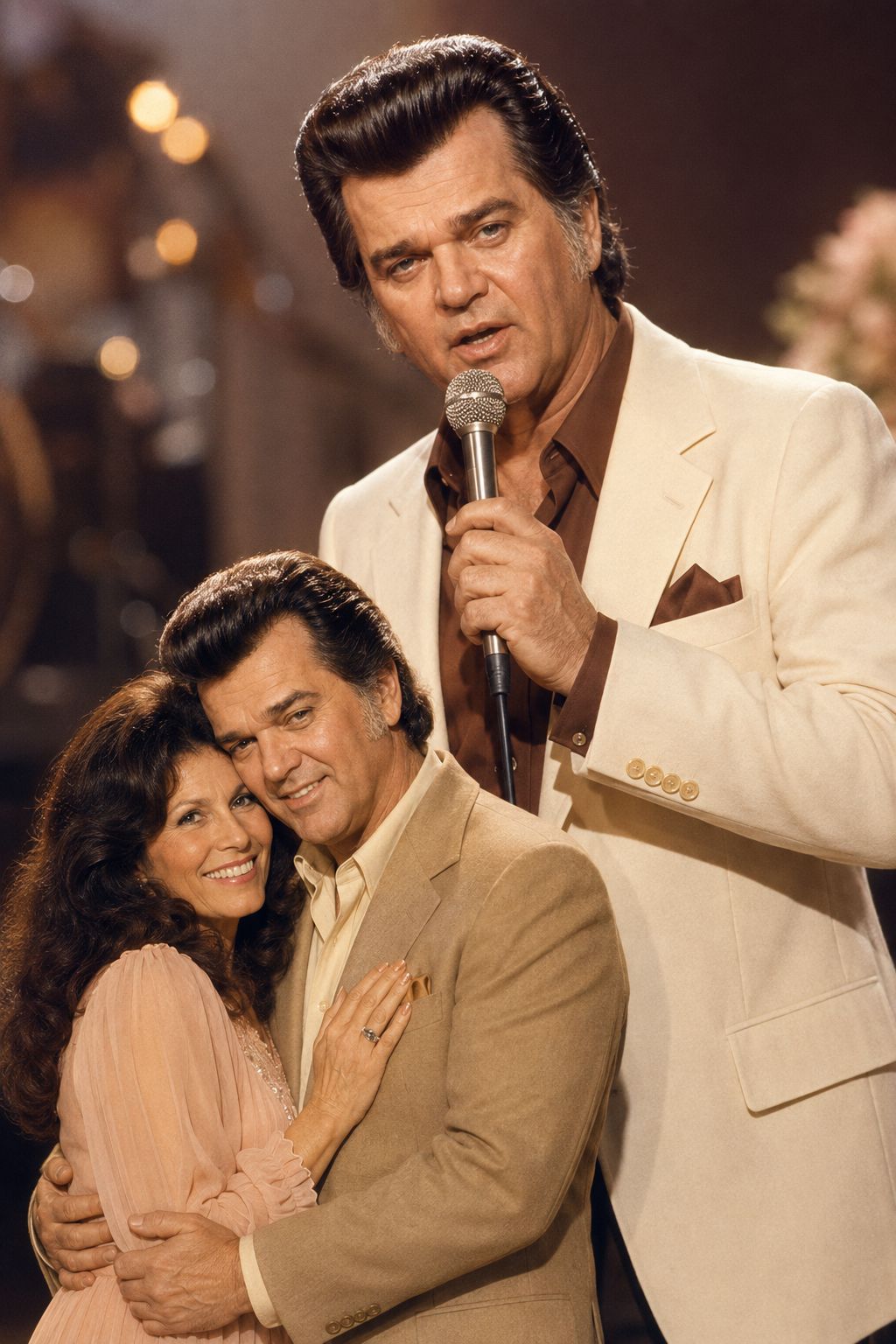
There are love songs that shout.
There are love songs that promise forever beneath a moonlit sky.
And then there are songs that whisper something far more intimate: I simply want to be close to you.
That quieter kind of love was one of Conway Twitty’s greatest strengths.
When Twitty sang about romance, his deep baritone could make even the simplest sentence sound like a confession whispered across a bedroom at midnight. His legendary 1980 hit “I’d Love to Lay You Down” became one of the clearest examples of that gift—a song that many listeners initially misunderstood because of its provocative title, but whose deeper message was about affection, familiarity, aging, and the enduring desire to remain close to the person who has turned a house into a home.
And that is where the real emotional power of the song begins.
THE LINE THAT SOUNDED SEDUCTIVE—BUT MEANT SOMETHING DEEPER
At first glance, the title “I’d Love to Lay You Down” sounds deliberately provocative.
That was part of the reason the record caused controversy when it reached radio. Some stations reportedly refused to play it, while radio commentator Paul Harvey criticized it as an example of what he considered overly sexualized country music.
But Twitty himself rejected the idea that the song was simply about casual lust.
He saw it differently.
To him, the song was about a long-married couple still finding romance in one another.
“I’d Love to Lay You Down” wasn’t about a random encounter. It was about keeping love alive between two people who had already shared a life.
That distinction changes everything.
Suddenly, the song is no longer about a man chasing someone new.
It becomes a husband looking at the woman he already knows—the woman who has shared the ordinary days, the difficult years, the quiet evenings—and still finding her beautiful.
That was a remarkably tender idea for a country song of its era.
CONWAY TWITTY KNEW THE POWER OF THE ORDINARY
The genius of the song is that it does not need diamonds, expensive dinners, or cinematic declarations.
Instead, it finds romance inside an ordinary home.
The woman in the song is not presented as some impossibly glamorous fantasy. She is seen in everyday surroundings, living an everyday life.
And that is precisely why the emotion works.
The song celebrates the woman standing in the kitchen.
The woman wearing an old cotton gown.
The woman whose hair is wrapped in curlers.
The woman who has stopped trying to look perfect because she feels at home.
Twitty’s narrator is essentially saying: I see you exactly as you are—and I still want you.
That is a much deeper confession than simple physical attraction.
It is acceptance.
It is familiarity.
It is desire that has survived ordinary life.
As one analysis of the song observed, Twitty was turning the familiar country-music narrative on its head: instead of a man becoming bored with an aging wife, the narrator insists that his affection remains.
“JUST HAVING YOU AROUND”
Perhaps the most revealing idea in the song isn’t the title at all.
It is the emotional explanation behind it.
Twitty’s narrator wants his partner to understand how much her presence means.
That sentiment is crucial because it transforms the song from something merely sensual into something profoundly emotional.
Physical closeness becomes a symbol for emotional closeness.
He isn’t simply saying, I want you tonight.
He is saying, Your presence still matters to me.
And there is a huge difference.
That difference is what makes the song resonate decades later.
Country music has always understood that love is often found in the small things: a familiar voice from another room, a shared cup of coffee, an old photograph, a hand reaching across the bed.
Twitty understood that language instinctively.
His official biography describes him as an artist whose communication came primarily through music rather than extensive stage banter. His songs became his conversations with the audience.
THE MOST BEAUTIFUL PART COMES WITH AGE
The song becomes even more powerful when it looks toward the future.
Time is coming.
Faces change.
Hair turns gray.
Youth disappears.
And yet the narrator imagines love remaining.
That may be the most romantic promise in the entire song.
Not I’ll love you while you’re young.
Not I’ll love you while you’re beautiful by society’s standards.
But essentially: I’ll still see the woman I love when time has changed the outside.
That is an idea that becomes more meaningful with every passing year.
The deepest love isn’t always the love that survives one perfect night. Sometimes it’s the love that survives decades of ordinary mornings.
This is where Conway Twitty’s performance becomes especially important.
His voice carried experience.
He didn’t sound like a young man discovering desire for the first time. He sounded like someone who understood that love has layers—attraction, companionship, memory, forgiveness, familiarity, and commitment.
That maturity gave his romantic songs a distinctive emotional weight.
CONWAY TWITTY’S PRIVATE MYSTIQUE MADE THE SONG EVEN STRONGER
There was another reason Twitty’s romantic performances felt so intimate: he deliberately kept his private life largely behind the curtain.
A 1991 Los Angeles Times profile noted that Twitty was protective of his privacy and preferred allowing his songs to communicate rather than explaining everything about himself publicly. He even described maintaining a certain “mystique” around his personal life as part of his career.
That decision was brilliant.
Because Twitty never completely explained himself, listeners could place their own lives inside his songs.
Was the narrator Conway?
Was it a fictional husband?
Was it something he had personally experienced?
The mystery remained.
And perhaps that is exactly how it should be.
A great country singer doesn’t always tell you what to feel.
He gives you enough truth to make you remember your own story.
WHY THE SONG STILL FEELS SO PERSONAL
Listen to the song today, and its emotional center becomes surprisingly universal.
It isn’t really about a particular decade.
It isn’t about fashion.
It isn’t even entirely about physical intimacy.
It is about wanting to remain wanted.
That feeling never becomes outdated.
For someone married for forty years, the song can sound like a promise.
For someone who has lost a spouse, it can sound like a memory.
For someone who has watched parents grow old together, it can sound like a portrait of lasting devotion.
And for someone who has experienced heartbreak, it can represent the kind of love they wish they had known.
That’s the magic of classic country music.
The words may belong to a fictional character, but the emotions belong to everyone.
THE LEGACY OF A MAN WHO KNEW HOW TO SAY WHAT PEOPLE COULDN’T
Conway Twitty once explained his approach to selecting material in remarkably revealing terms: if a song expressed something men wanted to say but didn’t know how to say, he knew it was in the right territory.
That may be the key to understanding his entire romantic catalog.
Twitty wasn’t merely singing about love.
He was giving people language for feelings they struggled to express.
His voice could turn regret into “Hello Darlin’.”
It could turn forbidden attraction into “You’ve Never Been This Far Before.”
And with “I’d Love to Lay You Down,” it could turn long-term companionship into something intimate and deeply romantic.
His official biography lists the song among the defining milestones of his career, alongside “Hello Darlin’,” “Linda On My Mind,” and “That’s My Job.”
The song also became Twitty’s 24th No. 1 country single, confirming that listeners were willing to embrace its unusual mixture of sensuality and tenderness.
THE REAL CONFESSION WAS NEVER ABOUT SEX
Perhaps the biggest misunderstanding surrounding the song is that people stopped at its title.
But the title is only the doorway.
Walk through it, and the song becomes something much softer.
It is about wanting to whisper.
Wanting to reassure.
Wanting to be near someone.
Wanting that person to know they are still desired.
And, most importantly, wanting them to understand that their presence matters.
That’s why the song has endured.
Because beneath Conway Twitty’s famous baritone and the controversy surrounding the title was a remarkably simple emotional truth:
Love doesn’t always need a grand declaration. Sometimes it simply needs someone to say, “I still want to be close to you.”
And maybe that’s why Conway Twitty’s voice still feels so powerful.
He understood that the most convincing love stories aren’t always about the beginning.
Sometimes they’re about everything that comes after.
The years.
The wrinkles.
The ordinary rooms.
The familiar face.
The person who has seen you at your best—and your worst—and is still there.
That is the quiet love Conway Twitty captured so beautifully.
And decades later, it may be the part of the song listeners remember most.
Not the controversy.
Not the provocative title.
Not even the sensuality.
But the promise underneath it all:
After all these years, I still choose you.
And in country music, few confessions are more powerful than that.
VIDEO: