 By admin
 INTRODUCTION:
There are country songs that sound like love letters.
Then there are country songs that sound like confessions.
Conway Twitty was a master of the second kind.
With a voice that could make a simple sentence feel like a secret whispered after midnight, Twitty built an extraordinary career around complicated love: husbands who regretted what they had done, wives who knew more than they were being told, old flames who returned at exactly the wrong moment, and hearts that refused to behave according to the rules.
But one of his most unforgettable songs created an especially uncomfortable question.
Was Conway Twitty simply writing fiction—or was there a real woman behind the emotion?
The song was “Linda on My Mind,” a self-penned 1975 No. 1 hit. Twitty wrote the song himself, one of the many major country successes that demonstrated why he was more than simply a spectacular interpreter of other people’s material. His official biography credits him with writing 19 of his No. 1 songs.
And “Linda on My Mind” was not exactly a conventional love song.
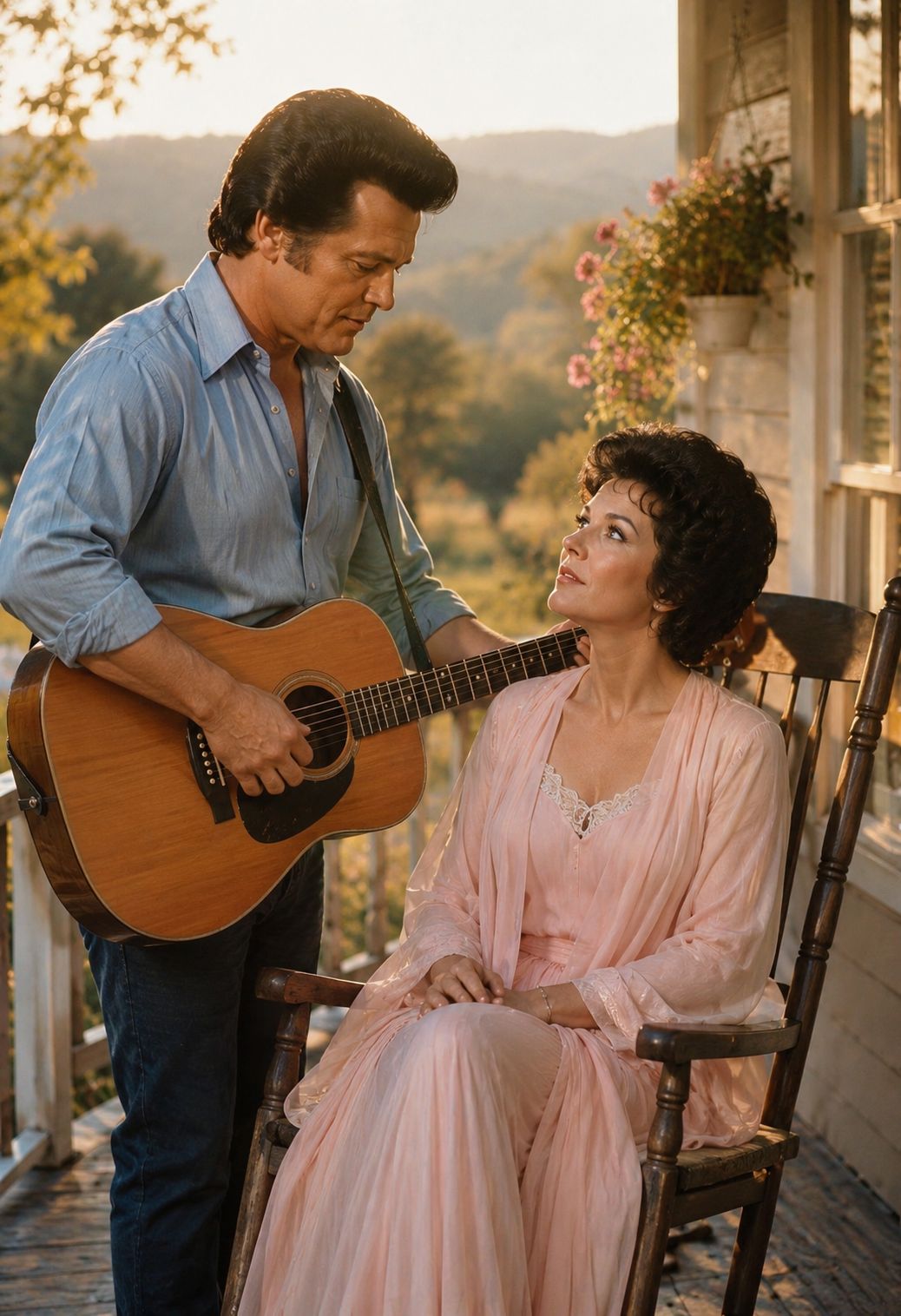
It began with a man lying beside his current partner while thinking intensely about another woman.
That premise alone was enough to make listeners wonder.
Who was Linda?
And more importantly, was Linda real?
A Love Song That Starts With Betrayal
The genius—and discomfort—of “Linda on My Mind” is that Twitty did not begin with romance.
He began with guilt.
The narrator is physically beside one woman while emotionally somewhere else. His attention has already drifted toward Linda, a woman whose feelings for him have apparently become impossible to ignore.
The emotional triangle is brutal because nobody gets to remain innocent.
The wife or girlfriend beside him realizes something is wrong. Linda has confessed feelings. The narrator is caught between the security of the relationship he already has and the temptation of something new.
It is classic Conway Twitty territory.
As one contemporary analysis of Twitty’s music observed, his songs repeatedly explored the contradiction between wanting domestic security and having a wandering eye.
And that contradiction was precisely what made his records so powerful.
He wasn’t singing about perfect men.
He was singing about men who were desperately trying to explain themselves after they had already made a mess.
“Sometimes the most painful country songs aren’t about losing someone. They’re about realizing you may be the reason you lose them.”
That is the emotional center of “Linda on My Mind.”
But Who Was Linda?
This is where the story becomes especially intriguing.
According to accounts of the song, Twitty never definitively established that Linda was a specific real-life woman. One later retrospective noted that the mystery surrounding Linda’s identity helped fuel the song’s fascination.
That uncertainty is important.
Because once a songwriter sings about a woman named Linda with such specificity, listeners naturally begin searching for the real person behind the name.
Was she an old girlfriend?
A friend?
A fictional character?
A composite created from imagination?
Or was Twitty simply doing what great country songwriters have always done—taking a universal emotional situation and turning it into a three-minute drama?
There is no reliable evidence that the song should be treated as a literal diary entry about a particular woman.
And that distinction matters.
The song was written by Twitty, but that does not mean every event inside the story happened to him exactly as sung.
Country music has always blurred that line.
Artists write from experience, observation, imagination and emotional truth. Sometimes the most convincing songs are not autobiographical in a literal sense.
But “Linda on My Mind” sounded convincing enough to make people wonder.
The Woman Beside Him Is Almost as Important as Linda
Perhaps the most heartbreaking character in the song isn’t Linda at all.
It is the woman lying beside the narrator.
She is physically present.
But emotionally, she has already begun to lose him.
That is a devastating idea because there doesn’t have to be physical cheating for a relationship to begin collapsing.
Sometimes the betrayal starts in the mind.
Twitty understood that.
His songs frequently placed listeners inside the uncomfortable space between desire and responsibility. His own explanation of his approach to songs was revealing: he said he wanted material that expressed things men might want to say to women but didn’t know how to say.
That philosophy explains much of Twitty’s enormous appeal.
He wasn’t merely singing about romance.
He was giving audiences a voice for feelings they might never admit aloud.
And “Linda on My Mind” gave that voice to an especially dangerous feeling.
The feeling of wanting someone else while still lying beside the person who loves you.
Why Listeners Took the Story Personally
By 1975, Twitty had already established himself as one of country music’s most dependable hitmakers.
But his specialty was not uncomplicated romance.
His signature 1970 hit “Hello Darlin’,” which he wrote himself, had already demonstrated his extraordinary ability to transform regret into commercial gold. The song became one of his defining recordings and spent four weeks at No. 1 on the country chart.
Then came songs that pushed even further into adult relationships, desire and moral uncertainty.
“Linda on My Mind” fit perfectly into that world.
The song wasn’t asking listeners to approve of the narrator.
It was asking them to understand him.
That is a very different thing.
And perhaps that is why the record remains fascinating decades later.
The Real Mystery Wasn’t Linda
The biggest mystery surrounding the song may not actually be whether Linda existed.
It may be why Twitty could make such an uncomfortable story sound so emotionally sincere.
He had an extraordinary gift for inhabiting flawed characters.
He could make regret sound intimate.
He could make temptation sound dangerous.
He could make a bad decision sound like the beginning of an inevitable tragedy.
And that was part of his genius.
Twitty himself understood the importance of choosing material that connected with women. In a Los Angeles Times interview, he explained that women were especially important to his songwriting instincts because he wanted songs to say things they would respond to emotionally.
So perhaps “Linda on My Mind” wasn’t intended as a coded confession at all.
Perhaps it was intended as something even more universal:
A warning.
The Conway Twitty Formula: Love, Guilt and Consequences
Twitty’s catalog repeatedly returned to the same emotional battlefield.
A man wants something.
He gets it.
Then he realizes what it will cost.
That pattern appears in songs such as “How Much More Can She Stand,” a 1971 No. 1 hit written by Harry Compton rather than Twitty himself. The song’s narrator admits to repeated infidelity while insisting he loves his wife, creating an intentionally uncomfortable portrait of a man who knows exactly how much pain he is causing.
That song demonstrates an important point about Twitty’s career.
He didn’t necessarily need to write every complicated story himself.
He knew how to find them.
He knew how to recognize the emotional pressure point.
Then he could step behind the microphone and make the audience believe the character was sitting beside them.
But “Linda on My Mind” was different because Twitty himself wrote it.
That made the emotional questions feel more personal.
A Song That Refused to Give Listeners a Comfortable Answer
Great country music rarely gives easy answers.
“Linda on My Mind” certainly doesn’t.
Who should the narrator choose?
Should he stay with the woman beside him?
Should he leave for Linda?
Was Linda worth destroying an existing relationship?
Was the narrator genuinely in love—or simply seduced by the excitement of forbidden possibility?
And was any of it real?
Twitty wisely left those questions hanging.
That ambiguity is part of the song’s power.
Because every listener brings their own history to it.
Someone who has been cheated on hears betrayal.
Someone who has fallen for the wrong person hears temptation.
Someone who has left a relationship hears liberation.
And someone who has stayed hears the devastating question:
How do you know when the person beside you has already left you emotionally?
Why the Song Still Feels Dangerous
More than five decades later, “Linda on My Mind” still doesn’t sound particularly safe.
That’s a compliment.
Country music has changed dramatically since 1975, but the emotional machinery hasn’t.
People still fall in love at the wrong time.
People still compare the person they have with the person they want.
People still lie.
People still stay.
And people still wonder whether the person sleeping beside them is thinking about somebody else.
That is why Conway Twitty’s music refuses to disappear.
His greatest songs weren’t simply about an era.
They were about human weakness.
And weakness doesn’t go out of style.
The Final Twist
So, did Conway Twitty really write “Linda on My Mind” for a particular woman?
The safest answer is that there is no solid evidence proving that Linda was a specific real-life woman who inspired the entire story. What is documented is that Twitty wrote the song himself and turned its complicated love triangle into one of his signature hits.
And maybe that is better.
Because if Linda was fictional, Twitty accomplished something remarkable.
He created a woman who never needed to exist for millions of listeners to recognize her.
She could be the person from your past.
The person you secretly wanted.
The person your spouse was afraid of.
Or simply the person who represents the life you imagined but never lived.
That’s the magic of Conway Twitty.
He could take a morally messy situation, give it a name, a melody and a trembling voice—and suddenly the listener wasn’t judging the characters anymore.
They were wondering what they would do.
“The most haunting part of a Conway Twitty song is rarely the goodbye. It’s the moment before it—the moment when everyone knows something has changed, but nobody is ready to say it.”
And that is why “Linda on My Mind” remains such an unforgettable piece of country storytelling.
The woman beside him had every reason to wonder.
Linda had every reason to hope.
And Conway Twitty’s narrator had every reason to be afraid of what would happen next.
Because sometimes the most dangerous person in a love triangle isn’t the other woman.
It’s the person who can’t decide where his heart belongs.
VIDEO: