 By admin
 INTRODUCTION:
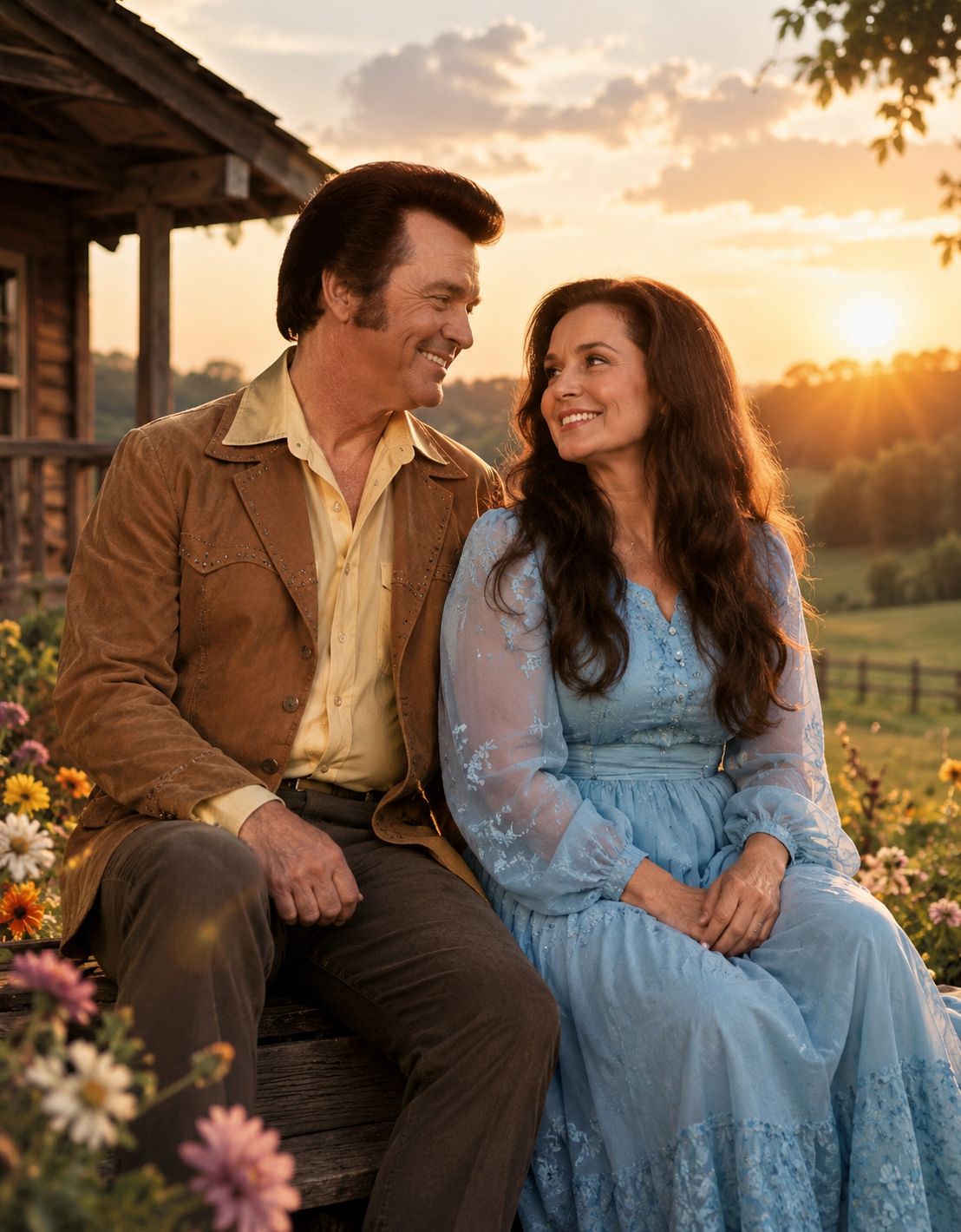
There are some friendships in country music that can be explained with photographs, interviews, awards, and chart numbers.
Then there are friendships that seem to exist in the silence between two people.
Conway Twitty and Loretta Lynn had one of those.
For years, audiences watched the two country giants stand beside each other onstage, trading glances, teasing one another, singing about desire, heartbreak, temptation, marriage, and forbidden love. Their voices seemed to fit together almost too naturally. Their performances carried a warmth and intimacy that made millions of listeners wonder whether there was something more behind the music.
But Loretta Lynn was remarkably clear about it.
“Everybody thought me and Conway had a thing going. And that’s the farthest from the truth,” Lynn said, explaining that she loved Conway as a friend and that her husband, Doolittle “Doo” Lynn, respected him as well.
And yet, the rumors never completely disappeared.
Perhaps that is because the real story was more powerful than the rumor.
It was the story of two extraordinary artists who found something increasingly rare in show business: trust without possession, affection without scandal, and chemistry without betrayal.
They Were Never Supposed to Become “Conway and Loretta”
Before they became one of country music’s defining duos, Conway Twitty and Loretta Lynn were already major stars.
Lynn had built her reputation on songs that gave women a powerful voice in a genre that had often been dominated by men. Twitty, meanwhile, had traveled an unusual road from rock and pop success into country music, eventually becoming one of the genre’s most dominant hitmakers.
Their professional partnership began after producer Owen Bradley brought them together. They eventually discovered that the chemistry audiences would later obsess over was not manufactured in a studio.
It was simply there.
According to archival material preserved by UNLV, the two first sang together for fun while touring Europe in 1969. They quickly discovered that their voices worked extraordinarily well together, while also recognizing the importance of protecting their individual careers.
That decision mattered.
They did not immediately turn themselves into a full-time novelty act.
Instead, they built something carefully.
And that restraint may have been one of the secrets of their success.
The Songs Said What They Didn’t
In 1971, “After the Fire Is Gone” became their first No. 1 duet.
It was only the beginning.
They eventually recorded 11 studio albums together and produced five No. 1 country singles. They were named CMA Vocal Duo of the Year four consecutive times, from 1972 through 1975.
Their repertoire was filled with complicated emotional territory.
“Lead Me On.”
“Louisiana Woman, Mississippi Man.”
“As Soon as I Hang Up the Phone.”
“Feelins’.”
These were not songs about polite relationships.
They were about temptation, longing, conflict, regret, and the emotional messiness of being human.
And that created an illusion.
The audience heard two people singing as though they were revealing secrets to each other.
But perhaps the greatest trick of their partnership was that the emotional truth belonged to the characters in the songs, not necessarily to the performers themselves.
The closer their characters sounded, the more audiences wanted to believe the story was real.
That tension became part of the mythology.
“Louisiana Woman, Mississippi Man” Made the Illusion Even Stronger
Few songs captured their chemistry more vividly than “Louisiana Woman, Mississippi Man.”
The premise was simple and irresistible: two lovers separated by geography but unable to stay apart.
Lynn represented the Louisiana woman.
Twitty represented the Mississippi man.
Together, they sounded like two people who had been waiting all their lives to find each other.
The song became a No. 1 country hit, and the album of the same name also reached No. 1.
For listeners, it was easy to forget that they were watching two professionals performing a story.
That was the point.
Country music has always depended on emotional believability. The greatest singers don’t simply perform a lyric—they make you forget there is a microphone between you and the story.
Twitty and Lynn were exceptionally good at that.
But What Happened Offstage Was More Important
The most fascinating part of their relationship may not have been what they said in interviews.
It was what they consistently refused to turn into a spectacle.
Twitty described Lynn as one of his best friends in the music business and explicitly rejected the idea that anything romantic had happened between them.
Lynn expressed essentially the same sentiment.
That consistency matters.
Because if there had been some hidden scandal, the story would probably have become another chapter in celebrity gossip.
Instead, their friendship survived because neither seemed interested in exploiting the mystery surrounding them.
They allowed the music to create the fantasy while their real lives remained their own.
And perhaps that is why the friendship became so enduring.
Conway Understood the Value of Silence
Conway Twitty was not a performer who needed to explain everything.
His official biography describes a man who believed his communication with audiences happened through his music rather than excessive stage conversation.
That philosophy helps explain why his partnership with Lynn worked so beautifully.
Twitty understood that mystery could be more powerful than explanation.
He didn’t need to tell the audience what a song meant.
He simply sang it.
He didn’t need to explain every look exchanged with Loretta.
The audience supplied its own story.
That is an extraordinary quality in entertainment: knowing when not to speak.
And Loretta understood it too.
She didn’t need to fight every rumor.
She simply continued singing.
Their Friendship Was Strong Enough to Survive the Fantasy
There is a strange irony in the story of Conway and Loretta.
The very thing that made people question their relationship was also evidence of how comfortable they were with each other.
Real chemistry cannot always be manufactured.
But chemistry does not automatically mean romance.
Sometimes it means two artists understand each other’s timing.
They know when to lean into a line.
They know when to pause.
They recognize a facial expression before it happens.
They know how to make the other singer sound better.
That kind of connection is its own form of intimacy.
And in country music, where emotional honesty is everything, it can be just as powerful as romance.
They didn’t need to be lovers to sound like people who had survived something together.
That was their gift.
The Awards Confirmed What the Audience Already Knew
The industry noticed.
The Country Music Association named Lynn and Twitty Vocal Duo of the Year from 1972 through 1975.
Their success wasn’t simply about two famous people appearing on the same record.
They had become a genuine musical unit.
Lynn brought her direct, unmistakably human storytelling.
Twitty brought his smooth, controlled delivery and emotional restraint.
She could sound wounded without sounding defeated.
He could sound dangerous without raising his voice.
Put them together, and the contrast became combustible.
That contrast is one reason their records remain recognizable decades later.
The Final Goodbye Changed Everything
Conway Twitty died in 1993.
Loretta Lynn lived for decades afterward, carrying memories of the era when country music was changing and when she and Conway had helped define its sound.
Their full-time touring partnership had ended long before his death, but the emotional imprint remained.
The Loretta Lynn website later described how her granddaughter Tayla Lynn and Twitty’s grandson Tre Twitty came to celebrate the musical legacy of their grandparents. Loretta herself helped support that connection and recalled Conway with affection.
That detail is deeply moving.
Because it suggests that what remained was not scandal.
Not regret.
Not some secret romance finally exposed.
It was memory.
Family.
Music.
And friendship.
The Legacy Was Bigger Than the Rumor
Today, the descendants of Conway and Loretta continue performing the songs their grandparents made famous. Tre Twitty and Tayla Lynn have carried that musical connection to new audiences, even performing “Louisiana Woman, Mississippi Man” together at the Grand Ole Opry.
That is perhaps the clearest answer to the question of what Conway and Loretta meant to each other.
Their relationship did not disappear when the records stopped being made.
It became family history.
It became musical inheritance.
It became a story passed from one generation to another.
And perhaps the most beautiful part is that nothing sensational had to be uncovered.
The truth was already enough.
Conway Twitty and Loretta Lynn were two extraordinary country artists who trusted each other enough to create the illusion of forbidden love without allowing that illusion to destroy their real friendship.
Their songs made millions believe they were witnessing something private.
But what they were really witnessing was something just as rare:
two people who knew exactly where the performance ended and the friendship began.
Some legends are built by what people say.
The Conway Twitty and Loretta Lynn legend was built, in part, by everything they never had to say out loud.
And maybe that is why their music still feels alive.
Because every generation hears something different in those voices.
Some hear romance.
Some hear heartbreak.
Some hear humor.
Some hear two old friends having fun.
And some hear the quietest truth of all:
The strongest bonds don’t always need a name.
They only need time, trust, and a song that refuses to be forgotten.
VIDEO: