 By admin
 INTRODUCTION:
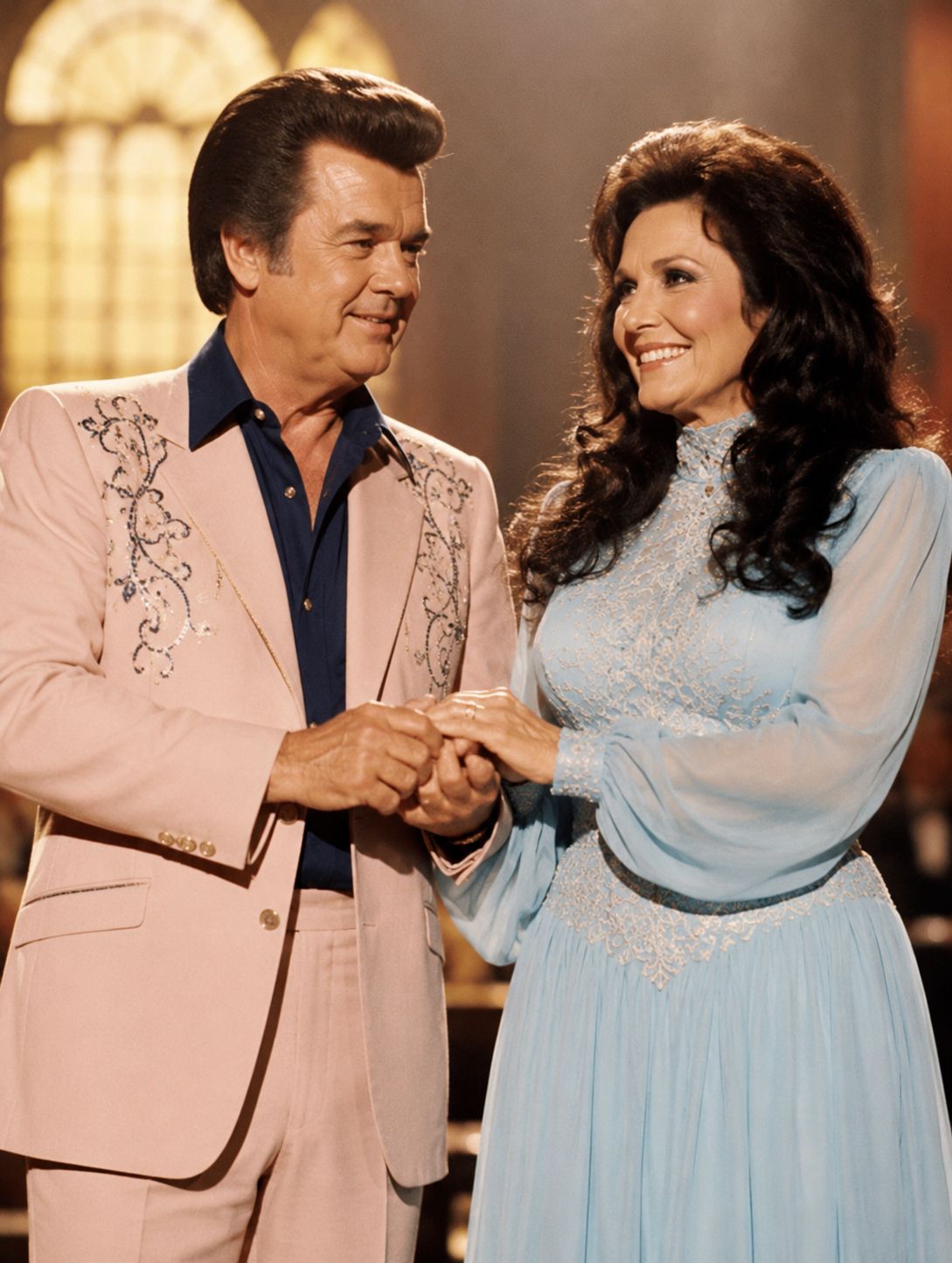
There are friendships in country music that are remembered because they produced great songs. And then there are friendships that become part of the emotional fabric of the music itself.
Conway Twitty and Loretta Lynn had one of those rare bonds.
For years, audiences watched them stand shoulder to shoulder beneath the lights, trading verses, glances, smiles, and harmonies that seemed almost too natural to be rehearsed. Their voices fit together so perfectly that millions of listeners assumed there had to be something more behind the scenes.
But Loretta Lynn consistently rejected that idea.
Their relationship was not a secret romance. It was something, in some ways, more enduring: genuine friendship, professional trust, family affection, and a shared understanding of what it meant to survive the pressures of country music.
And when Conway Twitty died suddenly in June 1993, Loretta’s words revealed just how deeply that friendship had mattered.
“I’ve not only lost a great singing partner but also a great friend.”
Those words, reported in the Congressional Record after Twitty’s death, capture the heart of their story.
It Started With a Meeting That Neither of Them Could Forget
Long before they became one of country music’s most successful duos, Conway Twitty and Loretta Lynn were already accomplished artists in their own right.
Twitty had traveled an unusual road from rock and roll to country superstardom. Loretta was becoming one of Nashville’s most important female voices.
Their first meeting came through producer Owen Bradley’s Nashville studio. Twitty had developed a habit of arriving early for his recording sessions, partly because he wanted to encounter other musicians and artists working there.
Loretta already knew who he was.
She had been a fan of Twitty’s earlier rock-and-roll success, particularly “It’s Only Make Believe.” When their paths finally crossed, the meeting became the beginning of a relationship that would eventually reshape the sound of country duets.
What neither artist could have known was that this casual Nashville encounter would eventually lead to more than a decade of recordings, touring, awards, laughter, rumors, and memories.
Then Came the Partnership Nobody Was Sure Would Work
In the early 1970s, putting two enormous solo stars together was not necessarily an obvious recipe for success.
Both had identities to protect. Both had established careers. Both had strong personalities.
Yet something happened when they sang together.
Their voices did not compete.
They completed each other.
Their first No. 1 duet, “After the Fire Is Gone,” arrived in 1971 and immediately demonstrated that this was more than a novelty pairing. The song became a Grammy-winning success, and the duo went on to record a remarkable body of work together.
They eventually recorded 11 studio albums between 1971 and 1988, with five No. 1 singles emerging from five different albums. They also won the CMA Vocal Duo of the Year award four consecutive times, from 1972 through 1975.
But the statistics only tell part of the story.
The real magic was what happened between the notes.
“Everybody Thought Me and Conway Had a Thing Going”
Their chemistry was so convincing that fans began creating their own story.
Onstage, Conway could sound playful and mischievous. Loretta answered with a warmth and confidence that made every exchange feel personal.
Songs such as “Louisiana Woman, Mississippi Man,” “Lead Me On,” and “Feelins’” frequently placed them in romantic situations.
For audiences, the line between performance and reality became blurry.
But Loretta knew exactly where that line was.
“Everybody thought me and Conway had a thing going. And that’s the farthest from the truth.”
She explained that she loved Conway as a friend—and emphasized that her husband, Oliver “Doolittle” Lynn, loved him too.
That distinction matters.
Because the most fascinating part of their relationship was not that people believed they were secretly in love.
It was that they didn’t need to be.
Their friendship was strong enough to exist without becoming a romance.
The Man Who Helped Make the Magic Happen
One of the most important figures in the Conway-and-Loretta story was Loretta’s husband, Oliver “Doolittle” Lynn.
Doolittle recognized something in the pairing that others initially questioned.
He also found “Louisiana Woman, Mississippi Man,” the song that would become one of the duo’s signature recordings.
When Loretta and Conway heard the song, they immediately understood its potential.
“I found you-uns a hit song.”
That was essentially Doolittle’s pitch when he brought the song to them, according to Loretta’s recollection. They recorded it—and he was right.
The song reached No. 1 on the country chart in 1973, while the album of the same name also reached No. 1.
It became more than a hit.
It became a symbol of their partnership.
What Made Their Friendship Different
Country music has never been short of complicated relationships.
Artists tour together. They become business partners. They share stages, buses, recording studios, producers, managers, and sometimes entire chapters of their lives.
But Conway and Loretta developed something unusually durable.
They trusted one another.
Loretta did not have to become Conway.
Conway did not have to overpower Loretta.
Instead, each understood how to make the other artist sound better.
The Country Music Hall of Fame describes their first duet as the beginning of one of country music’s most successful duet teams.
That success required more than vocal chemistry. It required listening.
It required knowing when to step forward and when to let the other person shine.
And perhaps most importantly, it required confidence.
Conway’s official biography describes him as someone who respected the people around him and regarded his musical gifts with humility rather than entitlement. It also notes that his partnership with Loretta became one of the defining achievements of his career.
That combination of confidence and respect may have been one of the secrets behind their longevity.
The Rumors Were Loud. The Friendship Was Quiet.
There is something almost poetic about the contrast.
The public imagined drama.
The reality was friendship.
The songs suggested forbidden romance.
The people involved described mutual affection and respect.
The stage was theatrical.
Their bond was personal.
That difference is precisely why their story remains so compelling decades later.
Their performances were passionate because they understood how to tell a story—not because the story necessarily reflected their private lives.
And that is what great country music does.
It takes fictional heartbreak and makes it feel real.
It takes a melody and makes listeners remember someone they lost.
It takes two singers standing beneath a spotlight and makes millions of people believe they are witnessing something private.
Conway and Loretta were masters of that illusion.
Then Came the Goodbye Nobody Expected
By the early 1990s, their most prolific recording years were behind them.
But the friendship remained.
Conway continued performing with extraordinary consistency. His official biography notes that over 36 years of touring, he never missed a show.
Then, in June 1993, tragedy struck.
Twitty was hospitalized in Springfield, Missouri, after suffering a serious medical crisis. He died at age 59 from complications following surgery after a blood vessel ruptured in his stomach.
For country music, it was a devastating shock.
For Loretta Lynn, it was personal.
She had lost far more than a duet partner.
She had lost a friend.
Her statement after his death did not focus on chart records, awards, or commercial success.
It focused on the human being.
“My heart goes out to Conway’s family and we’re all going to miss him very much.”
Those words are perhaps more revealing than any romantic rumor ever could have been.
What Remained After Conway Was Gone
Loretta lived for nearly three more decades after Conway’s death.
But Conway remained part of her story.
In later years, his memory continued to surface whenever people discussed the extraordinary era of country duet singing.
And their legacy did not disappear with them.
Today, their families continue to celebrate that musical history. Tre Twitty, Conway’s grandson, and Tayla Lynn, Loretta’s granddaughter, have performed together as Twitty & Lynn, carrying their grandparents’ music and story to new generations. Their official project describes the performances as a celebration of the lost art of duet singing and the legacy of Conway and Loretta.
There is something deeply moving about that.
Two grandchildren standing where their grandparents once stood.
Two voices attempting to recreate a chemistry that was never merely technical.
Two families reminding audiences that some musical partnerships become family stories.
The Friendship Was the Real Legacy
It is tempting to remember Conway Twitty and Loretta Lynn through the biggest numbers.
The awards.
The No. 1 records.
The sold-out shows.
The iconic photographs.
The songs everyone knows.
But perhaps their most important achievement was simpler.
They showed that two stars could share the spotlight without trying to steal it.
They showed that extraordinary chemistry does not have to become scandal.
They showed that a man and a woman can build an intimate, lifelong friendship without the relationship needing another label.
And when the final goodbye came, Loretta’s own words told us what mattered most.
Not the rumors.
Not the headlines.
Not even the records.
Friendship.
“I’ve not only lost a great singing partner but also a great friend.”
That may be the most beautiful way their story could have ended.
Because Conway Twitty and Loretta Lynn gave country music something that cannot be measured by chart positions: the sound of two people who trusted each other enough to sing the truth of a song together.
And decades later, when those voices rise again from an old recording, the feeling remains.
For a few minutes, Conway is still there.
Loretta is still beside him.
The music begins.
And the goodbye never quite feels final.
VIDEO: